
Best Nicotine Replacement Therapy (NRT) Options Compared in 2026
Choosing the best nicotine replacement therapy options can feel overwhelming. Patches, gum, lozenges, inhalers, nasal spray, varenicline, bupropion, cytisine — each works differently, suits different smokers, and comes with its own evidence base. If you have been wondering which NRT gives you the best shot at quitting for good, this head-to-head comparison has the answers. Every success rate cited comes from Cochrane systematic reviews or NHS and FDA guidance — no marketing claims.
According to the landmark Cochrane NRT review (Hartmann-Boyce et al.), all licensed forms of nicotine replacement therapy increase your chances of quitting by 50–70% compared to going it alone. But that headline figure masks significant variation between products and between individual smokers. The right NRT for a 40-a-day nurse working night shifts is different from the right NRT for a social smoker who lights up mainly with coffee. This guide breaks it all down.
How Nicotine Replacement Therapy Works
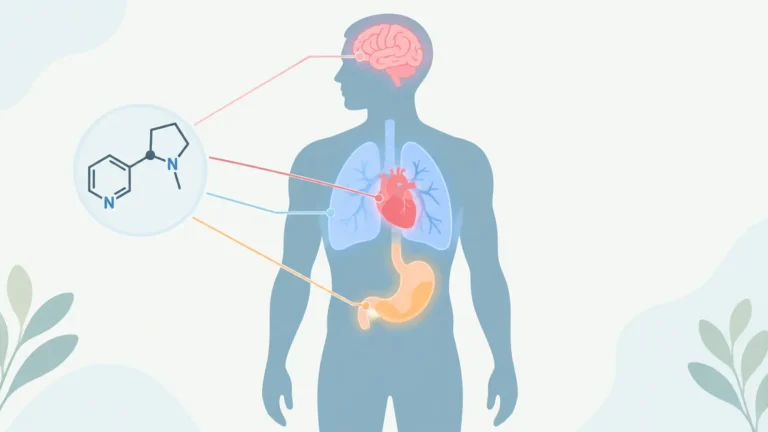
NRT works by supplying controlled, low-level doses of nicotine without the 4,000+ toxic chemicals in cigarette smoke. This reduces withdrawal symptoms and cravings while you break the behavioural habit of smoking. Unlike cigarettes, NRT delivers nicotine slowly and steadily — there is no dopamine spike, so it is not rewarding in the same way and carries very low addiction potential when used as directed.
OTC nicotine products (patches, gum, lozenges, inhalators) are available without a prescription in most countries. Prescription medications — varenicline and bupropion — work on brain chemistry rather than supplying nicotine directly, reducing cravings and the reward of smoking. Cytisine, a plant-derived partial nicotine agonist used in Eastern Europe for decades, occupies a middle ground and is now entering Western markets.
Side-by-Side Comparison Table
| Product | Type | Cochrane RR vs Placebo | Duration of Action | Rx Required? | Avg. Monthly Cost (USD) |
|---|---|---|---|---|---|
| Nicotine Patch (21/14/7mg) | OTC NRT | 1.64 | 16–24 hr | No | $40–$60 |
| Nicotine Gum (2mg/4mg) | OTC NRT | 1.49 | 20–30 min | No | $35–$55 |
| Nicotine Lozenge (2mg/4mg) | OTC NRT | 1.52 | 20–30 min | No | $35–$55 |
| Nicotine Inhalator | OTC NRT | 1.90 | 20 min per cartridge | No (EU); Rx (US) | $50–$75 |
| Nicotine Nasal Spray | OTC/Rx NRT | 2.02 | 5–10 min | Rx (US/EU) | $60–$90 |
| Varenicline (Chantix) | Prescription | ~2.24–2.88 | 24 hr (oral tablet) | Yes | $300–$500 (with Rx) |
| Bupropion (Zyban) | Prescription | ~1.69 | 24 hr (oral tablet) | Yes | $50–$100 (generic) |
| Cytisine (Tabex) | Prescription (select countries) | ~1.6–2.5 | 25-day tapering course | No (EU); Not FDA-approved | $20–$30 (EU) |
RR = relative risk of abstinence vs placebo at 6 months. Sources: Cochrane NRT Review (Hartmann-Boyce et al.), Cochrane Library; NHS Stop Smoking Medicines.
Nicotine Patches: 24-Hour vs 16-Hour
The nicotine patch is the most widely used NRT form globally. It is discreet, requires no technique, and delivers a steady background dose of nicotine to reduce baseline cravings throughout the day. Patches come in three strengths — typically 21mg, 14mg, and 7mg — designed to be stepped down over 8–12 weeks.
24-Hour Patches
Worn overnight, 24-hour patches (brands: Nicoderm CQ, Nicotinell) maintain nicotine levels through the night and can blunt early-morning cravings — the hardest time for many heavy smokers. The downside is that some users report vivid dreams or disturbed sleep. If this happens, removing the patch at bedtime and switching to a 16-hour format is the practical fix.
16-Hour Patches
Applied in the morning and removed at bedtime, 16-hour patches (brand: Nicorette) carry a lower risk of sleep disruption. They suit smokers whose cravings peak in daytime and who do not smoke heavily first thing in the morning. Cochrane evidence shows no meaningful difference in quit rates between 24-hour and 16-hour formats — the choice is purely about side-effect preference.
Patches are an excellent foundation for combination NRT — using the patch for steady background coverage while adding fast-acting gum or lozenges for breakthrough cravings.
Nicotine Gum: 2mg vs 4mg
Nicotine gum (Nicorette, generic brands) is the second most popular NRT form. It is fast-acting — nicotine is absorbed through the lining of the mouth within minutes — and gives users active control over craving management. Cochrane data puts its relative risk at 1.49 vs placebo.
The 2mg dose suits lighter smokers (fewer than 20 cigarettes/day or first cigarette more than 30 minutes after waking). The 4mg dose is designed for heavier, more dependent smokers. Using too low a dose is one of the most common reasons nicotine gum feels ineffective — if 2mg is not working, try 4mg before abandoning gum as a method.
Technique matters: the “chew and park” method — chew a few times until you taste nicotine, then park the gum between cheek and gum, then repeat — is far more effective than constant chewing, which pushes nicotine down the throat where it is wasted. Acidic drinks (coffee, juice) in the 15 minutes before or during use reduce absorption significantly.
A common question among long-term users is whether long-term nicotine gum use is safe once the standard 8–12 week course has passed. The NHS and FDA both confirm that continued gum use — for months or even longer in people at high risk of relapse — carries none of the cardiovascular or carcinogenic risks of smoking, and is far preferable to returning to cigarettes; our dedicated guide on whether long-term nicotine gum use is safe covers the evidence and practical tapering advice in full.
Nicotine Lozenges
Nicotine lozenges (Nicorette Mini, Commit) offer similar speed and user-controlled dosing to gum, with the advantage that no chewing technique is required. They dissolve in the mouth over 20–30 minutes. Cochrane RR: 1.52 — slightly higher than gum, though the difference is not statistically significant.
Lozenges suit people who cannot use gum due to dental work, jaw problems, or who simply find gum texturally unpleasant. The 2mg form is for smokers of fewer than 20 cigarettes/day; 4mg for heavier smokers. Mini-lozenges (1.5mg and 4mg) dissolve faster and are more discreet.
As with gum, avoid eating or drinking for 15 minutes before use. Do not chew or swallow the lozenge — let it dissolve fully to maximise buccal absorption.
Nicotine Inhalator
The nicotine inhalator (Nicorette Inhalator, available OTC in the UK/EU; prescription in the US) is an underused but highly effective product. Cochrane data shows the highest relative risk among OTC NRT forms at 1.90 — nearly double the quit rate versus placebo.
It addresses the hand-to-mouth habit directly: users puff on a plastic mouthpiece fitted with a nicotine-impregnated cartridge. Nicotine is absorbed in the mouth and throat, not the lungs (it is not a vape). This makes it appealing for smokers who miss the physical ritual of smoking. Each cartridge provides nicotine for approximately 20 minutes of intermittent puffing.
The main drawback is practical: throat irritation is common early on, it is visible in social settings, and the cost per cartridge makes it more expensive per dose than gum or lozenges. It is not recommended in cold climates, as low temperatures reduce nicotine delivery from the cartridge.
Nicotine Nasal Spray
The nicotine nasal spray (Nicotrol NS, prescription-only in the US) delivers the fastest nicotine hit of any NRT form — within 5–10 minutes, closer to the speed of a cigarette than any other product. This makes it the best option for smokers with severe, fast-onset cravings. Cochrane RR: 2.02 — the highest of any NRT product.
The trade-off is tolerability. Nasal irritation, sneezing, and watery eyes are nearly universal in the first week of use and can be severe. Most users adapt within 1–2 weeks. It also carries a slightly higher dependence risk than other NRT forms due to its faster speed of delivery, so it is typically used for 3–6 months rather than extended periods.
Varenicline (Chantix / Champix)
Varenicline is a prescription partial agonist at the same nicotine receptor that cigarettes stimulate. It works in two ways: it reduces cravings and withdrawal (partial agonist effect) and simultaneously blocks the satisfaction of smoking (antagonist effect). This dual action explains why Cochrane data consistently shows it as the most effective single pharmacotherapy for smoking cessation, with relative risks ranging from approximately 2.24 to 2.88 vs placebo.
The standard course is 12 weeks. Patients set a quit date in week 1–2 and titrate up from 0.5mg once daily to 1mg twice daily. The most common side effects are nausea (in roughly 30% of users, usually mild and transient) and vivid or unusual dreams. The serious neuropsychiatric warning that appeared on early Chantix labelling was reviewed in a large 2016 FDA-mandated trial (EAGLES) and found to be no greater than placebo in patients without pre-existing psychiatric conditions. The black-box warning was removed from US labelling in 2016.
Varenicline is contraindicated during pregnancy. Patients with severe kidney disease require dose adjustment. According to quit smoking success rate data, combination varenicline plus behavioural counselling is the single most effective cessation intervention currently available to most smokers.
Bupropion (Zyban)
Bupropion was originally developed as an antidepressant (Wellbutrin) and was found serendipitously to help patients quit smoking. It inhibits the reuptake of dopamine and norepinephrine, reducing nicotine cravings and withdrawal without supplying nicotine. Cochrane RR vs placebo: approximately 1.69.
The standard course is 7–12 weeks. Patients typically start bupropion 1–2 weeks before their quit date. Key contraindications include a history of seizure disorder, eating disorders, or current use of MAO inhibitors. Bupropion also carries a lower success rate than varenicline head-to-head, but is a strong second choice — especially for smokers who also have depression, as it treats both concurrently.
Generic bupropion is widely available at significantly lower cost than branded Zyban, making it the most cost-effective prescription option in markets where varenicline is expensive.
Cytisine (Tabex)
Cytisine is derived from laburnum seeds and has been used as a smoking cessation aid in Eastern and Central Europe since the 1960s. Like varenicline, it is a partial agonist at the nicotinic acetylcholine receptor — in fact, varenicline was developed partly inspired by cytisine’s mechanism. It is taken on a 25-day tapering schedule.
Clinical trial data (Walker et al., NEJM 2014; West et al., NEJM 2011) shows cytisine is significantly more effective than placebo and compares favourably to NRT. A 2019 Cochrane review found moderate-quality evidence that cytisine is more effective than NRT with a relative risk of approximately 1.6–2.5, though head-to-head data against varenicline is limited.
Cytisine is not FDA-approved for the US market and is not available OTC in most English-speaking countries as of 2026. It is widely available in Poland, Hungary, Bulgaria, and other EU countries as Tabex (approx. €10–€20 per course). Canadian provinces began limited access programs in 2024–2025. Its exceptionally low cost makes it of enormous global public health interest, and US approval trials are ongoing.
When to Combine NRT Products
Combination NRT — using a long-acting form (patch) simultaneously with a fast-acting form (gum, lozenge, or inhalator) — is one of the most evidence-backed strategies available without a prescription. Cochrane data shows combination NRT increases long-term cessation rates by approximately 25% compared to single-form NRT alone (RR approximately 1.25). For the full head-to-head comparison, dosing chart, and step-down protocol, see our dedicated guide to combination NRT vs single NRT.
The logic is simple: the patch covers baseline nicotine needs around the clock, while fast-acting products manage breakthrough cravings triggered by stress, social situations, or habit cues. The best quit smoking apps in 2026 can help you track craving patterns and time your fast-acting NRT use optimally.
- Step 1: Apply 21mg patch each morning
- Step 2: Use 2mg or 4mg gum/lozenge as needed for breakthrough cravings (up to 12 pieces/day)
- Step 3: Step down to 14mg patch at weeks 6–8, then 7mg at weeks 10–12
- Step 4: Gradually reduce fast-acting NRT use in parallel
Combining varenicline with NRT is also supported by evidence — a patch added to varenicline shows modest additional benefit in some studies, though it is not standard first-line guidance. Always discuss combining prescription medications with a doctor.
Best Option by Smoker Type
| Smoker Profile | Best NRT Option | Why |
|---|---|---|
| Heavy smoker (20+/day) | Varenicline OR combination NRT (21mg patch + 4mg gum) | Highest efficacy; high nicotine dependence needs strong support |
| Light/social smoker (<10/day) | 2mg gum or lozenge as needed | Low baseline dependence; situational cravings best managed with fast-acting OTC |
| Smoker with depression/anxiety | Bupropion or varenicline (with GP) | Bupropion addresses mood; varenicline has best evidence; both need monitoring |
| Pregnant smoker | Intermittent NRT (gum, lozenge, inhalator) | Safer than smoking; 24-hr patch not first choice; Rx meds contraindicated |
| Smoker who misses the ritual | Nicotine inhalator + patch | Inhalator mimics hand-to-mouth habit; patch provides background coverage |
| Budget-conscious quitter | Generic gum or lozenge + free stop smoking service | Combination of OTC NRT and free behavioural support rivals prescription options in real-world outcomes |
| Previous NRT failure | Varenicline (or combination NRT if not tried) | Previous NRT failure often reflects incorrect use or single-product use; different mechanism (varenicline) or combination often succeeds |
Whatever product you choose, pairing it with a structured quit plan and tracking your progress dramatically improves outcomes. The 15 strategies for managing cravings guide walks through what to do when NRT alone is not enough in a specific moment.
Frequently Asked Questions
Which nicotine replacement therapy has the highest success rate?
Varenicline (Chantix/Champix) has the highest single-agent success rate, roughly doubling to tripling quit rates compared to placebo. Among OTC NRT products, combination NRT (patch plus gum or lozenge) outperforms any single product, increasing long-term quit rates by around 25% over single-form NRT according to Cochrane reviews.
Is it safe to use NRT for more than 12 weeks?
Yes. Both the NHS and FDA confirm that longer use of NRT (beyond the standard 8–12 week course) is safe and is sometimes recommended for people at high risk of relapse. Nicotine from NRT carries none of the cardiovascular risks associated with smoking.
Can I use nicotine patches and gum at the same time?
Yes — this is called combination NRT and is actively recommended by the NHS and CDC. Using a long-acting patch to cover baseline cravings while using fast-acting gum or lozenges for breakthrough cravings increases quit success by approximately 25% compared to using either product alone.
What is the difference between 24-hour and 16-hour nicotine patches?
24-hour patches deliver nicotine overnight and can help with morning cravings, but may cause vivid dreams or sleep disturbances in some users. 16-hour patches are removed at bedtime, reducing sleep side effects. Effectiveness is similar; choice depends on whether morning cravings are a significant trigger for you.
Is cytisine available in the United States?
Cytisine is not currently FDA-approved for sale in the USA. It is widely available in Eastern Europe under brand names such as Tabex, and as of 2025 it is available by prescription in some Canadian provinces. Clinical trials for US approval are ongoing.
Which NRT option is best for heavy smokers (20+ cigarettes per day)?
Heavy smokers (20+ cigarettes/day) typically need higher-dose NRT. Options include the 21mg patch, 4mg gum or lozenge, or — ideally — combination NRT (patch plus a fast-acting form). Prescription options like varenicline or combination NRT with behavioural support are the most effective choice for heavy smokers.
Can pregnant women use nicotine replacement therapy?
Smoking during pregnancy is far more harmful than NRT. The NHS recommends NRT for pregnant women who cannot quit without support, preferring intermittent forms (gum, lozenges, inhalator) over 24-hour patches. Prescription medications such as varenicline and bupropion are not recommended during pregnancy.
Ready to Start Your Quit Journey?
The best nicotine replacement therapy is the one you will actually use consistently — and the evidence is clearest when you pair any NRT product with a structured quit plan and daily check-ins. iQuitNow combines AI-powered craving coaching, a savings tracker, and personalised milestone support to keep you on track through every stage of cessation.
Download iQuitNow free and start your quit plan today — pick your NRT, set your quit date, and let the app do the heavy lifting on craving management and motivation.