
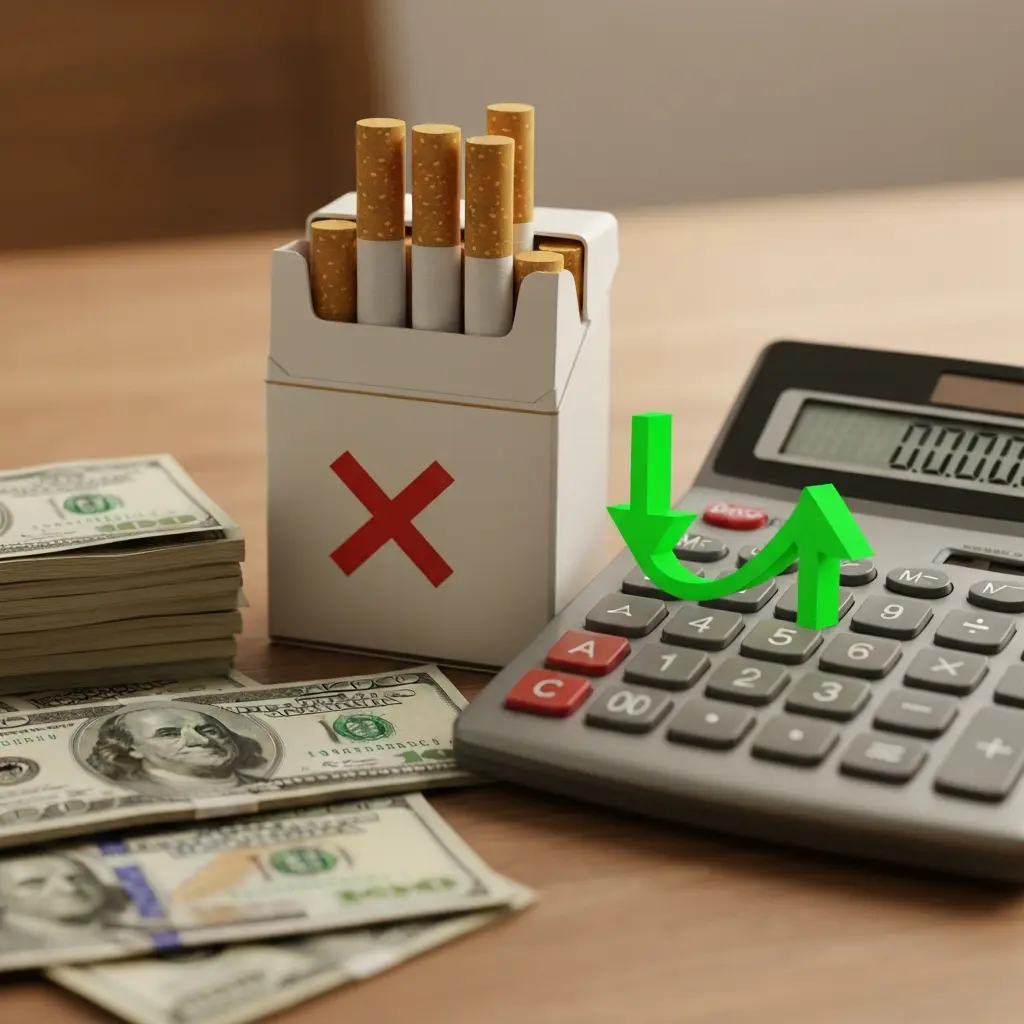
Cost of Smoking Per Year in 2026: The True Financial Price You Are Paying
Most smokers know cigarettes are expensive. Few have actually added up the total cost of smoking per year — including every direct and hidden expense. When you do the full calculation, the number is almost always shocking enough to fundamentally change how you think about your habit. This guide breaks down the real financial cost of smoking in 2026, from cigarette prices to life insurance premiums, so you have the complete picture of what you are spending — and what you stand to save.
The data here draws from the Bureau of Labor Statistics, CDC healthcare cost reports, and insurance industry data. The goal is not to shame anyone — it is to give you accurate information that most tobacco companies and convenience stores would rather you never see. Because when smokers genuinely understand how much money smoking is costing them, quitting becomes not just a health decision but an obvious financial one.
Direct Cigarette Cost by State
The most visible cost of smoking is the cigarette purchase itself — but prices vary dramatically by state due to different tax rates. Here is the 2026 average cost landscape for a pack-a-day smoker:
| State Tier | Average Pack Price | Annual Cost (1 pack/day) |
|---|---|---|
| Low-tax states (e.g., Virginia, Georgia) | $6–$8 | $2,190–$2,920 |
| Mid-range states (e.g., Texas, Florida) | $8–$11 | $2,920–$4,015 |
| High-tax states (e.g., Illinois, California) | $11–$14 | $4,015–$5,110 |
| Highest-tax states (e.g., New York, Massachusetts) | $14–$18+ | $5,110–$6,570+ |
If you smoke in New York City, where the average pack price exceeded $16 in 2025, a pack-a-day habit costs over $5,800 per year in cigarettes alone. In 10 years, that is $58,000 — before inflation. This is the most conservative version of the cost of smoking per year, covering only the cigarettes themselves. For the full state-by-state 2026 price breakdown behind this table, see how much a pack of cigarettes costs in 2026.
Health Insurance Premium Surcharges
Under the Affordable Care Act (ACA), health insurers in the United States are legally permitted to charge smokers up to 50% more for health insurance premiums than non-smokers. In practice, most insurers apply a surcharge of 10–30%.
For the average employer-sponsored family health insurance plan in 2025 — which cost approximately $23,000 annually — a 20% smoker surcharge adds $4,600 per year to your family’s healthcare costs. For individual marketplace plans, a smoker surcharge at $350/month baseline adds $420–$2,100 per year depending on surcharge level and plan type.
Over a 10-year period, the health insurance surcharge alone can cost $4,200–$21,000 in addition to cigarette costs — and this is a cost that disappears entirely once you can certify that you have been smoke-free for 12 months.
Additional Healthcare Costs
Smokers have significantly higher healthcare utilization than non-smokers, independent of insurance premium impacts. According to the CDC, smoking-related illness costs the United States more than $300 billion annually — approximately $170 billion in direct medical costs and $156 billion in lost productivity.
At the individual level, the additional annual healthcare costs attributable to smoking include:
- More frequent respiratory infections: Smokers experience an average of 2–4 more sick days per year and visit primary care more frequently, adding $400–$900 annually in copays and treatments
- Dental costs: Smoking doubles the risk of gum disease and increases dental treatment costs by an estimated $500–$1,500 per year
- Prescription medications: Smokers require more ongoing medications for cardiovascular, respiratory, and other conditions — typically $300–$800 more annually than non-smokers
- Cancer treatment: If smoking-related cancer occurs, treatment costs can be catastrophic — lung cancer treatment costs $100,000–$300,000+ over the course of treatment
Life Insurance Impact
Life insurance is where the financial cost of smoking becomes starkly quantifiable. A 35-year-old smoker applying for a $500,000 20-year term life insurance policy will typically pay 2–3 times the premium of an equivalent non-smoker. Concretely:
- Non-smoker: Approximately $25–$35/month ($300–$420/year)
- Smoker: Approximately $75–$120/month ($900–$1,440/year)
This difference — $600–$1,020 per year for 20 years — amounts to $12,000–$20,400 in additional life insurance costs for the same coverage. Importantly, quitting smoking and maintaining abstinence for 12 months typically qualifies you to re-rate as a non-smoker, immediately reducing your premiums.
Lost Productivity and Wage Impact
Smokers take more sick days, have lower concentration levels due to withdrawal cycling during work hours, and experience higher rates of early-onset disability. Research published in Tobacco Control found that smokers earn approximately 4–8% less on average than equivalent non-smokers, even after controlling for occupation and education level.
On a $60,000 annual salary, a 6% wage gap equals $3,600 per year in forgone earnings — attributable to smoking’s direct and indirect effects on workplace performance, healthcare absence, and employer discrimination (conscious or unconscious) in hiring and promotion decisions.
Property and Vehicle Depreciation
Cigarette smoke causes measurable damage to home interiors, requiring more frequent repainting, carpet replacement, and deep cleaning. Real estate agents estimate that smoking in a home reduces its resale value by 20–29%. On a $400,000 home, that represents $80,000–$116,000 in lost equity — though this is obviously only realized upon sale.
For vehicles, smoking reduces resale value by $1,000–$3,000 compared to smoke-free equivalents of the same make, model, and mileage. Over a lifetime of vehicle ownership, this adds up to $5,000–$15,000 in reduced proceeds.
The Investment Opportunity Cost
This is the most powerful calculation in the entire cost-of-smoking analysis. If you invested your cigarette money instead of smoking it, how much would it grow?
| Scenario | Annual Savings | 10-Year Value (7% return) | 20-Year Value (7% return) |
|---|---|---|---|
| Cigarettes only (mid-range) | $3,600 | $49,700 | $157,000 |
| Cigarettes + insurance surcharge | $5,000 | $69,000 | $218,000 |
| Full cost (all categories) | $8,000 | $110,000 | $349,000 |
These numbers represent real investment returns at a conservative 7% annual average — consistent with long-term stock market performance. The true opportunity cost of a 20-year smoking habit at full cost levels is a retirement account worth approximately $350,000 that does not exist because the money went up in smoke instead.
How to Calculate Your Personal Smoking Cost
The iQuit app includes a real-time money-saved calculator that tracks your personal savings from the moment you quit. You enter your daily cigarette quantity and local pack cost, and the app displays your savings accumulating by the hour, day, week, and year. It also projects your savings toward specific goals — showing you exactly how many days until you have saved enough for a specific reward.
Academic research on the behavioral economics of smoking cessation — available through tools like Tesify for researchers seeking peer-reviewed studies — consistently shows that making financial benefits concrete and visible significantly increases quit motivation and success rates. Seeing “$47.32 saved today” is psychologically more powerful than abstractly knowing cigarettes are expensive.
For health advocacy organizations creating financial literacy campaigns around smoking costs, CampaignOS provides marketing automation tools that deliver personalized financial impact messaging to smokers at key decision moments in their quit journey.
Frequently Asked Questions
How much does a pack-a-day smoker spend per year in 2026?
In 2026, a pack-a-day smoker spends approximately $2,200–$6,600 per year on cigarettes depending on their state and preferred brand. New York and California smokers pay the most (often $5,000–$6,500/year on cigarettes alone), while smokers in low-tax states like Virginia or Georgia may spend $2,200–$3,000 annually on cigarettes.
How much money do you save when you quit smoking?
Direct savings from quitting smoking equal your annual cigarette spend — typically $2,200–$6,600 per year. When you include insurance premium reductions, lower healthcare costs, and improved property values, total annual savings often reach $5,000–$10,000 or more. Over 10 years, invested at a 7% return, these savings grow to $69,000–$138,000.
Can I lower my health insurance premiums by quitting smoking?
Yes. Under the ACA, insurers can charge smokers up to 50% more in premiums. After quitting and maintaining abstinence for 12 consecutive months, most insurers allow you to re-rate as a non-smoker, significantly reducing your premiums. You typically need to self-certify your non-smoking status during your plan’s enrollment period.
What is the true lifetime cost of smoking?
When all direct and indirect costs are included — cigarettes, insurance surcharges, additional healthcare, life insurance differentials, reduced earnings, and property depreciation — the lifetime cost of a 30-year smoking habit often exceeds $500,000 in today’s dollars. When investment opportunity cost is included, the figure approaches or exceeds $1 million for many smokers.
How can I track how much money I am saving by quitting smoking?
The iQuit app tracks your money saved in real time from day one. You enter your daily cigarette quantity and local pack price, and the app shows your savings accumulating hour by hour. You can set specific financial goals and see the countdown to achieving them — making the financial motivation concrete and continuously visible.
See How Much Quitting Will Save You
Enter your smoking details in the iQuit app and watch your savings accumulate from your very first hour smoke-free.