Cytisine vs Varenicline vs Bupropion: Which Quit-Smoking Pill Wins in 2026?
Three prescription pills now compete for the title of the most effective medication to help you quit smoking — and the race in 2026 looks very different from just a few years ago. Cytisine (cytisinicline), the plant-derived newcomer, is on the cusp of FDA approval after decades of use in Eastern Europe. Varenicline (Chantix / Champix) has returned to pharmacies after supply disruptions and remains the most-studied option. Bupropion (Zyban) has held its position as a reliable, affordable alternative for over twenty years. If you’re weighing which quit-smoking pill is right for you, this head-to-head evidence guide cuts through the noise.
Understanding how these medications compare on quit rates, side effects, cost, and suitability matters enormously. According to the World Health Organization, tobacco kills more than 7 million people every year — making choosing the most effective cessation tool a genuinely life-or-death decision. Whether your doctor has already mentioned one of these options or you’re preparing for a consultation, what follows is the most current clinical comparison available.
Side-by-Side Comparison Table
The table below summarises the three medications across the dimensions that matter most to anyone deciding how to quit.
| Factor | Cytisinicline (Cytisine) | Varenicline (Chantix/Champix) | Bupropion (Zyban) |
|---|---|---|---|
| Drug class | Partial nAChR agonist (plant-derived) | Partial nAChR agonist (synthetic) | Antidepressant / dopamine-norepinephrine reuptake inhibitor |
| FDA status (2026) | NDA under review; PDUFA date June 20, 2026 | FDA-approved; widely available | FDA-approved; widely available |
| Typical course | 25 days (short) or 12 weeks (extended) | 12 weeks (extensible to 24) | 7–12 weeks |
| 6-month abstinence vs placebo | Significantly higher; comparable to varenicline at short-term; possibly superior at 24 weeks (OR 1.95 vs placebo anchor) | Doubles or triples quit rates vs no medication; superior to bupropion (OR 1.79 at weeks 9–12) | ~1 in 5 smokers quit at 12 months; lower than varenicline |
| Most common side effects | Mild nausea (82% less than varenicline), vivid dreams | Nausea, insomnia, abnormal dreams | Insomnia (30–40%), dry mouth, risk of seizure |
| Neuropsychiatric risk | Low; no black-box warning anticipated | Low (black-box removed 2016; safe in psychiatric patients per EAGLES) | Moderate; seizure risk ~0.1% |
| Approximate cost per course | Expected $1,700–$2,400 (12-week US price per ICER benchmark); historically cheapest in Eastern Europe | Varies; NHS: free on prescription; US generic ~$300–$600 | NHS: free on prescription; US generic: typically <$150 |
| Best suited for | Varenicline-intolerant patients; strong craving profiles; first choice if approved | Most motivated quitters seeking highest proven success rate | Comorbid depression/ADHD; cannot tolerate nAChR agonists |
Sources: JHEOR MAIC study (2025); PubMed meta-analysis — varenicline vs bupropion (2023); ICER evidence report (2026).
What Are These Three Medications?
Cytisine / Cytisinicline — The Plant-Derived Challenger
Cytisine has been prescribed to smokers in Eastern Europe since the 1960s, derived from the seeds of the common laburnum tree (Laburnum anagyroides). Its modern pharmaceutical version, cytisinicline, is the purified, standardised form being advanced through US and UK regulatory pathways by Achieve Life Sciences. Like varenicline, cytisinicline acts as a partial agonist at α4β2 nicotinic acetylcholine receptors — the very receptors that nicotine hijacks to create dependence. By occupying these receptors, the drug both blunts nicotine’s reward and eases withdrawal discomfort simultaneously.
The FDA accepted cytisinicline’s New Drug Application in 2025, with a PDUFA decision date set for 20 June 2026 — meaning it could be the first new FDA-approved quit-smoking medication in roughly 20 years. The WHO had already placed cytisine under serious consideration for its Model List of Essential Medicines, recognising it as potentially the most affordable pharmacotherapy option globally. For detailed trial data on cytisinicline’s abstinence rates from the ORCA-2, ORCA-3, and RAUORA studies, see cytisinicline vs varenicline: success-rate statistics ahead of the 2026 FDA decision. If you have questions about cytisinicline’s safety record specifically, is cytisine safe? — your 2026 questions answered covers the evidence in depth.
Varenicline (Chantix / Champix) — The Evidence Benchmark
Approved by the FDA in 2006, varenicline quickly became the gold-standard prescription option for smoking cessation. It works through the same α4β2 receptor pathway as cytisinicline, functioning as a partial agonist. Its dual mechanism — satisfying some of the craving while blocking the full reward of a cigarette — made it significantly more effective than earlier treatments.
Varenicline was briefly unavailable in the UK and many markets due to a nitrosamine contamination concern in 2021–2022. By 2024–2026, generic versions have re-entered the NHS formulary and are once again freely available to UK smokers on prescription. In the US, Pfizer’s branded Chantix and several generics are accessible through most insurance plans. For a deep dive into how varenicline stacks up against another commonly used option, the comprehensive varenicline vs bupropion comparison on this site covers dosing, mechanisms and safety profiles in detail.
Bupropion (Zyban / Wellbutrin SR) — The Antidepressant That Moonlights as a Quit Aid
Bupropion was originally developed as an antidepressant and is prescribed as a smoking cessation aid under the brand name Zyban. Unlike the other two medications, it does not work on nicotinic receptors. Instead, it inhibits the reuptake of dopamine and norepinephrine, reducing the pleasure associated with smoking and dampening the mood disturbances that accompany withdrawal. It is prescribed as bupropion SR (sustained-release) for quitting. Smokers typically start it one week before their quit date and continue for 7–12 weeks.
Quit Rates: What the Clinical Evidence Shows
Varenicline vs Bupropion
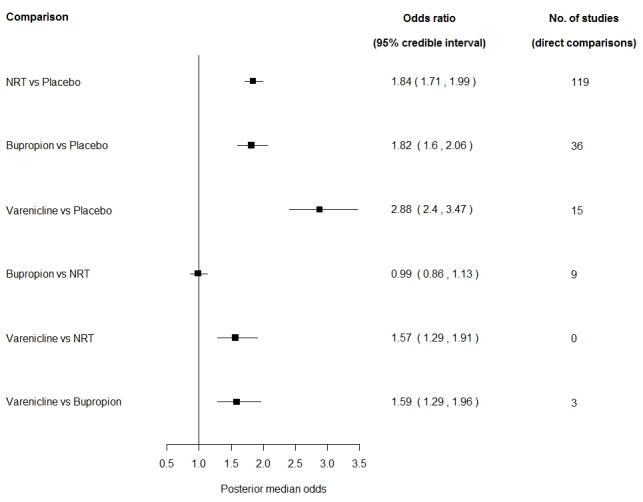
A 2023 systematic review and meta-analysis published on PubMed, covering three randomised controlled trials and more than 10,000 patients, found that varenicline’s continuous abstinence rate at weeks 9–12 was significantly higher than bupropion’s (OR 1.79; 95% CI 1.59–2.02). That advantage held across longer follow-ups: at weeks 9–24 (OR 1.51) and at one year (OR 1.60). In practical terms, NICE data suggests that for every 100 people using varenicline, roughly 12–16 quit successfully, compared with approximately 6 per 100 who quit without any medication. Bupropion roughly doubles unassisted quit rates — a meaningful benefit, though consistently lower than varenicline’s effect size.
Cytisinicline vs Varenicline
Because cytisinicline lacks direct head-to-head randomised trial data against varenicline, the best available comparison comes from a matching-adjusted indirect comparison (MAIC) published in the Journal of Health Economics and Outcomes Research. This analysis drew on results from the Phase 3 ORCA-2 and ORCA-3 trials (cytisinicline) and the landmark EAGLES trial (varenicline).
Key findings from the MAIC analysis:
- Short-term (weeks 9–12): No statistically significant difference in abstinence between cytisinicline and varenicline.
- Long-term (weeks 9–24): Cytisinicline showed a higher adjusted odds ratio of 1.95, suggesting possible superiority at sustained follow-up — though indirect comparison methodology carries inherent limitations.
- Nausea: Cytisinicline was associated with approximately 82% lower odds of nausea compared with varenicline — a clinically meaningful advantage that could improve real-world adherence.
The independent ICER evidence report (published February 2026) concluded that cytisinicline has “at least as good and possibly somewhat better net health benefit” versus varenicline, primarily on the strength of its improved tolerability. For a broader picture of how these pills sit within the full landscape of quitting methods, the complete guide to every quit-smoking method ranked by success rate offers a useful reference.
Where Combination Therapy Fits In
A network meta-analysis of 34 studies found that combining varenicline with bupropion significantly outperformed either medication alone (OR 1.49 vs varenicline alone). This approach is used in specialist tobacco treatment clinics and may be appropriate for very heavy smokers or those who have relapsed on single-drug therapy. It carries a higher side-effect burden and should only be considered under medical supervision.
Side Effects Compared
Cytisinicline Side Effects
The ORCA-2 and ORCA-3 trials consistently showed a favourable safety profile for cytisinicline. The most common adverse events were mild and transient: nausea (substantially less than varenicline), vivid or abnormal dreams, and mild gastrointestinal discomfort. Importantly, the Data Safety Monitoring Committee for the ORCA programme reported no new safety concerns across participants who had received more than six months of cumulative cytisinicline exposure. No neuropsychiatric black-box warning is expected, given the low incidence of mood-related adverse events in trials to date.
Varenicline Side Effects
Nausea is the most commonly reported side effect, affecting a meaningful proportion of users, particularly in the first two weeks. Starting at a lower dose and titrating up (as the standard schedule recommends) reduces this substantially. Sleep disturbances and vivid dreams are also common. Importantly, the EAGLES trial — the largest prospective safety study of smoking cessation medications — found no significant increase in neuropsychiatric adverse events with varenicline, even in patients with psychiatric histories, leading the FDA to remove the black-box warning in 2016. Varenicline is now considered safe for people with well-managed mental health conditions.
Bupropion Side Effects
Insomnia affects roughly 30–40% of bupropion users and is the most commonly reported complaint. Dry mouth occurs in around 10% of users. More serious — though rare — is the seizure risk, estimated at approximately 0.1%, which is why bupropion is contraindicated in people with a history of seizure disorders, eating disorders, or who are abruptly withdrawing from alcohol. Blood pressure monitoring during treatment is also recommended. The antidepressant effects can be beneficial for smokers who experience low mood, making it a thoughtful choice for specific clinical profiles. For context on choosing between prescription and non-prescription options, see the guide to prescription vs over-the-counter quit smoking aids.
Cost and Availability in 2026
United Kingdom
In the UK, both varenicline and bupropion are available free on NHS prescription for eligible smokers. Generic varenicline has returned to the NHS formulary following the nitrosamine supply disruption. Bupropion (Zyban) requires a prescription and is dispensed under NHS smoking cessation services. Cytisinicline is not yet available in the UK, though regulatory applications are anticipated once FDA approval is granted. Historically, generic cytisine tablets (Tabex) have been imported by some UK smokers at very low cost — however, the quality and regulatory status of imported products is uncertain.
United States
In the US, brand-name varenicline (Chantix) and multiple generic versions are covered by most insurance plans and Medicaid programmes. The ICER 2026 report calculated a health benefit price benchmark of $1,700–$2,400 per 12-week course for cytisinicline if approved, based on its comparable efficacy and improved tolerability versus varenicline. Bupropion SR generic is the most affordable option at typically under $150 for a full course. The Quitline (1-800-QUIT-NOW) and many state programmes can provide free or subsidised medications.
Australia, Canada, Ireland
In Australia, varenicline is subsidised under the PBS. In Canada, it is covered by most provincial drug plans. Ireland provides varenicline through the HSE smoking cessation programme. Bupropion is similarly available at low cost across all three markets. Cytisinicline availability is expected to follow shortly after FDA and any subsequent EMA or TGA approval processes conclude.
Which Pill Suits Which Person?
Important: All three medications require a prescription and a conversation with your doctor or pharmacist. The information here is evidence-based guidance to support that conversation — not a substitute for personalised medical advice.
Choose Cytisinicline if…
- You have tried varenicline and stopped early due to nausea.
- You want the latest evidence-based option with a strong tolerability profile.
- You are available to start treatment if/after FDA approval in June 2026.
- You have experienced multiple relapses and want the option with the most promising long-term abstinence signal.
Choose Varenicline if…
- You want the most comprehensively studied prescription pill with the strongest track record.
- You have not previously tried a nicotine receptor partial agonist.
- You have a well-managed psychiatric condition (the EAGLES trial confirmed safety in this group).
- You are on the NHS and want an immediately available, cost-free prescription option.
Choose Bupropion if…
- You also experience depression, ADHD, or seasonal affective disorder — the antidepressant effect may be doubly beneficial.
- You have had significant nausea or adverse reactions to nAChR agonists.
- You do not have a history of seizures, eating disorders, or alcohol dependency.
- Cost is a significant barrier and you need the lowest-cost prescription option.
Comparing prescription pills is only one part of the decision. Many people also weigh how these medications compare with nicotine replacement therapy (NRT). The varenicline vs nicotine patches comparison explores that angle directly, and the guide to the best NRT options covers patches, gum, lozenges, and inhalers for those who prefer a non-prescription route. For a head-to-head look at how NRT oral formats compare in 2026, see nicotine pouches vs NRT gum.
Combining Pills with Behavioural Support
All three medications work substantially better when combined with structured behavioural support — this is not a marketing footnote, it is one of the most consistent findings across quit-smoking research. A Cochrane review of nicotinic receptor partial agonists confirmed that behavioural counselling alongside pharmacotherapy produces meaningfully better outcomes than medication alone at every follow-up interval studied.
Practical behavioural support does not have to mean weekly therapy sessions. It can be as straightforward as:
- A dedicated quit-smoking app that tracks cravings, milestones, and money saved in real time.
- Setting a firm quit date (typically 7–14 days after starting medication, as per standard dosing protocols).
- Identifying and planning around high-risk trigger situations — stress, alcohol, social settings.
- Enlisting the support of at least one person who knows your quit date.
The iQuit app provides an AI-powered craving coach, milestone tracker, and community — designed to complement whichever medication approach your doctor recommends. The combination of evidence-based medication and personalised behavioural support remains the most effective strategy available.
Ready to make your quit attempt count?
iQuit tracks your cravings, health milestones, and money saved — so every pill you take is backed by the support that makes it work.
Frequently Asked Questions
Is cytisine the same as cytisinicline?
Yes. Cytisinicline is the International Nonproprietary Name (INN) for the same molecule that has been sold as cytisine (brand name Tabex) in Eastern Europe for decades. Achieve Life Sciences uses “cytisinicline” for its pharmaceutical-grade, FDA-submission version. The core compound and mechanism are identical — partial agonism at α4β2 nicotinic acetylcholine receptors.
Which quit-smoking pill has the fewest side effects?
Based on the available evidence, cytisinicline produces substantially fewer gastrointestinal side effects than varenicline — a 2025 MAIC analysis found approximately 82% lower odds of nausea with cytisinicline versus varenicline. Bupropion avoids nausea but causes insomnia in roughly a third of users and carries a small seizure risk. Overall, cytisinicline appears to be the best-tolerated option, though individual responses vary.
Can I get cytisine / cytisinicline on the NHS in 2026?
Not yet as of mid-2026. Cytisinicline is awaiting FDA approval (PDUFA date: 20 June 2026). NHS inclusion would require subsequent MHRA review and a NICE technology appraisal, a process that typically takes 1–2 years after US approval. For now, varenicline and bupropion remain the two prescription options available free on the NHS to eligible smokers.
How long do I need to take these medications?
Cytisinicline has been studied in both a 25-day short course and an extended 12-week course. Varenicline is typically taken for 12 weeks, with the option to extend to 24 weeks for smokers who need it. Bupropion courses run for 7–12 weeks, with the quit date set around day 10 after starting. All three medications should be started a few days before the planned quit date, and none should be stopped abruptly without discussing it with your prescriber.
Is varenicline safe if I have anxiety or depression?
Yes, based on current evidence. The landmark EAGLES trial — the largest prospective psychiatric safety study of smoking cessation medications — found no significant increase in serious neuropsychiatric adverse events with varenicline in smokers with a range of stable psychiatric conditions. The FDA removed the black-box neuropsychiatric warning from varenicline in 2016. That said, any change in mood, behaviour, or thinking while on medication should be reported to your doctor promptly.
Can I use a quit-smoking pill at the same time as nicotine patches?
Combining a prescription pill with nicotine replacement therapy (NRT) is sometimes used in clinical practice, particularly combining varenicline with a low-dose nicotine patch during the pre-quit period. The evidence base is growing but remains less robust than for single-agent pharmacotherapy. This approach should only be taken under medical guidance. Cytisinicline and bupropion are generally not studied in combination with NRT as standard first-line protocols.