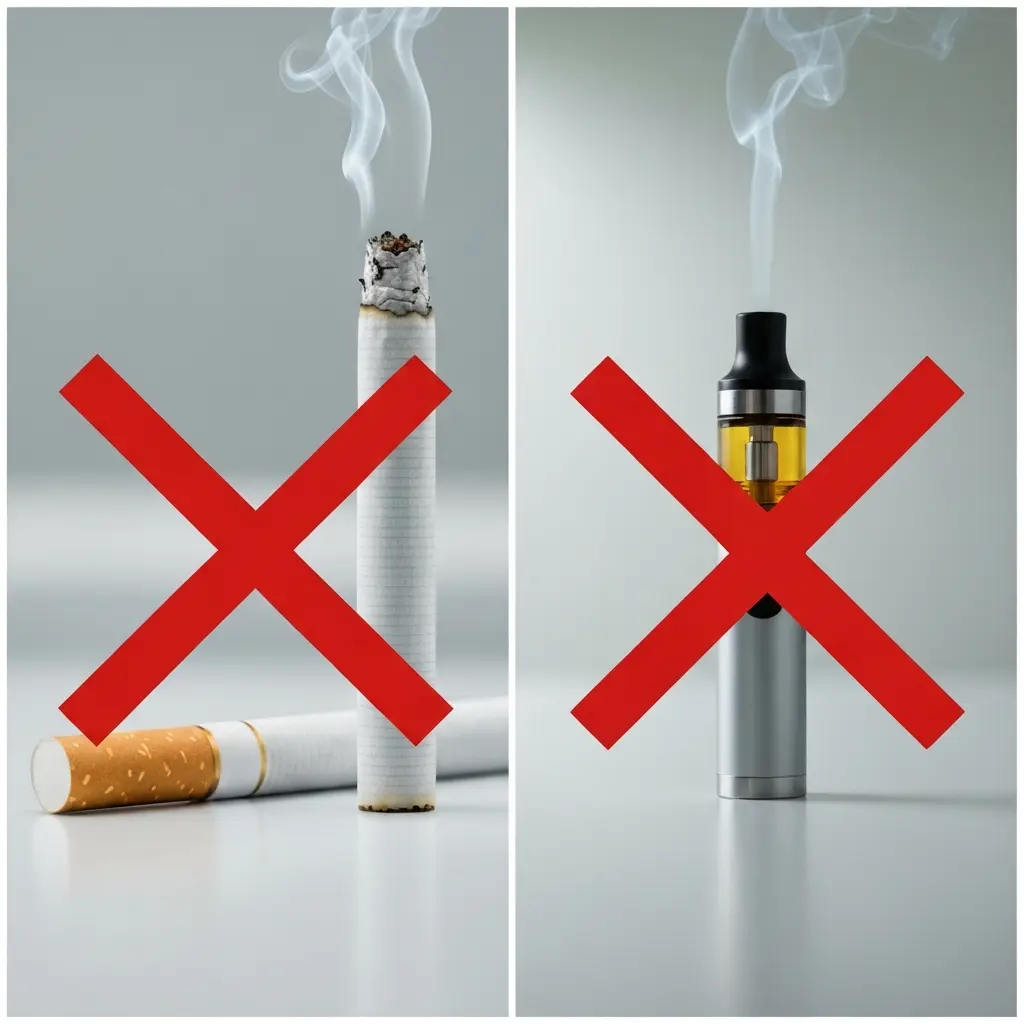
Does Vaping Help You Quit Smoking? What 2026 Research Actually Shows
Does vaping help you quit smoking? It’s one of the most searched — and most contested — questions in cessation science. The honest answer is nuanced: there is moderate-quality evidence that e-cigarettes (vapes) can help some smokers quit, but significant uncertainties remain about long-term safety and about how vaping compares to the most effective pharmacological alternatives. The question also carries an important embedded caveat: vaping as a cessation tool is categorically different from vaping as a habit, and the research applies primarily to the former.
This article provides an evidence-based answer drawing on the most recent Cochrane systematic reviews, NICE guidelines (updated 2023), NHS England guidance, and emerging 2024–2026 data — so you can make an informed decision about whether vaping belongs in your personal quit strategy.
The Cochrane Evidence: What the Data Shows
The Cochrane Tobacco Addiction Group’s 2024 review of 78 studies (n=22,052 participants) is the most comprehensive synthesis of e-cigarette cessation evidence available. Key findings:
- E-cigarettes vs no support: High-certainty evidence of benefit. For every 100 people trying to quit with e-cigarettes (vs no support), approximately 7 more will successfully quit — a meaningful absolute benefit
- E-cigarettes vs NRT: Moderate-certainty evidence that e-cigarettes are more effective than NRT. For every 100 people attempting to quit, approximately 3 more succeed with e-cigarettes than with NRT
- E-cigarettes vs behavioural support: Insufficient evidence for direct comparison
- Combination (e-cigarettes + behavioural support): The highest quit rates in the review were in studies combining e-cigarettes with structured behavioural support
The review also noted that the evidence is dominated by studies using refillable e-cigarettes rather than disposable vapes (which have different nicotine delivery profiles and are now the most commonly used by smokers). Generalisability of findings to disposable vapes specifically is uncertain.
NHS and NICE Position 2026
NHS England’s current position (2024) actively endorses e-cigarettes as a cessation tool with important caveats:
“E-cigarettes are substantially less harmful than tobacco smoking and can help people to stop smoking… We encourage smokers who want to stop to use them as part of a quit attempt supported by an NHS Stop Smoking Service.”
— NHS England, 2024
NICE guideline PH45 (updated 2023) recommends that healthcare professionals:
- Discuss e-cigarettes as a potential cessation option with patients who want to quit
- Advise that long-term vaping, while less harmful than smoking, is not risk-free
- Advise patients to stop vaping as well as smoking once they have successfully quit cigarettes
- Not prescribe e-cigarettes on the NHS (they are not licensed medicines) but support their use as OTC cessation tools
The US FDA and CDC have not yet provided equivalent endorsement, reflecting different regulatory philosophies and concern about youth vaping rates. Australia’s approach is more restrictive, requiring a medical prescription for nicotine-containing e-cigarettes.
Vaping vs NRT: Comparative Effectiveness
| Cessation Method | 12-Month Quit Rate | Evidence Quality |
|---|---|---|
| E-cigarettes (refillable) | 13–21% | High (Cochrane 2024) |
| Combination NRT | 18–26% | High (Cochrane) |
| Varenicline | 22–34% | High (NICE) |
| E-cigarettes + behavioural support | 19–26% | Moderate |
| Unassisted (cold turkey) | 3–5% | High |
The data shows that e-cigarettes are effective cessation tools — more effective than NRT in direct comparisons — but that varenicline (Champix/Chantix) with behavioural support achieves the highest rates. For the full comparative analysis of all cessation methods, see our complete NRT and cessation method comparison guide.
Health Risks of Long-Term Vaping
Vaping is substantially less harmful than smoking — this is the clear scientific consensus. However, “substantially less harmful than cigarettes” does not mean “harmless.” The long-term health profile of vaping remains incompletely characterised because the technology is too new to have 30-year outcome data.
Known risks from current evidence:
- Respiratory inflammation: E-cigarette aerosol causes measurable airway inflammation even without tobacco combustion products
- Nicotine dependence: Most vapers continue to be nicotine-dependent — the dependency has moved from cigarettes to a device, not been resolved
- EVALI risk: E-cigarette or Vaping-Associated Lung Injury, mostly associated with vitamin E acetate in illicit products, caused over 2,800 hospitalisations in the US (CDC)
- Cardiovascular effects: Nicotine is a vasoconstrictive substance regardless of delivery method; cardiovascular risk reduction with vaping vs smoking exists but is not complete
- Unknown long-term risks: Flavouring compounds, fine particles, and heating element products have unknown 20+ year health profiles
Who Does Vaping Best Help Quit?
Based on the research, e-cigarettes show the strongest cessation benefit for:
- People who have tried NRT and found it unsatisfying (e-cigarettes better mimic the act of smoking)
- People for whom the sensory/behavioural aspects of smoking are significant (hand-to-mouth habit, inhalation)
- Lighter to moderate smokers for whom high-dose pharmaceutical interventions may feel like overkill
- People who prefer a gradual nicotine reduction approach rather than abrupt cessation
E-cigarettes are less well-supported for: heavy smokers (>20/day), those with existing respiratory conditions, pregnant women (NRT preferred), and young people (where non-nicotine vaping as a goal is preferable to nicotine vaping as a gateway risk).
The Dual-Use Problem
The most common outcome in real-world vaping cessation studies is dual use — continuing to smoke cigarettes while also vaping. Dual use does not eliminate smoking-related harm and may not represent meaningful cessation progress. The evidence base for vaping as a cessation tool assumes that vaping is used with the explicit goal of replacing cigarettes entirely, not in addition to them.
For people who have been vaping for years without quitting cigarettes, the data suggests transitioning to a more structured pharmacological approach (combination NRT or varenicline) rather than continuing dual use indefinitely. The cognitive challenge of managing multiple nicotine sources — and the self-regulation required — is documented in habit-change research across contexts: see this guide for students on navigating AI and independent work, which examines similar questions about using a crutch versus building genuine independence.
For a full comparison of all cessation methods, see our cold turkey vs gradual reduction comparison guide.
Frequently Asked Questions
Does vaping help you quit smoking?
Yes, with caveats. The Cochrane Review (2024, 78 studies) found high-certainty evidence that e-cigarettes help more smokers quit than NRT or no support when used as a cessation tool. NHS England endorses e-cigarettes as a quit smoking aid but recommends stopping vaping once cigarettes are quit, as long-term vaping carries uncertain health risks. Varenicline remains the single most effective pharmacological option when compared to all others including e-cigarettes.
Is vaping better than NRT for quitting smoking?
The Cochrane Review (2024) found moderate-certainty evidence that e-cigarettes are more effective than NRT in direct comparisons. However, combination NRT achieves comparable quit rates when used correctly. The choice between the two should consider personal preference (e-cigarettes better mimic smoking behaviour), safety profile (NRT has a longer evidence base and no unknown long-term risks), and individual smoking pattern. Neither is as effective as varenicline with behavioural support.
What does the NHS say about using vaping to quit smoking?
NHS England (2024) endorses e-cigarettes as a cessation tool, stating they are “substantially less harmful than tobacco smoking” and can help people stop. NHS guidance recommends using them in combination with NHS Stop Smoking Services support. It also recommends stopping vaping once cigarettes are successfully quit, rather than vaping indefinitely, due to remaining uncertainties about long-term health effects.
What are the risks of using vaping to quit smoking?
The primary risks are: continued nicotine dependence if vaping becomes a permanent habit rather than a transitional tool, dual use (smoking and vaping simultaneously without quitting either), unknown long-term respiratory risks from e-cigarette aerosol compounds, and EVALI risk from illicit or unregulated products. Regulated nicotine e-cigarettes from reputable manufacturers, used explicitly to quit cigarettes with a plan to also stop vaping, represent a substantially safer risk profile than continued cigarette smoking.
Whether You Vape, Patch, or Go Cold Turkey — Have the AI Support
The iQuit app works alongside any cessation method — NRT, vaping, varenicline, or cold turkey. Its AI coach adapts its guidance to your chosen approach and supports you through the hardest moments regardless of your method.
Download iQuit free and add evidence-based AI support to your quit strategy.