Does Vaping Help You Quit Smoking? The 2026 Evidence Reviewed
Does vaping help you quit smoking? The scientific consensus in 2026 is clearer than it has ever been — and the answer is a qualified yes. A comprehensive 2025 Cochrane review of 104 randomized controlled trials involving more than 30,000 participants found high-certainty evidence that nicotine e-cigarettes are more effective at helping people quit smoking than traditional nicotine replacement therapy (NRT) such as patches and gum. But effectiveness comes with important conditions, risks, and limitations that every smoker considering vaping as a cessation tool needs to understand.
This evidence-based review presents the latest clinical findings, explains how vaping compares to other cessation methods, addresses the health risks of vaping, and helps you determine whether a vaping-based quit strategy is the right approach for your situation.
What Does the 2025 Cochrane Review Actually Say?
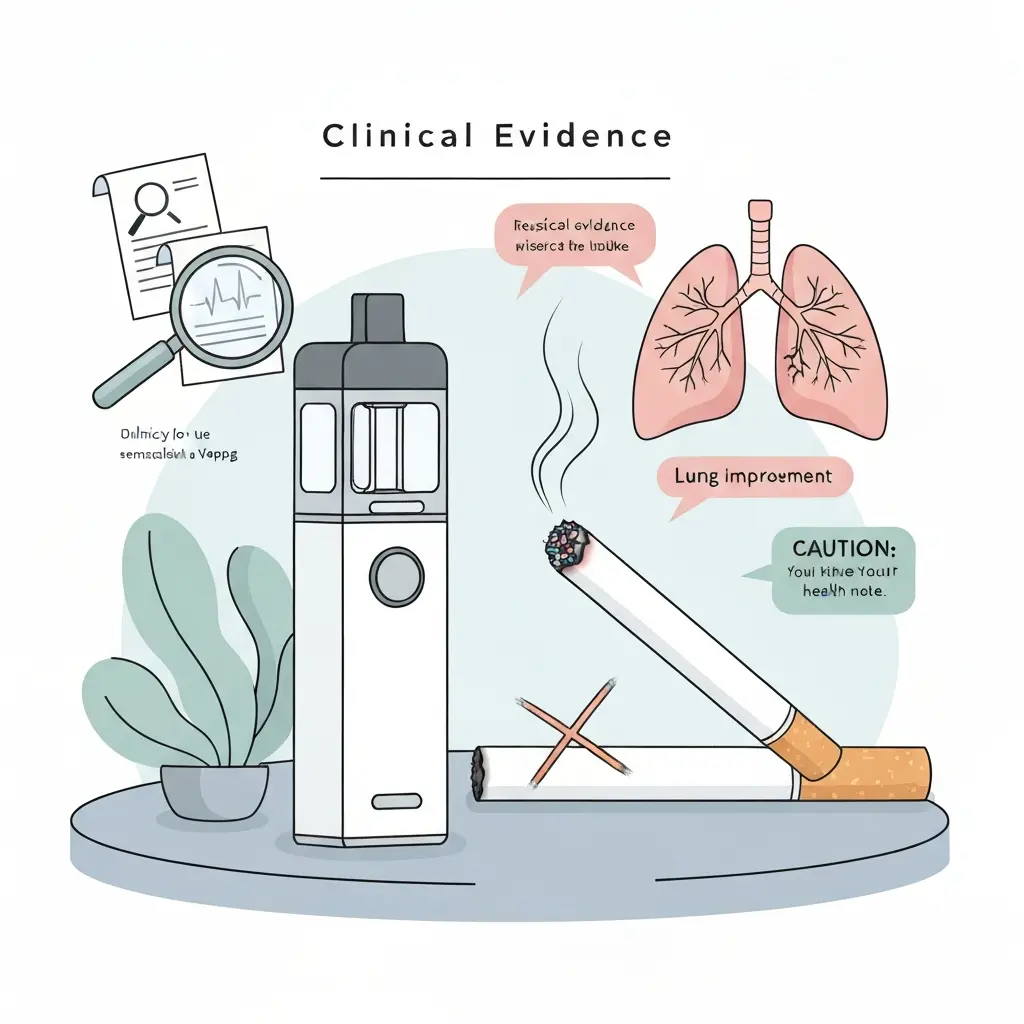
The Cochrane Collaboration — the gold standard for systematic evidence reviews in medicine — published its most comprehensive analysis of e-cigarettes for smoking cessation in 2025. The review included 104 randomized controlled trials and cohort studies with over 30,366 participants who smoked. It found high-certainty evidence that nicotine e-cigarettes increase the likelihood of quitting smoking compared to other NRT and to e-cigarettes without nicotine.
The key quantitative finding: people who used nicotine e-cigarettes to quit were approximately twice as likely to achieve sustained abstinence from smoking compared to those using patches, gum, or other traditional NRT. This “twice as likely” finding represents a meaningful, clinically significant advantage — not a marginal statistical result.
The University of Oxford’s 2023 analysis of over 150,000 smokers (one of the largest cessation studies ever conducted) also placed nicotine e-cigarettes among the top three most effective single cessation interventions, alongside varenicline and cytisine. This convergence of evidence from multiple independent research groups substantially strengthens the case for e-cigarettes as a valid cessation tool.
What Is the NHS Position on Vaping to Quit Smoking?
The NHS explicitly recommends vaping as a stop-smoking aid in its Better Health guidance. The NHS states that vaping is “substantially less harmful than smoking” and that using a vape together with NHS Stop Smoking Service support gives approximately two-thirds of people the best chance of quitting successfully. NICE (the National Institute for Health and Care Excellence) has also endorsed vaping as a cessation aid in its clinical guidelines.
This is a significant institutional endorsement. For years, health bodies were cautious about recommending e-cigarettes due to the relative novelty of the product and limited long-term data. The 2025 position represents the accumulated weight of a decade of research and clinical experience, and marks a clear turning point in official cessation guidance.
The Public Health England (now UK Health Security Agency) assessment that e-cigarettes are approximately 95% less harmful than tobacco cigarettes is often cited in this context, though it is worth noting this figure refers to relative harm rather than absolute safety. E-cigarettes are significantly less harmful than smoking, but they are not harmless.
How Does Vaping Help People Quit Smoking?
Vaping helps people quit smoking through three primary mechanisms. First, it delivers nicotine to the bloodstream, reducing the acute withdrawal symptoms and cravings that drive most relapse. This is the same mechanism as NRT patches and gum, but vaping delivers nicotine more rapidly — closer to the speed of cigarette absorption — which may make it more effective at controlling acute cravings.
Second, vaping replicates the behavioral rituals of smoking: the hand-to-mouth action, the inhalation, the exhalation of visible vapor, the sensory experience of something in the throat. These behavioral components of cigarette dependence are not addressed by patches or gum, which may partly explain why vaping outperforms traditional NRT for many people whose habit is as behavioral as it is chemical.
Third, vaping allows for incremental nicotine reduction. Most e-liquids are available in multiple nicotine strengths, enabling a structured taper from higher to lower concentrations over weeks to months. This provides a clear pathway to eventually quitting nicotine entirely, rather than maintaining an indefinite vaping habit.
Is Vaping More Effective Than NRT Patches and Gum?
The 2025 Cochrane review indicates that nicotine vaping is more effective than traditional NRT forms including patches, gum, lozenges, and inhalers as standalone cessation aids. The approximate doubling of quit rates compared to traditional NRT is consistent across multiple studies and appears robust across different study designs.
However, combination NRT (patch plus gum or lozenge simultaneously) closes the gap somewhat. And varenicline (Champix/Chantix) remains the most effective single pharmacological agent, with both the 2023 Oxford analysis and multiple clinical trials placing it ahead of all NRT forms including vaping in direct comparisons.
A practical interpretation of the evidence hierarchy in 2026: varenicline is the most effective medication, nicotine vaping is the most effective NRT alternative, and standard single-form NRT remains a valid option for people who cannot access or tolerate the other two. Adding behavioral support — including a quit-smoking app like iQuit — improves outcomes across all pharmacotherapy approaches.
Is Vaping Safe? What Are the Risks?
Vaping is not safe — it is less harmful than smoking. This distinction matters. E-cigarette vapor contains far fewer toxic chemicals than cigarette smoke (which contains over 7,000 chemicals, including 70 known carcinogens), but it is not the equivalent of breathing clean air. Common concerns include potential lung irritation, nicotine dependence maintenance, and unknown long-term effects of repeated vapor inhalation over decades.
What is clearly established: for people who are currently smoking cigarettes, switching to vaping reduces immediate harmful chemical exposure dramatically. The harms of continuing to smoke substantially outweigh the harms of switching to vaping as a cessation strategy. The clinical consensus is that vaping is an acceptable risk-reduction tool for adult smokers, while it is not an appropriate product for non-smokers or young people.
Flavored vapes have raised specific concerns, particularly about their appeal to young people and the use of flavoring agents (such as diacetyl) that may cause respiratory harm. Regulatory frameworks in the UK and increasingly in the US are addressing these concerns. For cessation purposes, NHS guidance recommends simple, tobacco-flavored or mint-flavored vapes from reputable manufacturers with established quality standards.
Who Is Most Likely to Benefit From Vaping as a Quit Aid?
Vaping as a cessation tool appears particularly effective for: heavy smokers who have failed multiple NRT attempts, people for whom the behavioral ritual of smoking (hand-to-mouth action, inhalation feel) is a significant component of the dependence, and people who find the taste or sensation of traditional NRT unappealing or ineffective.
It may be less suitable for: non-smokers or very light smokers (risk-benefit does not favor starting any nicotine product), pregnant women (NHS recommends discussing with a healthcare provider, though NRT is generally preferred due to more established safety data in pregnancy), and young people who have never smoked (vaping can itself create nicotine dependence in this group).
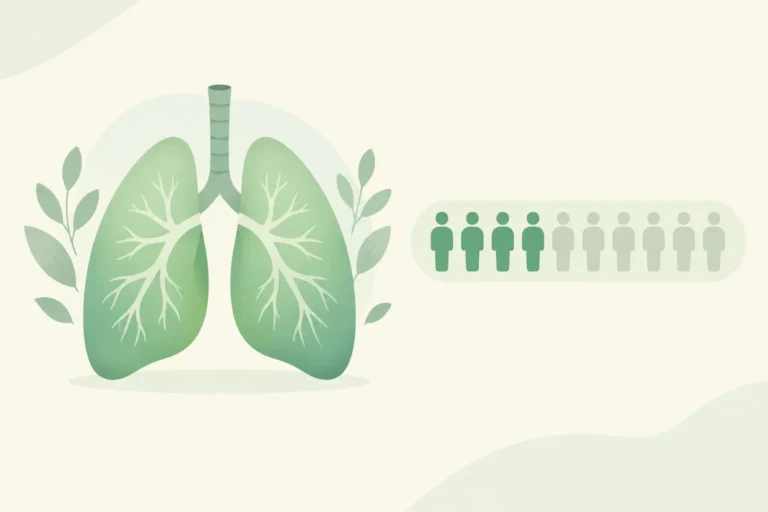
As with all cessation approaches, combining vaping with a structured behavioral support program produces better outcomes than vaping alone. The NHS reports that using a vape alongside its Stop Smoking Service counseling results in approximately two-thirds of participants achieving at least four weeks of abstinence — among the highest rates recorded for any cessation intervention.
Should You Plan to Quit Vaping Too?
Yes — the goal of using vaping to quit smoking should ultimately be to quit all nicotine products, not to maintain long-term vaping. NHS guidance is explicit on this point: e-cigarettes are recommended as a stepping stone away from smoking, with the intention of eventually quitting vaping as well. Many people successfully reduce their vape nicotine strength progressively over 6–12 months and then quit entirely.
Research shows that most people who switch from smoking to vaping for cessation purposes do ultimately reduce their vaping over time. A structured reduction plan — using lower-nicotine e-liquids, then zero-nicotine, then quitting entirely — mirrors the same incremental approach that makes gradual NRT reduction effective. Tracking this reduction in iQuit, alongside your smoke-free streak, keeps the ultimate goal of nicotine-free living visible at every step.
For further context on how health and wellness apps are changing behavior in 2026, see this analysis of Marketing Automation for Healthcare. For a broader perspective on the role of evidence-based tools in quitting smoking, see our guide on what is the most effective way to quit smoking in 2026. And for insight into how digital health tools reach people at the right moment, explore this guide on Best AI SEO Tools in 2026 and how health content is discovered online.
Frequently Asked Questions
Does vaping help you quit smoking for good?
Clinical evidence, including the 2025 Cochrane review, confirms that nicotine vaping helps more people achieve long-term smoking cessation than traditional NRT. However, “for good” also requires a plan to eventually quit vaping. People who switch from smoking to vaping are significantly less likely to return to smoking, but some maintain vaping long-term. The NHS recommends using vaping as a bridge to complete nicotine-free living.
How long should I vape before quitting completely?
There is no single recommended timeline, but NHS guidance suggests using a vape for as long as needed to remain smoke-free, then gradually reducing the nicotine strength. Most people who successfully use vaping as a cessation tool begin reducing their nicotine level after 3–6 months of being smoke-free, with many reaching zero-nicotine vaping within 12 months and quitting entirely shortly after.
Is vaping safer than smoking cigarettes?
Yes, vaping is significantly less harmful than smoking cigarettes. UK health bodies estimate e-cigarettes are around 95% less harmful than tobacco. E-cigarette vapor lacks the thousands of toxic chemicals produced by burning tobacco, including carbon monoxide and many carcinogens. However, “less harmful” does not mean “harmless” — vaping is not recommended for non-smokers or young people.
Can I vape and use NRT patches at the same time?
Using a nicotine vape alongside NRT patches is not a combination that has been extensively studied in randomized trials, and it could result in excessive nicotine intake. NHS guidance recommends using either vaping or NRT as your primary cessation tool, rather than combining them. If you want to supplement your vaping with additional support, behavioral counseling and a quit-smoking app are safer additions than stacking nicotine products.
What nicotine strength vape should I start with to quit smoking?
NHS guidance recommends starting with a nicotine strength that satisfies your cravings without making you feel unwell — typically 18–20 mg/ml for heavy smokers (more than 20 cigarettes per day) and 10–12 mg/ml for lighter smokers. If you find yourself vaping excessively to satisfy cravings, increase the nicotine strength rather than increasing the volume of vaping, as this more closely replicates the nicotine delivery pattern of cigarettes.
Does vaping help with nicotine cravings and withdrawal?
Yes. Vaping delivers nicotine to the bloodstream more quickly than patches or gum, which makes it effective at relieving acute craving spikes. The combination of nicotine delivery speed and the behavioral similarity to smoking makes vaping particularly good at the “craving in the moment” management that is critical in the first weeks of cessation.
Is nicotine vaping recommended for pregnant women who want to quit smoking?
Pregnant women who want to quit smoking should consult their midwife or GP. Current NHS guidance indicates that while vaping is likely less harmful than smoking during pregnancy, traditional NRT products have a more established safety record in this context and are generally preferred as the first-line option for pregnant smokers. Quitting without any nicotine product is always the safest option.
Can vaping cause lung disease?
There have been reported cases of vaping-associated lung injury, most linked to vitamin E acetate in illegal or counterfeit vape products, particularly in the US. Regulated e-cigarette products from established manufacturers in the UK and EU carry significantly lower risk. Long-term studies of respiratory effects from legal, regulated vaping products are still ongoing, but current evidence does not show the same level of lung disease risk as cigarette smoking.
Whether You Vape or Not — iQuit Supports Your Journey
iQuit tracks your smoke-free progress whether you are using vaping, NRT, medication, or going cold turkey. Monitor your cigarettes-not-smoked, calculate your health improvements, and access craving support tools at any moment of the day.
Download iQuit and take control of your quit journey with science-backed support — designed to work alongside whatever cessation method you choose.