Gradual Smoking Reduction Method: Does Cutting Down Work in 2026?
If the idea of quitting cold turkey feels impossible, you are not alone — and you are not wrong to explore alternatives. The gradual smoking reduction method appeals to millions of smokers who want a more manageable path to cessation, cutting cigarettes down systematically rather than stopping abruptly. But does it actually work? And if so, how do you do it in a way that leads to complete cessation rather than just a slightly reduced habit?
This guide draws on published clinical research — including meta-analyses from the Cochrane Collaboration, Annals of Internal Medicine, and Tobacco Induced Diseases journal — to give you an honest, evidence-based answer about gradual reduction: when it works, when it does not, and how to make it work for you specifically.
What Is the Gradual Smoking Reduction Method?
The gradual smoking reduction method involves systematically decreasing the number of cigarettes smoked each day over a defined period — typically 4–8 weeks — with a planned complete quit date at the end. It differs from simply “cutting back” (which rarely has a defined endpoint) in its structured, goal-directed nature: you have a specific daily cigarette target for each week and a non-negotiable quit date on the calendar.
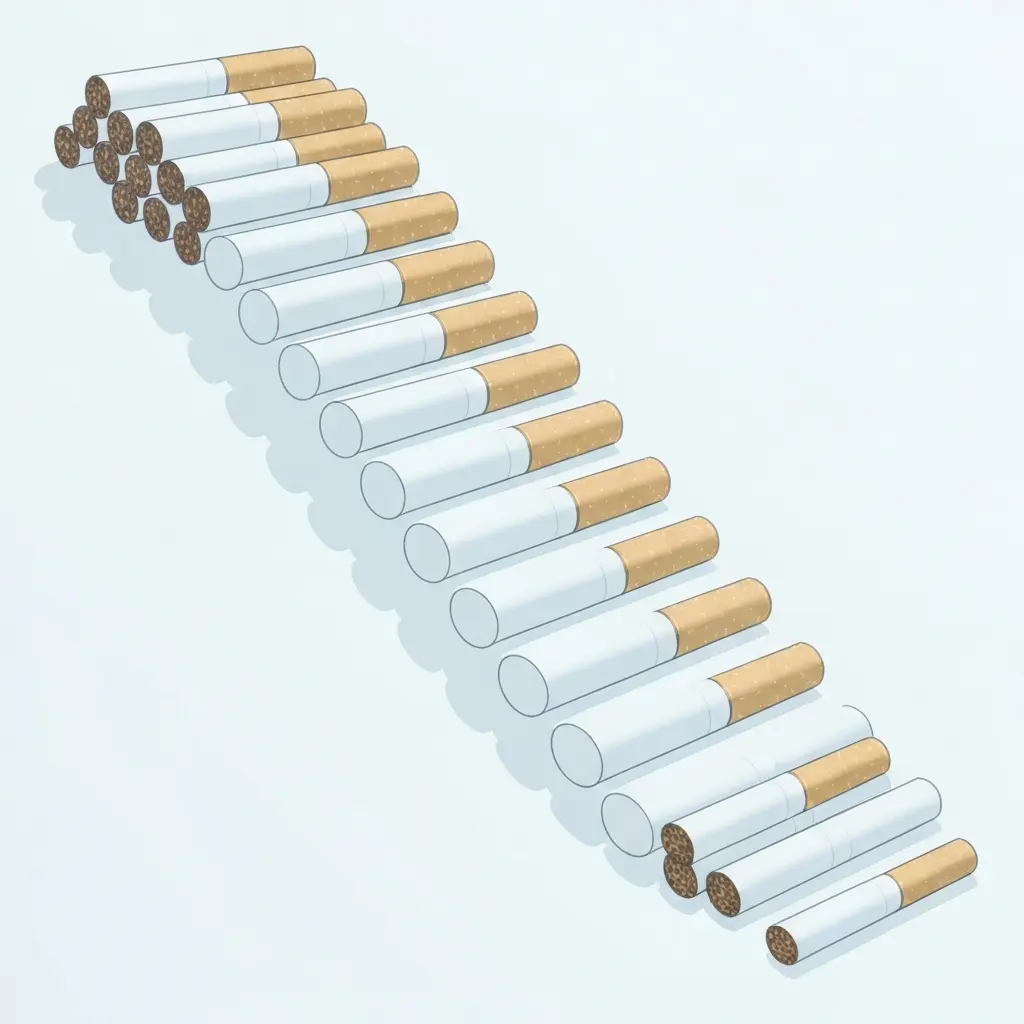
The psychological appeal is clear: rather than facing the terrifying leap of going from 20 cigarettes per day to zero overnight, you take steps — 20, then 15, then 10, then 5, then zero. Each step feels manageable. The question is whether this managed approach translates into the same (or better) long-term abstinence outcomes as the abrupt approach.
What the Research Really Says
The most rigorous evidence on gradual versus abrupt cessation comes from two key studies:
The Lindson-Hawley 2016 Study (Annals of Internal Medicine)
This landmark randomized controlled trial compared gradual reduction over two weeks versus an abrupt quit date in 697 adult smokers who wanted to quit but preferred gradual reduction. The results were counterintuitive: the abrupt cessation group showed significantly higher 4-week abstinence (49% vs 39.2%) and 6-month abstinence (22% vs 15.5%). Even among participants who said they would prefer the gradual approach, abrupt cessation outperformed it.
The Cochrane Meta-Analysis (2019)
The Cochrane Collaboration’s systematic review of 10 randomized trials found moderate evidence that abrupt cessation is more effective than gradual reduction. However, the review also noted that the difference may be smaller when gradual reduction is combined with pharmacological support (NRT or medication), and that individual preference should remain a factor in clinical recommendations.
The Nuanced Conclusion
The data favors cold turkey — but it does not rule out gradual reduction. The key finding from the more nuanced analyses is that gradual reduction without a committed quit date is unlikely to lead to cessation. The “cutting back” most smokers do on and off throughout their smoking lives rarely leads anywhere. What separates effective gradual reduction from ineffective cutting back is the commitment to a specific, immovable complete quit date from the very start of the reduction process.
When Gradual Reduction Works Best
While cold turkey outperforms gradual reduction on average, several specific smoker profiles may benefit more from the structured gradual approach:
- Smokers with high anxiety about abrupt cessation — for people whose primary barrier is the psychological terror of “never smoking again,” gradual reduction provides a less confronting pathway that maintains engagement with cessation rather than avoidance of it
- Very heavy smokers (30+/day) — for whom cold turkey produces extremely severe withdrawal, gradual reduction combined with NRT can smooth the transition more effectively
- Smokers who have repeatedly relapsed from cold turkey — if multiple cold turkey attempts have failed, a different approach may produce better outcomes
- People with significant comorbid anxiety or panic disorder — where the acute anxiety of abrupt cessation may be clinically dangerous or trigger other health crises
The Compensatory Smoking Problem
The most critical pitfall of gradual reduction is compensatory smoking — smoking fewer cigarettes but inhaling more deeply from each one, drawing more intensely, or smoking down to a shorter butt. Research shows that compensatory smoking can maintain nearly identical nicotine intake even when cigarette count drops by 50%, completely negating the health benefit of cutting back.
The solution is tracking your actual puffs and inhalation patterns, not just your cigarette count. Using NRT for the cigarettes you skip (rather than compensating with deeper inhalation from the cigarettes you still smoke) is essential for effective gradual reduction. This is why gradual reduction without NRT has relatively weak evidence behind it compared to gradual reduction with NRT.
How to Structure a Gradual Reduction Plan
If you decide that gradual reduction is your approach, structure matters enormously. A structured plan has five essential elements:
- A committed complete quit date — set at the beginning, non-negotiable, typically 6–8 weeks away
- Weekly cigarette targets — expressed as a specific number, not a range
- Rules about which cigarettes to eliminate first — start with your least emotionally loaded cigarettes (those associated with strongest habit cues — after meals, with coffee — should be the last to go)
- NRT for the cigarettes you skip — nicotine gum or patches prevent compensatory smoking and manage withdrawal between permitted cigarettes
- Craving management tools for the moments when you are approaching but not yet at your permitted cigarette
The iQuit app supports gradual reduction planning with a structured cigarette tapering tracker that helps you monitor your daily count against targets and provides craving tools for the between-cigarette windows. Our broader guide on how to quit smoking covers all cessation methods in detail.
Using NRT with Gradual Reduction
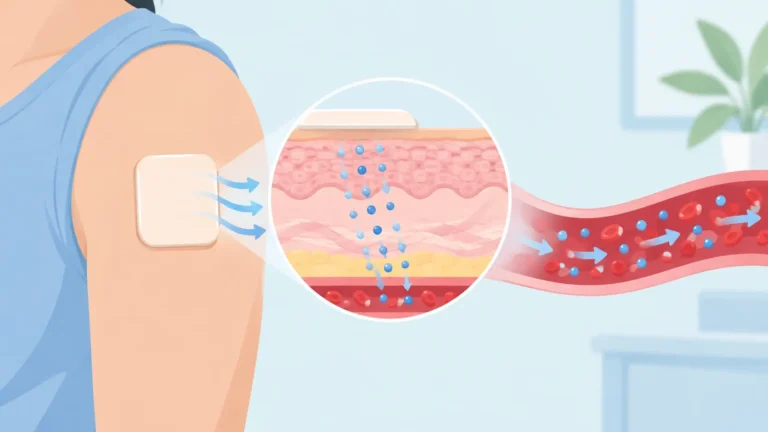
The combination of gradual reduction with NRT is significantly more effective than gradual reduction alone. The mechanics: when you choose not to smoke a cigarette you would have previously smoked, use nicotine gum or a nicotine mini-lozenge to manage the resulting craving without lighting up. This prevents compensatory smoking, maintains nicotine stability, and progressively reduces both cigarette count and overall nicotine dose simultaneously.
As your cigarette count decreases, you can also taper your NRT dose — moving from 4mg gum to 2mg gum, for instance — so that by your quit date, you are managing a much lower overall nicotine dependence than you started with.
Sample 6-Week Reduction Timeline
| Week | Daily Cigarette Target (starting at 20/day) | NRT Strategy |
|---|---|---|
| Week 1 | 15 cigarettes | 4mg nicotine gum for each skipped cigarette |
| Week 2 | 12 cigarettes | 4mg nicotine gum for craving moments |
| Week 3 | 8 cigarettes | Nicotine patch (14mg) + 2mg gum for acute cravings |
| Week 4 | 5 cigarettes | Nicotine patch (14mg) + 2mg gum |
| Week 5 | 2 cigarettes | Nicotine patch (7mg) + 2mg gum |
| Week 6 (Quit Day) | 0 cigarettes | Continue NRT patch for 8 additional weeks |
Health organizations running gradual reduction programs at population scale use tools like CampaignOS to send automated weekly check-in messages and cigarette count reminders to program participants — making the structured tracking feel supported rather than solitary. Academic reviews of gradual reduction versus abrupt cessation research are accessible through tools like Tesify for health professionals wanting to review the primary literature.
Frequently Asked Questions
Is gradual smoking reduction effective for quitting?
Gradual smoking reduction combined with NRT and a committed quit date has evidence supporting its effectiveness, though it shows lower success rates than abrupt cessation in most head-to-head studies (15.5% vs 22% at six months). It is most appropriate for smokers who find the idea of cold turkey psychologically paralyzing, or for very heavy smokers where abrupt withdrawal would be extremely severe.
What is the best way to reduce cigarettes gradually?
The most effective gradual reduction approach involves: (1) setting a complete quit date before starting the reduction, (2) reducing by 25% per week, (3) using NRT for cigarettes you skip rather than compensating with deeper inhalation, and (4) eliminating low-emotional-value cigarettes first, preserving your most habit-embedded cigarettes for the final reductions.
Does gradually cutting down on smoking improve health?
Only if compensatory smoking is avoided. Many smokers who reduce cigarette count inhale more deeply from remaining cigarettes, maintaining similar nicotine and toxin exposure. Genuine reduction in cigarette count and inhalation depth does produce health benefits — lower cardiovascular risk, reduced lung irritation — but the benefits of complete cessation are substantially greater and begin appearing within days of complete quitting.
How many cigarettes per day is considered gradual reduction success?
The goal of gradual reduction is not “fewer cigarettes” — it is complete cessation. Any reduction plan that does not have a complete quit date as its endpoint is unlikely to result in long-term abstinence. The clinical evidence consistently shows that “just cutting back” without a quit date results in smokers maintaining a reduced habit indefinitely rather than achieving cessation.
Plan Your Reduction with iQuit
Whether you choose gradual reduction or cold turkey, iQuit gives you the craving tools, cigarette tracking, and milestone motivation to make your plan work.