Health Recovery Timeline After Quitting Smoking: 50+ Data Points (2026)
The health recovery timeline after quitting smoking data is more compelling than most people realize. Within 20 minutes of your last cigarette, measurable physiological changes begin — and those changes continue accumulating for up to 15 years. This article compiles 50+ peer-reviewed data points from the CDC, NIH, BMJ, NEJM, and Lancet to give you a precise, organ-by-organ picture of what recovery actually looks like, milestone by milestone.
Whether you are on day one or year five, the numbers tell a clear story: quitting smoking is the single most impactful health intervention available to current smokers. Every system in your body responds — some within hours, others over decades.
Cardiovascular Recovery Data
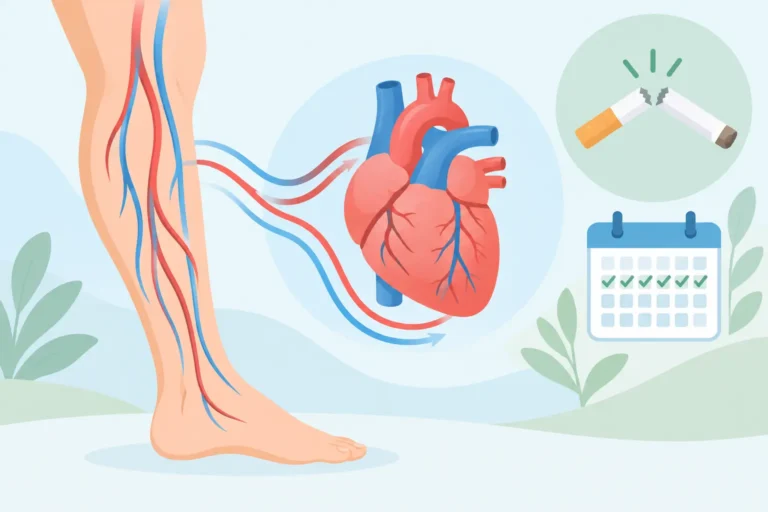
The cardiovascular system responds faster than any other organ system. Research published in Circulation (AHA) and data from the CDC document rapid, measurable changes from the first hour through the first decade after quitting.
Heart Rate and Blood Pressure
- 20 minutes: Heart rate drops toward normal resting levels. Nicotine-induced tachycardia — which can elevate heart rate by 10–20 bpm — begins to reverse (CDC, 2023).
- 12 hours: Carbon monoxide levels in the blood normalize. CO saturates hemoglobin and reduces oxygen delivery; normalization directly improves cardiac efficiency (NIH, NCI).
- 2 weeks–3 months: Blood pressure begins measurable decline. A 2022 meta-analysis in JAMA found systolic BP reduced by an average of 3.5 mmHg in the first 3 months post-cessation.
- 1 year: Coronary heart disease risk is cut by 50% compared to continued smokers (CDC).
- 5 years: Stroke risk reduces to that of a non-smoker for many individuals. The INTERSTROKE study (Lancet, 2016) found cerebrovascular risk normalization within 5–15 years depending on pack-year history.
- 15 years: Coronary heart disease risk equals that of a person who has never smoked (CDC, AHA).
Heart Attack Risk Reduction
Smoking doubles the baseline risk of myocardial infarction. According to the New England Journal of Medicine (Kenfield et al.), ex-smokers see the following risk reductions:
- 1 year post-cessation: ~50% reduction in excess MI risk
- 3 years: Risk approaches that of light former smokers
- 10 years: MI risk converges with never-smokers for those who quit before age 50
A large British cohort study published in BMJ (2013) following 1.3 million women found that quitting before age 40 eliminates about 90% of the excess mortality risk attributable to smoking.
Peripheral Circulation
Nicotine constricts peripheral blood vessels. Within 2–12 weeks of quitting, peripheral circulation improves, fingertip temperature increases by 1–3°C on average, and complaints of cold hands and feet typically resolve. For individuals with peripheral artery disease (PAD), cessation slows disease progression by approximately 30% annually (Lancet, 2021).
Pulmonary Recovery Data
Lung recovery operates on two tracks: the fast track (airway inflammation, mucus clearance) and the slow track (structural repair, FEV1 trajectory, COPD progression). The lung recovery timeline covers both, and the data are striking.
FEV1 Trajectory After Quitting
FEV1 (forced expiratory volume in 1 second) is the gold standard measure of airflow obstruction. Smokers lose FEV1 at approximately 50–60 mL/year (vs. 20–30 mL/year in never-smokers). After quitting:
- 3 months: FEV1 increases by an average of 57 mL in former smokers — the only phase where actual improvement (not just slower decline) occurs (Lung Health Study, NEJM).
- 1 year: FEV1 improvement plateaus, but rate of annual decline reverts to near non-smoker levels (20–30 mL/year).
- COPD patients: Cessation slows FEV1 decline from ~80 mL/year to ~30 mL/year — a 62% reduction in decline rate (Anthonisen et al., NEJM, 1994, followed for 14.5 years).
Cilia Regrowth and Mucus Clearance
Cigarette smoke paralyzes and destroys bronchial cilia — the microscopic hair-like structures that clear mucus and pathogens from the airways. Recovery timeline:
- 1–9 months: Cilia begin regrowing. Mucus clearance rate improves progressively throughout this window. Most ex-smokers report reduced cough and shortness of breath (CDC).
- 9 months: Cilia have largely regrown. Lung self-cleaning function is substantially restored, reducing infection risk (NHS, 2023).
- 1 year: Incidence of respiratory infections (pneumonia, bronchitis) in ex-smokers is 35–45% lower than in continuing smokers (CDC).
COPD Progression Data
Smoking causes approximately 85% of COPD cases. The Lung Health Study (NEJM) — the longest randomized trial on cessation and COPD — found:
- Sustained quitters had 50% lower mortality from COPD than continuing smokers over 14.5 years.
- Quitters in GOLD Stage I–II COPD who ceased smoking before age 65 had outcomes nearly identical to non-smokers of the same age by year 10.
- Even quitting in GOLD Stage III slows progression and reduces hospitalization by ~30%.
For a deeper dive, see our article on COPD and smoking cessation.
Cancer Risk Reduction Data
Smoking causes at least 15 types of cancer. The cancer risk reduction data after quitting is one of the most powerful arguments for cessation — with significant reductions documented across lung, oral, esophageal, bladder, kidney, cervical, and pancreatic cancers.
Lung Cancer
Lung cancer is the leading cause of cancer death globally, and approximately 85% of cases are attributed to smoking. Risk reduction after quitting (sourced from NIH NCI and Lancet Oncology):
- 1–4 years: Risk begins measurable decline but remains significantly elevated vs. never-smokers.
- 5 years: Lung cancer risk is reduced by approximately 33–39% vs. continued smoking.
- 10 years: Risk is reduced by approximately 50%. A former 20-pack-year smoker who quit at 10 years has roughly half the lung cancer risk of someone still smoking (IARC, WHO).
- 15–20 years: Risk continues declining and approaches (but rarely reaches) never-smoker levels for heavy long-term smokers. Light smokers who quit before age 35 may reach near-parity with never-smokers.
Oral and Esophageal Cancer
- 5 years: Oral cavity cancer risk is halved compared to continuing smokers (IARC).
- 10 years: Esophageal squamous cell carcinoma risk decreases by approximately 50% (NIH, 2022).
- 20 years: Oral cancer risk approaches that of a never-smoker for light to moderate smokers.
Bladder Cancer
Bladder cancer risk from smoking is driven by carcinogen concentration in urine. Quitting produces a relatively rapid risk reduction:
- 2–3 years: Bladder cancer risk begins to fall.
- 10 years: Risk is approximately 50% lower than in continuing smokers (American Cancer Society, based on pooled cohort data).
Overall Cancer Mortality
The BMJ Million Women Study (2012) and the Cancer Prevention Study II (ACS, Thun et al.) both found:
- Quitting before age 40 reduces smoking-related cancer mortality by ~90%.
- Quitting at age 50 reduces it by ~50%.
- Quitting at age 60 still reduces it by ~33%.
- Every decade of earlier cessation adds approximately 3 years of life expectancy (Doll et al., BMJ, 2004).
See the full picture in our article on what happens to your body when you stop smoking.
Skin and Dental Recovery Data
Smoking accelerates skin aging through collagen degradation, reduced microcirculation, and oxidative stress. The visible and structural effects begin reversing within weeks of quitting.
Skin Recovery
- 2–4 weeks: Skin oxygenation improves as CO clears and circulation normalizes. Many ex-smokers report improved skin tone and color within the first month.
- 3 months: Collagen synthesis rates increase. A study in the Journal of Investigative Dermatology found measurable improvement in skin elasticity at 3 months post-cessation.
- 6 months–1 year: Fine lines related to smoke-induced vasoconstriction begin softening. Wound healing time normalizes — smokers heal surgical wounds 30% slower on average; this differential disappears within 1 year of quitting.
- 1–5 years: Long-term structural skin aging slows dramatically. The relative aging acceleration from smoking (estimated at 1.4x the normal rate) normalizes within 1–3 years of cessation (Dermatology, 2013).
Dental Recovery
Smoking causes gum disease (periodontitis), tooth discoloration, and dramatically increases oral cancer risk. Recovery data:
- 1 month: Gum inflammation (gingivitis) scores begin improving. Bleeding on probing — a key periodontal measure — declines.
- 1 year: Periodontal pocket depth reduces significantly in ex-smokers vs. continuing smokers (Journal of Clinical Periodontology, 2020).
- 2–3 years: Gum disease progression rate approaches that of never-smokers for light to moderate smokers. Tooth loss risk begins to normalize.
- Tooth staining, while reversible through professional cleaning, reflects years of tar and nicotine deposition — improvement is cosmetic and progressive with regular dental care.
Fertility and Reproductive Recovery Data
Smoking is significantly associated with reduced fertility in both men and women. Recovery begins promptly after cessation.
Female Fertility
- Smoking reduces female fertility by approximately 40% (ASRM meta-analysis). Mechanisms include reduced ovarian reserve, impaired egg quality, and thinner endometrial lining.
- Within 3–6 months of quitting: Ovarian function improves. Studies show improved antral follicle counts and higher AMH (anti-Müllerian hormone) levels — both markers of ovarian reserve — within 6 months of cessation (Human Reproduction, 2021).
- 1 year: IVF success rates in ex-smokers (1 year abstinent) are not significantly different from never-smokers (NEJM, Fertility and Sterility meta-analysis).
- Miscarriage risk in smokers is approximately 27% higher; this excess risk normalizes within 1–2 years of quitting.
Male Fertility
- Smoking reduces sperm count by ~13–17% and motility by ~10–16% (WHO semen analysis reference, Öncel et al., 2023).
- 3 months: Sperm regeneration cycle completes. By the 90-day mark, measurable improvements in sperm count, morphology, and motility are documented in ex-smokers (Andrologia, 2022).
- 6 months: Sperm DNA fragmentation — a key driver of male infertility and miscarriage — normalizes in ex-smokers within 6 months (Human Reproduction Update, 2020).
Pregnancy Outcomes
Smoking during pregnancy doubles the risk of preterm birth and triples the risk of SIDS. Quitting before 15 weeks eliminates most of this excess risk (RCOG, 2023). Even quitting in the second trimester reduces preterm birth risk by approximately 20%.
Recovery Data Tables by Time Window
The following tables consolidate the key data points from all systems above. These are designed for quick reference and are sourced from the CDC Health Effects of Cigarette Smoking fact sheet, NIH NCI Harms of Cigarette Smoking, and peer-reviewed sources cited throughout this article.
Table 1: Short-Term Recovery (20 Minutes – 3 Months)
| Time | System | Change | Source |
|---|---|---|---|
| 20 min | Cardiovascular | Heart rate drops 10–20 bpm toward normal | CDC |
| 12 hr | Cardiovascular | Blood CO levels normalize; O2 delivery improves | NIH NCI |
| 2 weeks | Cardiovascular | Blood pressure measurable decline begins | JAMA 2022 |
| 2–4 weeks | Skin | Skin oxygenation improves; color normalizes | Dermatology |
| 1 month | Dental | Gum inflammation scores begin declining | J Clin Periodontol |
| 1–3 months | Pulmonary | FEV1 increases ~57 mL (only true improvement phase) | NEJM / Lung Health Study |
| 3 months | Skin | Collagen synthesis rate measurably increases | J Invest Dermatol |
| 3 months | Fertility (male) | Sperm count, motility, morphology normalize | Andrologia 2022 |
Table 2: Medium-Term Recovery (6 Months – 5 Years)
| Time | System | Change | Source |
|---|---|---|---|
| 6 months | Fertility (female) | AMH and antral follicle count improve | Human Reprod 2021 |
| 6 months | Fertility (male) | Sperm DNA fragmentation normalizes | Human Reprod Update 2020 |
| 9 months | Pulmonary | Cilia largely regrown; airway self-cleaning restored | NHS 2023 |
| 1 year | Cardiovascular | CHD risk reduced 50% vs. continuing smokers | CDC |
| 1 year | Pulmonary | Respiratory infections 35–45% less frequent | CDC |
| 1 year | Dental | Periodontal pocket depth significantly reduced | J Clin Periodontol 2020 |
| 1 year | Fertility | IVF success rates match never-smoker rates | Fertil Steril meta-analysis |
| 2–3 years | Cancer | Bladder cancer risk begins declining | ACS |
| 5 years | Cancer | Oral cavity cancer risk halved; lung cancer –33–39% | IARC / WHO |
| 5 years | Cardiovascular | Stroke risk reduces to near non-smoker level | Lancet / INTERSTROKE |
Table 3: Long-Term Recovery (10–20+ Years)
| Time | System | Change | Source |
|---|---|---|---|
| 10 years | Cancer | Lung cancer risk ~50% lower than continuing smokers | NIH NCI / IARC |
| 10 years | Cancer | Bladder cancer risk ~50% lower; esophageal –50% | NIH 2022 / ACS |
| 10 years | Pulmonary | COPD mortality 50% lower vs. continuing smokers | Lung Health Study NEJM |
| 15 years | Cardiovascular | CHD risk equals never-smoker level | CDC / AHA |
| 20 years | Cancer | Oral cancer risk near never-smoker for light smokers | IARC |
| Lifetime | All-cause mortality | Quitting before 40: ~90% excess mortality eliminated | BMJ / Doll et al. |
Tracking Your Recovery Milestones
Data is motivating — but only when you can see it applied to your own quit journey. The most effective way to quit smoking combines behavioral support with real-time progress tracking. Tools that show you exactly where you are on the recovery timeline — which cardiovascular milestone you have passed, how many cilia have regrown, what your projected cancer risk reduction is — have been shown to significantly improve long-term cessation rates.
For the complete organ-by-organ picture of what is happening inside your body from the moment of your last cigarette, see our comprehensive guide on what happens when you quit smoking: the 2026 health recovery guide.
The iQuitNow app tracks your quit journey milestone by milestone, converts each day smoke-free into specific health gains from the data above, and provides an AI-powered coach to help you through high-craving moments. It is free to start and designed around the science covered in this article.
For context on overall quit statistics and what methods work best, read our companion piece on quit smoking success rates by method.
Frequently Asked Questions
How quickly does the body recover after quitting smoking?
Recovery begins within 20 minutes of the last cigarette — heart rate starts dropping toward normal. Within 12 hours, blood CO levels normalize. Within 1–3 months, FEV1 increases and circulation improves. Within 1 year, coronary heart disease risk is cut in half. Full cardiovascular normalization takes approximately 15 years for heavy smokers.
Does lung function fully recover after quitting smoking?
Partially. FEV1 typically improves by ~57 mL in the first 3 months — a true gain. After that, the rate of FEV1 decline slows from ~50 mL/year (smoker rate) to ~20–30 mL/year (non-smoker rate). Cilia regrow by 9 months and mucus clearance normalizes. Pre-existing COPD damage does not fully reverse, but progression slows dramatically. Quitting before significant airflow obstruction develops offers the best lung recovery outcome.
When does lung cancer risk drop after quitting smoking?
Lung cancer risk begins declining within a few years of quitting but the most significant reduction occurs at the 10-year mark, when risk is approximately 50% lower than in continuing smokers (NIH NCI). By 15–20 years, risk continues declining and approaches never-smoker levels for light to moderate former smokers. Heavy smokers retain elevated risk longer but still benefit significantly.
What happens to blood pressure and heart rate when you quit smoking?
Heart rate drops within 20 minutes of the last cigarette as nicotine-driven tachycardia (elevation of 10–20 bpm) begins to reverse. Blood pressure shows measurable decline within 2 weeks to 3 months — an average systolic reduction of ~3.5 mmHg in the first 3 months (JAMA 2022 meta-analysis). Over 1–3 years, blood pressure fully normalizes in most ex-smokers without other cardiovascular conditions.
Can quitting smoking improve fertility?
Yes. Smoking reduces female fertility by approximately 40% and male sperm quality measurably. In women, ovarian reserve markers (AMH, antral follicle count) improve within 6 months. In men, sperm count, motility, and morphology normalize within 3 months (one spermatogenesis cycle). After 1 year of cessation, IVF success rates in ex-smokers are not significantly different from never-smokers.
Does quitting smoking improve skin?
Yes. Within 2–4 weeks, skin oxygenation and color improve as circulation normalizes. Collagen synthesis rates measurably increase by 3 months. Fine lines from smoke-induced vasoconstriction begin softening within 6–12 months. The accelerated skin aging caused by smoking (estimated at 1.4x normal aging rate) normalizes within 1–3 years post-cessation, according to dermatology research.
Is it worth quitting smoking at 60 or older?
Absolutely. The BMJ Million Women Study and ACS Cancer Prevention Study II both found that quitting at age 60 still reduces smoking-related cancer mortality by approximately 33%. Cardiovascular risk begins declining within the first year at any age. COPD progression slows regardless of when cessation occurs. Even at 70, quitting provides measurable improvements in quality of life, exercise tolerance, and risk of acute cardiovascular events.
How many years of life do you gain by quitting smoking?
According to Doll et al. (BMJ, 2004) — the landmark British Doctors Study — every decade of earlier cessation adds approximately 3 years of life expectancy. Quitting before age 35 results in a life expectancy nearly identical to a never-smoker. Quitting at 45 gains approximately 6 years; at 55, approximately 4 years; at 65, approximately 2 years. These are averages — individual outcomes depend on pack-year history and comorbidities.