How Long Does It Take for Nicotine to Leave Your Body? 2026 Complete Guide
One of the most common questions from people quitting smoking is: how long does it take for nicotine to leave your body? The answer has real practical importance — it explains why withdrawal symptoms peak when they do, why cravings follow the pattern they follow, and why the first three days are almost universally the hardest. Understanding the timeline of nicotine clearance is one of the most useful things you can know when you’re quitting.
The short answer is that nicotine itself clears within 1–3 days. But the metabolic byproduct cotinine, which most drug tests detect, persists for up to 3–4 weeks. And the neurological effects — the brain chemistry changes from long-term nicotine exposure — take significantly longer to normalize. This guide explains each of these timelines and what they mean for your quit journey.
Nicotine Half-Life Explained
The half-life of nicotine in the human body is approximately 2 hours. This means that every 2 hours, roughly half the remaining nicotine in your bloodstream is metabolized and eliminated. In practical terms:
- 2 hours after your last cigarette: ~50% of nicotine remains
- 4 hours: ~25% remains
- 6 hours: ~12.5% remains
- 8 hours: ~6% remains
- 10 hours: ~3% remains
By the end of your first day without cigarettes, nicotine levels in the blood are extremely low. By day 2–3, nicotine has been fully eliminated. This is precisely why most people find the first 72 hours the most challenging phase of quitting — the body is no longer receiving any nicotine at all, and the brain is struggling to function with its depleted dopamine pathways.
Nicotine is metabolized primarily by the liver using the enzyme CYP2A6. The primary metabolite produced is cotinine, which is then further metabolized into trans-3′-hydroxycotinine (3HC). The ratio of cotinine to nicotine in the blood is why cotinine detection is more useful for testing — it stays in the body much longer.
What Is Cotinine and Why Does It Matter?
Cotinine is the main metabolite of nicotine and is the primary marker used in nicotine testing — for insurance, employment, and medical purposes. Cotinine has a half-life of approximately 16–20 hours, making it much more detectable than nicotine itself.
Cotinine clearance timeline:
- Blood cotinine: Detectable for approximately 2–4 days after last exposure in most people
- Urine cotinine: Detectable for 3–4 days in non-habitual users; up to 1–3 weeks in heavy smokers; up to 4 weeks in some cases
- Hair cotinine: Can be detected for up to 3 months per 1-inch hair segment
- Saliva cotinine: Detectable for 2–4 days
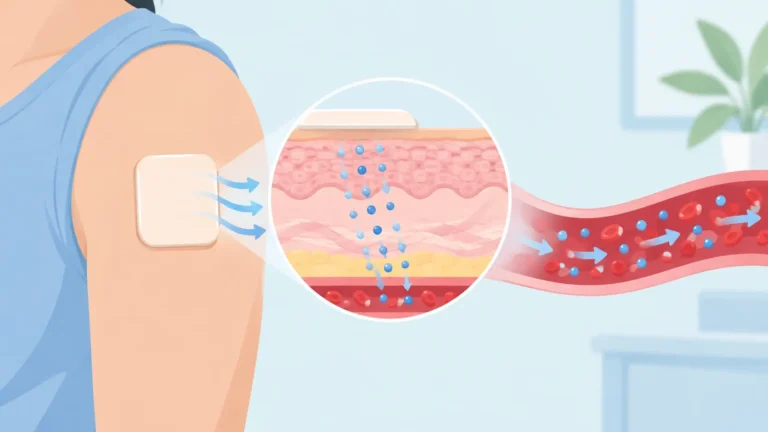
It’s important to note that NRT (patches, gum, lozenges) also introduce nicotine and will therefore show positive cotinine tests. If you’re undergoing medical testing, inform the administering physician about any NRT you’re using.
Complete Clearance Timeline
| Substance | Blood | Urine | Hair |
|---|---|---|---|
| Nicotine | 1–3 days | 2–4 days | Up to 3 months |
| Cotinine | 2–4 days | Up to 3 weeks | Up to 3 months |
| Carbon monoxide | 12–24 hours | N/A | N/A |
Nicotine and Drug Testing
Nicotine testing occurs in several contexts: life insurance applications, health insurance risk assessment, some employer wellness programs, and pre-surgical medical protocols. Most tests use urine or blood cotinine levels, with a common cutoff of 200 ng/mL in urine (though this varies by lab and purpose).
For a pack-a-day smoker who has just quit:
- 3 days after quitting: Blood cotinine usually below detection threshold
- 1 week after quitting: Most urine tests will be negative
- 4 weeks after quitting: Virtually all standard urine tests will be negative
Heavy smokers (2+ packs/day) may take the full 4 weeks to clear cotinine from urine at standard testing thresholds. NRT does not help “beat” a test — it continues introducing nicotine and will produce positive results.
When Does the Brain Recover?
This is perhaps the most important dimension of nicotine clearance for people quitting — and it’s slower than blood clearance by a significant margin. Long-term nicotine use causes measurable changes in the density and sensitivity of nicotinic acetylcholine receptors in the brain. These changes don’t reverse overnight.
- Days 1–3: Acute withdrawal; receptors are saturated with demand for nicotine
- Week 1–2: Dopamine regulation begins gradual normalization; mood typically stabilizes
- Month 1–3: Receptor density normalizes significantly; craving frequency and intensity decreases
- 6–12 months: Most neurological adaptations complete; psychological triggers remain but physiological drive is minimal
Research using PET imaging has shown that nicotinic receptor density in long-term smokers’ brains normalizes to near-non-smoker levels within approximately 6–12 weeks of abstinence. This is the neurological explanation for why quitting becomes dramatically easier after the first month — the brain has genuinely rewired itself.
Tracking this kind of invisible progress is exactly what behaviorally-designed tools are built for. The iQuit app makes the timeline concrete — showing you where you are in the nicotine clearance process and what’s happening in your body at each stage. Similar progress-visualization approaches are used across high-performance domains, from marketing analytics platforms to academic research tools — the principle that visible progress drives continued effort is universal.
Factors That Affect Nicotine Clearance
Nicotine clearance rate varies meaningfully between individuals based on several factors:
- CYP2A6 genetic variants: Some people are “fast metabolizers” who clear nicotine rapidly; others are “slow metabolizers” who retain it longer. Slow metabolizers tend to have an easier time with withdrawal but may have lower success with NRT patches (which rely on steady-state nicotine levels).
- Age: Older adults metabolize nicotine more slowly; clearance may take longer.
- Sex: Women (especially those on oral contraceptives) metabolize nicotine faster than men on average.
- Kidney function: Impaired kidney function slows cotinine excretion.
- Liver health: Since CYP2A6 is a liver enzyme, liver health affects metabolic rate.
- Hydration and pH: High urine acidity (low pH) increases nicotine excretion; alkaline urine slows it. Staying well hydrated generally supports faster clearance.
- Smoking history: Heavy, long-term smokers have more nicotine metabolite burden to clear.
Why This Explains Your Withdrawal
Understanding nicotine pharmacokinetics gives you a rational map of withdrawal:
- First 6–12 hours: Nicotine dropping; first cravings emerging
- Day 1–2: Nicotine nearly gone; withdrawal symptoms escalating — irritability, anxiety, difficulty concentrating
- Day 2–3: Peak withdrawal — the hardest 48 hours for most quitters; nicotine fully cleared
- Week 1: Physical withdrawal subsides; psychological triggers begin dominating
- Weeks 2–4: Cotinine fully cleared; most physiological withdrawal complete
- Months 1–3: Brain receptors normalizing; situational cravings remain but are manageable
When you know that the peak withdrawal window is literally 72 hours, it becomes a finite challenge to get through rather than an indefinite ordeal to endure. Many people find this reframe — from “I’ll always feel this way” to “this peaks in 3 days and gets easier from there” — to be genuinely transformative.
Frequently Asked Questions
How long does nicotine stay in your blood?
Nicotine itself is largely cleared from the blood within 1–3 days. Cotinine, the primary metabolite tested by labs, remains detectable in blood for 2–4 days in most people. For heavy smokers, both may persist slightly longer.
Will nicotine show up on a drug test after 1 week?
For most moderate smokers, nicotine and cotinine will not show up on a urine drug test after 1 week. Heavy smokers (2+ packs/day) may still have detectable cotinine at 1 week but are typically clear by 2–3 weeks. NRT products also produce positive results, as they introduce nicotine.
Does drinking water speed up nicotine clearance?
Staying well hydrated supports nicotine and cotinine excretion through the kidneys and may modestly accelerate clearance. It won’t dramatically shorten the timeline, but it supports overall detoxification and also helps with common withdrawal symptoms like headaches. Aim for 8+ glasses of water per day during the clearance period.
Why do cravings come back months after quitting?
Months after quitting, the physiological craving (driven by nicotine deficiency) is essentially gone. What returns are conditioned responses — the brain has associated certain situations, emotions, or environments with smoking. Stress, the smell of a cigarette, or being in a place you used to smoke can trigger a memory-based craving without any nicotine in your system. These get weaker with time as the associations aren’t reinforced.
Does nicotine in patches and gum stay in the body as long?
Yes. Nicotine from NRT products (patches, gum, lozenges, inhalers) is metabolized the same way as nicotine from cigarettes. The difference is that NRT delivers lower, controlled doses without the toxic chemicals. Cotinine from NRT will appear on drug tests exactly the same as cotinine from smoking.
What is the nicotine metabolism ratio and why does it matter?
The nicotine metabolism ratio (NMR) is the ratio of 3-hydroxycotinine to cotinine in urine, and it measures how fast a person metabolizes nicotine. Fast metabolizers have higher NMR values, clear nicotine quickly, and tend to smoke more heavily to maintain levels. Research shows that fast metabolizers may respond better to varenicline than NRT patches — this has implications for personalizing quit strategies.
Does exercise help clear nicotine faster?
Exercise increases metabolic rate, improves circulation, and supports kidney and liver function — all of which can modestly accelerate nicotine clearance. More importantly, exercise is one of the most evidence-supported interventions for managing withdrawal symptoms: it temporarily reduces cravings, improves mood, and addresses the anxiety and irritability common in the first two weeks. Even a 10-minute walk has been shown to reduce craving intensity.
How long does nicotine stay in breast milk?
Nicotine passes into breast milk and is detectable for 2–3 hours after smoking. Cotinine remains detectable for longer. Nursing mothers who smoke are advised by the NHS and AAP to quit entirely; if they continue to use NRT, they should breastfeed immediately before using NRT (when nicotine levels are lowest) and wait 2–3 hours after NRT use before nursing.
Track Your Nicotine-Free Hours
The iQuit app tracks your smoke-free time in real time, showing exactly how long it has been since nicotine was in your blood and what health changes are happening right now. Knowing where you are in the timeline makes the difficult moments easier to get through. Download iQuit free today.