How Long Does It Take to Quit Smoking Permanently? Statistics and Data 2026
One of the most practical questions any smoker asks is: how long does it actually take to quit smoking permanently? The statistical answer involves understanding average quit attempt numbers, the timeline to stable cessation, and the factors that predict whether any given attempt will be the last one. The data is both sobering and encouraging.
Quit Attempt Statistics: How Many Tries Does It Take?
Research on the number of quit attempts required for permanent cessation has produced a range of estimates:
| Study | Average Attempts Before Permanent Cessation |
|---|---|
| Chaiton et al. (2016) — Canadian longitudinal study | Median 30 attempts |
| Borland et al. (2012) — International Tobacco Control | 8–14 attempts |
| NHS cessation service data 2024 | 8–10 attempts on average for supported quitters |
The wide variation in these estimates reflects different study designs, populations, and definitions of what counts as a “quit attempt.” The most rigorous methodology is probably the Borland figure of 8–14 attempts — representing properly counted distinct cessation episodes. The Chaiton figure of 30 includes brief minor attempts that many smokers would not count as serious quit attempts.
The most important insight is that each quit attempt is not a failure — it is a learning experience and part of a process that, for most people, eventually succeeds. Similar to how mastery in any complex domain requires iteration — from academic writing to athletic training — quitting smoking typically involves a learning curve before permanent success.
Time to Stable Cessation: What the Data Shows
If a quit attempt is to become permanent, specific milestones are highly predictive:
| Milestone | Probability of Permanent Cessation |
|---|---|
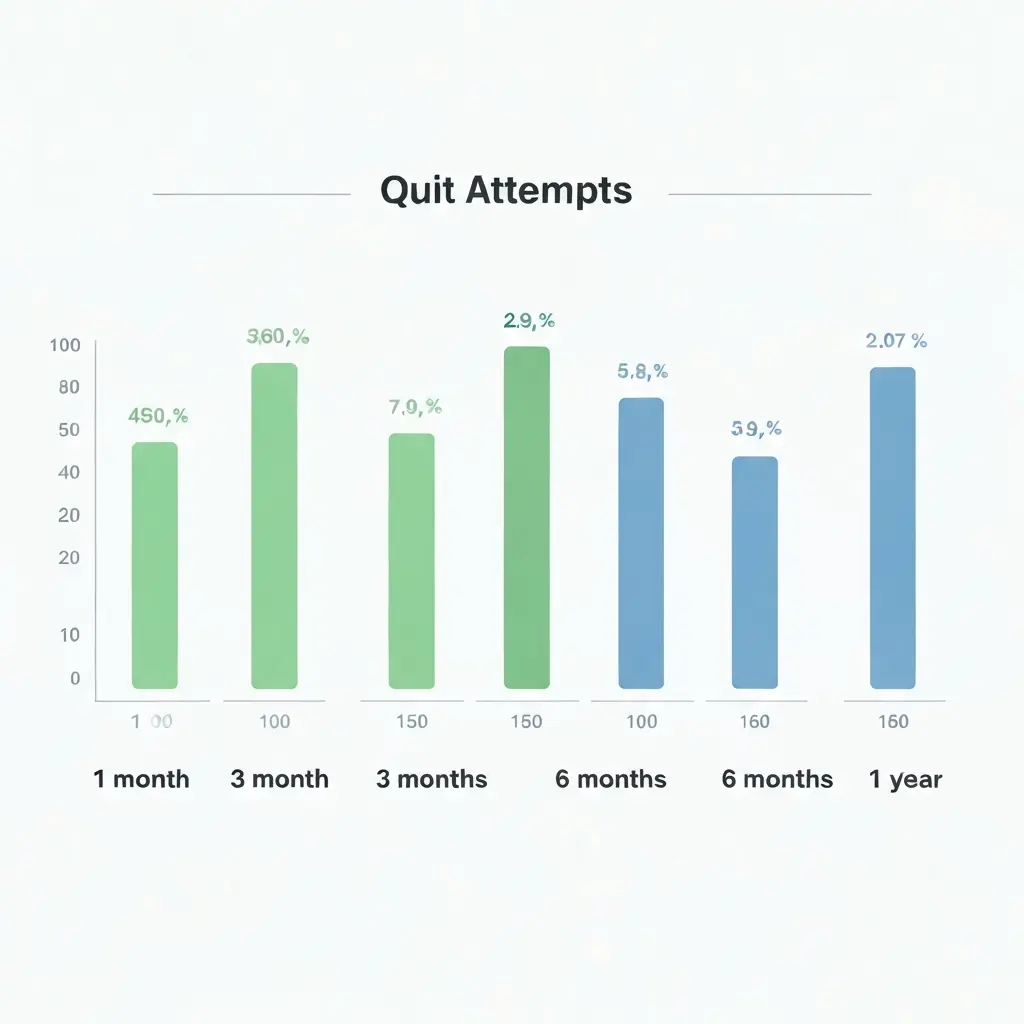
| Still quit at 1 month | ~40% will achieve 12-month abstinence |
| Still quit at 3 months | ~60% will achieve 12-month abstinence |
| Still quit at 6 months | ~75% will achieve 12-month abstinence |
| Still quit at 12 months | ~90% probability of long-term abstinence |
| Still quit at 2 years | >95% long-term abstinence probability |
These milestones confirm that each month of continued abstinence significantly improves the odds of permanent cessation. The first 3 months are the most vulnerable; reaching 12 months smoke-free indicates a very high probability of long-term success.
Statistical Predictors of Permanent Cessation Success
Large population studies have identified factors that statistically predict higher permanent cessation rates:
- Strong motivation: Rating quit motivation 9–10 out of 10 is associated with 2x higher success rates vs rating 5–6
- Previous longest quit period: Those who have previously stayed quit for 6+ months have higher long-term success rates on subsequent attempts
- Cessation aid use: Using combination support (pharmacotherapy + behavioural) is the single strongest modifiable predictor — increasing success by 3–6x
- Social support: Having a strong support network is independently predictive of success, particularly for maintaining abstinence beyond 3 months
- Mental health status: Unmanaged depression or anxiety reduces cessation success rates by approximately 30–40% — addressing co-occurring mental health conditions improves outcomes
- Home smoking environment: Having no smokers in the home is independently predictive of success
Long-Term Abstinence Rates by Method
| Cessation Method | 1-Year Abstinence Rate | 5-Year Abstinence Rate |
|---|---|---|
| Unassisted cold turkey | 4–7% | ~3–5% |
| NRT alone (patch or gum) | 10–15% | ~8% |
| Varenicline alone | 25–30% | ~15% |
| Combination support (medication + counselling + app) | 35–45% | ~25% |
The 5-year abstinence rates show an important pattern: even the best-supported cessation approaches have some relapse rate beyond 1 year. This does not mean those people “failed” — many go on to quit again on a subsequent attempt. Population-level data shows that the majority of people who ever smoked have successfully quit permanently by their late 50s to early 60s.
Frequently Asked Questions
How many quit attempts does it take on average to stop smoking permanently?
Research suggests 8–14 serious quit attempts before achieving permanent cessation on average. Some studies report higher numbers when brief/minor attempts are included. The key insight is that each attempt is not failure — it is learning. Each quit attempt that ends in relapse still provides information about your personal triggers and what support you need, making the eventual successful attempt more likely.
How long do I need to be quit before I’m considered a permanent non-smoker?
12 months of continuous abstinence is the standard clinical benchmark for “successful cessation.” At this point, approximately 90% of quitters will remain smoke-free long-term. At 2 years, the probability of long-term permanent abstinence exceeds 95%. However, any period of abstinence produces health benefits — even a month of non-smoking meaningfully reduces cardiovascular and cancer risk.
What is the success rate of quitting smoking with support?
With full combination support (medication + behavioural counselling + app), 12-month abstinence rates reach 35–45% — approximately 5–10x higher than unassisted cold turkey attempts (~4–7%). This makes structured cessation support among the most effective interventions in all of preventive medicine for its cost.
Sources: Chaiton et al. (2016) — Estimating the number of quit attempts before success; Borland et al. — International Tobacco Control; Cochrane Review — Cessation success rates by method 2023; NHS digital cessation data; CDC National Health Interview Survey 2024.