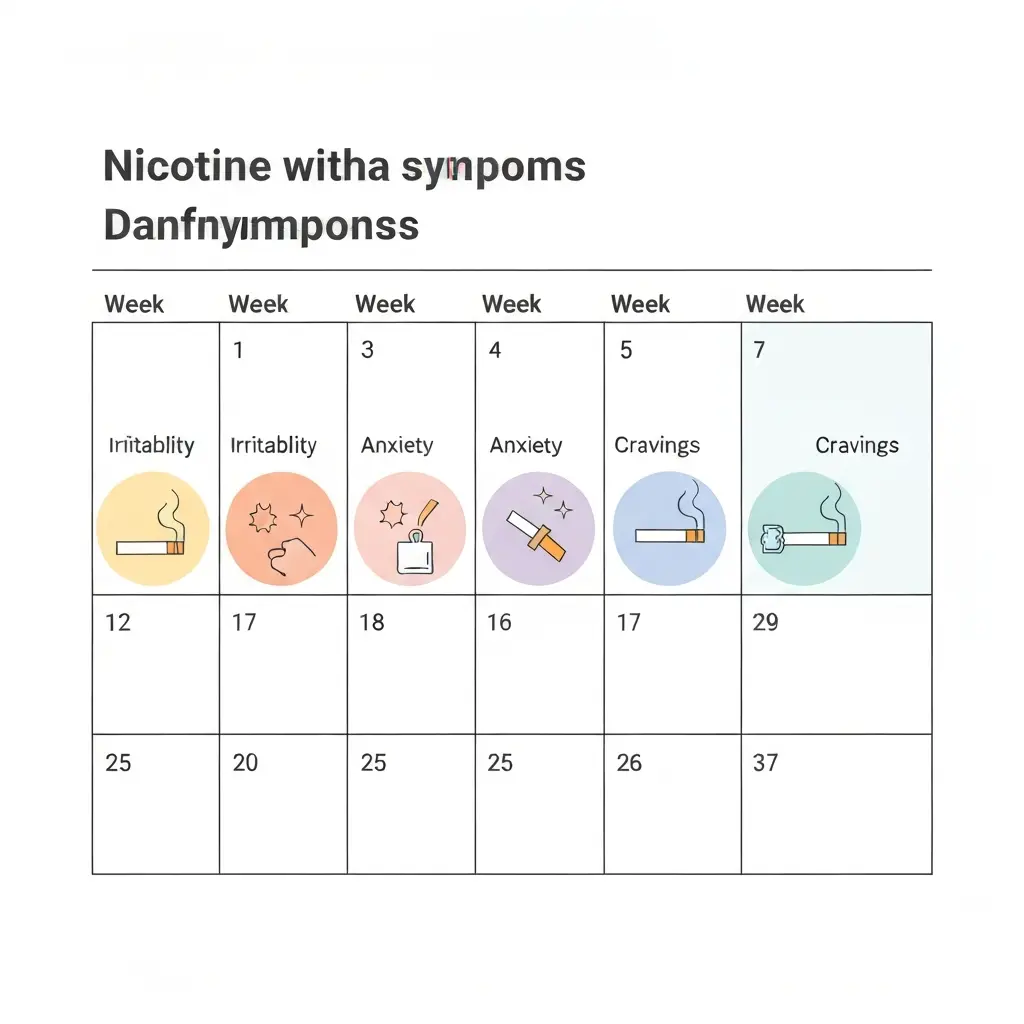
How Long Does Nicotine Withdrawal Last? A Week-by-Week Timeline for 2026
The question every new quitter asks is: how long does nicotine withdrawal last? Knowing the answer is one of the most powerful tools for staying smoke-free. When you understand that the worst of withdrawal peaks at 72 hours and that most physical symptoms resolve within 2–4 weeks, those difficult early days become more manageable. This is not going to last forever — and this guide tells you exactly how long it will last.
Nicotine withdrawal is real, documented, and temporary. The DSM-5 recognises it as a clinical condition. But it is also time-limited and predictable, which means you can prepare, plan, and get through it with the right support.
Nicotine Withdrawal Symptoms: What to Expect
Nicotine withdrawal symptoms recognised by medical authorities (DSM-5, NHS, CDC) include:
- Intense cravings for nicotine
- Irritability, frustration, and anger
- Anxiety and restlessness
- Difficulty concentrating
- Increased appetite and weight gain
- Depressed mood
- Insomnia and sleep disruption
- Headaches
- Increased coughing (as airways clear)
- Constipation (nicotine was a stimulant for the bowel)
Not everyone experiences all symptoms, and severity varies significantly based on smoking history, genetics, and support systems. Average daily smokers experience more intense withdrawal than occasional smokers.
Week-by-Week Withdrawal Timeline
| Time Period | What’s Happening | Intensity |
|---|---|---|
| Hours 1–4 | First cravings begin; mild anxiety | Mild |
| Hours 4–24 | Cravings intensify; irritability peaks; headaches | Moderate–High |
| Days 1–3 | Peak physical withdrawal; insomnia, concentration difficulties, mood dips | Peak |
| Days 4–7 | Physical symptoms begin easing; appetite increases; strong psychological cravings | High (declining) |
| Week 2 | Most physical symptoms resolved; mood stabilising; cravings in waves | Moderate |
| Weeks 3–4 | Physical withdrawal largely complete; situational cravings remain | Mild–Moderate |
| Months 2–3 | Cravings fewer and shorter; mood significantly improved; energy higher | Mild |
| Months 4–6 | Occasional situational cravings only; largely normalised | Very Mild |
| 6–12 months | Rare cravings; full psychological normalisation approaching | Minimal |
Physical vs Psychological Withdrawal
Physical withdrawal is driven by nicotine’s absence from receptor sites. It resolves completely within 4 weeks for the vast majority of quitters. These are the headaches, insomnia, digestive changes, and heightened appetite. Nicotine replacement therapy directly addresses this layer.
Psychological withdrawal is driven by conditioned associations — the neural pathways your brain built over years of smoking in specific situations. These persist beyond physical withdrawal and are why people experience strong cravings months after quitting when they encounter familiar triggers. Managing cravings through cognitive strategies and habit substitution targets this deeper layer.
Most relapses occur not during peak physical withdrawal (when people expect it to be hard) but at 3–6 months, when the guard is down and a situational craving appears unexpectedly. Knowing this in advance dramatically reduces relapse risk.
Factors That Affect Withdrawal Duration
Several factors influence how long and how severely you experience withdrawal:
- Daily cigarette count: Heavier smokers have more nAChR upregulation and experience more intense, longer withdrawal.
- Years smoked: Longer smoking history creates deeper conditioned associations, extending psychological withdrawal.
- Age started smoking: Starting in adolescence, when the brain was still developing, tends to create stronger dependency.
- Genetics: Variations in the CYP2A6 gene affect nicotine metabolism speed. Fast metabolisers experience more intense cravings between cigarettes and often find cold turkey more difficult.
- Stress levels: High-stress environments prolong withdrawal by continuously activating the same neural pathways that nicotine once soothed.
- Use of cessation aids: NRT, varenicline, and app-based support all measurably reduce withdrawal severity and duration.
How to Shorten Withdrawal Severity
You cannot skip the timeline entirely, but you can significantly reduce severity:
- Use nicotine replacement therapy: NRT reduces the severity of physical withdrawal by 30–50% (Cochrane Review data). Patch + fast-acting NRT (gum or spray) combinations are most effective.
- Exercise daily: A 20–30 minute walk directly reduces craving intensity and duration through dopamine normalisation and endorphin release.
- Stay hydrated and well-nourished: Adequate blood sugar (from regular meals) reduces irritability and cognitive fog during withdrawal.
- Sleep protection: Protect sleep aggressively in the first 2 weeks — withdrawal worsens significantly with sleep deprivation.
- Use a tracking app: Seeing concrete progress — hours since last cigarette, money saved, health improvements — significantly improves resilience. Progress tracking mirrors the evidence-based approach seen in successful goal achievement across domains, from fitness to academic writing.
- Prepare craving responses: Having a planned response (deep breathing, a walk, a specific activity) for when a craving hits replaces automatic smoking behaviour with a conscious choice.
Frequently Asked Questions
How long does nicotine withdrawal last on average?
Physical nicotine withdrawal typically peaks at 24–72 hours and substantially resolves within 2–4 weeks. Psychological cravings can persist for 3–6 months, occurring in waves that progressively diminish. Most former smokers report cravings becoming rare and manageable by month 3, with near-complete normalisation by month 6–12.
What is the hardest day of nicotine withdrawal?
Days 2 and 3 are typically the most intense. Nicotine clears the body within 72 hours, and physical withdrawal symptoms — cravings, irritability, anxiety, insomnia, headaches — peak during this window. Day 3 is most frequently cited by former smokers as the most difficult day. After day 3, physical symptoms begin easing.
Do cravings ever completely go away after quitting smoking?
For most people, yes — cravings become extremely rare and weak by 6–12 months. Some former smokers report an occasional fleeting urge years after quitting, typically in strong trigger situations (high stress, specific social settings). These are brief, usually seconds long, and unlike the intense withdrawal cravings of early cessation. The vast majority of long-term ex-smokers do not experience problematic cravings.
Is nicotine withdrawal dangerous?
Nicotine withdrawal is uncomfortable but not medically dangerous for most people. Unlike alcohol or benzodiazepine withdrawal, nicotine withdrawal does not carry risk of seizures or life-threatening complications. For people with serious psychiatric conditions (depression, anxiety disorders), withdrawal can temporarily worsen mood — medical monitoring is advisable in these cases.
Does nicotine withdrawal affect sleep?
Yes. Insomnia, vivid dreams, and difficulty falling asleep are common in the first 1–2 weeks of quitting. Nicotine was a stimulant that altered sleep architecture. As the brain rebalances, sleep typically normalises within 2–4 weeks and often improves beyond baseline by month 2–3 of cessation.
Can anxiety from nicotine withdrawal last months?
Anxiety is common in early withdrawal and usually peaks in the first week. For most people it resolves within 2–4 weeks. If anxiety persists beyond 4 weeks, it may indicate an underlying anxiety condition that was previously being self-medicated with nicotine. In this case, speaking to a healthcare provider is important — effective treatments are available.
Sources: DSM-5 Nicotine Withdrawal Criteria; NHS — What happens when you quit smoking; CDC — Quitting Smoking timeline; Cochrane Review on NRT effectiveness; American Journal of Psychiatry — Nicotine withdrawal and psychiatric comorbidity.