How to Deal With Nicotine Withdrawal: A Day-by-Day Symptom and Management Guide
The most common reason people relapse in the first week of quitting is not lack of willpower — it is inadequate preparation for what nicotine withdrawal actually feels like and how long it lasts. When you know exactly what to expect on day 1, day 3, week 2, and month 1, and you have specific evidence-based strategies matched to each phase, the withdrawal timeline stops being a terrifying unknown and becomes a map you can navigate.
This guide draws on DSM-5 clinical criteria for nicotine withdrawal, NHS guidance, Cleveland Clinic medical content, and peer-reviewed cessation research to give the most accurate, day-by-day picture of withdrawal progression — and what the evidence says about managing each stage.
What Nicotine Withdrawal Actually Is
Nicotine is a highly addictive substance that upregulates nicotinic acetylcholine receptors in the brain over time. When nicotine supply is removed, these receptors are left in a hypersensitive state, which creates the neurological imbalance experienced as withdrawal. This is not a character failing — it is a measurable neurochemical condition.
The good news: receptor sensitivity normalises over time. Withdrawal is time-limited. The brain actively returns to its pre-nicotine baseline — typically over 2–4 weeks for physical symptoms, with psychological/habitual patterns taking longer to fade.
The 7 Primary Withdrawal Symptoms (DSM-5)
The Diagnostic and Statistical Manual of Mental Disorders (DSM-5) formally defines 7 primary nicotine withdrawal symptoms:
- Irritability, anger, or frustration — caused by dopamine disruption; typically peaks day 2–4
- Anxiety — particularly common in the first week; withdrawal anxiety is distinct from clinical anxiety disorder
- Depressed mood — transient; should resolve within 2–3 weeks; seek medical advice if it persists
- Difficulty concentrating — very common in the first week; nicotine’s acetylcholine effect on attention is temporarily lost
- Increased appetite — nicotine suppresses appetite; removal causes a rebound increase; average weight gain of 4–5 kg is possible but manageable
- Insomnia — sleep disruption peaks in the first week; often improves significantly by week 2
- Restlessness — a physical manifestation of the body’s adjustment; movement and exercise are the most effective responses
Additional symptoms may include: headaches (from improved blood flow, usually resolving by day 3), constipation (gut motility normalisation), sore throat (mucus clearance reactivating), and dizziness (improved oxygenation).
Day-by-Day Withdrawal Timeline
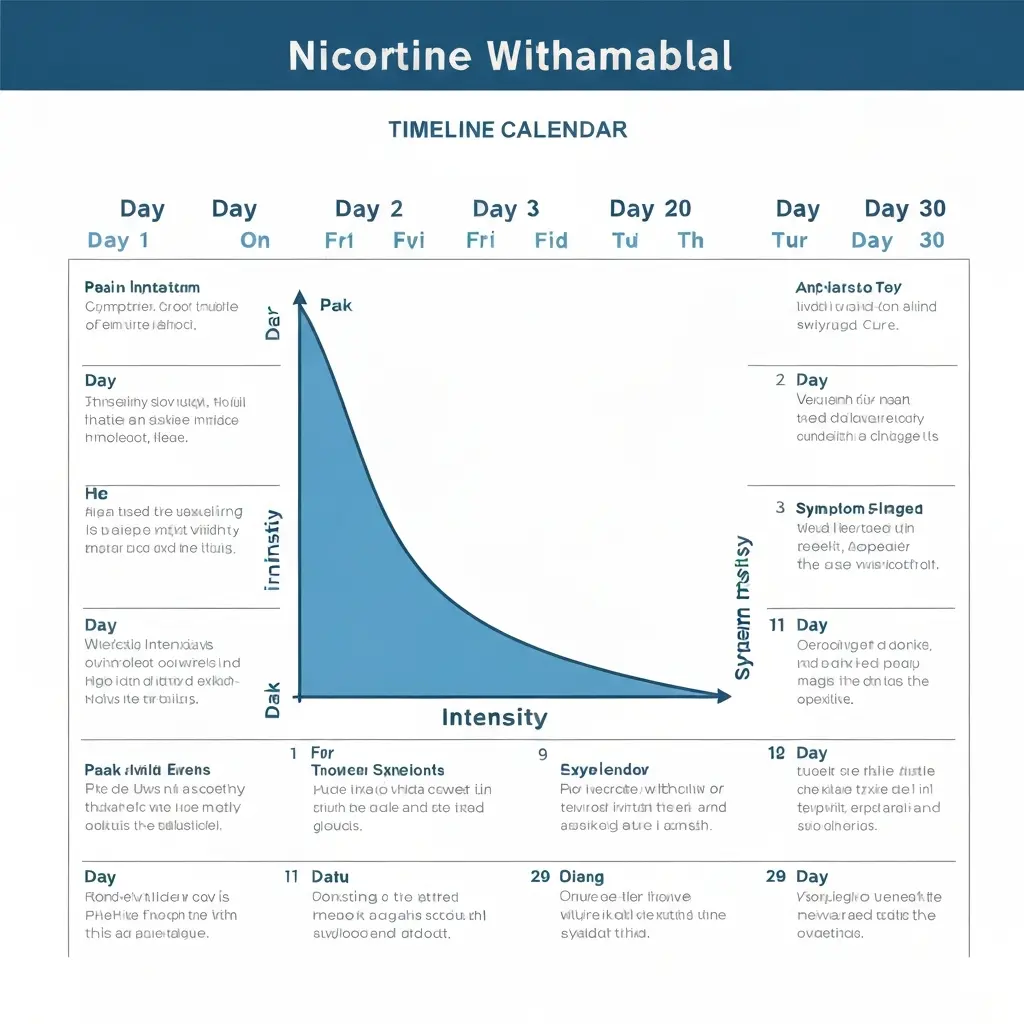
| Day/Period | What to Expect | Primary Strategy |
|---|---|---|
| Hours 4–24 | First cravings begin. Mild anxiety, slight irritability. Body starting to clear nicotine. | Start NRT immediately; drink water; begin craving log |
| Day 2 | Withdrawal accelerating. Headaches common. Mood dips. Cravings more frequent and intense. Nicotine fully cleared from blood. | Use 4D method; exercise (even a walk); ensure NRT dose is adequate |
| Day 3 (PEAK) | Peak withdrawal intensity. Most intense cravings. Irritability highest. Many people describe this as the hardest day. | Maximum NRT use; plan each hour proactively; avoid alcohol and smoking triggers; exercise |
| Days 4–7 | Physical symptoms begin to ease. Headaches resolve for most people. Energy levels start to improve. Sleep may still be disrupted. | Maintain NRT; use app to track improving craving frequency; celebrate day 7 |
| Week 2 | Physical symptoms largely resolved for most people. Cravings shorter and less intense. Taste and smell clearly improved. Energy better. | Begin stepping toward medium NRT dose; focus on habitual trigger management |
| Weeks 3–4 | Mostly psychological cravings now. Strong situational triggers (alcohol, stress, social) may produce cravings. Overall frequency declining. | Urge surfing; craving log analysis; app milestone tracking |
| Month 2–3 | Cravings rare and brief. New habits established. Lung function improving. Risk of casual “just one” cigarette remains. | Maintain app use; continue NRT step-down; avoid “just one” thinking |
Using NRT to Reduce Withdrawal Intensity
NRT is the single most evidence-based pharmacological strategy for managing withdrawal intensity. The Cochrane review confirms all NRT forms reduce withdrawal symptom severity versus placebo. Key principles:
- Dose adequacy is critical. The most common reason NRT “doesn’t work” is using too low a dose. If you smoke 20+ cigarettes daily, you need 21mg patches. Underdosing leads to breakthrough withdrawal.
- Use fast-acting NRT for breakthrough cravings. A patch provides steady background coverage but cannot respond to acute craving spikes. Keep 4mg gum or lozenges accessible for day 3 peak moments.
- Do not stop NRT too early. Many people stop NRT after 2–3 weeks because they feel better — then relapse. The standard recommendation is 8–12 weeks minimum, with a step-down approach.
- Combination NRT outperforms single product. Patch + fast-acting NRT achieves ~17% 6-month abstinence versus ~14% for patch alone.
Exercise: The Evidence-Based Natural Withdrawal Reducer
Exercise is one of the most underutilised withdrawal management tools, despite a solid evidence base. A Cochrane review of exercise for smoking cessation found that exercise reduces nicotine withdrawal symptoms and craving severity in the acute withdrawal period. Key findings:
- Even short bouts (10–15 minutes of moderate activity) reduce craving intensity for up to 30 minutes post-exercise
- Exercise releases dopamine and endorphins — partially compensating for the dopamine reduction caused by nicotine removal
- 150–300 minutes of moderate aerobic activity per week is the NHS-recommended amount; any increase from current baseline is beneficial during withdrawal
Practical application: When a Day 3 craving hits hard, go for a brisk 15-minute walk. By the time you return, the acute craving will have passed and the walk will have released mood-improving endorphins.
The 4D Method for Acute Cravings
The 4D technique is a clinically-used rapid craving management strategy recommended by NHS and multiple cessation programmes:
- Delay: Do not act on the craving immediately. Cravings peak and pass within 5–10 minutes. Tell yourself to wait 10 minutes — by then, the peak will have passed.
- Distract: Immediately engage with something that occupies your hands or mind. Change rooms. Call someone. Do a physical task. Craving intensity drops dramatically with effective distraction.
- Deep breathe: Slow, diaphragmatic breathing activates the parasympathetic nervous system, reducing the anxiety component of a craving. 5 deep breaths, counting slowly to 4 in and 4 out.
- Drink water: Cold water helps reduce craving intensity. Hydration also counteracts some physical withdrawal symptoms including headaches and fatigue. Drinking a full glass of water gives your hands something to do and occupies the time during which the craving peaks.
Practice the 4D sequence before your quit date so it is automatic when needed. Use the iQuit app’s craving management tools to access guided versions of these exercises at the moment a craving hits.
Diet and Hydration During Withdrawal
Certain foods can amplify or reduce withdrawal symptom severity. The evidence-based dietary guidance from NHS and American Cancer Society:
Foods That Help
- Fruits and vegetables: Studies show that smokers who eat more fruits and vegetables find cigarettes less satisfying, and the pattern helps healthy eating during the increased-appetite withdrawal period
- Water-rich foods: Cucumber, celery, carrots — provide oral substitution and hydration
- Nuts and seeds: Provide the hand-to-mouth satisfaction and chewing effect
Foods to Reduce
- Alcohol: Significantly increases relapse risk — reduce consumption, especially in the first month
- Coffee: Caffeine sensitivity increases after quitting; nicotine normally speeds caffeine metabolism, so after quitting the same amount of coffee may feel stronger and increase anxiety
- High-sugar foods: Can cause energy crashes that amplify irritability during withdrawal
Managing Sleep Disruption
Sleep disturbance during the first 1–2 weeks of quitting is very common. Nicotine is both a stimulant and a sedative at different times; its removal disrupts the sleep architecture the brain has adapted to. Strategies:
- Switch from 24-hour patches to 16-hour patches (removed at bedtime) if vivid dreams or insomnia are problems
- Avoid screens in the hour before bed — the added stimulation compounds withdrawal-related sleep difficulty
- Regular exercise improves sleep quality during withdrawal
- Short-term sleep disruption is normal and will resolve — typically within 2–3 weeks
Frequently Asked Questions
How long does nicotine withdrawal last?
Physical nicotine withdrawal symptoms typically peak on Day 3 and begin to ease by Days 5–7. Physical symptoms largely resolve within 2–4 weeks. Psychological cravings — triggered by habitual associations — can continue for months but become shorter, less intense, and less frequent over time. Most people find that by the 3-month mark, cravings are rare and manageable.
Is Day 3 the hardest day of quitting smoking?
For most people, Day 3 is the peak of physical withdrawal intensity — cravings are most frequent and intense, irritability is highest, and nicotine is fully cleared from the blood, meaning the body is at maximum receptor sensitivity. Knowing this in advance is genuinely useful: if you have a specific plan for Day 3 (maximum NRT use, a distracting activity planned, no alcohol, exercise scheduled), you significantly reduce the chance of relapse on the statistically hardest day.
What reduces nicotine withdrawal symptoms fastest?
Fast-acting NRT (nasal spray or gum) provides the fastest pharmacological relief — nicotine spray peaks in 5–10 minutes. For the physical symptoms of a craving episode, exercise and the 4D method (Delay, Distract, Deep breathe, Drink water) are the most effective non-pharmacological strategies. For persistent or severe withdrawal, varenicline (prescription) is the most effective pharmacological option, with 44% abstinence rates at 24 weeks in trials.
Can withdrawal symptoms be dangerous?
Nicotine withdrawal is uncomfortable but not medically dangerous for the vast majority of people. The symptoms (irritability, anxiety, difficulty concentrating, insomnia, increased appetite) are unpleasant but not harmful. However, if you experience severe depression that does not improve after 2 weeks, very high anxiety, or suicidal thoughts, seek medical advice immediately — some people need specialist support for the mood component of withdrawal, particularly those with pre-existing mental health conditions.
Does exercise really help with nicotine withdrawal?
Yes — there is meaningful clinical evidence. The Cochrane Collaboration found that exercise reduces nicotine withdrawal symptoms and craving severity in the acute withdrawal period. Even 10–15 minutes of moderate activity (brisk walking) reduces craving intensity for up to 30 minutes post-exercise. Exercise stimulates dopamine release, partially compensating for the dopamine deficit caused by nicotine withdrawal, and addresses the restlessness and anxiety components directly.
Track Your Withdrawal — And Watch It Get Easier
The iQuit app lets you log every craving, see when they peak and fade, and access the 4D craving tools exactly when you need them. Watching the craving frequency decrease in your own data is one of the most powerful motivators during the hardest days. You are not imagining improvement — you can see it.