How to Quit Smoking When You Live With a Smoker: Step-by-Step for 2026
Quitting smoking is hard enough. Doing it when you share a home with someone who still smokes — smelling cigarettes every day, seeing packets on the counter, watching someone light up in the garden — is a significantly greater challenge. Yet millions of people succeed in exactly this situation. Knowing how to quit smoking when you live with a smoker requires specific strategies beyond the standard cessation approach. This guide gives you those strategies, backed by 2026 evidence.
You cannot control whether your household companion quits. You can only control your own behaviour. But with the right environment design, communication, and support systems, quitting successfully alongside a smoker is entirely possible.
Why Living With a Smoker Makes Quitting Harder
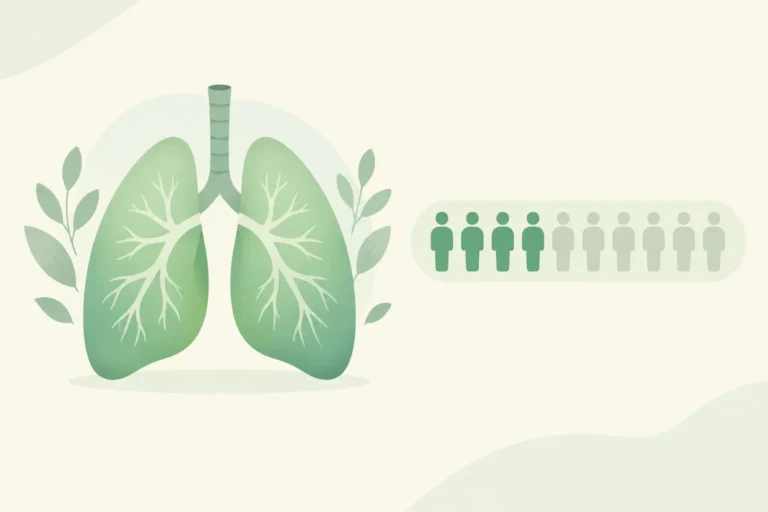
The research is clear: quitting smoking is significantly harder when a household member smokes. A study published in Addiction found that having a smoker in the household reduces the probability of successful cessation by approximately 30%. The mechanisms are multiple:
- Constant cue exposure: Seeing and smelling cigarettes activates the cue-conditioned craving response even when the smoker is not asking you to join them.
- Availability: Cigarettes are physically present and easily accessible. The barrier to “just one” is close to zero.
- Social modeling: Observing someone else smoking, particularly in pleasurable contexts (relaxing after dinner, socialising) reactivates reward associations.
- Secondhand smoke: Even brief secondhand smoke exposure can trigger cravings through nicotine inhalation and olfactory cues.
None of this makes quitting impossible — it makes preparation and strategy more important.
Having the Conversation With Your Household Smoker
This is the most important step. A calm, clear conversation before your quit date, asking for specific support, dramatically changes the dynamic:
What to ask for (specific, reasonable requests):
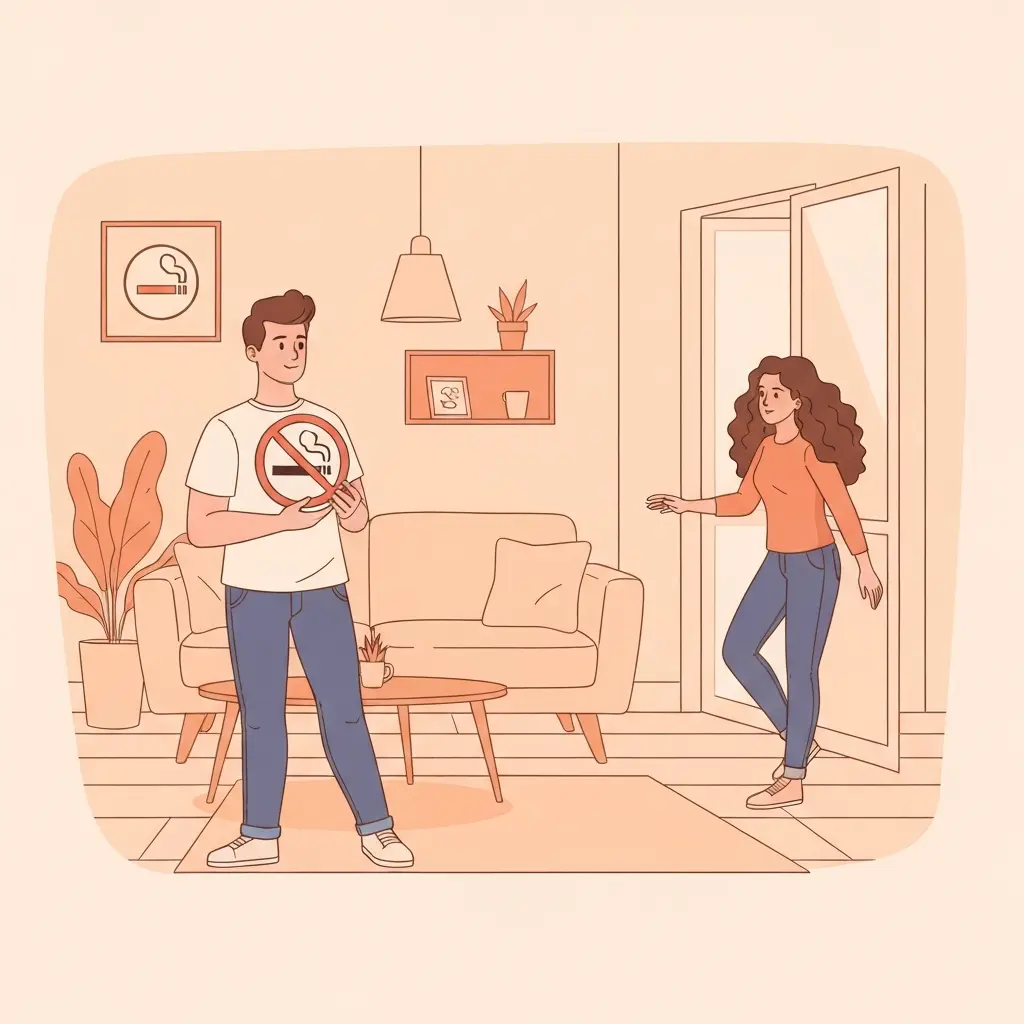
- Please smoke outside, away from the main living areas, for at least the first 4 weeks of my quit.
- Please don’t smoke in the same room as me, especially in the first 2 weeks.
- Please keep cigarettes and lighters out of our shared spaces (living room, kitchen) — store them somewhere out of my immediate sight.
- When you feel the urge to smoke, try not to announce it in front of me — this can trigger sympathetic cravings.
- I would love your positive encouragement, even if you are not ready to quit yourself.
Frame these requests as temporary and specific. You are not asking them to never smoke — you are asking for targeted support during your most vulnerable period. Most household members, even committed smokers, will comply with reasonable short-term requests.
Creating a Quit-Friendly Home Environment
You cannot remove all smoking from your home, but you can design your personal environment:
- Establish smoke-free zones: Your bedroom, the kitchen, and any rooms where you spend most time should be agreed non-smoking spaces.
- Create distance between you and smoke: If your housemate smokes in the garden, spend time in the front of the house. Physical and visual distance reduces cue exposure.
- Manage the smell: Open windows after smoking events. Air purifiers can significantly reduce residual smoke smell. Scented candles or reed diffusers in your spaces help override olfactory cues.
- Remove your personal cigarettes: Even if cigarettes remain in the house, your specific cigarettes should be gone on quit day. Ask your housemate to keep their supply in their personal space.
- Design a smoke-free personal retreat: Your bedroom should be a completely smoke-free sanctuary — no cigarettes, no smell of smoke. This is your recovery space.
Coping Strategies for Secondhand Smoke Exposure
When you encounter smoking smells or see your housemate smoke:
- Use NRT immediately: A nicotine spray, gum, or lozenge used promptly when a craving is triggered by secondhand smoke provides rapid relief. The combination of a patch (background coverage) and fast-acting NRT (for acute cue-triggered cravings) is especially effective in this living situation.
- Change your location: Move to a different part of the house or go for a brief walk. Physical distance from the trigger breaks the craving cycle quickly.
- Use your quit app: Your quit-smoking app can provide an immediate evidence-based coping response. Log the trigger, then use the in-app craving tool.
- Mindful acknowledgement: Rather than fighting the craving, observe it: “I see that the smell of smoke is triggering a craving. This is a conditioned response, not a need. It will pass.” This mindfulness approach actively weakens the cue-conditioned pathway over time.
What If They Want to Quit Too?
If your household smoker is willing to quit alongside you, research shows that couples and housemates who quit together have significantly higher success rates than those quitting alone. Partner cessation is one of the strongest social predictors of quit success.
Quitting together means:
- Set the same quit date (or stagger by 1–2 weeks if they need more preparation time).
- Share your progress and celebrate milestones together.
- Be each other’s accountability partners without enabling each other to relapse.
- Agree that neither will offer cigarettes to the other, even if one of you is struggling.
Even if they are not ready to quit completely, they might agree to cut down, use NRT, or smoke only outside during your most vulnerable weeks. Partial support is still valuable support. Sharing your journey — including what motivates you — is how quitting for family becomes a shared endeavour rather than a lonely struggle.
Frequently Asked Questions
Can I really quit smoking if my partner still smokes?
Yes. While living with a smoker makes quitting harder, many people succeed. The keys are: creating a supportive physical environment (smoke-free zones, cues out of sight); having a clear conversation about what you need during your quit; using NRT to manage cue-triggered cravings from secondhand smoke exposure; and building strong external support (app, friends, GP) to compensate for the reduced household support.
Is secondhand smoke exposure dangerous when you’ve recently quit?
Yes — secondhand smoke is harmful at any level, and recent quitters’ lungs are particularly sensitive as they begin the healing process. Additionally, secondhand smoke exposure can trigger powerful cravings through both olfactory cues and low-level nicotine inhalation. Minimising secondhand smoke exposure, particularly in the first 3 months, is strongly recommended.
Should I ask my partner to stop smoking entirely so I can quit?
Asking a committed smoker to stop completely on your behalf is likely to create conflict and resentment. More effective requests are temporary, specific, and reasonable: smoking outside, keeping cigarettes out of shared spaces, and not smoking in your presence during your critical first weeks. These requests respect their autonomy while protecting your quit attempt.
What if my partner refuses to stop smoking inside the house?
If indoor accommodation cannot be reached, increase your external support dramatically: use both patch and fast-acting NRT; engage with a professional quit counsellor; maximise app-based support; spend more time outside the home during your critical first 4 weeks; and consider whether temporary alternative accommodation for the first week (staying with a friend or family member) might give you the clean start your quit needs.
Sources: Addiction journal — Household smoker effect on cessation; NHS — Quit smoking when people around you smoke; CDC quit smoking tips; Nicotine and Tobacco Research — Partner smoking and cessation outcomes 2023.