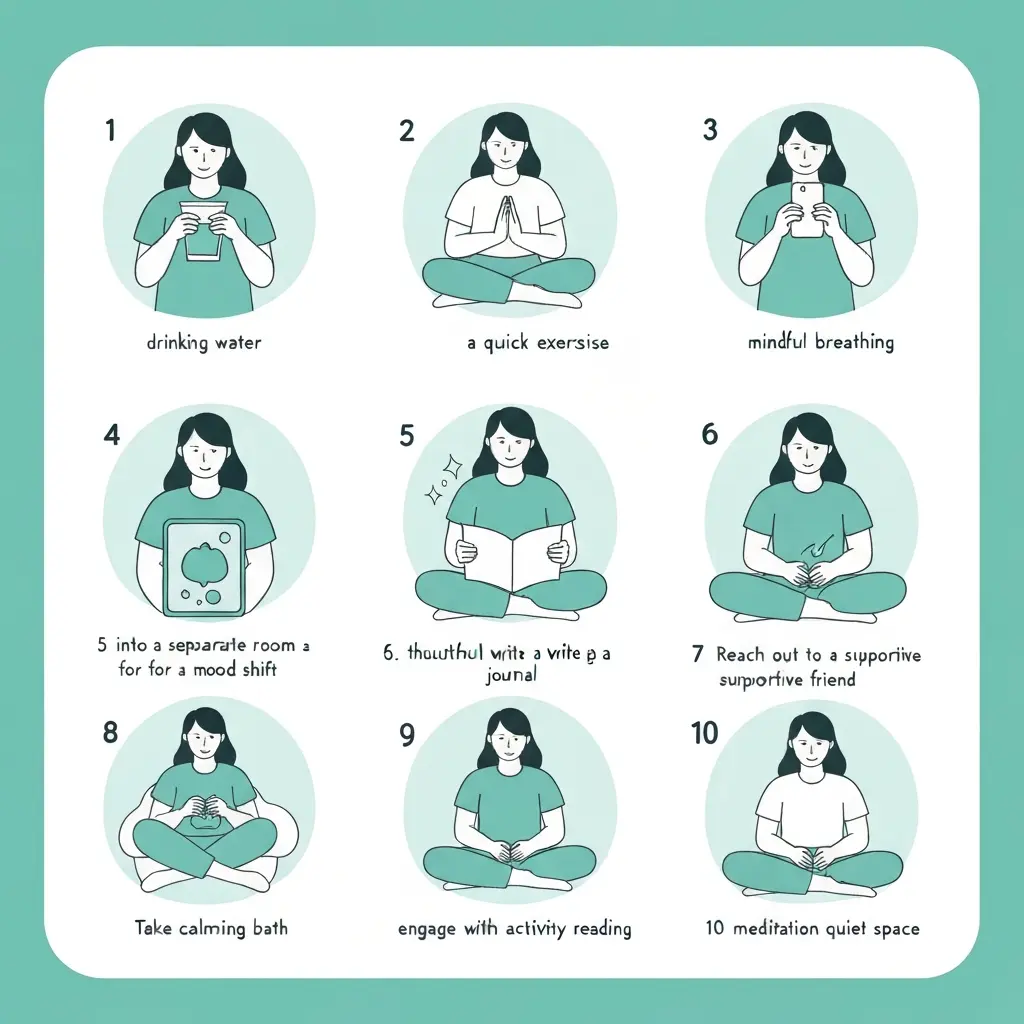
How to Stop Smoking Cravings: 10 Evidence-Based Techniques for 2026
The most important fact about smoking cravings is the one most people do not know before they quit: a craving typically peaks and passes within 3–5 minutes if you do not act on it. That is all you need to survive — 3 to 5 minutes of active coping, repeatedly, until the cravings decrease in frequency and intensity. The techniques in this article are not motivational suggestions; they are the specific evidence-based strategies that clinical research has identified as effective at disrupting the craving response and preventing relapse in that critical window.
This guide draws on NHS smoking cessation guidance, the 4D technique published in clinical literature, Cochrane evidence on exercise and cessation, and the latest research on app-based and behavioural craving management from the 2025 Nature meta-analysis.
Technique 1: Fast-Acting NRT (The Fastest Pharmacological Response)
When to use: Immediately when an intense craving hits, especially in the first 2 weeks.
Nicotine nasal spray reaches peak plasma levels in 5–10 minutes — faster than any other NRT form. Nicotine gum and lozenges work within 20–30 minutes. For an acute craving during the peak withdrawal period (days 2–5), reaching for fast-acting NRT is the most physiologically direct response available.
How to use gum correctly: Chew briefly until you taste a strong peppery or minty sensation, then park the gum between cheek and gum. Do NOT chew continuously — this causes nausea and reduces nicotine absorption. The nicotine absorbs through the oral mucosa, not the stomach. Avoid acidic drinks (coffee, juice, fizzy drinks) for 15 minutes before and during use.
Research context: The Cochrane review of 136 NRT trials confirms that fast-acting NRT reduces craving intensity and duration compared to placebo. Used as part of combination NRT with a background patch, it fills the role of “rescue medication” for craving peaks.
Technique 2: The 4D Method
When to use: Any craving, especially when NRT is not immediately accessible.
The 4D method is a behavioural cessation technique formally evaluated in the clinical literature and recommended by NHS, American Cancer Society, and multiple cessation programmes:
- Delay: Actively choose to wait 10 minutes before considering acting on the craving. Tell yourself explicitly: “I will not make a decision about this for 10 minutes.” By that point, the peak will have passed.
- Distract: Immediately engage in an activity that occupies your hands and/or mind. Change rooms. Walk somewhere. Do 10 push-ups. Call someone. The activity itself matters less than the immediacy of the distraction.
- Deep breathe: Take 5 slow breaths — breathe in for a count of 4, hold for 2, breathe out for 4. This activates the parasympathetic nervous system and reduces the anxiety component of the craving within 60–90 seconds.
- Drink water: A full glass of cold water. The cold provides sensory interruption; the drinking gives your hands something to do; the water itself helps with hydration (which reduces some withdrawal symptoms).
Technique 3: Cold Water
When to use: Any craving, immediately.
Drinking cold water is one of the simplest and fastest craving interrupters available. Physiologically, it provides sensory interruption (the cold sensation is processed by the same neural pathways the craving is using), occupies the hands in a functional alternative to holding a cigarette, and addresses dehydration — which amplifies craving intensity.
Some ex-smokers report that holding ice cubes during an intense craving provides strong enough sensory input to interrupt the craving loop. The evidence basis for this is primarily the broader research on sensory distraction for craving management rather than smoking-specific trials, but the mechanism is sound.
Technique 4: Immediate Exercise
When to use: High-intensity cravings, especially those with a strong restlessness component.
The Cochrane review on exercise and smoking cessation found that bouts of moderate exercise significantly reduce nicotine craving intensity during the withdrawal period. The mechanism involves dopamine release (partially compensating for nicotine’s dopamine effect) and sympathetic nervous system activation that channels the restlessness of craving into productive physical activity.
Even 10 minutes of brisk walking has been shown to reduce craving intensity for up to 30 minutes post-exercise. At peak withdrawal (days 2–5), scheduling brief exercise sessions at your known high-craving times (morning, after lunch, after work) reduces the frequency and intensity of that day’s worst craving moments.
Technique 5: Deep Breathing and the 4-7-8 Technique
When to use: Anxiety-driven cravings, stress-triggered urges.
The 4-7-8 breathing technique (developed in clinical stress-reduction contexts) activates the parasympathetic nervous system rapidly:
- Breathe in through the nose for 4 counts
- Hold for 7 counts
- Breathe out through the mouth for 8 counts
- Repeat 3–4 cycles
Within 2–3 cycles, heart rate variability increases, cortisol responses reduce, and the acute physical anxiety of a craving diminishes. This technique is particularly useful for after-work or stress-related smoking triggers where anxiety is the primary driver.
Technique 6: Urge Surfing (The Mindfulness Approach)
When to use: Medium-intensity cravings where you have a few minutes available; particularly useful after the first 2 weeks.
Urge surfing is a mindfulness-based technique developed from ACT (Acceptance and Commitment Therapy) research, used in the iCanQuit app and multiple clinical cessation programmes:
Instead of fighting the craving or distracting from it, you observe it as a physical sensation. Notice where it is in your body. Notice its intensity. Notice it rising. Know that it will peak and fall — like a wave. You ride the wave without acting on it. The craving is not a command that must be obeyed; it is a sensation that will pass.
Research shows that practising urge surfing reduces the automatic quality of the craving response over time — each successfully surfed craving reduces the brain’s association between the trigger and the smoking behaviour.
Technique 7: Change Your Location Immediately
When to use: Situation-triggered cravings (specific rooms, associations, times).
Many smoking cravings are triggered by environmental cues — a specific room, a particular chair, a view from a window, even a smell. These conditioned responses are powerful precisely because they operate semi-automatically. The most effective immediate disruption is simply leaving the trigger environment.
If a craving hits in the kitchen (where you used to smoke after meals), leave the kitchen and go to another room immediately. The association between location and craving diminishes with each time the location is not followed by smoking. Over weeks, the conditioned response extinguishes through non-reinforcement.
Technique 8: Use the Craving Timer
When to use: Any craving, particularly when the urgency feels overwhelming.
The Smoke Free app popularised the craving timer feature — showing users in real time how long they have been in a craving without smoking. The psychological effect of watching a timer tick from 0:00 to 5:00, showing you have survived the craving without smoking, is genuinely powerful. It makes abstract (“cravings pass”) concrete (“this specific craving has been passing for 4 minutes and 23 seconds”).
The iQuit app also provides craving logging and tracking tools that fulfil a similar function — building your own data on how long your cravings last and confirming that each one passes.
Technique 9: Oral Substitution
When to use: When the hand-to-mouth habit is a strong component of cravings.
For smokers who smoke partly out of physical habit (holding something, having something in the mouth), oral substitutes can bridge the gap while habitual patterns are being extinguished:
- Chewing sugar-free gum (or nicotine gum for the pharmacological benefit)
- Drinking water through a straw
- Eating raw vegetables (carrots, celery) — provides oral activity and manages appetite increase
- Toothpicks or cinnamon sticks
These are not pharmacologically active but they address the sensory-motor component of craving — the learned behaviour pattern of hand-to-mouth movement that has been practised thousands of times over years of smoking.
Technique 10: Log the Craving
When to use: Every craving, especially in the first month.
Opening an app and logging a craving does three things simultaneously: it creates a 30-second distraction (the craving peaks during this time), it builds a data set of your craving patterns, and it reinforces your identity as someone actively managing their quit rather than just enduring it. The data from craving logs helps identify which triggers are still most active and when the highest-risk moments are — information that makes preventive NRT use and behavioural preparation more targeted.
The iQuit app’s craving tracker lets you log: time, trigger situation, intensity, and what coping technique you used. Over 2–3 weeks, this builds a personalised picture of your withdrawal landscape.
Frequently Asked Questions
How long do smoking cravings last?
A nicotine craving typically peaks within 3–5 minutes and then begins to subside — even if you do not smoke. This is one of the most powerful pieces of information for anyone quitting: you only need to survive a few minutes per craving, not indefinitely. Craving frequency is highest in the first week (up to 20+ per day for heavy smokers) and decreases substantially over weeks 2–4. By month 3, most ex-smokers experience cravings rarely and briefly.
What stops smoking cravings immediately?
The fastest acting options are: (1) nicotine nasal spray (peaks in 5–10 minutes) — the most pharmacologically rapid response; (2) the 4D method (Delay, Distract, Deep breathe, Drink water) — effective within the 3–5 minute craving window; (3) brief intense exercise — reduces craving intensity within 5–10 minutes and maintains reduction for 30+ minutes. For a craving that hits when nothing else is available, simply waiting it out with the knowledge that it will peak and pass within 5 minutes is itself an effective strategy.
Why are cravings worst in the morning?
Morning cravings are intense for two reasons: (1) your blood nicotine has been falling for 7–8 hours during sleep, so you wake up in a relative nicotine trough with receptors unsatisfied; and (2) morning has often been heavily conditioned with smoking — coffee + cigarette is one of the most deeply embedded smoking habits. Starting NRT (particularly 24-hour patches, which maintain overnight coverage) and using fast-acting NRT before the first coffee are the most effective morning craving countermeasures.
Does the 4D method for smoking cravings actually work?
Yes — the 4D method (Delay, Distract, Deep breathe, Drink water) has a genuine clinical evidence basis. It is recommended by the NHS, American Cancer Society, and multiple cessation programmes. Research on its individual components is strong: distraction reliably reduces craving intensity; deep breathing activates the parasympathetic nervous system, reducing anxiety; the 10-minute delay exploits the natural 3–5 minute craving peak-and-pass dynamic. Used consistently, the 4D method becomes an automatic craving response over weeks.
Have Your Craving Tools Ready Before You Need Them
The iQuit app puts every craving management technique in this article directly on your phone — breathing exercises, craving log, distraction tools, and a live timer showing you how long each craving has lasted without you smoking. Download it before your quit date so the tools are familiar when day 3 hits.