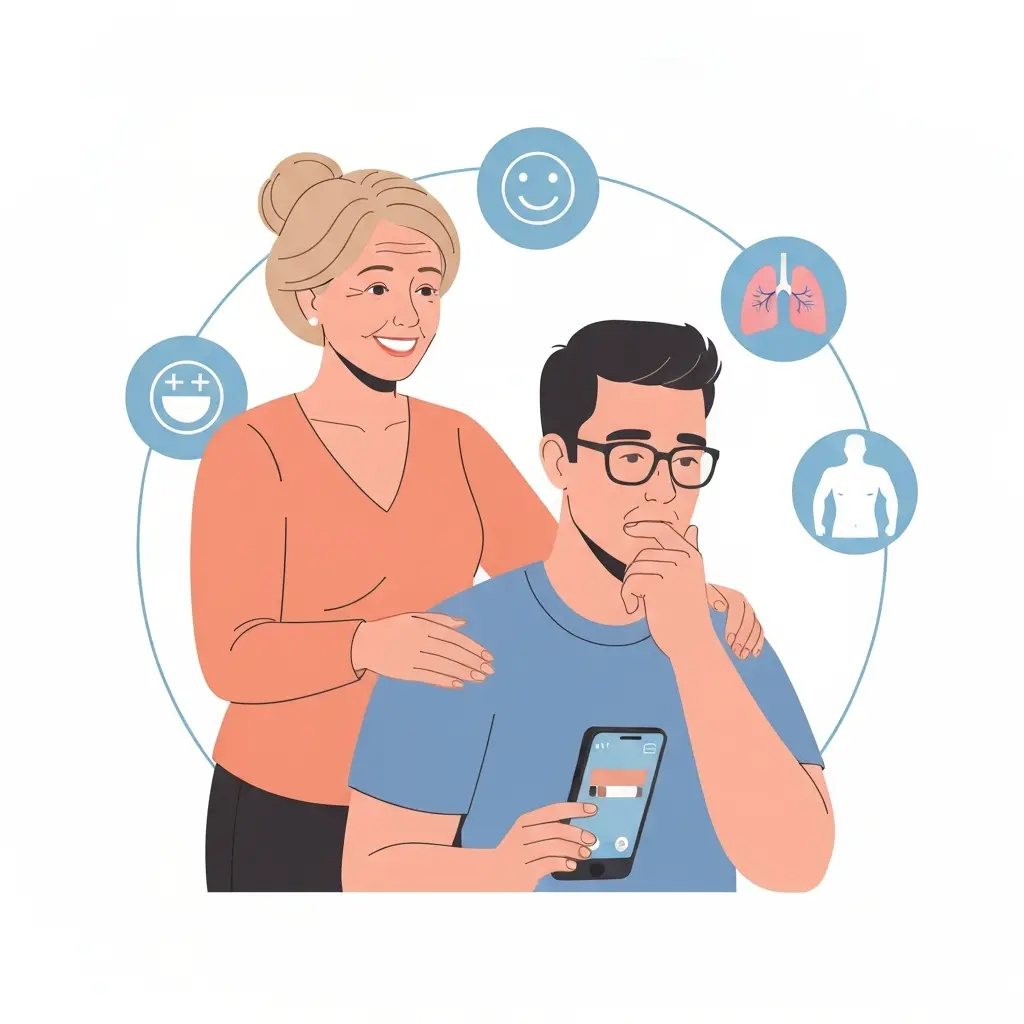
How to Support Someone Quitting Smoking: A Practical Guide for 2026
If someone you care about is trying to quit smoking, your role matters more than you might think. Research consistently shows that social support is one of the most significant predictors of quit success. But support done badly — with pressure, nagging, or well-meaning comments at the wrong moment — can actively undermine a quit attempt. This guide explains how to support someone quitting smoking in ways that actually help, based on what cessation research shows works.
The person quitting needs compassionate, practical, consistent support — not cheerleading, not judgment, and not unsolicited advice. Understanding what they’re going through physiologically and psychologically, and knowing exactly what to do (and what to avoid) in different situations, is what makes you an effective support person rather than an accidental obstacle.
What They’re Going Through
Before you can support someone effectively, understanding what quitting actually feels like is essential. In the first 2–3 days:
- Intense cravings occurring multiple times per hour
- Irritability and mood swings that feel disproportionate and hard to control
- Difficulty concentrating — thinking through fog
- Anxiety that feels like a constant low hum
- Sleep disruption — trouble falling asleep, waking repeatedly, vivid dreams
- Headaches and physical discomfort
None of this is a personality failing or a choice. It is the result of measurable neurochemical disruption — dopaminergic dysregulation, disruption of the hypothalamic-pituitary-adrenal axis, and the absence of a neurological crutch the brain has relied on for years. The irritability your loved one shows in week 1 is not who they are. It’s chemical, and it passes.
Many of the same principles that make behavioral support tools like the iQuit app effective apply to human supporters: consistency, non-judgment, and showing up during the difficult moments rather than only the triumphant ones. Just as effective tools work in the background so humans can focus on what matters, good support works as a background presence rather than a constant intervention.
Before Quit Day: Setting Up for Success
The most impactful support happens before the quit date:
Ask them what support looks like
This is the single most important thing you can do. Different people need radically different things: some want to talk about it constantly, others want their quit attempt treated as private. Some want to be checked in on; others find check-ins feel like pressure. Ask: “What does helpful support look like to you?” and follow their lead.
Help with practical preparation
- Offer to go with them to buy NRT or to their GP appointment
- Help clear the home of cigarettes, lighters, and ashtrays
- Offer to stock the house with healthy snacks and oral substitutes
- Help identify their smoke-free zones
Plan activities for the first week
Offer to plan activities during the first week that are naturally smoke-free and distracting — walks, visits to non-smoking venues, films, cooking together. Having things to do makes the early days less focused on not smoking and more focused on living.
The First Week: How to Help Day by Day
Be available, but not hovering
Availability matters most in the first 72 hours — the physiological peak. Being physically present during evenings (when many cravings intensify), offering distraction activities, and being someone they can text when a craving hits are all concrete supports.
Offer distraction, not lectures
When they say they’re having a craving, your best response is to offer immediate distraction — “Let’s go for a short walk,” or “Come watch this clip with me,” or “Tell me about what you’re looking forward to this weekend.” Not: “Remember why you’re doing this” unless they’ve asked for that kind of prompting.
Absorb the irritability without feeding it
Week 1 irritability is real and can be directed at the people nearest to the quitter. Your job is to not take it personally and not to escalate it. A calm, even response — “I understand you’re having a hard time today, that’s okay” — is worth more than defending yourself or pointing out the irritability.
Celebrate milestones
Day 1, day 3 (the peak is past), day 7. Acknowledge these. “You’ve made it through the hardest part” at day 3 is meaningful. Suggesting a specific reward — a meal out, a small purchase with the cigarette money saved — at day 7 gives them something to aim for.
Weeks 2–4: Maintaining Support
The acute withdrawal crisis passes, but the quit isn’t won at day 7. Weeks 2–4 involve ongoing behavioral adjustment and situational cravings. Support shifts from crisis support to consistent presence:
- Continue avoiding smoking around them even after they seem more settled
- Keep planning activities — this is when habit substitution becomes important
- Check in without pressure (“How are you doing with the quit?” rather than “You haven’t slipped, have you?”)
- Suggest using the iQuit app together to look at their health recovery milestones — making progress visible is motivating
- Be aware of their high-risk situations and offer support before, not after (the stressful meeting coming up, the social event where others will smoke)
What NOT to Do (Common Support Mistakes)
| Don’t Do This | Do This Instead |
|---|---|
| Nag or repeatedly bring up the quit | Follow their lead on how much to discuss it |
| Smoke in front of them or offer them a cigarette | Smoke away from them and be discreet with cigarettes |
| Say “Just have one, it won’t hurt” | Say nothing and offer a distraction activity |
| Comment negatively on their irritability or mood | Acknowledge it without judgment: “I know it’s rough” |
| Comment on weight changes | Say nothing; this topic is sensitive and irrelevant |
| Give up support after a relapse | Respond to relapse with compassion and renewed support |
| Create stressful situations in the first 2 weeks | Minimize conflict and high-stress interactions where possible |
Handling Relapses
If the person you’re supporting has a slip — smokes a cigarette or returns to regular smoking — your response in that moment shapes what happens next. The worst possible response is disappointment, anger, or “I told you so.” The best response is compassion followed by forward focus.
What to say after a slip:
- “One cigarette doesn’t erase what you’ve done. What happened?”
- “This doesn’t mean you’ve failed. What do you need right now?”
- “Most people make several attempts before they quit for good. You’ve got this.”
Research shows that how a support person responds to a relapse is a significant predictor of whether the person will attempt to quit again and how quickly. A compassionate response to a slip helps the person return to their quit plan immediately. A disappointed or angry response creates shame that delays resumption.
Encourage them to look at the iQuit app together and reset their quit counter — the act of resetting and recommitting, rather than abandoning the app, symbolizes a return to the quit plan rather than abandonment. Tools that support ongoing, iterative progress are designed around this kind of resilience — the same principle applies whether you’re working through complex academic research with a platform like Tesify or supporting a loved one through a quit journey.
If You Smoke Too
If you smoke yourself and your partner, family member, or friend is trying to quit, your behavior has outsized impact on their success. Key considerations:
- Don’t smoke in shared spaces — if you live together, smoke only outside and away from shared areas
- Consider quitting together — partners who quit together have higher success rates than those who quit alone while their partner continues smoking
- Don’t leave cigarettes accessible — keep them out of sight and out of shared areas
- If you’re not ready to quit, acknowledge it — “I’m not ready yet, but I fully support you” is an honest, helpful position. Pretending to support while continuing to smoke in shared spaces is counterproductive.
Frequently Asked Questions
What is the most helpful thing to say to someone quitting smoking?
The most helpful things to say: “I’m proud of you for doing this,” “What do you need from me right now?”, and “I know today is hard — I’m here.” Avoid unsolicited advice, comments about their mood, or relating to how hard you think it must be. During a craving, the most useful response is to offer immediate distraction rather than encouragement.
How can I help someone get through a nicotine craving?
When they tell you they’re having a craving, offer immediate behavioral distraction: suggest a walk, talk about something engaging, watch a video together, or play a game. Remind them that the craving will pass in 3–5 minutes. If they use a quit app like iQuit, suggest they open it. Physical presence and gentle distraction are more useful than pep talks during the acute craving window.
Should I ask someone daily about how their quit is going?
It depends on what they’ve said they want. Some quitters want regular check-ins and find them encouraging. Others find repeated questions about their quit create pressure that feels like surveillance. Ask them explicitly: “Would you like me to check in regularly, or would you prefer to bring it up when you want to talk about it?” Then follow their preference consistently.
What should I do if someone I’m supporting relapses?
Respond with compassion, not disappointment. Say something like “One cigarette doesn’t mean it’s over — what triggered it?” Help them treat the slip as information rather than failure. Encourage them to contact their Stop Smoking Service or update their quit plan rather than abandoning it. Your response in this moment is one of the strongest predictors of whether they attempt to quit again and how quickly.
Is it okay to smoke around someone who is quitting?
No — smoking around someone who is quitting is one of the most common causes of relapse. The smell of cigarette smoke is a powerful sensory trigger. If you smoke, do so only outside, away from the quitter, and be discreet with cigarettes and related materials in shared spaces. This is one of the most concrete contributions you can make to their success.
How long should I expect the person to be irritable after quitting?
Peak irritability is in days 2–4, typically resolving substantially by the end of week 2. Most people are meaningfully more settled emotionally by week 3. If irritability persists intensely beyond 4 weeks, they may benefit from speaking with a doctor about whether a mood-related withdrawal complication is present — bupropion or professional counseling may help in this case.
Can I help someone quit smoking if I smoke myself?
Yes, though you’ll need to be especially careful about not smoking around them, keeping cigarettes out of sight, and being genuinely supportive rather than subtly undermining. Research shows partners who smoke are a relapse risk factor. The strongest support you could offer if you both smoke is to consider quitting together — couples who quit together have significantly higher success rates than those where one partner continues smoking.
What if they don’t want my support?
Respect it. Some people prefer to handle quit attempts privately — particularly if previous public attempts led to embarrassment after relapse. If they don’t want active support, the most helpful things you can do are: not smoking around them without being asked, not commenting on their mood or behavior during withdrawal, and making clear that you’re available if they want to talk without pressing them to talk when they don’t.
Help Them Set Up the Right Tools
One of the most practical things you can do as a supporter is help your loved one set up the iQuit app before their quit day — their progress tracker, craving management tools, and health milestone counter ready to go. You could even look at their milestones together as a shared ritual. Sometimes the most effective support is helping someone access the right tools at the right moment.