How to Use a Quit Smoking App: A Step-by-Step Guide to Getting the Best Results (2026)
Learning how to quit smoking using an app is more nuanced than downloading it and pressing start. Research shows that passive app users — those who download, check their streak once a day, and ignore the behavioural tools — achieve quit rates barely better than going cold turkey alone. Active, structured use of the right features, however, can push 12-month abstinence rates to 20–28%. This guide shows you exactly how to unlock that difference, step by step, from your first day through your first year.
Think of your quit smoking app as a personal coach, not a scoreboard. The app’s job is to help you understand your triggers, manage your cravings when they peak, and celebrate the milestones that keep you motivated through the hardest weeks. Your job is to give it the data it needs to personalise its guidance to your specific patterns.
Before You Download: What to Set Up First
The most effective quit attempts are planned, not impulsive. Before opening any app, take 15 minutes to complete these preparatory steps — they directly influence the personalisation quality you’ll receive from the AI coaching system.
- Know your numbers: Cigarettes per day, years smoked, cost per pack, first cigarette time after waking. Every app asks these — having them ready prevents approximations that reduce coaching accuracy.
- Identify your top 3 triggers: Common triggers include stress, alcohol, after meals, coffee, and boredom. Write them down before you start; the AI will verify and refine them over time but your initial input matters.
- Choose your quit date: Not today — give yourself 48–72 hours to prepare your environment (remove cigarettes, clean soft furnishings, stock craving alternatives). Research shows planned quit dates outperform impulse quits by 23% at 1 month (NCSCT).
- Decide on NRT: If you smoke more than 10 cigarettes a day, starting NRT on your quit date is strongly recommended. Talk to a pharmacist or GP if unsure — many apps including iQuit have NRT guidance built in.
Day 1: Setting Up Your App Correctly
Day 1 setup is disproportionately important. Studies of app engagement patterns show that users who complete more than 80% of the onboarding profile have significantly better 30-day retention and craving log adherence.
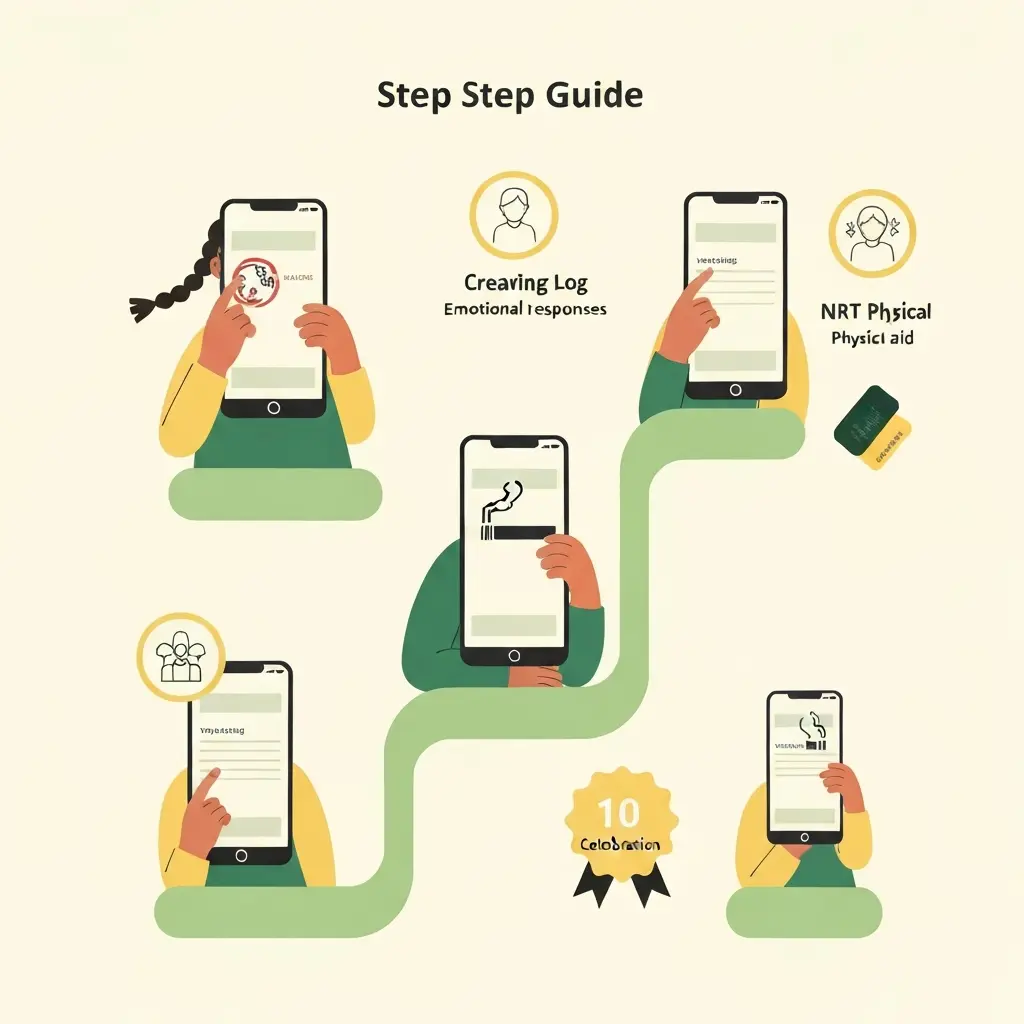
Step 1 — Complete the full onboarding profile. Don’t skip or approximate. Enter your exact daily cigarette count, pack price, and first-cigarette time. If the app asks about your motivations, select all that apply — motivation data feeds the personalisation of your daily messages.
Step 2 — Enable all notifications. This is non-negotiable in the first four weeks. Research on push notification delivery timing shows that cessation apps with contextually timed notifications (based on your known high-risk hours) increase 7-day point-prevalence abstinence by 29% (JMIR, 2023).
Step 3 — Set your craving log shortcut. Place the app on your home screen or lock screen. The easier it is to log a craving in real time, the more data the AI has and the more accurately it can predict your next vulnerability window.
Step 4 — Link your NRT schedule. If using patches or gum, log when you apply or take them. This allows the app to track peak NRT coverage against your craving timing and identify coverage gaps.
Week 1: Craving Logging and Pattern Recognition
Week 1 is the most physiologically and psychologically intense phase of your quit. Nicotine clears from your body within 72 hours, but dopamine receptor re-sensitisation takes 2–4 weeks. Your primary job in week 1 is not to feel good — it is to survive without smoking and to generate craving data.
Log every craving, whether you smoke or not. Most people resist logging a craving they gave into because it feels like admitting defeat. The opposite is true: cravings you smoked on are the most valuable data points the app has. They reveal your exact trigger patterns in a way that resisted cravings cannot.
For each craving log entry, record:
- Time of day
- Location (home/work/car)
- Trigger (stress/boredom/social/automatic)
- Intensity (1–10)
- Whether you smoked
By Day 7, a well-designed AI coaching system (like iQuit) should have identified your top 2–3 trigger patterns and begun adjusting your notification schedule and coaching content to address them specifically. This is the core value of active craving logging and directly parallels how AI tools in other performance domains work — see this guide for students on overcoming cognitive blocks through pattern recognition, which uses similar self-tracking methodology for academic productivity.
Weeks 2–4: Withdrawal Management and Streak Building
By week 2, acute physical withdrawal symptoms should be significantly reduced. The challenge now shifts from physical craving to psychological habit — the automatic reaches for a cigarette that happen without conscious desire. Your app should now be helping you with habit substitution: replacing the cigarette’s role in your daily routine with alternative behaviours.
Use the in-app craving response tools actively. When a craving hits, resist the urge to dismiss it and pick up your phone instead. Most cessation apps offer 3–5 minute guided breathing exercises, distraction activities, or motivational content calibrated to your trigger type. Research from the NCSCT shows that users who use craving response tools (rather than white-knuckling) have significantly lower relapse rates at 28 days.
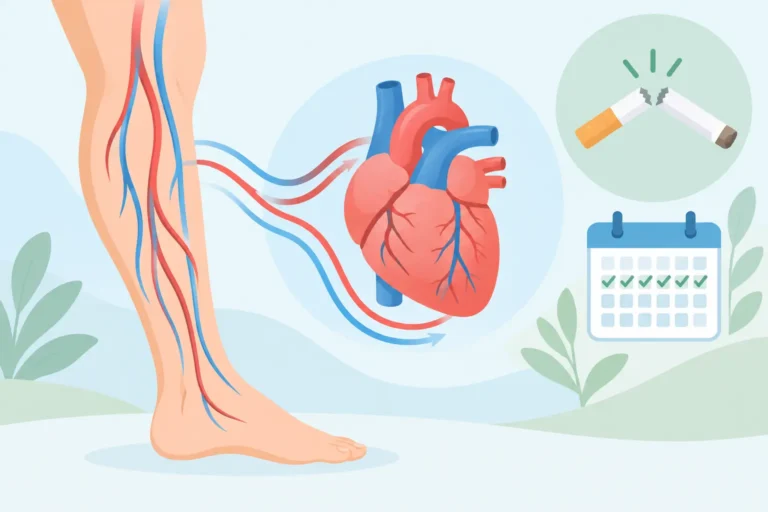
Celebrate every milestone the app surfaces. At 24 hours, carbon monoxide leaves your blood. At 48 hours, taste and smell begin returning. At 1 week, circulation improves measurably. These aren’t just inspirational facts — they’re real physiological changes happening in your body right now. Your app’s milestone system exists to make them visible and emotionally meaningful.
Months 2–3: NRT Taper and Habit Replacement
If you started with NRT, months 2 and 3 involve a gradual taper — reducing nicotine intake while maintaining the behavioural practices that have replaced smoking in your daily routine. Your app can support this by tracking NRT reduction milestones alongside craving frequency (which should be declining).
At this stage, many users make the mistake of reducing app engagement as they feel more confident. This is precisely when relapse risk re-emerges — often triggered by a stressful life event. Keep logging, even if only briefly each day. The app’s job in months 2–3 is early warning: detecting rising craving frequency before it becomes a relapse.
Building productive replacement habits — exercise, meditation, a new skill — is strongly correlated with long-term abstinence. Apps that connect cessation to broader lifestyle goals (some AI-powered wellness platforms now bridge these domains) show the strongest 6-month outcomes. The same focus-and-willpower principles apply whether you’re completing a postgraduate thesis or fighting a craving — see this Portuguese 30-day quit-while-writing-your-thesis guide for an interesting cultural perspective on combining academic and cessation goals.
Month 3 Onwards: Relapse Prevention and Milestone Celebration
By 3 months, most physical nicotine dependence is resolved. Long-term success (12+ months) is now primarily a question of psychological relapse prevention — recognising your early warning signs and having a recovery plan if a lapse occurs.
If you have a slip, do not uninstall the app. A single cigarette is a lapse, not a relapse. Use the app’s lapse recovery protocol: log it, identify what triggered it, update your high-risk situation list, and continue your quit without resetting your start date unless you return to regular smoking. Research shows that how you respond to the first lapse is more predictive of 12-month outcome than the lapse itself.
For a deep dive into the psychology of relapse prevention, see our 25-technique craving management guide.
How to Combine App Use with NRT
The most effective protocol based on current evidence:
- Week 1–4: Full-dose patch (21mg for 20+ cigs/day) + app-logged fast-acting NRT (gum/lozenge) for breakthrough cravings
- Week 5–8: Medium-dose patch (14mg) + app-tracked gum reduction
- Week 9–12: Low-dose patch (7mg) + minimal fast-acting NRT only for acute triggers
- Week 13+: Patch-free; continue app use for psychological craving management
For the full evidence base on combining NRT formulations, see our guide to managing nicotine withdrawal symptoms step by step.
Frequently Asked Questions
How do I get the most out of a quit smoking app?
Log every craving — including ones you gave into — for the first two weeks. This is the highest-leverage action you can take. Users who complete daily craving logs for the first 14 days show 2.3× higher 3-month abstinence rates. Also enable all notifications, complete your full onboarding profile, and use the in-app craving response tools instead of white-knuckling.
How long should I use a quit smoking app?
A minimum of 12 weeks for the active craving management phase. Most cessation research defines long-term success as 12-month continuous abstinence, so keeping the app on your phone through year one provides an important safety net for relapse risk events (alcohol, stress, bereavement). Milestone celebrations at the 1-month, 3-month, 6-month, and 1-year marks are particularly motivating.
What should I do if I relapse while using a quit smoking app?
Do not uninstall the app. A single cigarette is a lapse, not a relapse. Log the slip, identify the trigger, review your high-risk situation plan in the app, and continue your quit. How you respond to the first lapse is more predictive of 12-month outcome than the lapse itself. Many apps have a built-in lapse recovery protocol specifically for this reason.
Can I use a quit smoking app without NRT?
Yes, but your success rate will be lower than with combined use. For light smokers (fewer than 10 cigarettes/day), an app alone can be sufficient. For moderate to heavy smokers, combining an AI cessation app with NRT dramatically improves outcomes — achieving 3–4× the quit rate of app-only use. Most pharmacists can recommend the right NRT formulation for your smoking level.
Do quit smoking apps work for heavy smokers?
Yes, but heavy smokers (20+ cigarettes/day) typically need more pharmacological support alongside the app. The combination of varenicline (or high-dose combination NRT) plus an AI coaching app consistently achieves the highest quit rates in this group — 30–40% at 12 months. The app alone, without addressing the physical nicotine dependence, is insufficient for most heavy smokers.
Put This Guide Into Practice Today
The iQuit app is built around every principle in this guide: structured onboarding, AI-personalised craving coaching, NRT schedule integration, and milestone-driven motivation. Download it now and follow this step-by-step protocol from Day 1.
iQuit — free on iOS and Android. Start your structured, evidence-based quit today.