Lung Recovery After Quitting Smoking: The Complete Timeline (2026)
Your lungs bear the most direct consequences of smoking — but they also have a remarkable capacity for recovery once you quit. Lung recovery after quitting smoking begins within hours and continues for years. Understanding this timeline is both medically important and deeply motivating: your airways are healing right now, even if you cannot feel it yet.
This guide draws on research from the NHS, the American Thoracic Society, CDC, and peer-reviewed studies to give you the most accurate, up-to-date picture of how your lungs heal after you stop smoking — including what recovers fully, what improves substantially, and what the evidence says about permanent damage.
What Smoking Does to Your Lungs
Cigarette smoke contains over 7,000 chemicals, at least 70 of which are known carcinogens. When inhaled, these chemicals inflame and damage the lungs through multiple mechanisms:
- Cilia paralysis: The cilia — microscopic hair-like structures that sweep debris, bacteria, and mucus out of the airways — are paralysed by cigarette smoke within minutes of each cigarette. Over years, chronic exposure causes permanent damage to many cilia.
- Chronic inflammation: The immune response to smoke particles keeps airways in a constant state of inflammatory swelling, narrowing the passages and impairing airflow.
- Excess mucus production: Goblet cells in the airways overproduce mucus to try to trap and remove particles, creating the chronic cough and phlegm associated with “smoker’s lung.”
- Alveolar damage: The tiny air sacs (alveoli) where gas exchange occurs are progressively destroyed by oxidative stress and inflammation, reducing the lungs’ surface area for oxygen absorption — this is emphysema.
- DNA damage: Carcinogens directly damage the DNA of lung cells, creating the mutations that lead to lung cancer.
Hours to Days: Immediate Changes
Within 12 Hours
Carbon monoxide — a poisonous gas in cigarette smoke — is cleared from the bloodstream within 12 hours of your last cigarette. This is not a small thing: carbon monoxide binds to haemoglobin 200 times more effectively than oxygen, meaning a significant proportion of your red blood cells were carrying CO instead of O2. As CO clears, oxygen delivery to the lungs and every other tissue normalises.
Days 1–2: Cilia Begin to Reactivate
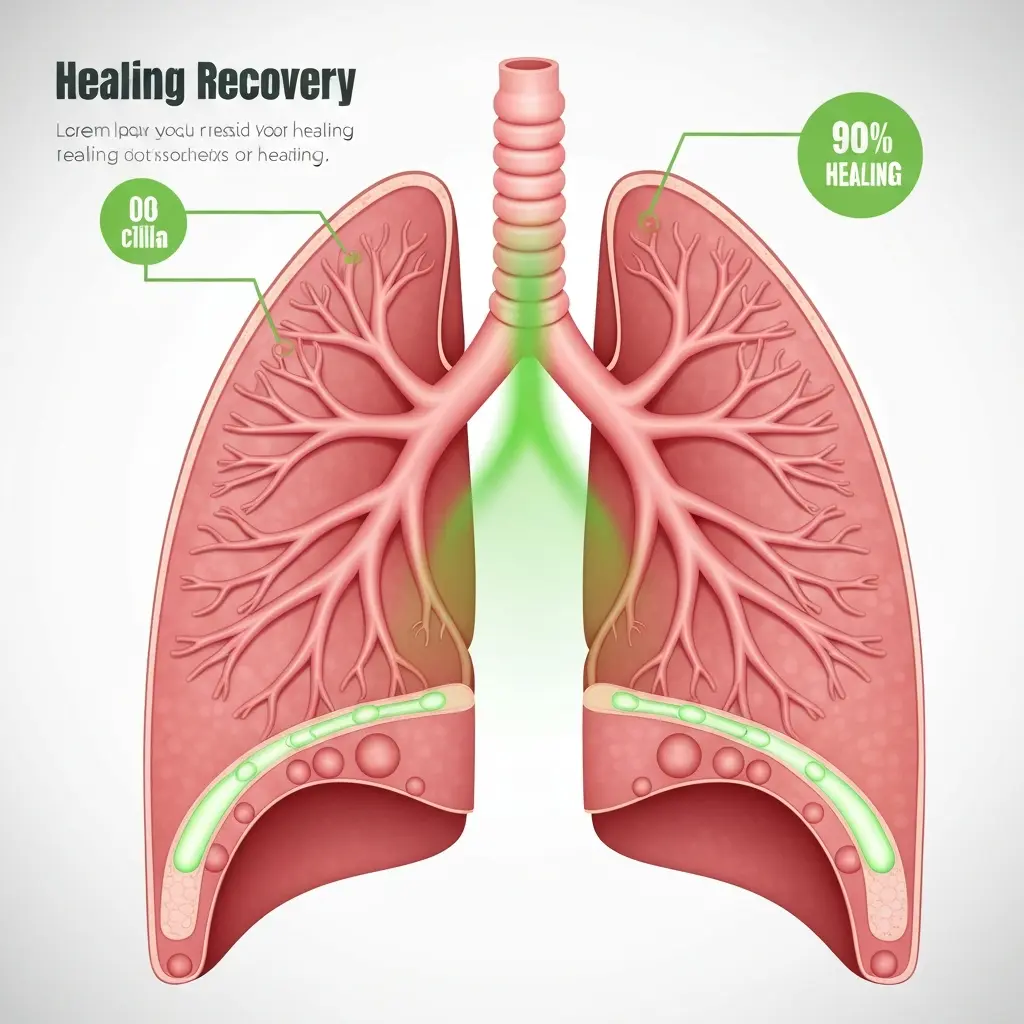
Within 24–48 hours, the cilia that were paralysed by cigarette smoke begin to show signs of reactivation. This is one of the most important early steps in lung recovery — without functioning cilia, the lungs cannot effectively clear debris, bacteria, or accumulated mucus.
An important side effect of cilia recovery: increased coughing. As the cilia regain function, they begin pushing years of accumulated mucus and debris upward and out of the airways. If you notice more coughing in the days after quitting, this is almost always a sign that your lungs are cleaning themselves — not that something is wrong.
Weeks 1–4: Cilia Continue Their Work
The cilia recovery process is gradual. Research suggests they begin functioning within 1–2 days of quitting, but it takes months for full restoration. During the first month:
- Mucus begins to clear from airways more effectively
- Airway inflammation decreases as the irritant (smoke) is no longer present
- Bronchial tubes begin to relax and widen — breathing feels somewhat easier
- The chronic “smoker’s cough” may actually increase temporarily before improving
- Respiratory immune function begins to recover — you may get fewer or less severe respiratory infections
This period is also when many quitters first notice they can take a deeper breath than before. The airways are genuinely wider, and the air exchange is more efficient.
Months 1–3: Measurable Function Gains
This is when lung recovery becomes tangible and measurable. NHS data and multiple clinical studies show that lung function — measured as FEV1 (forced expiratory volume in 1 second) — can increase by up to 30% within 1–3 months of quitting smoking in some patients.
What is driving this improvement:
- Reduced airway inflammation allowing fuller airway diameter
- Improved mucus clearance reducing airway obstruction
- Recovering cilia (now several weeks into their restoration)
- Improved cardiovascular efficiency delivering better oxygenation
For people who smoked heavily, the gains may be more modest — but they are consistent. Every former smoker experiences measurable improvement in lung function by this point.
Months 6–12: Significant Recovery
6 Months
By six months, the cilia have largely restored their function. Mucus clearance is near normal. Airway inflammation has substantially decreased. Many former smokers report that respiratory infections — colds, bronchitis — are less frequent and less severe than when they smoked.
The ongoing cough that many quitters experience begins to resolve around this time, as the lungs have cleared most of the accumulated debris and the airways no longer need to work overtime to do so.
9 Months
According to research published in chest medicine literature, by 9 months post-cessation, cilia are typically functioning at near-normal capacity. The airways can now maintain their own cleanliness without the constant heavy lifting of clearing smoke-related debris. Respiratory health at this stage is substantially better than it was during the smoking years.
1 Year
After one year smoke-free, the lungs are in a dramatically different state from their smoking-era condition. Airway function has improved substantially, and the risk of developing respiratory infections continues to decrease. Combined with the cardiovascular improvements occurring simultaneously, a one-year quitter’s overall health trajectory has changed fundamentally.
For the complete picture of all health changes at this milestone, see our full guide to what happens when you quit smoking hour by hour, day by day.
Years 1–5: Long-Term Healing
Over the first five years post-cessation:
- The rate of lung function decline slows to match that of a non-smoker rather than the accelerated decline seen in current smokers
- Risk of chronic bronchitis continues to decrease
- Respiratory immune defence strengthens progressively
- Airway hyperresponsiveness (the heightened reactivity that makes former smokers sensitive to pollution, cold air, etc.) begins to normalise
Research from the Lung Health Study (American Journal of Respiratory and Critical Care Medicine) found that participants who quit smoking showed a significant, sustained improvement in FEV1 compared to those who continued smoking — and this difference grew over time.
Year 10: Lung Cancer Risk Landmark
Ten years after quitting smoking, your risk of dying from lung cancer is approximately half that of a person who still smokes. This is one of the most clinically significant milestones in smoking cessation research. The cellular repair processes in the lung — including DNA repair mechanisms, immune surveillance of malignant cells, and the replacement of damaged airway cells — have been working for a decade.
Your risk of cancers of the mouth, throat, oesophagus, bladder, kidney, and pancreas also decreases significantly at this point. Smoking cessation is one of the most effective single interventions for cancer prevention known to medicine.
Lung Recovery With COPD
If you have been diagnosed with COPD (chronic obstructive pulmonary disease), quitting smoking remains the single most effective intervention available to you — more effective than any medication for slowing disease progression.
A 2024 systematic review and meta-analysis published in Frontiers in Public Health found that smoking cessation in COPD patients:
- Significantly slowed the annual rate of FEV1 decline (from 42–82 mL/year in smokers to 0–49 mL/year in quitters)
- Improved quality of life scores
- Reduced frequency of COPD exacerbations
- Improved survival outcomes
COPD involves some permanent structural damage — destroyed alveoli cannot regenerate. But quitting smoking changes the trajectory of the disease profoundly, preserving the lung function that remains. For a dedicated guide, see our article on COPD and smoking cessation: recovery possibilities.
What Cannot Fully Recover
Honesty is important here. Not all smoking damage reverses completely. The lungs have impressive regenerative capacity, but some changes are permanent:
- Emphysematous damage: Destroyed alveolar walls do not regenerate. The lost surface area for gas exchange cannot be fully restored. However, the progression stops when smoking stops.
- Advanced fibrosis: Scar tissue that has formed in severe cases of smoking-related lung disease does not fully reverse.
- Some cilia: While most cilia recover, some that sustained the worst damage over the longest smoking periods may not fully regrow.
These limitations do not diminish the value of quitting. They are reasons to quit as soon as possible — but quitting at any stage preserves what remains and prevents further damage.
Frequently Asked Questions
How long does it take for lungs to fully recover after quitting smoking?
There is no single “full recovery” date because different aspects of lung health recover at different rates. Cilia restore function within 1–9 months. Lung function improves by up to 30% within 1–3 months. Lung cancer risk is halved by 10 years. Some structural damage (emphysema) is permanent, but recovery in terms of function and cancer risk continues for a decade and beyond.
Why do I cough more after quitting smoking?
Increased coughing after quitting smoking is a normal and actually positive sign. As the cilia in your airways reactivate and regain function, they begin clearing accumulated mucus, tar, and debris that built up during your smoking years. This produces a temporary increase in coughing that typically peaks in the first few weeks and resolves within 1–3 months as the lungs finish their cleaning process.
Can lungs recover from 20 years of smoking?
Yes — significantly, though not necessarily completely. Twenty years of smoking does cause more damage than shorter-term smoking, but quitting still delivers major lung health benefits. Airway inflammation resolves, cilia restore, lung function improves, and — critically — the risk of lung cancer and other smoking-related lung diseases decreases substantially over the following 5–10 years. Long-term smokers benefit enormously from quitting.
Does quitting smoking help if you already have COPD?
Yes, significantly. Quitting smoking is the most effective treatment for COPD — more so than any medication for slowing disease progression. It reduces the annual rate of lung function decline from 42–82 mL per year (in continuing smokers with COPD) to 0–49 mL per year (near normal age-related decline). It also reduces exacerbations, improves quality of life, and extends life expectancy.
How does lung function improve after quitting smoking?
Lung function improves after quitting because airway inflammation decreases (allowing wider, more open airways), cilia restore their mucus-clearing function (reducing obstruction), and the bronchial tubes relax. NHS data shows lung function can increase by up to 30% within 1–3 months. This means deeper breaths, less breathlessness during exercise, and better overall oxygen exchange.
When does lung cancer risk drop after quitting smoking?
Lung cancer risk begins to fall as soon as you quit smoking, but the most clinically significant milestone is at 10 years — when the risk of dying from lung cancer is approximately half that of a current smoker. This risk reduction is driven by DNA repair mechanisms, immune surveillance, and the absence of ongoing mutagenic exposure from tobacco chemicals.