Craving Surfing Technique: 5 Proven Tips to End Urges
A cigarette craving peaks at around 3–5 minutes. That’s it. Less time than it takes to make a cup of tea. Yet in that window, millions of people light up — not because they’re weak, but because nobody ever taught them what to do with their body and mind during those 300 seconds.
Craving surfing is a mindfulness-based technique that treats a craving like a wave: something that rises, crests, and passes on its own — if you let it. The goal isn’t to fight the urge. It’s to ride it. And the research backing this approach is harder to ignore than the cravings themselves.
Whether you just stubbed out your last cigarette an hour ago or you’ve been trying to quit smoking for years without success, these five proven tips will change how you relate to the urge — and give you a fighting chance when it hits hardest.
Craving surfing is a mindfulness technique where you observe a cigarette craving without acting on it, allowing the urge to rise and fall naturally — typically within 3–5 minutes. Instead of suppressing or fighting the craving, you notice its physical sensations with detached curiosity until it passes on its own.
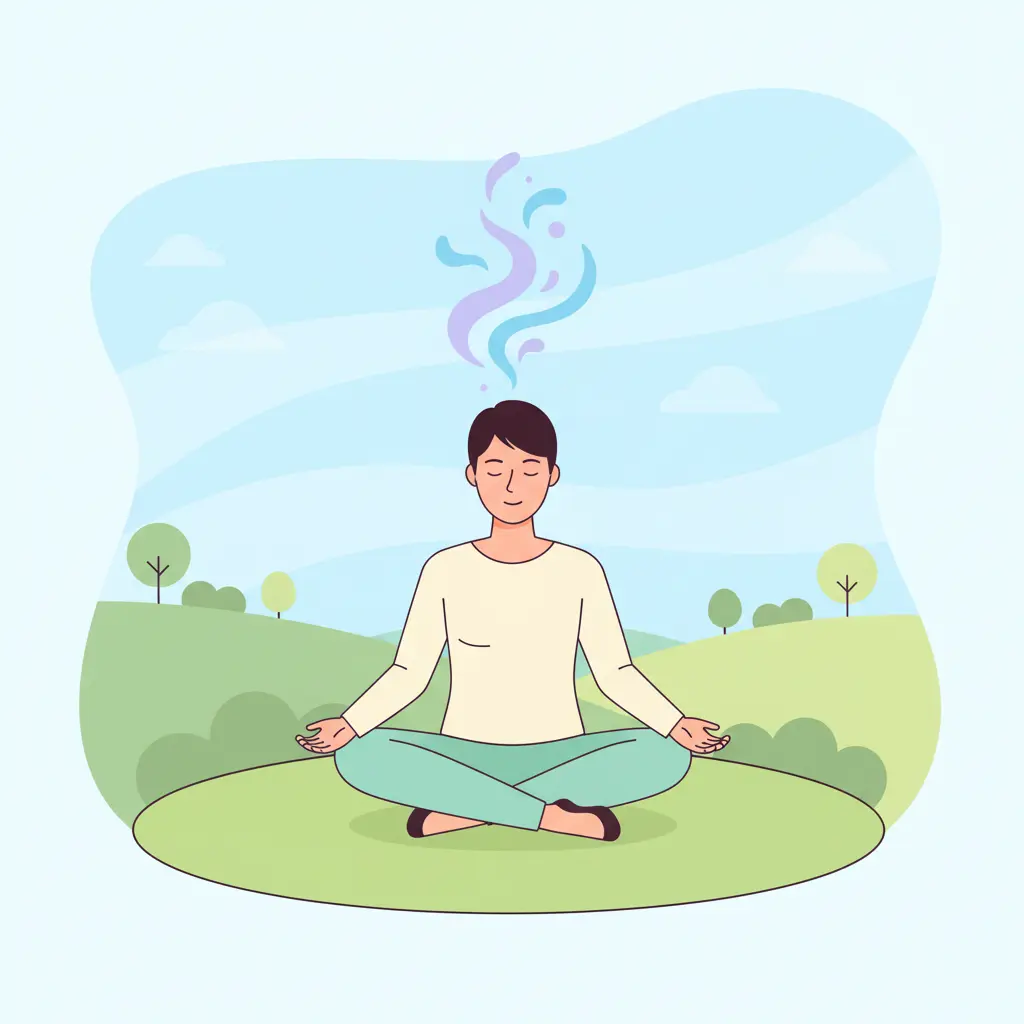
What Is Craving Surfing and Why It Works
The term was coined by psychologist G. Alan Marlatt in the 1980s as part of relapse prevention therapy. The core idea is deceptively simple: cravings are not commands. They’re neurological events with a beginning, middle, and end. Your job is to observe, not obey.
Here’s where it gets interesting. A 2023 randomized trial published in Psychology of Addictive Behaviors (PMC) tested mindfulness-based craving regulation in daily cigarette smokers. The results showed that mindfulness and cognitive reappraisal training significantly reduced craving intensity compared to control conditions — not just in lab settings, but in real-world daily smoking behavior. Read the full study on PMC here.
The mechanism is straightforward. Most smokers respond to cravings with what researchers call “experiential avoidance” — pushing the feeling away, distracting, or giving in. Craving surfing does the opposite: it teaches you to turn toward the sensation with curiosity, which paradoxically weakens its grip. Psychiatrist Judson Brewer at Brown University calls this “getting curious instead of craving,” and his research has produced some of the strongest clinical evidence for mindfulness-based smoking cessation. Watch his TED Talk: A Simple Way to Break a Bad Habit.
What most people miss is that the craving doesn’t actually get stronger the more you resist it in a mindful way — it gets shorter. Studies consistently show that untreated cravings peak between 3 and 5 minutes. Every time you surf one successfully, you weaken the neural pathway that connects “craving” to “smoking.” That’s not motivation; that’s neuroscience.
To understand why cravings feel so overwhelming in the first place — and how identifying your personal triggers can make surfing them easier — it helps to read about the top strategies to quit smoking successfully, which walks through the psychology of addiction and trigger mapping in detail.
Tip 1: Use Controlled Breathing to Ride the Craving Wave
Breathing is the one autonomic process you can consciously control — and that gives it unusual power over your stress response. When a craving hits, your sympathetic nervous system activates. Heart rate goes up. Thoughts narrow. The body prepares to act. Controlled breathing interrupts that cascade before it reaches the point of no return.
The technique with the strongest physiological evidence is called the physiological sigh — a double inhale through the nose followed by a long, slow exhale through the mouth. Stanford neuroscientist Andrew Huberman describes it as “the fastest way to reduce stress in real time.” The double inhale re-inflates collapsed alveoli in the lungs and the extended exhale activates the parasympathetic (rest-and-digest) system almost immediately. See the Huberman Lab explanation on YouTube.
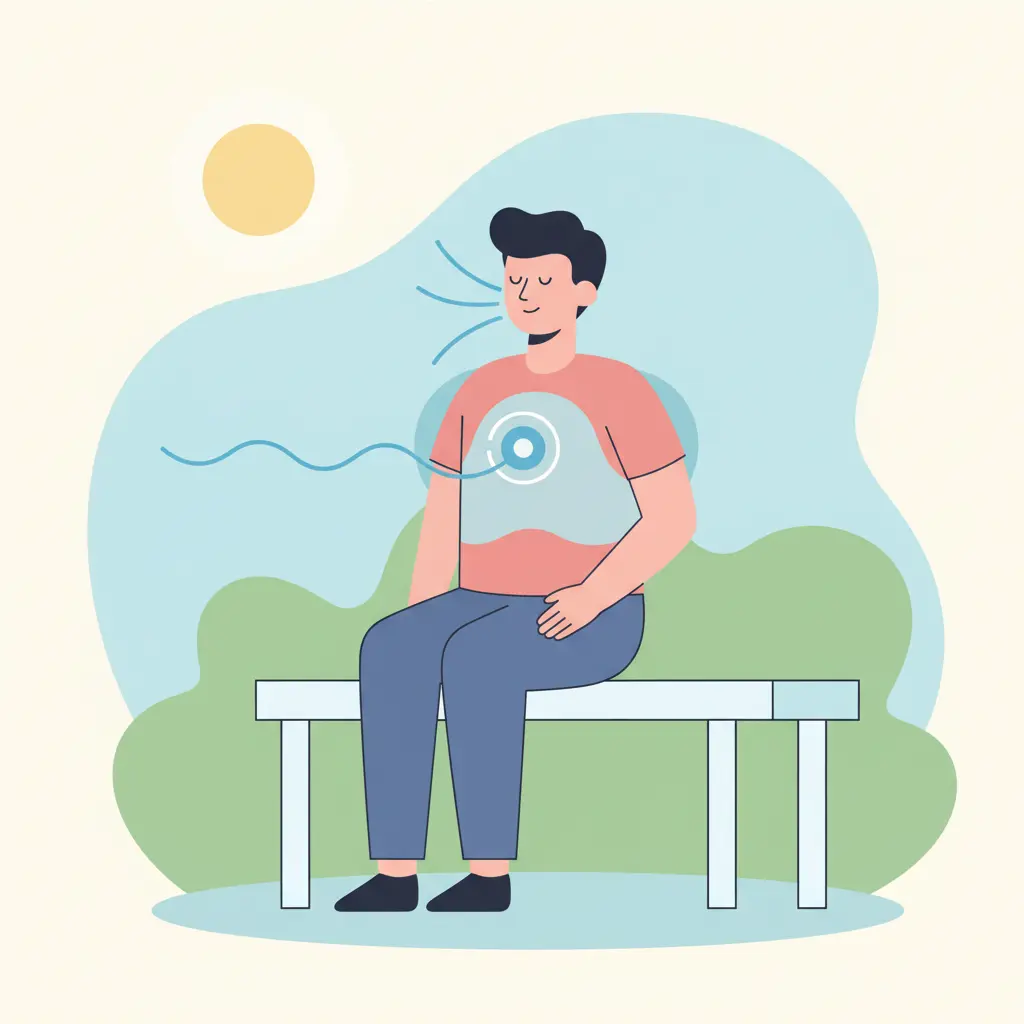
How to Use the Physiological Sigh During a Craving
- Inhale through your nose for 3 seconds — a full breath.
- Sniff again through the nose on top of that breath (a short second inhale).
- Exhale slowly through your mouth for 6–8 seconds — longer than the inhale.
- Repeat 3–5 times. Notice whether the craving has softened.
Box breathing (4 seconds in, hold 4, out 4, hold 4) is another reliable option. Both techniques work because they give your brain something specific to focus on — they’re functional distractors that also physically calm the nervous system. You’re not ignoring the craving; you’re changing the physiological soil it’s growing in.
Fair warning: the first time you try this, it might feel awkward or insufficient. That’s normal. The technique builds effectiveness with repetition, just like any skill. Don’t judge the result after one attempt.
Tip 2: Ground Yourself with the 5-4-3-2-1 Technique
Cravings are essentially future-focused — your brain is projecting a scenario where you smoke and feel relief. Grounding techniques yank your attention back to the present moment, short-circuiting that projection before it becomes a decision.
The 5-4-3-2-1 method is one of the most widely used grounding exercises in cognitive behavioral therapy (CBT) for addiction. It engages all five senses, making it difficult for your mind to simultaneously run the “just one cigarette” story.

The 5-4-3-2-1 Grounding Method
- 5 things you can SEE: Look around and name them aloud or in your head. The coffee cup. The window. The pattern on the floor.
- 4 things you can TOUCH: Feel the texture of your shirt, the chair beneath you, the cool air on your skin.
- 3 things you can HEAR: Traffic outside, a fan humming, your own breath.
- 2 things you can SMELL: Even subtle scents count. This one is especially powerful — smell is processed in the same brain region as emotion and memory.
- 1 thing you can TASTE: Drink a glass of cold water, chew gum, notice the taste already in your mouth.
The NHS’s smoking cessation guidance acknowledges that understanding the sensory cues linked to cravings is a key part of staying smoke-free long-term. The NHS Better Health guide on smoking triggers is worth bookmarking for reference.
Grounding works best when you practice it before a crisis moment — not just during one. Try running through 5-4-3-2-1 once a day at a calm time, so your nervous system knows the drill when a craving ambushes you at a party or after a stressful meeting.
Tip 3: Run a Body Scan — Name the Sensation to Defuse It
This is the most direct expression of craving surfing as a technique, and it’s the one that surprises people the most. When a craving hits, instead of looking for an exit, you turn toward it — and get specific.
Most smokers experience cravings as a vague, overwhelming pressure. “I just need a cigarette.” But when you actually investigate the physical sensation — where is it, exactly? — something interesting happens: the craving loses its abstract, all-consuming quality and becomes a locatable, describable event that has edges.

How to Do a Craving Body Scan
- Pause and close your eyes if possible (or soften your gaze).
- Locate the sensation. Is it in your chest? Throat? Hands? Stomach?
- Describe it neutrally: “There’s a tight, buzzing sensation in my chest, about the size of a fist.” No judgment — just description.
- Notice if it changes. Does it move? Intensify? Start to fade?
- Name the emotion underneath it, if there is one. Stress? Boredom? Loneliness? Naming it takes power from it.
The Mayo Clinic’s guidance on resisting tobacco cravings emphasizes that identifying what you’re actually feeling — rather than just reacting — is one of the most effective behavioral strategies available. See Mayo Clinic’s full list of craving resistance strategies.
Here’s a counterintuitive truth: the body scan often shortens the craving faster than distraction does. Distraction works, but it’s a delay. The body scan is more like defusing — you’re actively reducing the craving’s emotional charge while it’s happening.
Tip 4: Use Quit Smoking Success Stories as Anchors
When you’re deep in a craving, abstract motivation crumbles. “I want to be healthy” doesn’t hold up against “I want a cigarette right now.” What does hold up? A specific human story — someone who felt exactly what you’re feeling and came out the other side.
This is why quit smoking success stories are more than feel-good content. They function as cognitive anchors. When your brain is pattern-matching its way toward a cigarette, introducing a competing narrative — a real person’s story — disrupts that pattern with something equally vivid and emotionally charged.
Tiffany R.’s story, featured in the CDC’s Tips From Former Smokers campaign, is a good example of this kind of anchor. It’s specific, it’s honest about the struggle, and it’s hard to dismiss. Watch Tiffany’s quit smoking story on YouTube — and consider saving it for the next time a craving catches you off guard.
Building Your Personal Story Bank
- Save 3–5 specific videos or testimonials that move you. Not general health facts — stories from real people.
- Write your own “why I quit” letter when you’re calm and motivated. Read it during cravings.
- Join a community where quit stories are shared regularly. Seeing someone hit 30 days, 90 days, or one year is more motivating than a statistic about lung cancer risk.
- Keep a craving journal. Each successfully surfed craving becomes its own small success story. Over time, you become your own source of quit smoking motivation.
The iQuit app’s community feature and journal function were built exactly for this purpose — giving users a place to log their progress, share wins, and read others’ stories when motivation runs low. It’s a quiet but consistent source of real-time quit smoking motivation, available in the moments between professional support sessions.
Quit smoking success stories also reveal that most long-term quitters failed multiple times. The CDC reports that most smokers make 8–10 quit attempts before succeeding long-term. That’s not a discouraging statistic — it’s an honest one that reframes “failing” as part of the process.
Tip 5: Activate Your Support System Before the Urge Wins
Social support is one of the most consistently validated predictors of successful smoking cessation — and one of the most underused. Most people try to quit smoking alone, treating it like a private battle of willpower. But nicotine dependence is a physiological condition, not a character flaw, and it responds to social connection in measurable ways.
The key word here is before. Waiting until you’re deep in a craving to reach for your phone and text someone is often too late. The preparation matters.
Building a Craving Support System That Actually Works
- Identify 2–3 specific people you can contact during a craving — not just anyone supportive, but people who understand what you’re going through and won’t minimize it.
- Tell them your plan in advance. “I might text you when I’m struggling. I just need you to respond quickly and remind me why I quit.” That framing makes it easy for them to help.
- Use digital support tools between human contacts. The quitSTART app from Smokefree.gov offers a craving tracker and in-the-moment support tools developed by the National Cancer Institute.
- Join a quit smoking community — online forums, local groups, or app-based communities all reduce the isolation that makes cravings harder to surf.
- Consider professional support. The CDC’s quit smoking resources include free quitline access (1-800-QUIT-NOW in the US). See the CDC’s How to Quit Smoking guide for a full breakdown of support options.
If you want a broader framework for building all these behavioral strategies into a sustainable plan, the guide on effective strategies to help you quit smoking is a practical next step — it covers behavioral techniques, medication options, and how to structure your quit timeline.
On the app side, iQuit includes an emergency SOS craving button that connects users to an AI coach during acute craving moments — useful for the 2 a.m. craving when your support contacts are asleep. It’s not a replacement for human connection, but it fills the gap that’s sunk many quit attempts.
Your 5-Minute Craving Surfing Action Plan
Theory is useful. A concrete plan you can actually follow when you’re shaking with the urge to smoke is better. Here’s a step-by-step framework that combines all five techniques into a single 5-minute protocol.
The 5-Minute Craving Surfing Protocol
- Minutes 0–1: BREATHE. Do 3–5 physiological sighs. Double inhale through the nose, long exhale through the mouth. Sit down if possible.
- Minutes 1–2: GROUND. Run the 5-4-3-2-1 technique. Name what you see, touch, hear, smell, taste. Stay present.
- Minutes 2–3: SCAN. Locate the craving in your body. Describe it precisely without judgment. Watch whether it shifts or softens.
- Minutes 3–4: ANCHOR. Pull up a quit smoking success story, your personal “why I quit” letter, or your journal. Read one entry.
- Minutes 4–5: CONNECT. Text a support person, open your quit smoking app, or post in a community. Even one line: “Just surfed a craving. Still here.”
If the craving is still present after 5 minutes, restart from step 1. Cravings rarely survive two full cycles.
Print this out. Screenshot it. Set it as your phone’s lock screen background. The best technique is the one you can actually access when your brain is not cooperating.
Craving Techniques Compared: Which One to Use When
| Technique | Best For | Time Required | Evidence Level |
|---|---|---|---|
| Physiological Sigh | Immediate stress + craving spikes | 30–60 seconds | High (peer-reviewed neuroscience) |
| 5-4-3-2-1 Grounding | Anxiety-driven cravings, social triggers | 1–2 minutes | High (CBT standard) |
| Body Scan | Vague, persistent urges; emotional cravings | 2–3 minutes | High (mindfulness RCTs) |
| Success Story Anchoring | Motivation loss, long-term quit struggles | 2–5 minutes | Moderate (behavioral psychology) |
| Social Support Activation | High-risk moments, evening/weekend cravings | 1–5 minutes | Very High (multiple meta-analyses) |
| App-Based Support (e.g., iQuit) | Off-hours cravings, tracking, daily motivation | On-demand | Growing (digital health research) |
Frequently Asked Questions
How long does craving surfing take to work?
Most people notice a reduction in craving intensity within the first 2–3 minutes of using the technique. Full effectiveness builds over 1–2 weeks of consistent practice, as repeated use weakens the neural association between a trigger and the urge to smoke. Don’t judge the method on your first attempt — it’s a skill that gets faster and more reliable over time.
What is the best way to deal with cigarette cravings at night?
Evening cravings are among the hardest to manage because stress peaks, inhibition lowers, and social support is less accessible. The most effective approach combines a brief breathing exercise (3 physiological sighs) with a structured distraction — a short walk, a cold shower, or a 5-minute journaling session. Having an app like iQuit with an SOS craving feature available 24/7 also fills the gap when human support isn’t reachable.
Does craving surfing work for long-term heavy smokers?
Yes — and the 2023 PMC randomized trial specifically included daily smokers, not just occasional ones. Long-term heavy smokers may experience stronger initial cravings, which is why combining craving surfing with nicotine replacement therapy (NRT) or prescription medication is often recommended. Craving surfing addresses the behavioral and psychological dimension; medication addresses the physiological one. Used together, outcomes improve significantly.
How many quit attempts does the average smoker need before succeeding?
Research published in BMJ Open found that it takes an average of 30 attempts before a smoker achieves long-term abstinence, though other studies cite 8–10 serious attempts. The point isn’t the number — it’s that “failing” is statistically normal and doesn’t predict future outcomes. Each attempt, including ones that end in relapse, builds skills and self-knowledge that make the next attempt more likely to succeed.
Can quit smoking apps really help with cravings?
Multiple studies and the Cochrane Review have found that mobile health interventions, including quit smoking apps, modestly but meaningfully increase cessation rates compared to unassisted quitting. The benefit is strongest when the app includes real-time craving support, progress tracking, and community features — which is why apps like iQuit (with its SOS button, AI coach, and accountability circles) are more effective than basic reminder-only apps.
Is craving surfing a form of mindfulness?
Yes. Craving surfing is directly rooted in mindfulness-based relapse prevention (MBRP), which applies mindfulness meditation principles to addiction recovery. It shares the core mindfulness instruction to observe experience without judgment and without immediately reacting. Judson Brewer’s research at Brown University has produced the most rigorous evidence linking mindfulness specifically to reduced cigarette cravings and smoking cessation rates.
Keep Going: Your Next Steps for Quitting Smoking
You’ve just read the most actionable breakdown of craving surfing available — but reading about it and doing it are two different things. The gap between those two is where most quit attempts stall.
Here’s how to close that gap:
- Bookmark the 5-minute protocol above and screenshot it to your phone right now — before the next craving hits.
- Dig into the psychology of your triggers with the guide on top strategies to quit smoking successfully — understanding why cravings happen makes surfing them significantly easier.
- Build your full quit plan using the effective strategies to help you quit smoking guide, which covers behavioral tools, medication, and timeline planning in one place.
- Get real-time support with the iQuit app on Google Play — its SOS craving button, daily missions, and community challenges were built for exactly the moments described in this article.
Managing cigarette cravings through craving surfing works because it changes your relationship with the urge itself — from something you fear and fight to something you observe and outlast. Every craving you surf rewires the neural pathway that connects “trigger” to “cigarette.” That’s not a metaphor. That’s how the brain rewires itself.
You’ve already done the hardest part: you’re here, looking for a way through instead of a way around. Keep that momentum.