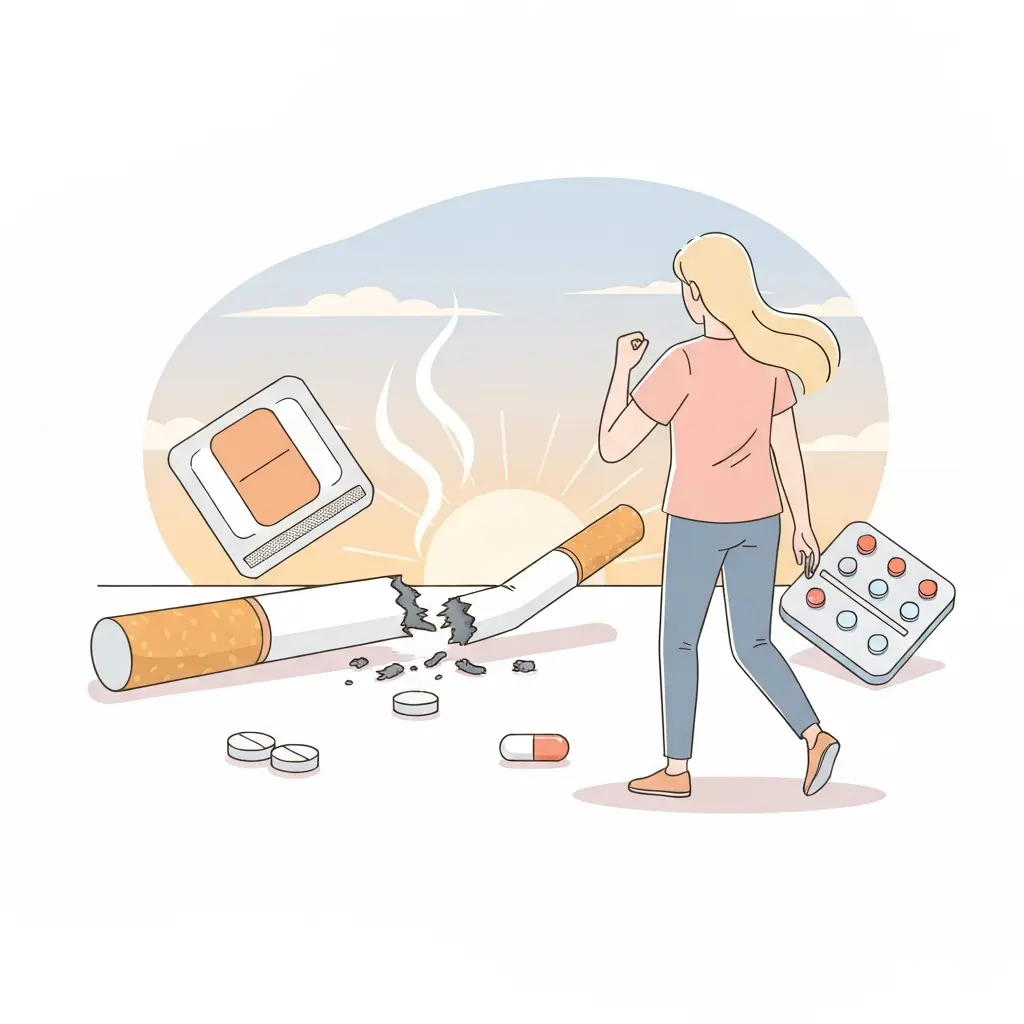
What Is the Most Effective Way to Quit Smoking? Doctor-Recommended Strategies for 2026
What is the most effective way to quit smoking? This is the question millions of people ask every year — and the answer has changed significantly in recent years. According to the World Health Organization, tobacco kills more than 8 million people annually, yet quitting is one of the hardest behavioral changes a person can make. The good news is that in 2026, the evidence is clearer than ever: combining pharmacotherapy with behavioral support gives you the best possible chance of becoming smoke-free for life.
Whether you have tried to quit once or a dozen times, understanding why certain methods work — and why others fall short — can make this attempt different from all the rest. This guide breaks down every major cessation strategy, ranks them by evidence, and explains how to build the most effective personal quit plan.
Why Is Quitting Smoking So Difficult?
Nicotine is one of the most addictive substances known. When you smoke, nicotine reaches the brain within 10 seconds and triggers a release of dopamine — the brain’s reward chemical. Over time, the brain restructures itself to depend on nicotine to maintain normal dopamine function. When you stop, dopamine levels drop rapidly, triggering withdrawal symptoms that include irritability, anxiety, insomnia, and intense cravings.
This is not a failure of willpower. The DSM-5 classifies nicotine use disorder as a diagnosable medical condition, and healthcare bodies including the NHS, CDC, and WHO recommend medical treatment — not willpower alone — as the first-line approach. Understanding the biology of addiction helps remove shame and replaces it with a strategic, evidence-based mindset.
The relapse rate for untreated quit attempts is approximately 95–97% within the first year. With medical support, that figure improves dramatically. The key insight is that the method you choose has a measurable, quantifiable impact on your outcome.
How Does Nicotine Replacement Therapy Work?
Nicotine replacement therapy (NRT) delivers controlled doses of nicotine to the body without the thousands of toxic chemicals in tobacco smoke. By maintaining nicotine at a lower, steady level, NRT reduces withdrawal severity and cravings while the person practices smoke-free behavior. A landmark Cochrane review of over 150 studies found that NRT increases quit rates by 50–60% compared to placebo, regardless of the setting.
There are six licensed forms of NRT approved in most countries: patches, gum, lozenges, inhalers, nasal spray, and sublingual tablets. Each has a slightly different delivery profile. Patches provide a steady baseline level over 16–24 hours. Short-acting forms like gum and lozenges provide quick relief for sudden cravings.
The NHS recommends starting NRT on your quit date rather than tapering beforehand. Using it consistently for the full 8–12 week recommended course is essential — many people stop too early when cravings ease temporarily, only to relapse weeks later.
Is Combination NRT More Effective Than Single NRT?
Yes — and the evidence is compelling. Research from the University of Oxford found that using a nicotine patch together with a short-acting form (gum or lozenge) is more effective than using a single NRT product alone. In one key study, 17.4% of people using combination NRT successfully quit at 12 months compared to 13.9% using a single product.
The logic is straightforward: the patch provides a stable nicotine baseline throughout the day, while short-acting NRT handles acute craving spikes — the moments most likely to trigger a relapse. This two-layer approach mirrors how the body was previously receiving nicotine, making the transition significantly smoother.
Combination NRT is safe for most adults and is now endorsed by the NHS, NICE, and the US Preventive Services Task Force. The total nicotine dose from combination NRT is generally lower than the amount smokers were absorbing from cigarettes, making it a much safer alternative.
What Are the Most Effective Prescription Quit-Smoking Medications?
Two prescription medications have the strongest evidence base for smoking cessation: varenicline (brand names Champix/Chantix) and bupropion (Zyban). A 2023 University of Oxford analysis of over 150,000 smokers confirmed that varenicline and cytisine (a plant-based alternative available in Eastern Europe) are among the most effective single interventions available.
Varenicline works by partially activating nicotine receptors in the brain, reducing cravings and withdrawal symptoms, while simultaneously blocking the reward effect of any cigarettes smoked. In clinical trials, it produced a four-week abstinence rate of 44%, compared to 29.5% for bupropion and 17.7% for placebo. It is typically taken for 12 weeks, with the quit date set 1–2 weeks after starting.
Bupropion is an antidepressant that reduces nicotine cravings through a different mechanism — it acts on dopamine and noradrenaline pathways. It is particularly useful for people with a history of depression or who experience pronounced mood-related withdrawal symptoms.
Both medications require a prescription and a consultation with a healthcare provider to assess suitability. Side effects are generally mild, but varenicline in particular has been extensively studied and has a strong safety profile in most healthy adults. Always discuss options with your GP or pharmacist before starting.
How Much Does Behavioral Counseling Improve Quit Rates?
Behavioral support — whether individual counseling, group sessions, or telephone quitlines — significantly improves outcomes when combined with pharmacotherapy. The CDC reports that combining behavioral support with medication roughly doubles quit rates compared to medication alone, producing overall abstinence rates of approximately 24% at 12 months.
Two specific counseling components have the strongest evidence: practical skills training (identifying triggers, planning coping responses, managing high-risk situations) and social support (encouragement, accountability, celebrating milestones). These address the psychological dimension of addiction that medication alone cannot fully treat.
For people without access to in-person programs, telephone quitlines have been shown to be highly effective — the CDC’s 1-800-QUIT-NOW service in the US and the NHS Stop Smoking Services in the UK offer free professional support. Research consistently shows that people who use these services are significantly more likely to quit successfully than those who try alone.
Do Quit-Smoking Apps and Digital Tools Actually Help?
Digital tools have emerged as an important complement to traditional cessation methods, particularly for the accountability and real-time support they provide between counseling sessions. A growing body of evidence supports their efficacy, especially apps that deliver cognitive behavioral techniques, progress tracking, and on-demand craving support.
Apps like iQuit offer features specifically designed around the behavioral science of quitting: tracking cigarettes-not-smoked, calculating health milestones, providing coping exercises during craving peaks, and building a streak-based motivation system. These mechanics tap into the same reward pathways that cigarettes exploit — but redirect them toward healthy behavior.
The iQuit app was developed with evidence-based behavioral change principles and is designed to work alongside NRT or medication, not replace it. Consider it the behavioral support layer of your quit plan — always available in your pocket when a craving strikes at an unexpected moment.
How Should You Build Your Personal Quit Plan?
The most effective quit plan is one that addresses all three dimensions of tobacco dependence: physical (nicotine addiction), behavioral (habit patterns), and psychological (emotional triggers). A strong plan includes a chosen quit date, a selected pharmacotherapy method, a source of behavioral support, and contingency strategies for high-risk moments.
Set your quit date within the next two weeks — close enough to maintain motivation but far enough to prepare properly. Inform close contacts about your quit attempt to activate social support. Remove cigarettes, lighters, and ashtrays from your environment. Identify your top three trigger situations (e.g., after meals, during stress, with alcohol) and plan specific alternative responses for each.
Track your progress from day one. Research consistently shows that self-monitoring improves outcomes in behavioral change interventions. Whether you use a journal, a spreadsheet, or a dedicated app like iQuit, seeing your smoke-free streak grow is a powerful motivator — and recognizing early warning signs helps you course-correct before a slip becomes a relapse.
For deeper reading on using technology to support your health goals, this guide on How to Use AI for Studying 2026 explores how AI-powered tools are changing personal development and habit formation. Similarly, health organizations are now using Marketing Automation for Healthcare to deliver personalized quit-smoking interventions at scale. And for a broader perspective on how digital content drives health decisions in 2026, see this overview of AI Content Marketing in 2026.
Frequently Asked Questions
What is the single most effective method to quit smoking?
No single method is most effective in isolation. The combination of varenicline (or combination NRT) plus structured behavioral counseling consistently produces the highest quit rates — approximately 24% abstinence at 12 months according to CDC data. Varenicline alone has a 44% four-week abstinence rate in clinical trials, the strongest single-agent result available.
How long does it take for quit-smoking medication to work?
Varenicline typically takes 1–2 weeks to reach therapeutic levels, which is why it is started before the quit date. NRT begins reducing withdrawal symptoms within hours of first use. Most people notice a significant reduction in craving intensity within the first 3–7 days of treatment.
Is willpower alone enough to quit smoking?
For most people, willpower alone is insufficient. Unaided quit attempts succeed approximately 3–5% of the time at 12 months. This is not a moral failing — it reflects the neurochemical reality of nicotine dependence, which the NHS and WHO classify as a medical condition requiring treatment. Medication and support dramatically improve these odds.
Can I use NRT and medication at the same time?
Combining varenicline with NRT is not routinely recommended in current guidelines and provides limited additional benefit over varenicline alone. However, bupropion can be combined with NRT. Always consult a healthcare provider before combining any cessation pharmacotherapies.
How many attempts does it typically take to quit smoking for good?
Research published in the BMJ found that the average smoker makes 30 quit attempts before achieving long-term abstinence. However, each attempt provides valuable information about personal triggers and effective strategies. Quit attempts that use medication and support are significantly more likely to result in long-term success.
What is the role of a quit date in smoking cessation?
A set quit date creates a psychological commitment point and allows time to prepare medications, remove smoking cues, and build support. Research shows that people who set a specific quit date are more likely to follow through than those who plan to quit “when the time feels right.” Most guidelines recommend choosing a date within two weeks of making the decision to quit.
Does exercise help with quitting smoking?
Yes. Exercise has been shown in multiple studies to reduce nicotine craving intensity and withdrawal symptoms acutely. Even a brisk 5-minute walk can reduce craving intensity for up to 50 minutes. Regular aerobic exercise also improves mood, reduces anxiety, and helps prevent post-cessation weight gain — all significant barriers to successful quitting.
What should I do if I slip and have a cigarette after quitting?
A slip is not a failure — it is information. Identify what triggered the slip (time of day, emotion, social situation, alcohol), reinforce your coping plan for that trigger, and recommit to your quit date without self-criticism. Research shows that people who continue their cessation plan after a slip are significantly more likely to achieve long-term abstinence than those who abandon the attempt entirely.
Are there free resources to help quit smoking?
Yes. In the US, the CDC’s 1-800-QUIT-NOW quitline and smokefree.gov offer free counseling and tools. In the UK, NHS Stop Smoking Services provide free NRT and behavioral support. Globally, the WHO’s mCessation program provides free quit-smoking text message programs. The iQuit app offers a free entry tier with core tracking and craving support features.
Ready to Quit With Evidence-Based Support?
iQuit is a science-backed quit-smoking app designed to help you track your progress, manage cravings in real time, and celebrate every milestone on your smoke-free journey. It works alongside NRT and medication — not instead of them — to give you the behavioral support layer every successful quit plan needs.
Download iQuit today and build the most effective quit plan for 2026 — one built on evidence, not guesswork.