Nicotine Addiction and Anxiety: The Vicious Cycle Explained (2026)
Most smokers will tell you: “Cigarettes help me relax. They take the edge off anxiety.” This feels completely true to them — and yet it contradicts what decades of neuroscience research actually shows. The relationship between nicotine addiction and anxiety is one of the most misunderstood aspects of smoking, and misunderstanding it is one of the key reasons people continue smoking when they want to quit. Once you understand the actual mechanism, the anxiety argument for smoking collapses — and your motivation to quit becomes considerably stronger.
This guide explains the precise neurological mechanism by which nicotine creates the anxiety it appears to relieve, what happens to anxiety levels during and after quitting, and how to manage the genuine anxiety that does occur during nicotine withdrawal.
The Neurochemical Mechanism: How Nicotine Creates Anxiety
Nicotine binds to nicotinic acetylcholine receptors (nAChRs) throughout the brain and body. In the short term, this binding triggers the release of multiple neurotransmitters: dopamine (reward), norepinephrine (alertness and stress response), and serotonin (mood regulation). This produces the characteristic “hit” — brief stimulation, relaxation of withdrawal symptoms, and mood improvement.
The critical problem is adaptation. With repeated exposure, the brain:
- Increases the number of nicotinic receptors (upregulation)
- Reduces its own baseline dopamine and serotonin production
- Becomes dependent on exogenous nicotine to maintain normal neurotransmitter levels
The result: when nicotine is not present — between cigarettes, during meetings, while sleeping — the brain is in a state of chemical deficit. This deficit manifests as anxiety, irritability, difficulty concentrating, and low mood. The smoker perceives this as “needing a cigarette to calm down” when in reality they need a cigarette to restore the baseline they destroyed by smoking in the first place.
This is the core of the anxiety-nicotine deception: nicotine is treating a problem it caused.
The Vicious Cycle: Why Smoking Feels Relaxing
The relief a smoker feels when lighting a cigarette is real. But it is not the relief of stress relief — it is the relief of withdrawal relief. The feeling of relaxation is the brain returning from a state of nicotine deficit back to what it now considers “normal.” A non-smoker in the same stressful situation does not experience this because their baseline neurochemistry is not in deficit.
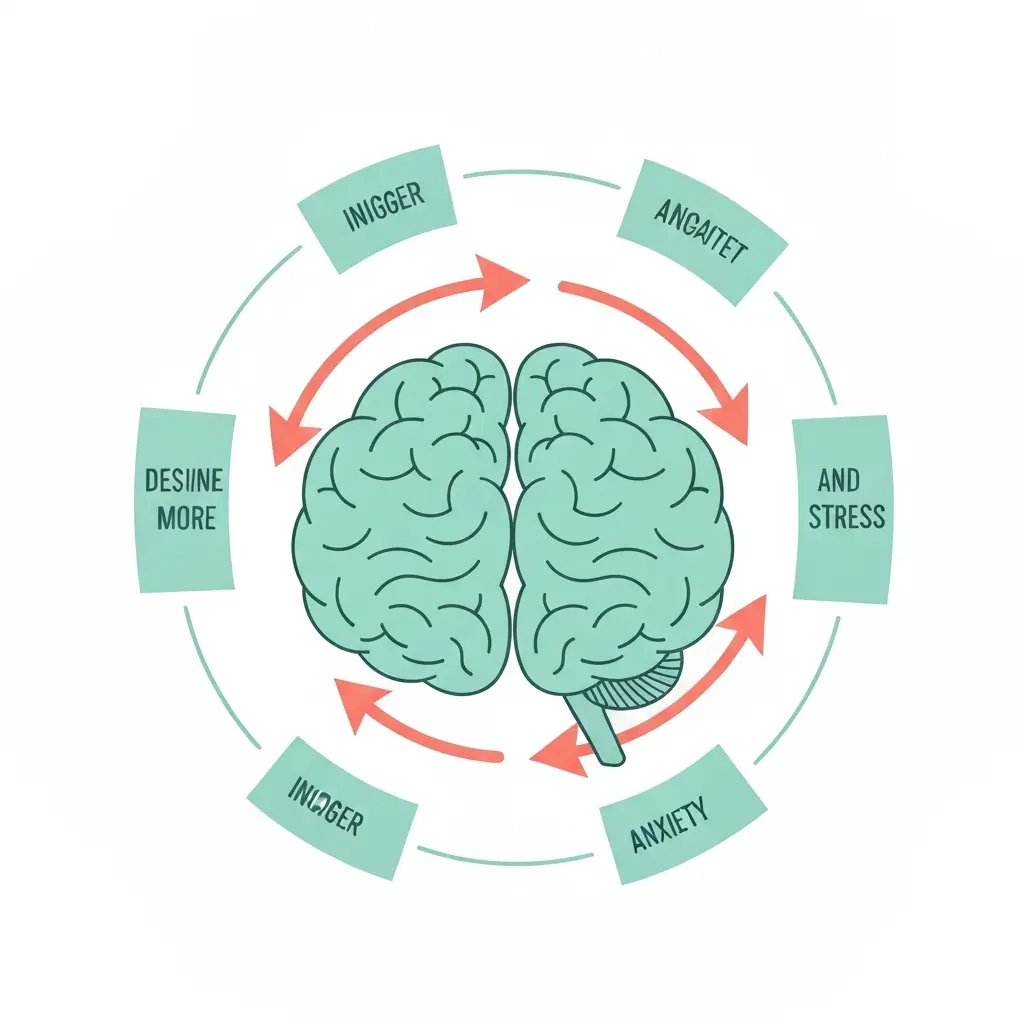
This cycle becomes self-reinforcing:
- Nicotine wears off → brain enters chemical deficit → anxiety builds
- Smoker lights cigarette → nicotine restores baseline → anxiety relieved
- Smoker attributes relief to cigarette’s stress-relieving properties
- Association strengthens: cigarettes = anxiety relief
- Next stress event triggers stronger craving and more anxiety
Research confirms this: a 2020 study published in Psychological Medicine found that smokers had higher baseline anxiety scores than non-smokers, and that this difference was not explained by other confounding variables. The anxiety is a product of the addiction, not a pre-existing condition that smoking happens to treat.
What the Research Shows About Anxiety and Quitting
The research on anxiety and smoking cessation is strikingly consistent. A landmark 2014 meta-analysis published in BMJ, reviewing 26 studies, found that smoking cessation was associated with a significant reduction in anxiety, depression, and stress compared to continued smoking. The effect size was comparable to antidepressant treatment in some analyses.
Key findings from the research:
- Ex-smokers show significantly lower anxiety scores than current smokers at 6-12 months post-cessation
- The anxiety reduction is particularly pronounced in smokers who smoked specifically for stress relief (i.e., those for whom the anxiety-nicotine cycle was most entrenched)
- The improvement in anxiety is maintained at long-term follow-up (1-5 years)
This is also consistent with findings on smoking and mental health more broadly — the relationship is bidirectional and complex, but quitting is consistently associated with improved mental health outcomes.
Managing Anxiety During Nicotine Withdrawal
While the long-term outcome for anxiety is positive, the short-term withdrawal period (days 1-14) does involve genuine anxiety symptoms as the brain recalibrates. This is normal, expected, and temporary. Strategies that help:
Evidence-Based Techniques
- 4-7-8 breathing: Directly activates the parasympathetic nervous system, counteracting the sympathetic (anxiety) activation of withdrawal. Use it reactively for acute anxiety moments and proactively at predictable stress times.
- Physical exercise: Exercise reduces anxiety via multiple pathways — cortisol regulation, endorphin release, and vagal tone improvement. Even 20 minutes of moderate exercise provides measurable anxiety reduction for 2-4 hours post-exercise.
- Cognitive reframing: When anxiety spikes during withdrawal, label it accurately: “This is my brain adjusting to not having nicotine. It is temporary and it is healing.” This metacognitive framing — understanding anxiety as withdrawal rather than as a signal to smoke — significantly reduces its power.
- NRT for acute anxiety: Fast-acting NRT (spray, gum) can manage withdrawal-driven anxiety spikes effectively during the most acute phase.
If Anxiety Is Severe
If withdrawal anxiety is significantly impairing daily function — panic attacks, inability to sleep, severe agitation — consult your GP. Prescription cessation medications (particularly varenicline) have anxiolytic properties alongside their cessation benefits. CBT from a qualified therapist is also highly effective for the anxiety-smoking co-occurrence pattern.
Long-Term Anxiety After Quitting
Most ex-smokers who have been smoke-free for 3 months or more report a meaningful improvement in baseline anxiety and overall sense of calm. This is not anecdotal — it is documented in the research literature and confirmed by NHS patient follow-up data.
The timeline for anxiety improvement typically follows this pattern:
- Days 1-7: Withdrawal anxiety peaks; may feel worse than before quitting
- Weeks 2-4: Withdrawal anxiety gradually reduces; some situational anxiety remains around triggers
- Months 2-3: Most ex-smokers notice their baseline anxiety is noticeably lower than during their smoking period
- 6 months+: Anxiety continues improving; many ex-smokers describe this as one of the most unexpected benefits of quitting
Understanding this trajectory matters for managing the first two weeks. The anxiety of early withdrawal is real — but it is the last gasp of a cycle that, if you hold on through it, resolves into genuine, lasting relief. The mood swings and emotional changes guide maps this emotional timeline in detail.
Frequently Asked Questions
Why do I feel more anxious after quitting smoking?
Increased anxiety in the first 1-2 weeks after quitting is nicotine withdrawal — the brain adjusting to the absence of nicotine’s neurochemical effects. This is temporary and is the opposite of what many people expect. Within 3-4 weeks, baseline anxiety typically begins declining below smoking-era levels. If anxiety remains severe beyond 4 weeks, consult a GP to assess whether additional support is needed.
Can quitting smoking make anxiety worse permanently?
No — the research does not support this. Multiple meta-analyses covering thousands of ex-smokers consistently show that long-term (6+ months) cessation is associated with lower anxiety, not higher. The short-term withdrawal anxiety is temporary. For people with pre-existing anxiety disorders, cessation should ideally be supported by mental health care, but the evidence shows quitting is still net beneficial for anxiety in the long term.
Does nicotine itself cause anxiety, or is it the withdrawal?
Both. Active nicotine use causes anxiety through receptor upregulation and baseline neurochemistry disruption. Nicotine withdrawal then causes additional anxiety as the brain readjusts. The net effect of the addiction cycle is increased anxiety compared to never-smokers. The anxiety relief smokers perceive is withdrawal relief — not genuine stress relief against a normal baseline.
Is there a link between smoking and panic attacks?
Yes. Research published in Archives of General Psychiatry found that daily smoking significantly increases the risk of developing panic disorder, and that nicotine withdrawal is a common trigger for panic attacks. Smokers with panic disorder show higher smoking rates than the general population, suggesting a self-medication cycle. Quitting smoking, supported by appropriate anxiety management during withdrawal, typically reduces panic attack frequency over time.
Manage Withdrawal Anxiety with iQuit
The iQuit app includes guided breathing exercises, craving-specific mindfulness tools, and real-time milestone notifications that reinforce the positive changes happening in your brain. Track your anxiety-free moments and build the evidence that quitting is making you calmer.