Online Quit Smoking Programmes vs In-Person Support: What Works Better in 2026?
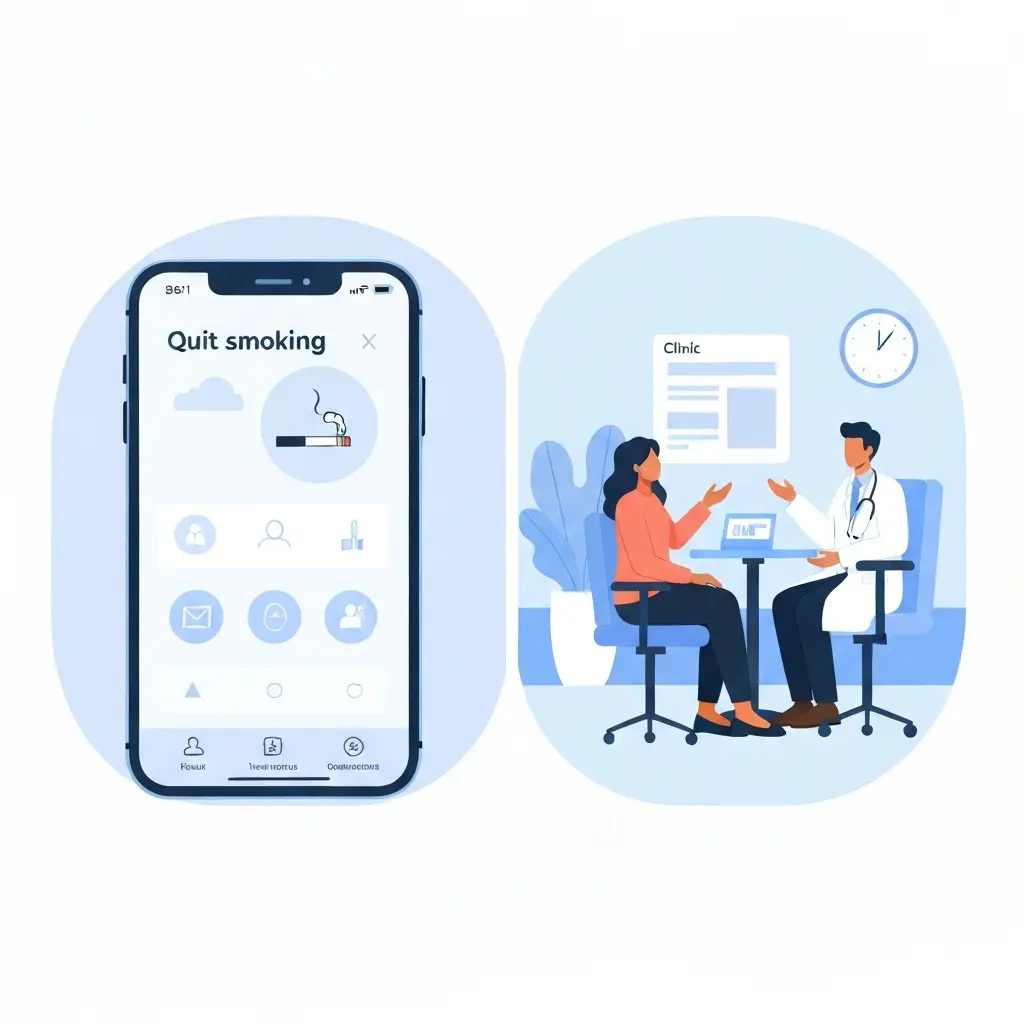
The landscape for cessation support has been transformed by digital technology. Today’s smoker can access quit programmes via apps, online counselling, NHS websites, and AI coaching tools — without ever visiting a clinic. The question is: does this digital shift come at the cost of effectiveness? Comparing online quit smoking programmes vs in-person support reveals a nuanced picture that has shifted considerably in digital’s favour by 2026.
What In-Person Cessation Support Offers
NHS Stop Smoking Services, hospital cessation clinics, and private counsellors offer:
- Personalised assessment by a trained specialist
- Face-to-face CBT and motivational interviewing
- Prescription for NRT or medication as part of the consultation
- Group sessions for peer support
- Follow-up appointments over 4–12 weeks
Evidence consistently shows that in-person support, particularly when delivered by a specialist over multiple sessions, produces the highest absolute quit rates in clinical settings — approximately 35–45% at 12 months when combined with medication.
What Online Quit Programmes Offer
Online programmes range from basic NHS quit websites to sophisticated AI coaching apps. Key offerings:
- AI coach — personalised, adaptive coaching available 24/7
- Craving tracking and real-time intervention
- Progress dashboards, milestones, and motivational content
- Community forums and peer support
- Video consultations with cessation specialists (some services)
- Free access to evidence-based tools at scale
Evidence: Comparative Effectiveness
| Support Type | 12-Month Quit Rate | Accessibility |
|---|---|---|
| No support (cold turkey) | 4–7% | Universal |
| Online only (app/website) | 15–22% | Universal |
| In-person counselling (NHS/clinic) | 25–35% (with medication) | Limited by access |
| Online + medication (GP-prescribed) | 25–35% | Good |
| In-person + medication + app | 35–45% | Limited |
The Real-World Barrier Problem
The most important insight: in-person support’s clinical superiority is largely irrelevant if the smoker cannot or does not access it. Research shows that only 10–15% of smokers who attempt to quit ever access professional in-person support. Reasons include:
- Time constraints — clinic hours, travel, waiting lists
- Geographic barriers — rural populations with no local service
- Stigma — reluctance to discuss smoking habit formally
- Unawareness — many smokers do not know free NHS support exists
Online programmes remove all these barriers. A comprehensive 2022 analysis found that population-level quit rates are higher in regions with strong digital cessation infrastructure than in regions with strong in-person services — because far more people access digital support.
The same principle applies in other behaviour-change contexts: accessibility determines real-world impact. Digital tools in domains from marketing automation to health coaching democratise access to support that was previously available only to those with resources or proximity.
Who Benefits Most from Each Format?
Choose in-person support if:
- You have had multiple relapses and need intensive, specialist support
- You have significant mental health conditions that require professional monitoring
- You want prescription medication alongside counselling
- You value face-to-face accountability highly
Choose online/app support if:
- You have schedule or geographic constraints
- You want 24/7 support (critical for cravings that strike at night)
- You are motivated and want a self-directed quit with daily structure
- You want to start immediately without appointments
Combine both if:
- You want maximum support — visit your GP for medication prescription, then use an app for daily behavioural support between appointments
Frequently Asked Questions
Are online quit smoking programmes as effective as in-person?
In clinical trials, in-person support slightly outperforms online-only programmes. However, when combined with medication, online programmes achieve similar quit rates to in-person support. In population-level studies, online programmes often produce higher actual quit rates because far more people access them. The best practical choice for most smokers in 2026 is a high-quality app combined with GP-prescribed medication.
Is the NHS quit smoking service free?
Yes. NHS Stop Smoking Services in England are free to access. They provide behavioural support, and NRT or prescription medication on the NHS (usually free or at prescription charge). The NHS Quit Smoking app is also free. Access these services via your GP or directly through local stop smoking services.
Can an online quit smoking programme give me a prescription for Champix?
Some online GP services and telehealth platforms can prescribe varenicline (Champix/Chantix) following a remote consultation. In the UK, NHS online consultation services and registered online GPs can prescribe cessation medications. This hybrid model — online consultation for prescription, app for daily support — is increasingly common and highly accessible.
Sources: Cochrane Review — Behavioural support for smoking cessation 2023; NHS Stop Smoking Services effectiveness data; Journal of Medical Internet Research — Online vs in-person cessation programmes meta-analysis 2022; WHO Digital health for tobacco cessation 2024.