Quit Smoking Acupuncture: What the Research Really Shows in 2026
Millions of people have turned to quit smoking acupuncture as an alternative or complement to conventional cessation methods. The appeal is understandable: acupuncture is non-pharmaceutical, has minimal side effects, and practitioners claim it specifically reduces nicotine cravings and withdrawal symptoms by stimulating points on the ear and body. But what does the clinical evidence actually say?
This guide cuts through the conflicting information, examines what rigorous studies show, explains the biological mechanisms proposed, and gives you a realistic expectation of what acupuncture can and cannot do if you are trying to quit. If you are considering acupuncture as part of your quit plan, read this first.
How Acupuncture for Smoking Is Supposed to Work
Traditional acupuncture theory holds that inserting fine needles into specific points along meridians (energy pathways) regulates the flow of qi (vital energy) and restores physical balance. In the context of smoking cessation, practitioners focus on:
- Reducing cravings: By stimulating points associated with relaxation and stress response
- Managing withdrawal symptoms: Particularly anxiety, irritability, and restlessness
- Detoxification: Claimed to accelerate nicotine clearance from the body
From a Western physiological perspective, researchers propose that acupuncture may stimulate the release of endorphins and serotonin, which can reduce the perceived need for nicotine’s neurochemical effects. Some studies also suggest acupuncture modulates dopamine pathways — the same reward circuits that nicotine hijacks. However, this mechanism remains incompletely understood and is an active area of research.
What the Clinical Evidence Shows
The evidence base for acupuncture and smoking cessation is genuinely mixed, and it is important to read it honestly.
Cochrane Reviews
The most authoritative systematic review comes from the Cochrane Collaboration, which examined 38 studies involving over 4,000 participants. The review found:
- No evidence that acupuncture is more effective than sham acupuncture for smoking cessation at 6 months or beyond
- Some short-term benefits (e.g. reduced craving intensity immediately after sessions) compared to no treatment
- Significant methodological limitations in most included studies (small samples, inconsistent protocols, high risk of bias)
The reviewers concluded there is insufficient evidence to either recommend or dismiss acupuncture for smoking cessation, and called for higher-quality trials.
WHO Recognition
Despite the Cochrane findings, the World Health Organization lists nicotine dependence as one of the conditions for which acupuncture has demonstrated therapeutic effect based on controlled trials. This recognition reflects a broader evidence threshold than the Cochrane standard and acknowledges that evidence quality varies across healthcare systems.
Individual Practitioner Reports
Many acupuncturists report high success rates with smoking cessation clients. However, these figures are not controlled for motivation level — people who seek out acupuncture to quit smoking are typically highly motivated, which itself predicts better outcomes regardless of the intervention used.
Auricular Acupuncture: The Specific Protocol Used
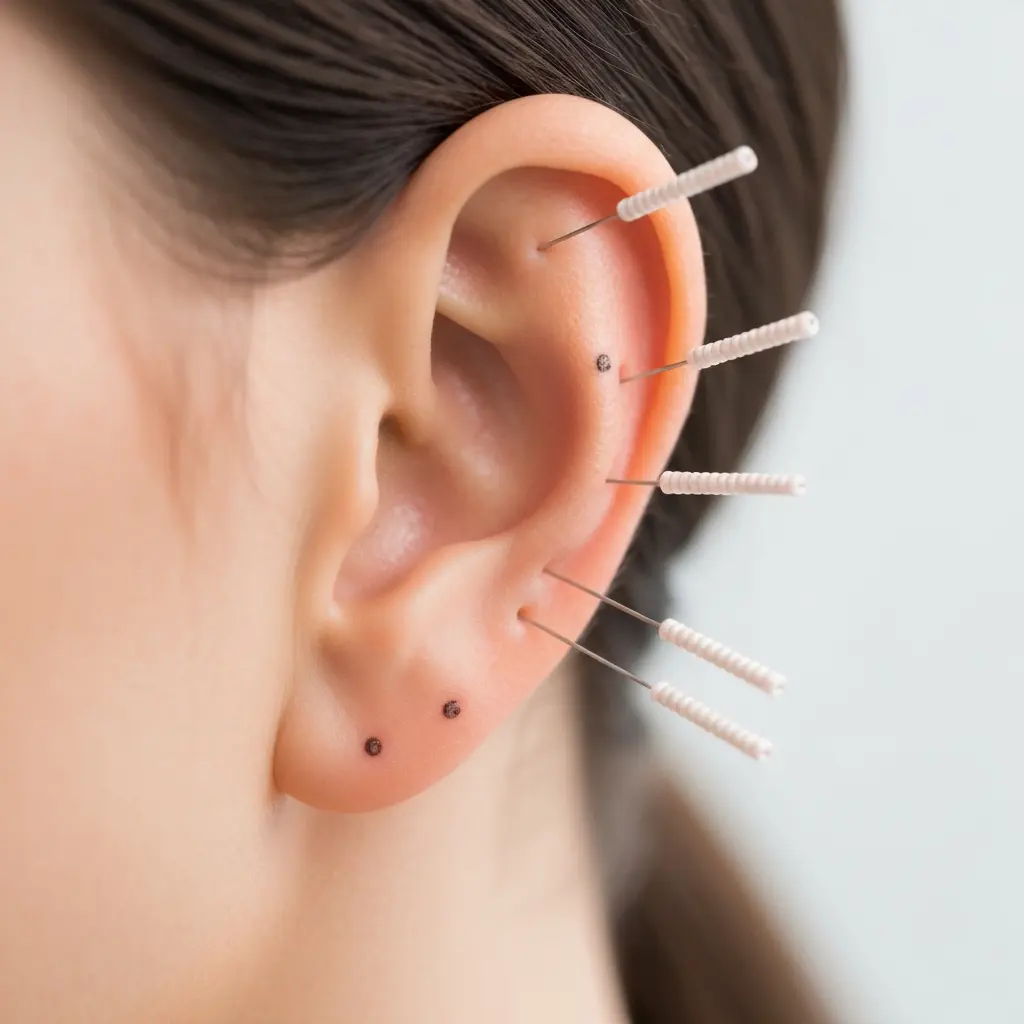
The most widely used acupuncture protocol for smoking cessation is auricular (ear) acupuncture, specifically the NADA (National Acupuncture Detoxification Association) protocol. This involves placing fine needles in five points on the outer ear:
- Sympathetic (autonomic nervous system regulation)
- Shen Men (relaxation and anxiety reduction)
- Kidney (organ strengthening)
- Liver (detoxification)
- Lung (respiratory function and nicotine processing)
Sessions typically last 30–45 minutes, with needles left in place while you rest quietly. Some practitioners use semi-permanent ear seeds or press needles that remain in place for several days between sessions, allowing you to apply gentle pressure to the points when cravings arise.
Acupuncture vs Other Cessation Methods
| Method | Evidence Level | NHS Recommended | Side Effects |
|---|---|---|---|
| Varenicline | Very strong | Yes | Nausea, dreams |
| NRT (patches/gum) | Very strong | Yes | Mild skin irritation |
| Behavioural therapy | Strong | Yes | None |
| Hypnotherapy | Moderate | Partial | None |
| Acupuncture | Inconclusive | Not routinely | Minimal |
The honest conclusion is that if your primary goal is maximising your chance of quitting, medically approved methods have substantially stronger evidence. However, acupuncture carries virtually no risk of harm, and for people who prefer non-pharmaceutical approaches or who have had adverse reactions to medication, it represents a legitimate complementary option — especially when paired with other support.
Understanding what is happening in your body during this process matters. Our guide to the nicotine withdrawal timeline explains the physical symptoms acupuncture may help alleviate, and our overview of body recovery after quitting smoking shows the long-term rewards of getting through those first weeks.
What to Expect From a Session
A typical acupuncture cessation session:
- Initial consultation (first visit, 20–30 min): Your history of smoking, general health, triggers, and goals
- Treatment (30–45 min): Fine needles placed in ear points and possibly body points; you rest quietly while they take effect
- Ear seeds or press needles: Small seeds or metal balls taped to ear points that you can press between sessions when cravings arise
- Frequency: Most practitioners recommend 3–6 sessions over 3–6 weeks, with more frequent sessions in the first week (your highest-risk period)
Needle insertion causes minimal discomfort — most people describe a brief dull ache or tingling that quickly subsides. Serious adverse effects are extremely rare with a qualified practitioner.
Finding a Qualified Practitioner
In the UK, look for members of the British Acupuncture Council (BAcC) — the main regulatory body for traditional acupuncture. BAcC members have completed at least three years of degree-level training. You can search their register at acupuncture.org.uk.
In the US, look for licensed acupuncturists (L.Ac.) who have passed the NCCAOM examination. Many states also license medical doctors who practice acupuncture; these practitioners typically use a more biomedical approach.
Always ask specifically about their experience with smoking cessation and whether they use the NADA or a similar standardised protocol.
Combining Acupuncture With Other Quit Tools
Where acupuncture shows its strongest results is as a complementary tool within a comprehensive quit plan. The evidence for combination approaches is consistently better than for any single intervention used alone. Consider pairing acupuncture with:
- NRT: To manage the physical dependency while acupuncture addresses stress and anxiety components
- Behavioural support: NHS stop smoking services provide structured group or one-to-one support that addresses the psychological habit layer
- A quit tracking app: The iQuit app tracks your smoke-free days, health milestones, and money saved — giving you daily motivation to continue. Use it between acupuncture sessions to maintain momentum when cravings arise
For managing specific withdrawal symptoms that may arise during your quit, our guides on nicotine addiction and anxiety and mood swings after quitting offer practical, evidence-based strategies.
Frequently Asked Questions
How many acupuncture sessions do you need to quit smoking?
Most practitioners recommend 3–6 sessions, with more frequent sessions in the first week after quitting when cravings and withdrawal are most intense. Some offer a single intensive session, though evidence suggests ongoing sessions produce better long-term outcomes. The total course length varies between practitioners and individual response.
Is acupuncture for smoking cessation available on the NHS?
Acupuncture for smoking cessation is not routinely available on the NHS because the evidence is not considered strong enough to meet NHS commissioning standards for widespread adoption. Some individual GPs and community services may offer referrals. Private sessions typically cost £50–£80 per session in the UK.
Does acupuncture reduce nicotine cravings?
Some studies show acupuncture reduces craving intensity in the short term (immediately after and in the hours following a session). The evidence for sustained craving reduction over days and weeks is weaker and inconsistent. For the strongest craving management, combining acupuncture with NRT (which directly addresses the physical nicotine withdrawal) tends to produce better outcomes.
Is ear acupuncture more effective than body acupuncture for quitting smoking?
Auricular (ear) acupuncture is the most widely researched protocol for smoking cessation and the approach most practitioners use. The evidence does not clearly show that auricular acupuncture is superior to body acupuncture — the research base for both approaches has methodological limitations. The NADA ear protocol is the most standardised, which makes practitioner skill and consistency somewhat more predictable.
Are there any risks or side effects of acupuncture for smoking cessation?
Serious adverse effects are extremely rare with a qualified practitioner. Minor side effects can include brief soreness at needle sites, light-headedness after the first session, and occasional minor bruising. Acupuncture should be avoided in people with bleeding disorders or those taking blood-thinning medication without medical advice. Always inform your acupuncturist of any medical conditions or medications.
Support Your Quit With iQuit
Whatever method you choose, having a tool that tracks your progress makes a real difference to long-term success. The iQuit app tracks your days smoke-free, money saved, and health milestones in real time — giving your commitment the tangible evidence it needs to stay strong between sessions. Download iQuit free on Android today.