How to Quit Smoking After 20 Years: What Actually Works for Long-Term Smokers in 2026
If you’ve been smoking for two decades or more, you already know that quitting isn’t just a matter of willpower. After 20 years, nicotine has shaped your brain’s reward circuitry, your daily rituals, and even your sense of identity. The advice designed for someone who started last year doesn’t always apply. But here’s the truth that research confirms: quitting smoking after 20 years is absolutely possible, and the health benefits begin within hours of your last cigarette — no matter how long you’ve smoked.
This guide is written specifically for long-term smokers. We’ll look at why quitting feels harder after decades of smoking, which cessation strategies have the strongest evidence for this group, and what a realistic quit plan looks like when you’re starting from a place of deep habit.
Why Long-Term Smoking Makes Quitting Different
After 20+ years of smoking, your brain has fundamentally adapted to nicotine. The neurotransmitter dopamine — your brain’s reward signal — has been trained to expect a nicotine hit with almost every positive or stressful moment in your life. Morning coffee, finishing a meal, a work break, a stressful phone call: these are all deeply wired triggers that have been reinforced thousands of times.
Research published in Neuropsychopharmacology shows that long-term nicotine exposure increases the density of nicotinic acetylcholine receptors in the brain. When you stop smoking, these receptors go through a period of “up-regulation” — they become hypersensitive to the absence of nicotine, which is why withdrawal can feel more intense the longer you’ve smoked.
There’s also the identity dimension. If you started smoking at 18 and are now 40, you’ve been a smoker for more than half your life. Cigarettes have been present at celebrations, funerals, relationships, and career milestones. Quitting isn’t just a habit change — for many long-term smokers, it’s a fundamental shift in self-concept.
Health Benefits Still Waiting for You
One of the most powerful motivators for long-term smokers is understanding that the body retains enormous capacity for recovery, even after decades of smoking. The timeline of benefits is well-documented:
| Time After Quitting | What Changes |
|---|---|
| 20 minutes | Heart rate and blood pressure begin to normalize |
| 12 hours | Carbon monoxide levels in blood drop to normal |
| 2–12 weeks | Circulation improves; lung function increases up to 30% |
| 1–9 months | Coughing and breathlessness decrease significantly |
| 1 year | Risk of coronary heart disease is half that of a continuing smoker |
| 5 years | Stroke risk falls to that of a non-smoker |
| 10 years | Lung cancer risk drops to roughly half that of a continuing smoker |
| 15 years | Heart disease risk approaches that of someone who never smoked |
Even if you’ve smoked a pack a day for 30 years, quitting at 50 adds an average of 6 years to your life expectancy compared to continuing. Quitting at 40 adds roughly 9 years. These are not small margins.
What Actually Works for Long-Term Smokers
The evidence is clear: combination approaches outperform single-method attempts significantly. Here’s what the research supports:
Nicotine Replacement Therapy (NRT)
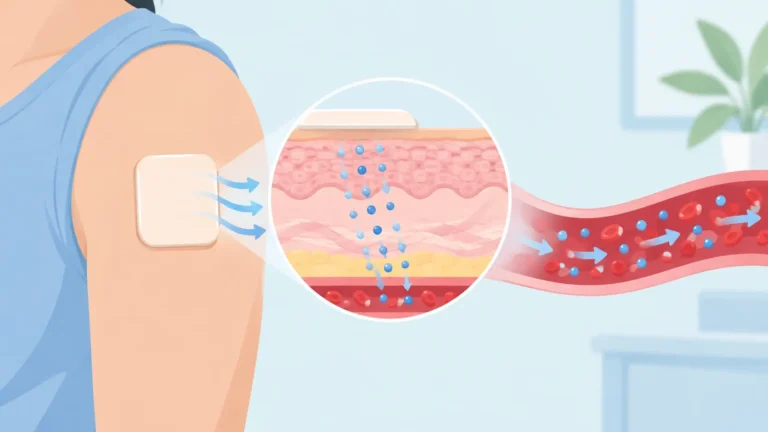
NRT remains one of the most effective tools for long-term smokers precisely because it addresses the physical dependency directly. Options include patches (which provide steady-state nicotine), gum and lozenges (for managing acute cravings), inhalers, and nasal sprays. Combining a long-acting form (patch) with a fast-acting form (gum or lozenge) nearly doubles quit rates compared to using either alone.
For heavy, long-term smokers, starting at the highest NRT dose available (21 mg patch) is generally recommended. Stepping down too quickly is a common mistake that increases the likelihood of relapse.
Prescription Medications
Varenicline (Champix/Chantix) is currently the most effective single pharmacotherapy for smoking cessation, with quit rates roughly 2–3 times higher than placebo in clinical trials. It works by partially activating nicotine receptors — reducing cravings — while also blocking nicotine from binding, which reduces the reward of smoking if you do slip. Bupropion (Wellbutrin) is another option, particularly for smokers with concurrent depression or anxiety.
Speak with your GP or a stop smoking specialist about which medication is appropriate for your health profile.
Behavioral Support
Individual or group behavioral counseling increases quit rates substantially on its own, and even more powerfully when combined with medication or NRT. For long-term smokers, behavioral support is particularly valuable because it addresses the psychological and habitual dimensions of smoking that medication alone cannot reach.
Quit Smoking Apps
Digital tools have matured considerably in recent years. The best quit smoking apps now offer real-time craving tracking, personalized behavioral coaching, progress milestones, community support, and AI-powered guidance. The iQuitNow app is designed specifically to help smokers track their progress and manage cravings moment-by-moment, which is particularly useful for long-term smokers whose cravings are deeply situational.
If you’re also working on improving other health behaviors alongside quitting, tools like CampaignOS wellness programs can help you build comprehensive habit-change systems. For those using AI-powered planning in other areas of life, Authenova’s productivity platform offers structured approaches to behavior change.
The Combination Approach: Your Strongest Option
For long-term smokers, the single most evidence-backed strategy is combining pharmacotherapy with behavioral support. According to a 2023 Cochrane Review, combining NRT with behavioral counseling results in quit rates of 15–25% at 12 months — compared to roughly 3–5% for unassisted willpower-only attempts.
What an effective combination plan looks like:
- Set a quit date 1–2 weeks out. This preparation time is associated with higher success rates than quitting impulsively.
- Start medication or NRT 1–2 weeks before your quit date if using varenicline, or on your quit date if using NRT.
- Enroll in behavioral support — a stop smoking service, counselor, or app-based program.
- Tell your support network. Social support is a consistently significant predictor of success.
- Identify your top 5 triggers and plan specifically for each one.
Relapse Is Part of the Process — Not Failure
Most long-term smokers who eventually quit successfully make multiple attempts before achieving long-term abstinence. Research from the journal BMJ found the average smoker makes 8–14 attempts before quitting for good. This is not a reason for despair — it’s a reason to reframe how you think about the process.
Each quit attempt, even one that ends in relapse, provides valuable information. What triggered the return to smoking? Was it stress, social settings, alcohol, or emotional pain? Each attempt is a learning experience that brings you closer to understanding your personal pattern.
Critically, do not wait months before trying again after a relapse. Evidence suggests that the sooner you restart a quit attempt following a relapse, the better your eventual outcomes.
Building Your Quit Plan in 2026
A structured plan dramatically outperforms unplanned quit attempts. Here’s a framework for long-term smokers starting their quit journey in 2026:
Week Before Your Quit Date
- Choose your cessation method(s) and obtain medication or NRT
- Download a quit tracking app and set it up with your quit date
- Remove all cigarettes, lighters, and ashtrays from your home and car
- Identify your top triggers and write down specific strategies for each
- Tell at least 3 people about your quit date and ask for their support
Your Quit Day
- Start your NRT or medication as directed
- Log your first smoke-free hours in your app
- Change your morning routine to break the wake-up cigarette habit
- Have a craving management plan ready (the 4 Ds: Delay, Deep breathe, Drink water, Do something else)
First 30 Days
- Check in with your app or counselor regularly
- Track your money saved — for a 20-a-day smoker, this adds up quickly
- Reward yourself at milestones: 1 day, 3 days, 1 week, 2 weeks, 1 month
- Avoid high-risk situations (parties, bars, social events with smokers) in the first 2 weeks if possible
Frequently Asked Questions
Is it worth quitting smoking after 20 or 30 years?
Absolutely. Studies consistently show that quitting at any age delivers significant health benefits. Quitting at 50 adds an average of 6 years to life expectancy. Within 1 year of quitting, heart disease risk is halved. Within 10 years, lung cancer risk drops to about half that of a continuing smoker. The body has remarkable capacity for recovery regardless of how long you’ve smoked.
Will withdrawal be worse if I’ve smoked for decades?
Heavy, long-term smokers can experience more intense withdrawal symptoms because the brain has had more time to adapt to nicotine. However, the physical withdrawal phase typically peaks at 2–3 days and largely subsides within 3–4 weeks. Starting at a higher NRT dose or using prescription medication (varenicline) helps manage this significantly.
What is the most effective method for long-term smokers?
Combination therapy — pharmacotherapy (NRT or prescription medication) plus behavioral support — gives long-term smokers the best chance of success. Varenicline combined with behavioral counseling has the strongest evidence base, with quit rates of 20–25% at one year. This is significantly higher than willpower-only attempts (3–5%).
How many attempts does it typically take to quit?
Research suggests the average smoker makes 8–14 attempts before achieving long-term abstinence. However, using professional support and evidence-based methods dramatically reduces the number of attempts needed. Each attempt is a learning experience, not a failure.
Can a quit smoking app really help after 20 years of smoking?
Yes, especially when used as part of a combination approach. Quit apps provide real-time craving support, progress tracking, financial savings calculations, and behavioral coaching — all elements that help long-term smokers stay motivated and manage triggers in the moment. Apps are most effective when paired with NRT or medication rather than used in isolation.
What should I do if I relapse after quitting?
Do not give up. A relapse is a learning opportunity, not a permanent failure. Analyze what triggered it, adjust your plan, and restart as soon as possible. Evidence shows that restarting quickly after a relapse is associated with better long-term outcomes. Reach out to your GP, stop smoking service, or app community for support.
Ready to Start Your Smoke-Free Journey?
No matter how many years you’ve smoked, the iQuitNow app gives you the tools to succeed — personalized craving management, real-time progress tracking, and AI-powered support designed for long-term smokers.