Quit Smoking App: How to Save $1,800 in 12 Weeks
A quit smoking app doesn’t just count your smoke-free days — it can show you, in real dollars, how much money is piling up in your pocket. Most smokers spend between $150 and $200 a month on cigarettes alone. Over 12 weeks, that’s well over $1,800 sitting on the table. The math is simple. Actually quitting? That’s the hard part — and that’s exactly where the right quit smoking app changes everything.
Table of Contents
The Real Cost of Smoking Per Year (And Per Week)
Here’s a number that doesn’t get talked about enough: the average American smoker spends roughly $2,500 to $4,000 per year on cigarettes, depending on their state. New York smokers pay upward of $14 per pack; in Missouri, it’s closer to $6. But even at the low end, a pack-a-day habit costs over $2,000 annually.
And that’s just cigarettes. The full cost of smoking per year — factoring in healthcare costs, higher insurance premiums, lost productivity, and dental bills — is estimated at over $300,000 across a lifetime of smoking, according to data cited by public health researchers. What most people miss is how quickly the daily pocket drain adds up when you actually write it down.
| Habit Level | Packs Per Day | Weekly Cost (at $10/pack) | Annual Cost | 12-Week Savings if Quit |
|---|---|---|---|---|
| Light smoker | 0.5 | $35 | $1,825 | $420 |
| Average smoker | 1 | $70 | $3,650 | $840 |
| Heavy smoker | 1.5 | $105 | $5,475 | $1,260 |
| Very heavy smoker (2 packs + premium brand) | 2 | $170+ | $8,800+ | $2,040+ |
The $1,800 headline figure? That’s very achievable for a 1.5-pack-a-day smoker using a $12/pack average — a realistic number in many US cities, the UK, Australia, and Canada. These numbers aren’t designed to scare you. They’re designed to show you what’s already yours to reclaim.
How a Quit Smoking Money Saved Calculator Works
A quit smoking money saved calculator is a tool — built into many cessation apps or available as a standalone web tool — that tracks your smoke-free days and multiplies them against your personal cigarette cost to show real-time financial savings. Most require just three inputs: daily cigarette count, price per pack, and quit date.
The mechanics are straightforward, but the psychological effect is significant. Seeing “$186 saved” on day 18 is a different experience than just knowing you haven’t smoked. It converts willpower into a concrete reward — and that’s not a small thing when a craving hits at 10 PM.
Online tools like the Nicorette Quit Smoking Calculator and WhatTheCalculator’s Quit Smoking Savings Calculator let you run these numbers before you even download an app. They’re a useful first step — but they don’t stay with you the way a mobile app does.
The best quit smoking apps embed the calculator natively, updating your savings counter in real time alongside health milestones. So while you’re watching your lung function improve, you’re also watching your bank balance improve. That dual feedback loop is what keeps people engaged past the first difficult week.
What Makes a Quit Smoking App Worth Using in 2026
Not all quit smoking apps are created equal. The market has matured considerably — you can now find apps backed by randomized controlled trials, AI coaching, and clinical behavior change frameworks. The question isn’t “should I use an app?” The question is “which one actually delivers results?”
A 2024 randomized controlled trial published in JMIR comparing the Smoke Free app against no intervention found meaningful differences in quit rates at 6 months. Earlier research published in npj Digital Medicine confirmed that smartphone-based cessation tools — especially those with real-time feedback — outperform passive self-help resources.
The NHS also lists digital tools as a supported option for people exploring quit smoking support options, alongside nicotine replacement therapy and professional counseling.
Core features that separate effective apps from the mediocre ones
Here’s what the evidence and user experience converge on:
- Real-time money-saved tracker — personalized to your pack price and daily usage
- Craving SOS tools — distraction exercises, breathing techniques, or instant AI chat for the 3–5 minute craving window
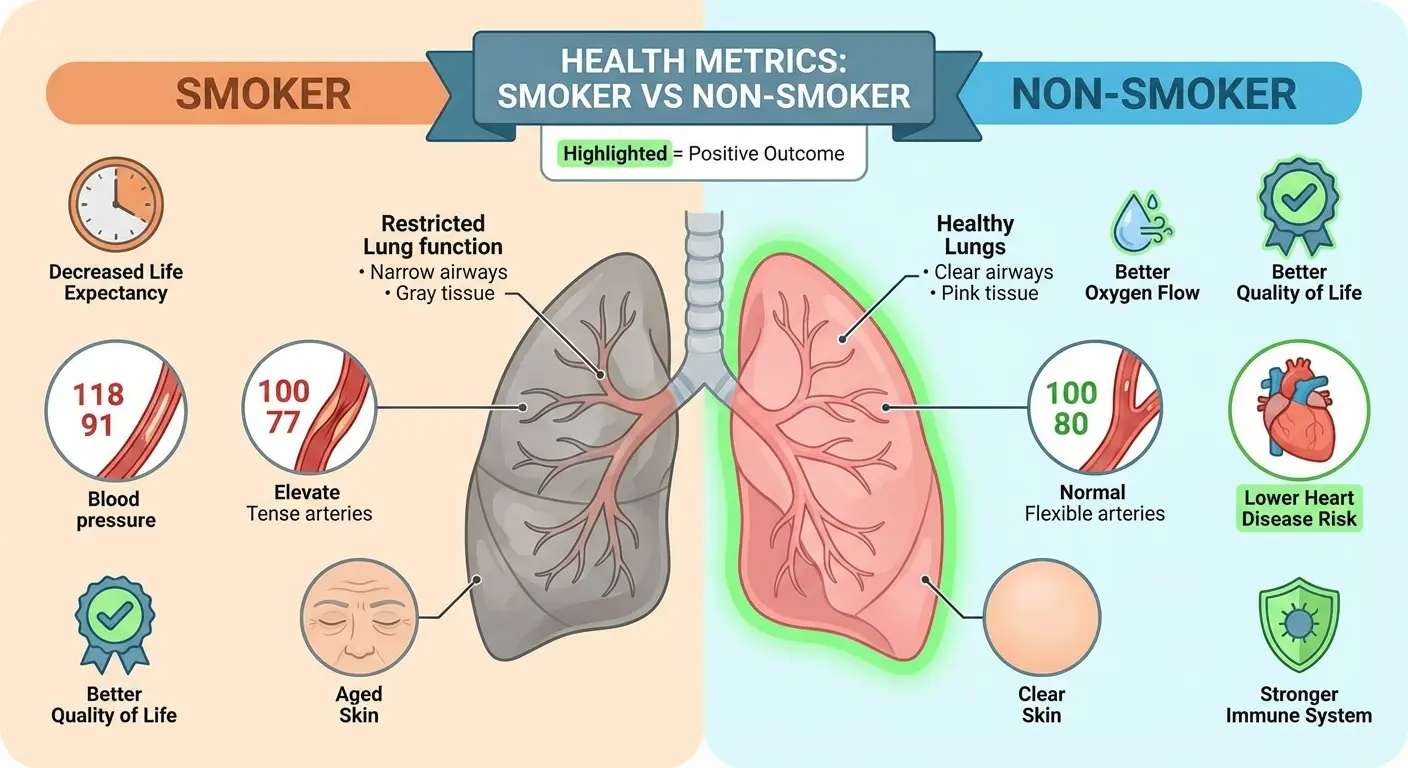
- Health recovery timeline — showing milestones like improved circulation at 2 weeks and reduced cancer risk at 1 year
- Daily missions or habit anchors — structured tasks that replace the ritual of smoking
- Community support — accountability partners or group challenges that statistically improve retention
- Mood and journal tracking — links emotional triggers to cravings (critical for understanding your personal patterns)
One app that checks all these boxes is iQuit (available on Google Play), which combines behavioral science frameworks with AI-powered coaching, an emergency SOS craving mode, and a health recovery timeline. Its community challenges and accountability circles address the social dimension of quitting — something many standalone calculators completely ignore. If you want to pair the financial motivation of a money-saved tracker with genuine behavioral support, it’s worth exploring.
For those who want to complement app-based tools with proven behavioral strategies, our guide to top strategies to quit smoking successfully covers the trigger management and coping techniques that work alongside any app’s tracking features.
12-Week Savings Breakdown: What to Expect
Twelve weeks is long enough to see serious money accumulate — and short enough that it doesn’t feel abstract. Here’s how the financial recovery typically tracks, assuming a 1-pack-a-day habit at $10/pack:
| Week | Cumulative Savings | Health Milestone | Common Challenge |
|---|---|---|---|
| Week 1 | $70 | Carbon monoxide levels normalize in 12–24 hours | Withdrawal peaks — cravings most intense |
| Week 2 | $140 | Circulation starts to improve | The “false confidence” dip — social situations are risky |
| Week 4 | $280 | Lung function improves noticeably | Stress relapse triggers emerge |
| Week 6 | $420 | Coughing and shortness of breath reduce | Boredom smoking urges spike |
| Week 8 | $560 | Taste and smell sharpen significantly | Weight gain concerns may emerge |
| Week 12 | $840 | Risk of infection drops; energy levels increase | Complacency — “just one won’t hurt” thinking |
At $12/pack (common in the UK, Australia, or major US cities), week 12 savings hit $1,008 for one pack a day. Heavy smokers at 1.5 packs and $12/pack cross $1,800+ by week 12 — which is exactly where the title comes from. The math is real. It just requires actually making it to week 12.
How to Use a Quit Smoking App to Hit Your Savings Goal
Downloading an app is easy. Using it effectively during a 3 AM craving is a different skill. Here’s a step-by-step approach that combines the financial tracking features with the behavioral tools to maximize your 12-week outcome.
Step-by-step guide to hitting $1,800 in savings
- Set your quit date before you install anything. A firm date performs better than “starting soon.” Pick a Monday, two to seven days out. Enough time to prepare; not so far that you lose urgency.
- Enter your accurate cigarette data into the app. Don’t round down your daily count — be honest. The money-saved calculator is only motivating if the savings figure is credible to you.
- Set a savings goal and name it. “$1,800 = new laptop” or “$1,800 = trip to Portugal” is far more motivating than a bare number. Most quit apps have a goal-naming feature; use it.
- Enable craving SOS before your first craving hits. Know exactly where the emergency support button is. A craving lasts 3–5 minutes. If you can get through those minutes, you win that round.
- Check your money counter every morning. Morning habit anchoring — opening the app at the same time each day — dramatically improves retention through the difficult first two weeks.
- Use the journal to log emotional triggers. Understanding why you want to smoke (stress, boredom, social situations) is the fastest path to effective strategies for managing cravings and withdrawal long-term.
- Join a community challenge or accountability group. Apps with social features show meaningfully better outcomes — the accountability effect is well-documented in behavioral research.
- Celebrate financial milestones visibly. When you hit $100, do something with $20 of it. When you hit $500, spend $50 on yourself. Making the savings tangible prevents them from feeling abstract.
- Quit date confirmed and in your calendar
- Daily cigarette count entered accurately
- Savings goal named and personalized
- SOS craving support activated and tested
- Morning app check-in habit established
- Trigger journal started
- Community or accountability partner connected
- First savings milestone reward planned
The NCI’s quitSTART app also offers evidence-based tips and mood tracking for those who want a free, government-backed starting point. That said, pairing any tracker with behavioral strategies — like the proven quit smoking strategies that address long-term trigger management — gives you the strongest possible foundation.
Ready to Watch Your Savings Add Up?
The iQuit app tracks your money saved in real time — alongside health milestones, craving support tools, and community challenges designed to get you to week 12 and beyond. Financial motivation and behavioral science, together in one place.
Download iQuit on Google Play — Free
Free to download. Premium features available for unlimited AI coaching and device sync.
Frequently Asked Questions
How much money can I realistically save by quitting smoking in 12 weeks?
Savings depend on how much you smoke and your local cigarette price. A 1-pack-a-day smoker paying $10/pack saves roughly $840 in 12 weeks. At $12/pack or 1.5 packs a day, savings exceed $1,200–$1,800. Use a personalized quit smoking money saved calculator to get your specific figure.
Do quit smoking apps actually help people stop smoking?
Yes — clinical evidence supports their effectiveness. A 2024 randomized controlled trial published in JMIR found measurable quit rate improvements with app-based interventions versus no support. Apps are most effective when they include real-time feedback, craving support tools, and behavioral tracking rather than just a simple counter.
What is the best quit smoking app in 2026?
The best quit smoking app in 2026 depends on your priorities. Apps like iQuit offer AI coaching, money-saved tracking, community challenges, and SOS craving support in one place. The NCI’s quitSTART is a solid free option. Look for apps with behavioral science backing, craving tools, and real-time financial tracking for maximum effectiveness.
How does a quit smoking money saved calculator work?
You enter your daily cigarette count, the price you pay per pack, and your quit date. The calculator multiplies your smoke-free days by your daily spend to show cumulative savings in real time. Most quit smoking apps have this built in; standalone web calculators also let you run projections before you commit to quitting.
What is the true cost of smoking per year beyond just cigarettes?
The direct cost of cigarettes ranges from $1,800 to $8,800+ per year depending on habit and location. Beyond that, smokers face higher life insurance premiums (often 25–50% more), increased health costs, dental expenses, and car and home depreciation from smoke damage. The lifetime financial cost has been estimated in the hundreds of thousands of dollars.
Can I use a quit smoking app alongside nicotine replacement therapy?
Absolutely — combining an app with nicotine replacement therapy (NRT) like patches or gum is one of the most effective quit approaches available. The NHS recommends exploring both digital tools and NRT together. The app handles behavioral triggers, progress tracking, and motivation; NRT manages the physical nicotine dependency.
The right quit smoking app turns an abstract resolution into a daily, measurable win — for your health and your wallet. Whether you’re tracking your first $70 saved in week one or watching your cumulative total approach $1,800 by week 12, a money-saved calculator keeps the motivation concrete when cravings try to convince you otherwise. Start with an honest number, name your goal, and let the app do the rest.
Last updated: 2026. Statistics sourced from publicly available pricing data, clinical trial publications, and national health organizations.