
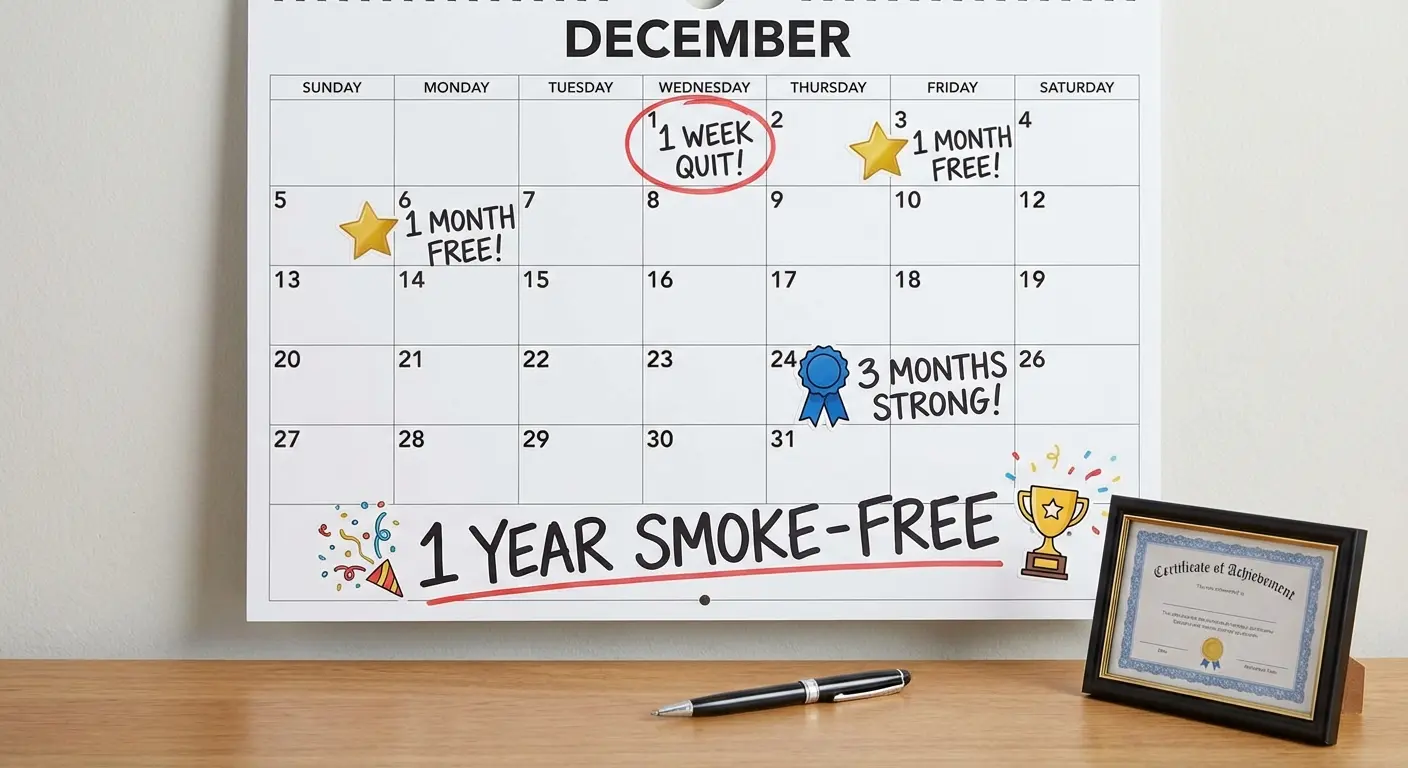
Quit Smoking App: Save $2,000 in 6 Months Fast
A quit smoking app won’t magically erase cravings overnight — but here’s what it can do: turn every cigarette you don’t smoke into a dollar figure you can actually see. That number gets surprisingly large, surprisingly fast. The average pack-a-day smoker in the U.S. spends between $3,000 and $5,500 per year on cigarettes alone — and that’s before factoring in healthcare costs, dental bills, or lost productivity.
What most people miss is that the financial argument for quitting isn’t just motivational fluff. It’s a behavior-change mechanism. Watching your savings climb in real time — $12 today, $84 this week, $360 this month — creates a feedback loop that most willpower-only approaches completely lack.
This article breaks down exactly how much smoking costs you, which quit smoking apps actually work in 2026, and how to use a quit smoking money saved calculator to turn those numbers into a plan that sticks.
The Real Cost of Smoking Per Year (It’s More Than You Think)
The sticker price on a pack of cigarettes is just the beginning. When you calculate the true cost of smoking per year, the number that comes back tends to stop people cold.
Here’s the math most smokers haven’t done:
- Pack price (U.S. average, 2025): $8.00–$11.00 depending on state
- Pack-a-day habit: $2,920–$4,015 per year just on cigarettes
- Life insurance premium surcharge for smokers: 2–3× the non-smoker rate
- Estimated lifetime healthcare costs attributable to smoking: $35,000+ per smoker, per the CDC
- Lost wages from smoking breaks and illness: Estimated $6,000/year by some employer studies
New York smokers pay some of the highest prices in the country — over $14 per pack after taxes. A pack-a-day habit there costs roughly $5,110 annually. Even in tobacco-producing states with lower taxes, the cost still exceeds $3,000 per year.
The six-month figure of $2,000 in savings isn’t an exaggeration. It’s actually conservative for many smokers, especially those in high-tax states or those with a pack-plus-per-day habit. The quit smoking app category was built precisely around making this math visible — and visceral.

How a Quit Smoking Money Saved Calculator Changes Your Mindset
There’s a reason behavioral economists call this “making the abstract concrete.” Most smokers know cigarettes are expensive in a vague, uncomfortable way — but they’ve never sat down with a quit smoking money saved calculator and watched the number grow in real time.
That experience is genuinely different from reading a statistic. Research published in JMIR mHealth and uHealth found that real-time feedback on health and financial progress significantly increases engagement with cessation tools — particularly when the feedback is personalized rather than generic. (The QuitBot RCT, referenced in this peer-reviewed study from PMC, showed that chatbot-delivered, personalized cessation support produced measurable quit rates.)
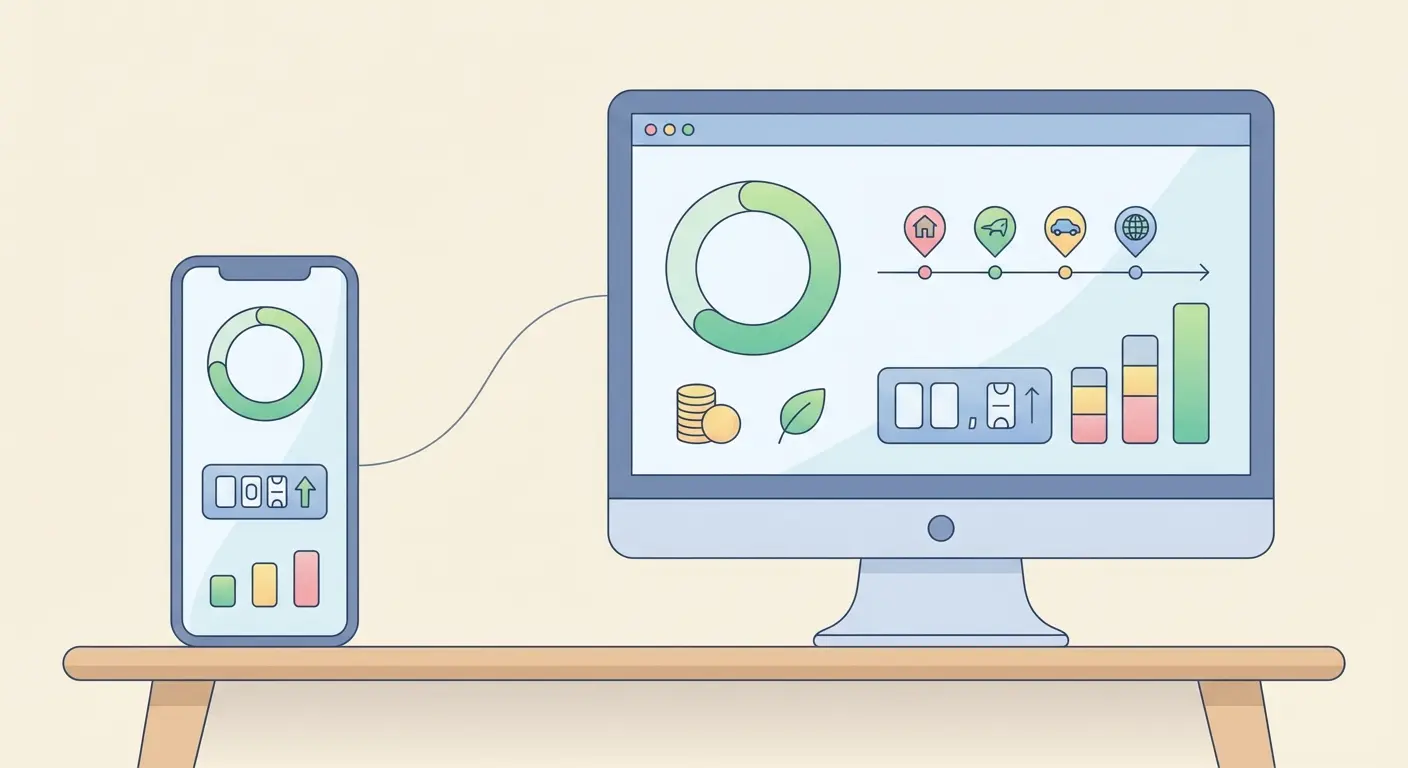
Here’s how a savings calculator works inside a quit smoking app:
- Input your baseline: How many cigarettes per day, cost per pack, and quit date.
- Watch the counter run: The app calculates money saved per minute, hour, and day — not just cumulative totals.
- Set milestone rewards: Many apps let you assign specific purchases to savings milestones (“At $500 saved, I’m booking a weekend trip”).
- Track health alongside wealth: The best apps layer in health recovery milestones — improved lung function at 72 hours, reduced heart disease risk at 1 year — alongside the financial data.
The psychological mechanism at work here is called “implementation intention.” You’re not just deciding to quit — you’re mentally rehearsing what quitting makes possible. That mental link between quitting and a specific, desirable outcome is one of the most well-studied predictors of follow-through in behavioral science.
If you want to go deeper on managing cravings and triggers once you’ve set your quit date, the quit strategies and trigger management guide at iQuitNow is worth reading before or alongside any app you choose.
Best Quit Smoking App 2026: Features That Actually Help
Not every quit smoking app is created equal. Some are little more than a timer with a counter. The best quit smoking app in 2026 does several things that cheap or outdated alternatives simply don’t.
Features Worth Paying For
AI-powered craving support is the biggest differentiator right now. When a craving hits at 11pm and your support network is asleep, an AI coach that can respond in real time — with personalized, evidence-based techniques rather than generic tips — is genuinely valuable. Trevor Noah’s conversation with AI researchers on how large language models are being used to combat addiction covers why this technology is more than a gimmick.
Emergency SOS craving tools — quick-access features that launch the moment a craving spikes — are more useful than any amount of motivational content you’d read between cravings. These are the features that matter at 2am, not at 2pm when you’re browsing the app store.
Health timeline tracking grounds your progress in physiology, not just willpower. Within 20 minutes of your last cigarette, heart rate and blood pressure drop. Within 12 hours, carbon monoxide levels normalize. Seeing these milestones tick past — anchored to real data — builds momentum in a way that abstract motivation can’t.
Community and accountability features matter more than most people expect. Cessation research consistently shows that social support — even digital social support — improves quit rates. Accountability circles, where a small group tracks progress together, replicate the social dynamics of in-person support groups without the scheduling friction.
Journal and mood tracking help users identify patterns — the specific times of day, emotional states, or environmental triggers that spike cravings. Most people can name one or two triggers off the top of their head, but the patterns that appear in two weeks of mood data are often surprising. For a deeper look at how to work with those patterns, the evidence-based quitting techniques and withdrawal tips article covers the behavioral side in more detail.
Free vs. Premium: Where the Line Is
Free tiers of most quit smoking apps give you the counter and basic milestones. That’s genuinely useful — don’t dismiss it. But premium features like unlimited AI coaching, device sync (Apple Health, Google Fit, Fitbit integration), and personalized disease risk assessments are where the behavioral science gets applied at scale. For most people, a $5–$10/month premium subscription pays for itself before the first week is out, simply in cigarettes not purchased.
The quitSTART app from Smokefree.gov and the QuitGuide app from the National Cancer Institute are both free, government-backed options worth knowing about — particularly for users who want NRT guidance alongside digital support. The CDC’s Tips From Former Smokers video resources pair well with any app you choose.
Quit Smoking App Comparison: Side-by-Side Breakdown
Here’s where it gets useful. The table below compares the major quit smoking apps available in 2026 across the features that actually determine whether someone stays quit past 30 days.
| App | Savings Tracker | AI / Craving Support | Community | Health Timeline | Free Tier | Platform |
|---|---|---|---|---|---|---|
| iQuit (iQuitNow) | ✅ Real-time | ✅ AI coach + SOS mode | ✅ Accountability circles | ✅ + Disease risk | ✅ (premium available) | Android (Google Play) |
| Smoke Free | ✅ Real-time | ❌ No AI coach | Limited | ✅ Basic | ✅ (freemium) | iOS & Android |
| QuitNow! | ✅ Real-time | ❌ No AI coach | ✅ Forum-based | ✅ Basic | ✅ (freemium) | iOS & Android |
| quitSTART (Smokefree.gov) | ✅ Basic | ❌ | ❌ | ✅ Basic | ✅ (fully free) | iOS & Android |
| QuitGuide (NCI) | ✅ Basic | ❌ | ❌ | ✅ Basic | ✅ (fully free) | iOS & Android |
The honest takeaway: If you want the financial tracking alone, most apps deliver. If you want AI coaching, emergency craving support, community accountability, and device health sync in one place, the field narrows quickly. iQuit stands out for combining behavioral science-backed features with real-time savings data in a way that the free government tools simply aren’t designed to do.
Your 6-Month Savings Plan: Step-by-Step
The $2,000 figure isn’t hypothetical — it’s the math for a pack-a-day smoker paying $11/pack, which covers most U.S. markets. Here’s how to build your personal savings plan using a quit smoking app.
- Calculate your baseline this week. Count actual packs used over 7 days, multiply by your real pack price (not the round number you might guess). This gives you an honest weekly burn rate.
- Set a firm quit date — 7 to 14 days out. Research consistently shows that quit dates set too far in the future lose their motivating power. One to two weeks gives you time to prepare without losing urgency.
- Download and configure your quit smoking app before quit day. Enter your cigarettes per day, pack cost, and quit date. Let the app generate your projected savings timeline — screenshot the 6-month number and keep it somewhere visible.
- Assign your first three savings milestones. $100 saved = specific small reward. $500 saved = medium reward. $2,000 saved = the goal you’re working toward. Be specific. “A weekend trip to Austin” beats “something nice.”
- Set up craving alerts and SOS shortcuts. Do this before quit day, not during a craving. You won’t have the patience to configure features when your hands are shaking at 9pm.
- Join or create an accountability circle. Even one other person tracking progress alongside you meaningfully improves 30-day quit rates. Digital accountability circles in apps like iQuit make this possible without scheduling coordination.
- Review your savings weekly, not daily. Daily fluctuations in mood or craving intensity can obscure the trend. A weekly savings review — “I have $84 more this week than I did last week” — maintains motivation without creating obsessive checking behavior.
The Science Behind AI Coaching and Craving Support
Skepticism about AI coaching in a quit smoking app is reasonable. The question isn’t whether AI sounds convincing — it’s whether it actually helps people stay quit. The evidence is starting to catch up with the technology.
The QuitBot randomized controlled trial, published in JMIR mHealth, found that conversational chatbot-delivered cessation support produced statistically significant improvements in engagement and self-reported quit attempts compared to static digital interventions. The key mechanism wasn’t the AI’s sophistication — it was availability. Cravings don’t keep business hours. A support tool that responds at midnight is categorically different from one that requires a scheduled appointment.
Here’s where it gets interesting: the most effective AI coaching in cessation apps isn’t trying to replace therapists or counselors. It’s filling the gaps — the moments between human touchpoints where most relapses actually happen. The average craving lasts 3–5 minutes. An AI that can redirect attention, prompt a breathing exercise, or surface a progress stat in that window is doing something a hotline can’t realistically provide.
iQuit’s AI coach operates on this principle — available for unlimited sessions on premium plans, with an emergency SOS craving feature designed for high-intensity moments. When combined with the app’s journal and mood tracking (which identifies personal trigger patterns), the AI coaching becomes progressively more personalized over time.
The coping with cravings techniques and withdrawal support strategies in the effective quitting techniques guide complement AI-based support by giving users a behavioral toolkit they can apply independently — which is what you want when an app isn’t available or when human judgment matters more than algorithmic response.
One counterintuitive finding from cessation research: users who engage with both app-based tracking and community features quit at higher rates than those who use either alone. The financial tracking and the social accountability work together — the money makes the stakes concrete, and the community makes the commitment social. That combination is hard to replicate with willpower alone.
Frequently Asked Questions
How much money can I save by quitting smoking in 6 months?
A pack-a-day smoker paying the U.S. average pack price of $8–$11 saves between $1,460 and $2,015 in six months on cigarettes alone. In high-tax states like New York, that figure can exceed $2,500. A quit smoking money saved calculator in an app gives you the exact number based on your personal habit and local prices.
What is the best quit smoking app in 2026?
The best quit smoking app in 2026 depends on what features matter most to you. For AI coaching, emergency craving support, and community accountability in one app, iQuit is among the most feature-complete options available on Android. For free, government-backed tools, quitSTART (Smokefree.gov) and QuitGuide (National Cancer Institute) are reliable starting points with no cost barrier.
Do quit smoking apps actually work?
Yes — with an important caveat. Quit smoking apps are significantly more effective when they include real-time progress tracking, personalized craving support, and social accountability features, rather than serving as passive information tools. A 2024 RCT published in JMIR mHealth found that conversational, app-based cessation support improved quit attempt rates compared to standard digital resources. Apps work best as one component of a broader quit strategy, not as a standalone solution.
What does the cost of smoking per year include?
The direct cost of smoking per year includes cigarette purchases ($3,000–$5,500 for a pack-a-day habit depending on location), but the full cost is much higher. Indirect costs include life insurance premium surcharges (often 2–3× higher for smokers), increased healthcare expenses, dental costs, and reduced productivity. Total lifetime costs attributable to smoking are estimated at $35,000 or more per smoker by the CDC.
Is there a free quit smoking app that tracks money saved?
Yes. Several free quit smoking apps include a money saved calculator, including Smoke Free, QuitNow!, quitSTART, and QuitGuide. Free tiers typically cover basic savings tracking and health milestone timelines. Premium features like AI coaching, unlimited craving support, and device health sync are available through paid subscriptions on apps like iQuit, usually starting around $5–$10/month.
How does an AI coach in a quit smoking app help with cravings?
An AI coach in a quit smoking app helps with cravings by providing immediate, personalized responses during high-risk moments — including breathing exercises, distraction techniques, and progress reminders — at any time of day. Unlike scheduled support calls or online forums, AI-based craving tools are available in real time, which matters because most relapses happen in unplanned, late-night, or high-stress moments when human support isn’t accessible.
Start Tracking Your Savings Today
The math is simple. The decision is harder. But having the right tools in place before cravings hit — not during — is what separates successful quit attempts from the ones that end at day three.
If you’re ready to see exactly how much your habit is costing you and watch that number reverse in real time, the iQuit app on Google Play brings together real-time savings tracking, AI coaching, emergency SOS craving support, health recovery milestones, and community accountability — all the features covered in this article, in one place.
For practical behavioral strategies to complement any quit smoking app you choose — managing triggers, setting goals, and building relapse prevention habits — the complete quit strategies guide at iQuitNow is a strong next step.
Your $2,000 is already waiting. It’s just currently burning.