

Quit Smoking App: How You Save $3,000+ a Year
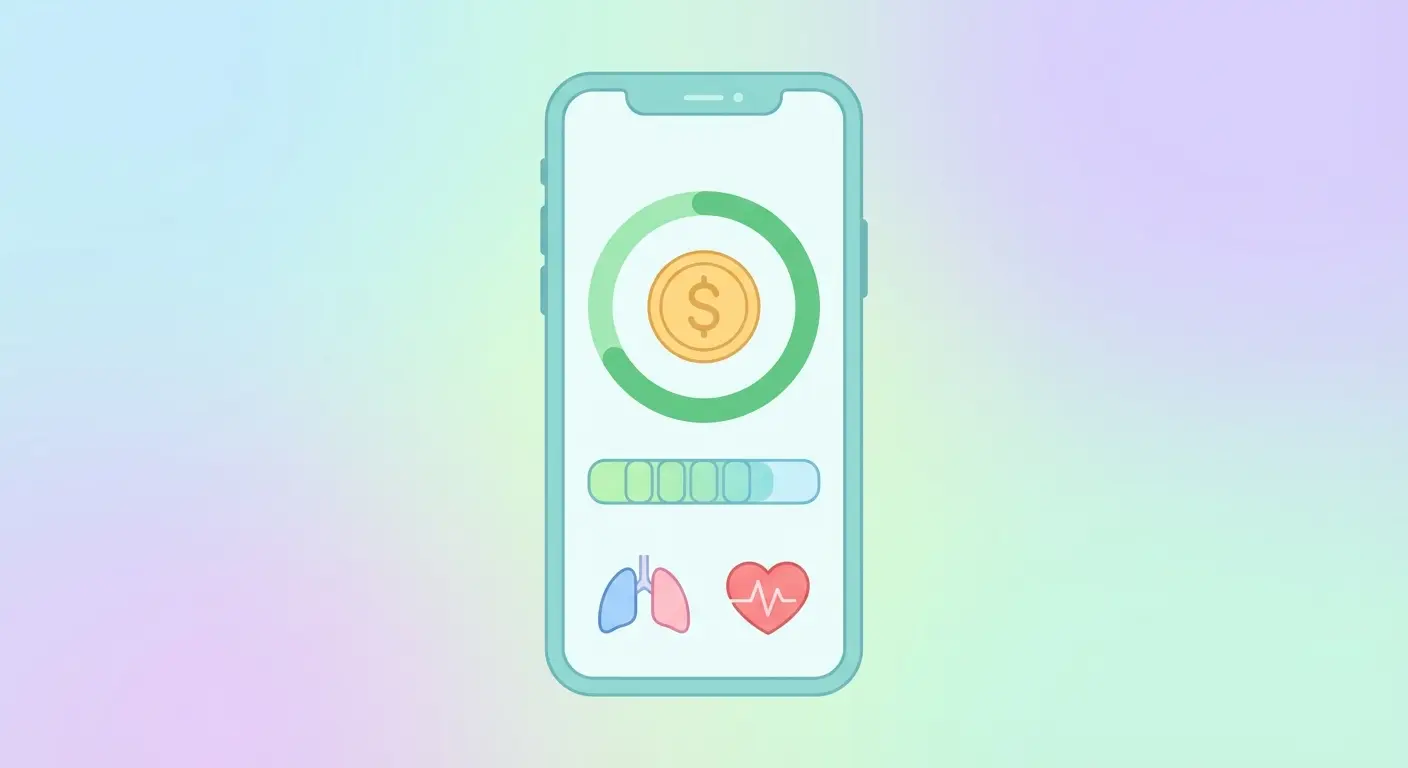
Quit smoking and the money adds up faster than most people expect. A pack-a-day smoker in the United States spends an average of $3,000 to $5,000 every single year on cigarettes alone — before you factor in healthcare costs, lost productivity, and higher insurance premiums. That’s a car payment. A vacation. A meaningful chunk of a retirement account. The financial case for quitting is overwhelming, yet most people don’t sit down and actually calculate it until they’re already motivated to stop. A dedicated quit smoking app changes that — it puts your exact number in front of you, updating every hour.
What’s in This Article
- The Real Cost of Smoking Per Year (You’ll Be Surprised)
- How a Quit Smoking Money Saved Calculator Works
- Savings Over Time: 1 Month to 10 Years
- Best Quit Smoking App 2026: What Features Actually Matter
- Quit Smoking App vs. Willpower Alone: What the Data Says
- How to Start Tracking Your Savings Today (Step-by-Step)
- Frequently Asked Questions
The Real Cost of Smoking Per Year (You’ll Be Surprised)
Most smokers mentally account for the pack they buy at the gas station. What they rarely account for is everything stacked on top of it.
Definition: Cost of Smoking Per Year
The cost of smoking per year refers to the total annual financial burden of a smoking habit. This includes the direct price of cigarettes, plus indirect costs such as higher life and health insurance premiums, increased medical visits, reduced workplace productivity, and accelerated depreciation of property (cars, furniture, clothing) exposed to smoke.
Let’s run the actual numbers. The average U.S. cigarette price in 2024 ranged from roughly $8 per pack in Missouri to over $14 per pack in New York, with a national average sitting near $10–$11. A pack-a-day smoker spends:
- $3,285–$5,110 per year on cigarettes alone (1 pack/day × 365 days)
- $600–$1,500/year more in health insurance premiums (smokers pay up to 50% more under the ACA)
- $200–$400/year in additional dental, dermatology, and respiratory care
- An estimated $500–$800/year in lost productivity and sick days
Add that up honestly, and the total annual cost of smoking for a pack-a-day habit lands somewhere between $4,500 and $7,800 per year. Most people have genuinely never seen that number written out.
Here’s the counterintuitive part: the healthcare savings from quitting don’t spike immediately. Your insurance premiums may not drop until you’ve been smoke-free for 12 months (the standard verification window for most insurers). But the direct savings — the cash that stops leaving your wallet at the register — start on Day 1. That’s why real-time tracking through a quit smoking app is so psychologically powerful. You’re not waiting for an annual insurance statement. You’re watching the number climb every single day.
For a detailed breakdown by state and pack price, the Quit Smoking and Save Calculator from OmniCalculator lets you plug in your specific numbers and see projections across multiple timeframes.
How a Quit Smoking Money Saved Calculator Works
A quit smoking money saved calculator is one of the most underrated motivational tools in smoking cessation — and the best ones are embedded directly inside modern quit smoking apps.
The basic formula is straightforward:
Daily Savings = (Cigarettes per day ÷ Cigarettes per pack) × Pack price
Total Savings = Daily Savings × Days smoke-free
So if you smoke 20 cigarettes a day and your pack costs $11.00, your daily savings after quitting is $11.00. After 30 days: $330. After one year: $4,015. The math is simple. What makes a quit smoking app’s calculator powerful is the presentation — a live, updating counter that psychologically reinforces the decision you’ve already made.
The Smokefree.gov Quit Smoking Savings Calculator (run by the U.S. Department of Health and Human Services) is the gold standard for a quick, no-download estimate. For ongoing tracking, an app-based calculator that updates the moment you open your phone is more effective for daily motivation.
What the Best Calculators Include
Not all savings calculators are equal. Here’s what separates a basic tool from a genuinely useful one:
- Cigarettes-per-day input — Must handle non-round numbers (8 cigarettes, not just “half a pack”)
- Local pack price input — Needs to reflect your actual spend, not a national average
- Multi-year projections — Showing 1-year, 5-year, and 10-year savings changes the emotional weight of the number
- Health milestone markers — Money saved mapped alongside health recovery milestones (e.g., “At $547 saved, your lung function has improved by 30%”)
- “What could you buy?” context — Translating $3,832 into “a 7-night beach vacation” or “6 months of car payments” makes abstraction concrete
Apps like iQuit integrate this kind of real-time savings tracker alongside health recovery timelines and achievement milestones, so the financial progress doesn’t feel separate from the health progress — they’re woven together in the same daily experience.
Savings Over Time: 1 Month to 10 Years
Numbers on a page are one thing. Seeing them mapped across your actual future is another. The table below uses three common smoking habits and a conservative national average pack price of $10.50 to project direct cigarette savings only (not insurance or healthcare savings, which would push these figures significantly higher).
| Time Frame | 10 cigs/day (½ pack) | 20 cigs/day (1 pack) | 40 cigs/day (2 packs) |
|---|---|---|---|
| 1 Month | $160.65 | $321.30 | $642.60 |
| 3 Months | $481.95 | $963.90 | $1,927.80 |
| 6 Months | $963.90 | $1,927.80 | $3,855.60 |
| 1 Year | $1,916.25 | $3,832.50 | $7,665.00 |
| 5 Years | $9,581.25 | $19,162.50 | $38,325.00 |
| 10 Years | $19,162.50 | $38,325.00 | $76,650.00 |
Based on $10.50 average pack price, 20 cigarettes per pack. Does not include healthcare, insurance, or productivity savings.
Best Quit Smoking App 2026: What Features Actually Matter
The app market for smoking cessation has grown considerably, and not all of it is worth your time. Picking the best quit smoking app in 2026 comes down to understanding which features are backed by behavioral science and which are just window dressing.

A 2016 Cochrane review published on PubMed analyzed mobile phone-based interventions for smoking cessation and found that text-message-based programs increased quit rates — but noted that app-based interventions with interactive features showed the most promise for sustained abstinence. A 2018 randomized controlled trial published in JMIR mHealth found that a mobile app intervention significantly increased 30-day abstinence rates in young adults compared to a control group.
What do those effective apps have in common? They’re not passive. They respond to you, push back during cravings, and make progress visible.
Features That Drive Real Quit Rates
- Real-time savings counter — Updated continuously, not just on check-in. Seeing $14.73 saved on Day 1.5 matters.
- SOS craving support — A dedicated crisis tool for the moment a craving peaks (typically 3–5 minutes). Breathing guides, distraction techniques, and AI prompts that respond to what you’re experiencing right now.
- Health recovery timeline — Mapping biological milestones (carbon monoxide drops within 12 hours; lung function improves within 3 months) to your actual quit date makes the science personal.
- AI-powered coaching — Personalized feedback based on your patterns, not generic tips recycled from a 1990s pamphlet.
- Community accountability — Peer support has a documented impact on long-term quit rates. Social accountability circles aren’t just nice-to-have.
- Achievement milestones — Behavioral reinforcement through micro-rewards sustains motivation during the hardest early weeks.
- Journal and mood tracking — Identifying emotional triggers (stress, boredom, social situations) is how you break the habit loop, not just suppress it.
iQuit covers all seven of these features in a single app — including an emergency SOS craving tool, a health recovery timeline synced to your quit date, 50+ achievement milestones, and an AI coach that goes deeper than generic tips. It also connects with Apple Health, Google Fit, and Fitbit, so your quit progress integrates with your broader health data. For people who want accountability beyond solo tracking, the app’s community challenges and accountability circles function as the social layer that solo willpower can’t replicate.
Try the Quit Smoking App Built Around Your Progress
iQuit combines a live savings counter, AI coaching, SOS craving support, and community accountability — all in one free app. See exactly what your habit costs, then watch those costs disappear.
For a broader look at the evidence-based strategies these app features are built on, the guide to top strategies to quit smoking successfully covers the behavioral science in depth — from trigger management to relapse prevention frameworks.
Quit Smoking App vs. Willpower Alone: What the Data Says
Here’s an uncomfortable truth: willpower, by itself, has a dismal track record for smoking cessation. Unassisted quit attempts succeed at a rate of roughly 3–5% at the 12-month mark. That’s not an opinion — it’s consistent across decades of cessation research.
This doesn’t mean people who quit cold turkey are weak. It means nicotine dependency is a physiological condition that responds to structured support, not just resolve.
The CDC maintains a directory of quitlines and cessation support resources that confirms a well-established principle: combining behavioral support with tracking tools produces meaningfully better outcomes than any single approach.
The thing that makes apps specifically effective is the intersection of three factors: immediacy (the tool is in your pocket during a craving), personalization (it knows your quit date, your triggers, your history), and visibility (it shows you what you’ve already accomplished). Willpower is real — but it benefits enormously from these reinforcements.
Understanding your personal craving triggers is a critical part of this equation. The guide to effective strategies to help you quit smoking walks through withdrawal management and coping techniques that pair naturally with app-based tracking to give you both the tactical and emotional toolkit you need.
How to Start Tracking Your Savings Today (Step-by-Step)
Tracking your quit-smoking savings isn’t complicated, but the order in which you do it matters. Here’s a practical framework that takes under 10 minutes to set up — and pays dividends every day after.
-
Calculate your current daily spend.
Take your most recent pack price (check your last receipt or card statement) and divide by 20 (standard cigarettes per pack). Multiply by how many cigarettes you smoke daily. Write this number down. This is your baseline. -
Set a firm quit date — today if possible.
Research consistently shows that immediate quit dates outperform “I’ll quit in 2 weeks” plans. The motivation is highest at the point of decision. Use it. -
Enter your numbers into a quit smoking app.
Download a dedicated quit smoking app (such as iQuit on Google Play) and input your cigarettes-per-day, pack price, and quit date. The savings counter starts immediately. -
Set a savings milestone goal.
Decide what you’ll do with your first $500 saved, your first $1,000, your first $3,000. Make it specific and something you actually want. Vague goals don’t motivate. “A weekend trip to the coast” does. -
Activate craving support tools before you need them.
Set up the SOS/emergency craving feature in your app before your first difficult moment. You don’t want to be reading setup instructions when a craving peaks at 9pm. -
Check your savings total every morning.
Make it a ritual. The first thing you do is open the app and see the number. This is not obsessive — it’s behavioral reinforcement. It reminds your brain what the decision is actually worth. -
Join a community accountability group.
The social commitment effect is real. Telling other people — even strangers in an app community — that you’re quitting measurably increases your follow-through rate.
The quitSTART app from the National Cancer Institute is another well-regarded free resource, particularly for evidence-based tip libraries and mood tracking. What matters most is that you’re using something — because passive intention doesn’t change habits.
Frequently Asked Questions
How much money does the average smoker save per year after quitting?
A pack-a-day smoker saves approximately $3,832 per year in direct cigarette costs, based on a national average pack price of $10.50. Including healthcare savings, higher insurance premiums no longer paid, and indirect costs, the true annual savings often exceed $5,000–$7,000. The exact figure depends on your local cigarette prices and smoking frequency — a quit smoking money saved calculator gives you a personalized projection.
What is the best quit smoking app in 2026?
The best quit smoking app in 2026 combines real-time savings tracking, AI-powered coaching, SOS craving support, health recovery timelines, and community accountability in one experience. Apps like iQuit (available on Google Play) cover all of these features. The right app for you depends on whether you prioritize community features, AI coaching depth, or health data integration — but research consistently shows that interactive, personalized apps outperform passive tools for long-term quit rates.
How does a quit smoking money saved calculator work?
A quit smoking money saved calculator uses your daily cigarette count, pack price, and quit date to calculate your exact savings in real time. The formula is: (cigarettes per day ÷ 20) × pack price × days smoke-free. The best calculators — found inside dedicated quit smoking apps — update continuously and project your savings at 1 year, 5 years, and 10 years to make the long-term financial impact tangible.
Does quitting smoking really reduce your health insurance premiums?
Yes — under the Affordable Care Act, insurers can charge smokers up to 50% more in premiums than non-smokers. After 12 months of verified smoke-free status, most plans will reclassify you as a non-smoker and reduce your premiums accordingly. The exact savings depend on your state, insurer, and plan type, but annual premium savings of $600–$1,500 are common for former smokers.
Do quit smoking apps actually work, or are they just gimmicks?
Apps with interactive, personalized features — not just tip libraries — have demonstrated real effectiveness in clinical research. A 2018 randomized controlled trial published in JMIR mHealth found that mobile app interventions significantly increased 30-day abstinence rates in young adults. The key is choosing an app that offers craving-specific support, behavioral tracking, and ongoing engagement rather than a one-time information dump.
What’s the fastest way to calculate how much I’d save if I quit smoking?
The fastest approach is to use a dedicated quit smoking savings calculator. Smokefree.gov’s calculator (from the U.S. Department of Health and Human Services) gives you an instant estimate online without any signup. For ongoing tracking, download a quit smoking app that keeps a live counter running from your quit date — so you see exactly what you’ve saved at any moment.
The Bottom Line on Quitting Smoking and Your Money
The financial argument for quitting smoking isn’t subtle. It’s $3,000 to $5,000 per year — every year — going up in smoke. Most people know this in the abstract but have never seen their specific number sitting in an app counter, climbing by the hour.
That’s the shift a good quit smoking app makes. It turns a vague awareness (“smoking is expensive”) into a concrete, daily reality (“I’ve saved $127.40 in the last 12 days”). Behavioral science has a name for this: making the cost of inaction visible. It works.
If you’re ready to move beyond the calculation and into the quit itself, the guides to top strategies to quit smoking successfully and effective strategies to help you quit smoking give you the behavioral and practical foundation to pair with your tracking tools.
The money is already yours. You just have to stop spending it.
Start Your Quit. Watch Your Savings Grow.
iQuit combines real-time savings tracking, AI coaching, SOS craving support, health milestones, and community accountability — everything you need to quit smoking and keep the $3,000+ you’ve been spending every year.