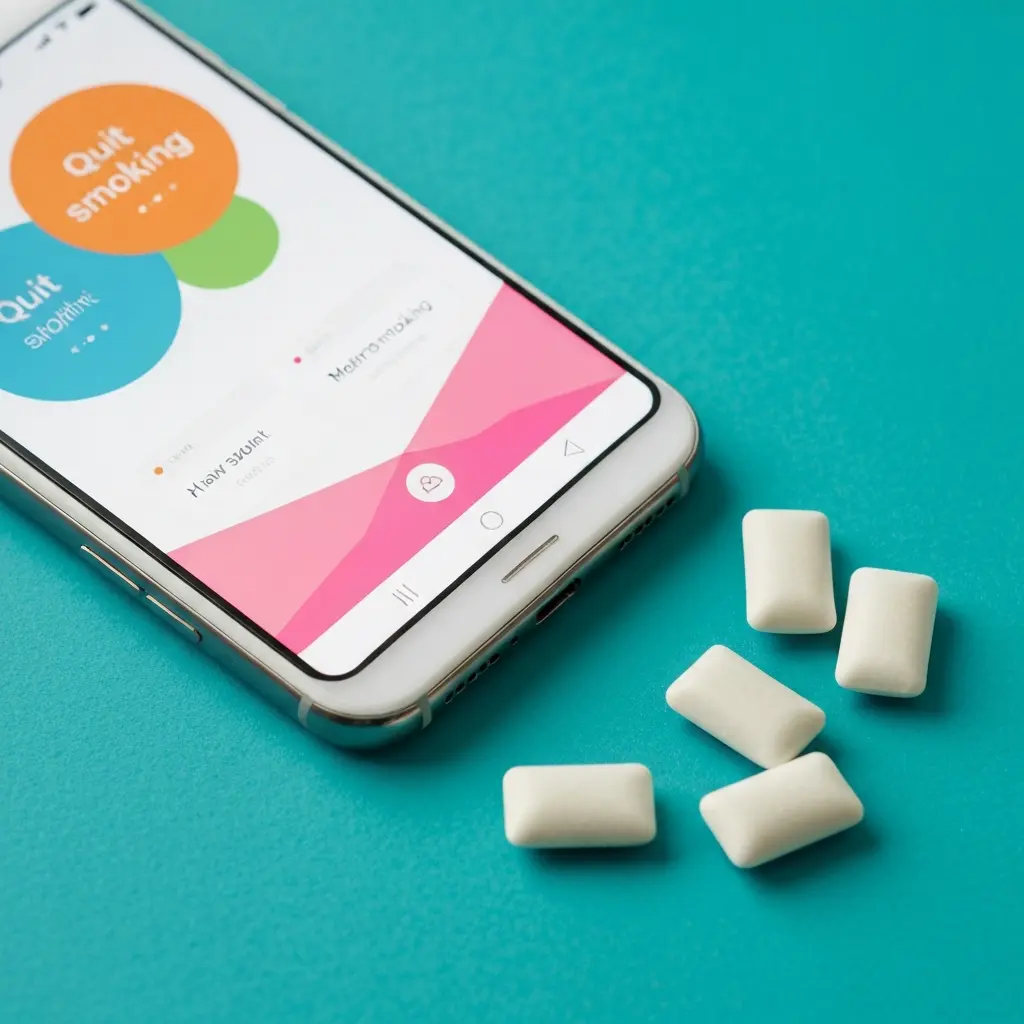
Quit Smoking App vs Nicotine Gum: Which Should You Use First in 2026?
The framing of quit smoking apps vs nicotine gum effectiveness is, strictly speaking, a category error. Apps and nicotine gum do not compete — they target entirely different components of nicotine addiction. Gum addresses physical withdrawal; apps address habitual and psychological triggers. Asking which is “better” is like asking whether a seatbelt or a helmet is better protective gear: the correct answer is that they protect against different types of harm and should be used together.
That said, for someone choosing where to start with limited time, attention, or budget, understanding exactly what each does — and does not do — is genuinely useful. This comparison lays out the evidence for both, explains where they overlap and where they diverge, and gives a clear recommendation for how to combine them in 2026.
What Nicotine Gum Does vs What an App Does
Nicotine Gum: Addressing the Pharmacological Layer
Nicotine gum works by delivering controlled nicotine doses through the oral mucosa, maintaining blood nicotine levels high enough to suppress the physical withdrawal symptoms — irritability, anxiety, difficulty concentrating, headache, intense physical cravings — that peak on days 2–3 of abstinence and taper over weeks.
What gum does NOT address:
- The habitual association between specific situations and smoking (stress → smoke; coffee → smoke; driving → smoke)
- The psychological relief pattern smoking has provided for years
- Social smoking triggers (alcohol, social events)
- Lack of accountability and motivation tracking
Quit Smoking Apps: Addressing the Behavioural and Psychological Layer
Evidence-based quit smoking apps deliver: craving management tools at the exact moment of risk (distraction exercises, breathing techniques, 4D prompts), habit pattern identification through craving logging, ongoing motivational reinforcement through milestone tracking, and structure through a personalised quit plan.
What apps do NOT address:
- The neurochemical withdrawal from nicotine
- Physical symptoms like headaches, sleep disruption, or anxiety during peak withdrawal
Effectiveness Data: Gum and Apps Side by Side
| Measure | Nicotine Gum (single NRT) | Quit Smoking App (evidence-based) |
|---|---|---|
| 6-month abstinence rate | ~12–13% (Cochrane) | ~8–14% (estimated from RCT data) |
| vs. cold turkey | ~2x improvement | ~2x improvement (Smoke Free RCTs) |
| What they treat | Physical nicotine withdrawal | Behavioural and psychological triggers |
| Evidence source | Cochrane 136-trial review | 2025 Nature meta-analysis, 3 app-specific RCTs |
| Cost | ~£15–30/month OTC; free on NHS Rx | Free–subscription (varies) |
| Availability | OTC globally | Global (app stores) |
| Compliance challenge | Technique (chew-and-park); timing | Maintaining daily engagement |
When Nicotine Gum Has the Edge
Gum provides faster, more direct relief for physical symptoms. Choose gum (or prioritise gum) if:
- You experience very intense physical cravings in the first few days — the kind that feel physically unmanageable
- You smoke your first cigarette within 30 minutes of waking (this is the strongest marker of high physical dependence)
- You have previously tried to quit cold turkey and found the physical symptoms overwhelming
- You are a heavy smoker (20+ cigarettes/day) with strong physical dependence
In these scenarios, gum (especially at 4mg strength) provides a pharmacological floor that prevents the physical withdrawal from becoming so intense that it overrides the motivational and behavioural work the app supports.
When a Quit Smoking App Has the Edge
Apps are more effective than gum for addressing situations where the urge to smoke is triggered by context, habit, or emotion rather than pure physical withdrawal. Prioritise the app if:
- Your smoking is heavily situational (always smoke with coffee, always smoke under stress, always smoke socially)
- You smoke more from habit and boredom than from physical need
- You are a lighter smoker (fewer than 10 cigarettes/day) with lower physical dependence
- You find accountability and progress tracking highly motivating
- You are past the peak physical withdrawal period (day 4 onwards) and craving is mostly psychological
Why Combined Use Outperforms Either Alone
The New England Journal of Medicine’s 2025 assessment of digital tobacco treatment explicitly recommends combining digital tools with pharmacotherapy (NRT or prescription medication) rather than choosing one or the other. The reasoning is straightforward:
- Gum without an app: Physical withdrawal is managed, but habitual triggers at 8am (coffee), 1pm (post-lunch), and 6pm (after work) remain unaddressed. The habitual component of addiction drives most relapses after the first week.
- App without NRT: Behavioural patterns are tracked and addressed, but the physical intensity of day 2–5 withdrawal creates a stress load that makes behavioural coping strategies very difficult to execute. The pharmacological floor from gum makes the behavioural work tractable.
The combined approach addresses both layers simultaneously — a principle consistent with every major evidence-based cessation guideline from WHO, NHS, CDC, and American Lung Association.
Practical Guide: Using Both Together
Week 1 (highest risk — prioritise gum):
- Use 4mg gum (for 25+/day smokers) or 2mg gum (lighter smokers) every 1–2 hours during waking hours
- Open the iQuit app on your quit date and log every craving as it happens, noting the time, situation, and intensity
- Use the app’s craving tools (breathing, distraction) alongside the gum for the habitual component
Weeks 2–4 (withdrawal easing — balance shifts):
- Begin stepping down gum use as physical craving intensity decreases
- Use craving logs in the app to identify remaining trigger situations — these are now primarily habitual/psychological
- Continue app use daily for milestone tracking and financial motivation
Weeks 4–12 (consolidation — app leads):
- Continue stepping down NRT toward stop
- App becomes the primary ongoing tool — tracking progress, maintaining motivation, flagging high-risk situations
Frequently Asked Questions
Should I use nicotine gum or a quit smoking app?
Ideally, use both — they address different components of nicotine addiction. Nicotine gum addresses the physical withdrawal (the pharmacological layer); a quit smoking app addresses the habitual, psychological, and situational triggers (the behavioural layer). The research recommendation from WHO, NHS, and the NEJM 2025 analysis is to combine pharmacological support with behavioural tools rather than choosing one over the other.
Can a quit smoking app replace nicotine gum?
No — apps do not address physical nicotine withdrawal. For heavy smokers (15+ cigarettes/day) with high physical dependence, the intensity of pharmacological withdrawal during days 2–5 is unlikely to be manageable through app-based behavioural tools alone. NRT gum or patches provide the pharmacological floor that makes behavioural coping strategies effective. For very light smokers with primarily habitual smoking, an app alone may be sufficient, but NRT is still a performance enhancer.
How effective is nicotine gum at preventing relapse?
The Cochrane review of 136 trials found that nicotine gum (as single NRT) produces approximately 12–13% sustained abstinence at 6 months versus approximately 9% for placebo. This represents roughly a 50–60% improvement in relative terms. Gum is most effective at preventing relapse during peak withdrawal (days 2–10) when physical craving intensity is highest. Its protection against habitual trigger-driven relapse later in the quit is weaker — this is where an app complements it.
What should I do if nicotine gum alone is not working?
First, check you are using gum correctly — the “chew and park” technique, not continuous chewing; 4mg strength if you smoke 25+ per day; not eating/drinking 15 minutes before use. Second, consider switching to or adding a nicotine patch for steady background coverage. Third, add a quit smoking app to address the habitual and psychological components that gum does not reach. Fourth, speak to a GP about prescription options (varenicline achieves 33–44% abstinence vs gum’s ~13%).
The Complete Cessation Stack Starts Here
Your nicotine gum handles the chemistry. iQuit handles the psychology — tracking your cravings, identifying your trigger patterns, and keeping the motivation alive through every smoke-free day. Download the free app today and build the multi-layer approach the research recommends.