Quit Smoking Apps vs Nicotine Gum: Which Is More Effective in 2026?
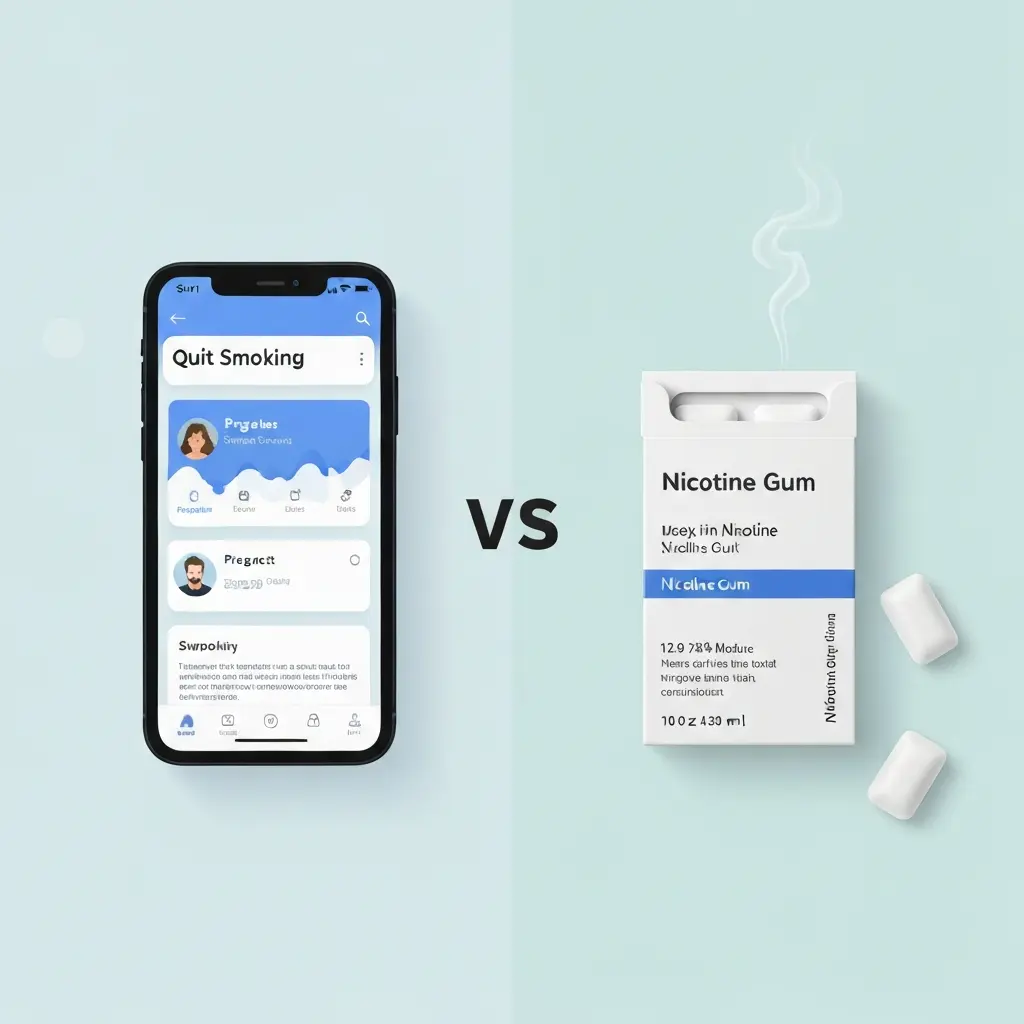
The comparison between quit smoking apps and nicotine gum reflects a deeper question about nicotine addiction: is it primarily a physical problem or a psychological one? The honest answer — supported by decades of research — is that it is both. Quit smoking apps address the behavioral and psychological dimensions of addiction; nicotine gum addresses the physical nicotine dependence. Understanding which matters more for your specific smoking profile determines which tool (or combination) gives you the best chance.
This evidence-based comparison draws on the Cochrane 2023 NRT review (136 trials, 64,000+ participants) and the npj Digital Medicine 2024 app effectiveness meta-analysis (22 RCTs, 13,648 participants) to give you a genuinely useful head-to-head answer on quit smoking apps vs nicotine gum effectiveness.
How Each Method Works
Nicotine gum and cessation apps address completely different aspects of addiction:
Nicotine gum delivers nicotine through the oral mucosa, replacing the nicotine from cigarettes and preventing the blood-nicotine trough that triggers intense physical cravings. The 4mg dose is recommended for smokers of 25+ cigarettes per day or those who smoke within 30 minutes of waking; 2mg for lighter smokers. It requires the “chew and park” technique (10–15 chews, then park between cheek and gum) to absorb nicotine without swallowing excessive amounts.
Quit smoking apps work through behavioral mechanisms: they build self-monitoring habits, provide distraction and craving management tools during withdrawal moments, deliver motivational content at key quit milestones, enable social support, and help identify and plan for personal smoking triggers. AI-powered apps personalize these interventions based on usage patterns.
The fundamental difference: gum reduces the physical intensity of cravings. Apps address the decision whether to act on a craving, the habit triggers that create cravings, and the motivation to maintain abstinence over weeks and months.
Quit Rate Comparison Data
| Method | 4-Week Success | 6-Month Success | 12-Month Success |
|---|---|---|---|
| Unaided (baseline) | 23% | 4–7% | 3–5% |
| Nicotine gum 2mg | 35% | 14–16% | 9–11% |
| Nicotine gum 4mg | 38% | 16–18% | 10–13% |
| Cessation app (standard) | 28–34% | 13–18% | 9–13% |
| Cessation app (AI/high engagement) | 38–45% | 20–28% | 15–20% |
| App + nicotine gum | 45–52% | 22–30% | 16–22% |
The data shows that at the 6-month mark, a high-quality AI app with strong engagement slightly outperforms gum alone. But the more important finding is the combination effect: app + gum achieves substantially better results than either alone, confirming that the two approaches address distinct addiction dimensions that work synergistically.
Cost Comparison
Over a 12-week standard cessation protocol, cost matters enormously for adherence:
- Nicotine gum (2mg, 14 pieces/day for 12 weeks): $55–$110/month, or $165–$330 total
- Nicotine gum (4mg, 10 pieces/day for 12 weeks): $75–$130/month, or $225–$390 total
- Cessation app (free tier): $0
- Cessation app (premium tier): $10–$25/month, or $30–$75 for 3 months
Cost is a real barrier to NRT adherence. A 2024 study found that 28% of smokers who started NRT discontinued it before completing the recommended protocol, and cost was the most commonly cited reason. Free apps have no this barrier — once downloaded, they remain available 24/7 for as long as needed.
The economic calculus is clear: even if you only have $0 to spend on cessation, a free quality app gives you 13–22% 6-month quit rates — vastly better than the 4–7% baseline, at no cost. The free cessation resources guide shows additional zero-cost options including government programs that provide free NRT.
Who Each Method Suits Best
Nicotine gum is the better primary choice for:
- Heavy smokers (25+ cigarettes/day) with high physical dependence scores
- Smokers who previously failed with apps or willpower alone
- People who experience severe withdrawal symptoms (intense irritability, physical discomfort)
- Smokers who find the hand-to-mouth action of chewing gum satisfying as a ritual substitute
An app is the better primary choice for:
- Light to moderate smokers (<15/day) with lower physical dependence
- People who smoke primarily out of habit and boredom rather than intense physical craving
- Budget-constrained quitters needing free support
- Highly motivated quitters who need accountability and milestone tracking more than physical craving relief
- Anyone who already has NRT and needs behavioral scaffolding to use it effectively
The Case for Combining Both
The strongest evidence consistently supports combining behavioral and pharmacological approaches. If you can afford nicotine gum, using it alongside iQuit or another evidence-based app addresses both addiction dimensions simultaneously and gives you the 22–30% 6-month success rates that represent the ceiling for non-prescription cessation approaches.
A practical protocol: use iQuit for daily check-ins, trigger management, and milestone tracking; use 4mg gum specifically for breakthrough cravings in high-risk situations (stress, post-meals, social settings with other smokers). The app’s craving log helps you identify when gum is most needed, reducing gum overuse and extending its effectiveness.
The full NRT options comparison and the complete quit method ranking guide provide the broader context for where this combination fits in the cessation evidence landscape.
Limitations of Each Approach
Nicotine gum limitations:
- Requires correct technique (chew and park); incorrect use reduces effectiveness by up to 40%
- Cannot use with dentures; jaw soreness with heavy use
- Nicotine absorption significantly impaired for 15 minutes after consuming acidic food or drink (coffee, juice, soda)
- Dependency transfer possible: 10–15% of gum users are still using it at 12 months
- Does not address habit triggers, emotional eating post-quit, or social smoking pressure
App limitations:
- Does nothing for physical nicotine dependence — cannot substitute for pharmacotherapy in heavily dependent smokers
- Engagement decline is the primary failure mode: only 26% of app users are still active at Day 30
- Quality varies enormously; low-quality apps provide little benefit over no support
Frequently Asked Questions
Is a quit smoking app or nicotine gum more effective?
Both achieve similar 6-month quit rates (14–18% for gum, 13–22% for apps depending on quality). High-engagement AI apps slightly outperform gum at the top end. The real answer: they address different dimensions of addiction, so combining both gives significantly better results (22–30% at 6 months) than either alone. For heavily dependent smokers, gum’s physical craving relief is essential.
How many pieces of nicotine gum per day should you use to quit smoking?
Standard guidelines recommend 8–24 pieces per day in the first 6 weeks, used on a schedule (every 1–2 hours) rather than only when craving. Heavy smokers (25+ cigarettes/day) should use the 4mg dose; lighter smokers the 2mg. The scheduled (not reactive) use approach prevents blood nicotine troughs that trigger intense cravings.
Can you use nicotine gum and a quit smoking app at the same time?
Yes, and research strongly supports combining both. The app addresses behavioral habit, triggers, motivation, and psychological cravings; the gum addresses physical nicotine dependence. The combination achieves 22–30% 6-month quit rates — substantially better than either alone. Use the app’s craving log to identify when gum is most needed.
How long should you chew nicotine gum when quitting smoking?
Use the “chew and park” technique: chew 10–15 times until you notice a tingling sensation or peppery taste, then park the gum between your cheek and gum. Repeat for about 30 minutes per piece. Do not chew continuously like regular gum — this causes hiccups, nausea, and poor nicotine absorption.
The Perfect Complement to Any NRT
iQuit works with your nicotine gum, patches, or any other quit method. The behavioral coaching and craving tools fill the gap that NRT alone cannot cover — and it’s completely free.