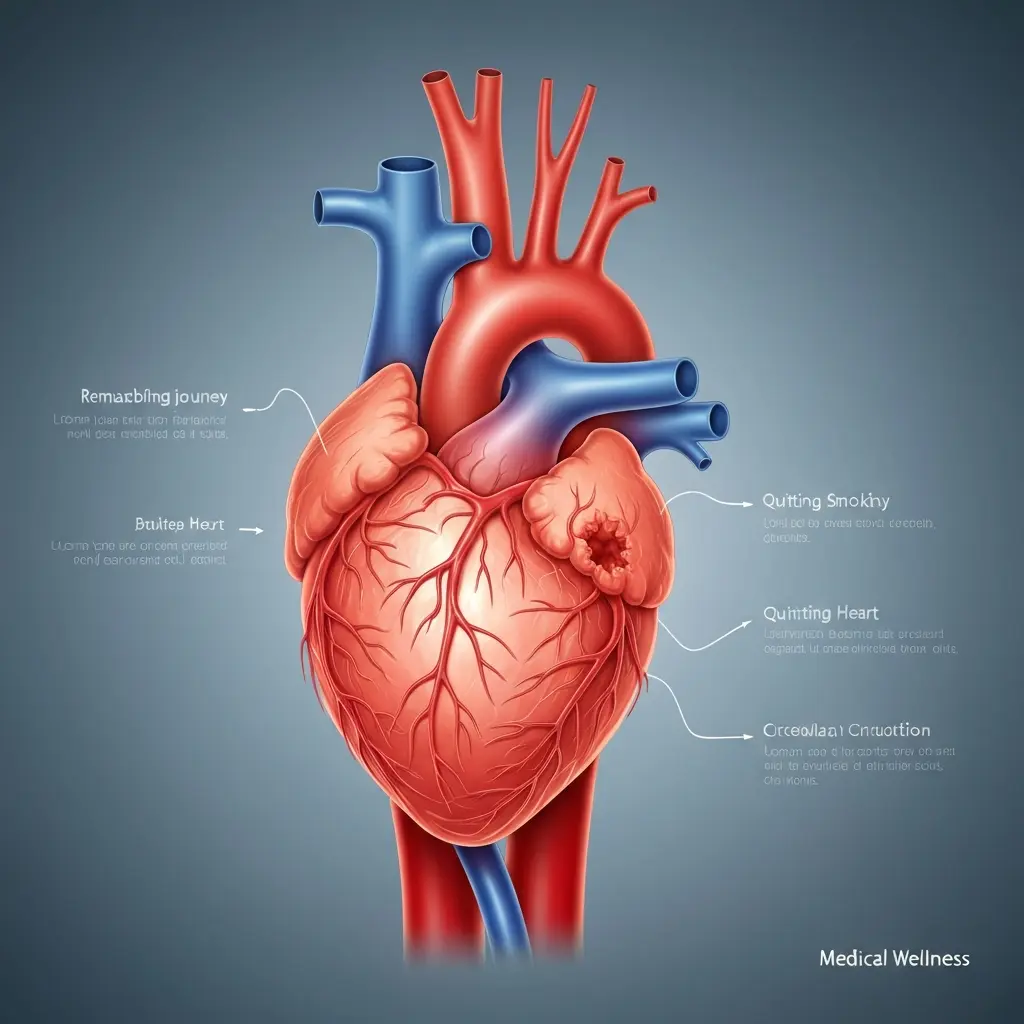
Cardiovascular Recovery After Quitting Smoking: How Your Heart Heals in 2026
Smoking is the single most modifiable risk factor for cardiovascular disease — and when you quit, your heart begins recovering faster than almost any other organ. The connection between smoking and heart disease is not subtle. Smokers have roughly twice the risk of heart attack compared to non-smokers, and the risk of stroke is increased by 2–4 times. But the remarkable news for anyone quitting in 2026 is this: quit smoking heart recovery begins within 20 minutes of your last cigarette, and within a year, your cardiovascular risk profile changes dramatically.
Understanding the biology of how smoking damages your heart — and how quickly that damage begins to reverse — is one of the most compelling reasons to quit, and one of the most satisfying aspects of tracking your progress after you do.
How Smoking Harms Your Cardiovascular System
To appreciate the recovery, it helps to understand the damage. Smoking attacks your cardiovascular system through multiple simultaneous mechanisms:
Carbon Monoxide Poisoning
Every cigarette delivers carbon monoxide (CO), a gas that binds to hemoglobin in red blood cells 200 times more strongly than oxygen. This creates carboxyhemoglobin, which cannot carry oxygen. Smokers’ blood can carry up to 15% less oxygen than non-smokers’ blood, forcing the heart to work harder to deliver adequate oxygen to tissues — raising heart rate and blood pressure chronically.
Atherosclerosis Acceleration
Cigarette smoke promotes atherosclerosis — the buildup of fatty plaques in arterial walls — through multiple mechanisms: increasing LDL (“bad”) cholesterol oxidation, reducing HDL (“good”) cholesterol, damaging the endothelial lining of blood vessels, and promoting inflammation. These effects create the arterial narrowing that underlies heart attacks and strokes.
Thrombosis Risk
Smoking makes blood more viscous and prone to clotting by increasing platelet aggregation and fibrinogen levels. This is why smoking dramatically increases the risk of sudden, acute cardiovascular events — clots forming on already narrowed arteries.
Endothelial Dysfunction
The endothelium — the thin layer of cells lining all blood vessels — regulates vascular tone, inflammation, and thrombosis. Smoking directly impairs endothelial function, reducing nitric oxide availability and causing vessels to remain abnormally constricted. This is a central mechanism behind smoking-related hypertension and reduced exercise capacity.
The Cardiovascular Recovery Timeline
| Time After Quitting | Cardiovascular Change |
|---|---|
| 20 minutes | Heart rate begins to normalize; blood pressure starts to decrease |
| 12 hours | Carbon monoxide levels in blood drop to near-normal; oxygen-carrying capacity improves |
| 24 hours | Risk of sudden cardiac event begins to decrease; heart already working less hard |
| 2 weeks – 3 months | Circulation improves; blood viscosity decreases; platelet function begins normalizing |
| 1–9 months | Coughing and breathlessness decrease; exercise capacity improves as circulation and lung function recover |
| 1 year | Risk of coronary heart disease is half that of a continuing smoker |
| 5 years | Stroke risk falls to that of a non-smoker; carotid arteries show measurable improvements |
| 10 years | Continued cardiovascular risk reduction; lung cancer risk drops to roughly half |
| 15 years | Heart disease risk approaches that of a lifetime non-smoker |
Blood Pressure and Heart Rate Recovery
Nicotine stimulates the adrenal glands to release adrenaline, which raises both heart rate and blood pressure immediately after each cigarette. Smokers who smoke heavily experience chronic elevated cardiovascular workload throughout the day.
After quitting, resting heart rate typically decreases by 5–15 beats per minute in the first weeks. Blood pressure improvement varies: while smoking directly raises blood pressure acutely, some people experience a temporary increase in blood pressure in the first few weeks after quitting due to stress and nicotine replacement effects. Over 1–3 months, blood pressure typically normalizes or improves.
For smokers with hypertension, quitting is one of the most impactful interventions available — in some cases reducing the need for antihypertensive medication after consultation with a physician.
Cholesterol and Circulation Improvements
Smoking lowers HDL cholesterol (the protective “good” cholesterol) and increases the oxidation of LDL cholesterol, making it more atherogenic (plaque-forming). After quitting:
- HDL cholesterol levels rise — studies show increases of 5–10% within months of quitting
- LDL oxidation reduces as antioxidant capacity recovers
- Platelet aggregation normalizes, reducing blood clot risk
- Fibrinogen (a clotting factor) decreases toward normal levels
- Endothelial function improves, restoring normal vascular regulation
These changes collectively explain why the 1-year risk reduction for heart attack is so dramatic — the blood chemistry driving acute cardiovascular events begins normalizing relatively quickly after quitting.
Stroke Risk After Quitting
The 2–4x elevated stroke risk from smoking is one of the most striking statistics in cardiovascular medicine. Smoking promotes stroke through all the mechanisms described — atherosclerosis in carotid arteries, increased blood pressure, enhanced clotting tendency, and reduced oxygen delivery. The 5-year timeline for stroke risk normalizing reflects how quickly these mechanisms reverse when smoking stops.
Research using carotid intima-media thickness (IMT) measurements — a direct measure of arterial wall thickening — has shown measurable reductions in arterial stiffness and thickness in ex-smokers compared to continuing smokers within years of cessation. This is physical evidence of arterial recovery in action.
Supporting Your Heart’s Recovery
Quitting is the most important step, but supporting your cardiovascular recovery accelerates and amplifies the benefits:
- Exercise: Even moderate aerobic exercise (30 minutes, 5 days/week) improves HDL cholesterol, lowers blood pressure, and promotes endothelial health. For new ex-smokers, walking is highly effective and does double duty as a craving management tool.
- Diet: Reducing saturated fats, increasing omega-3s (oily fish, walnuts), and eating a vegetable-rich diet supports the cholesterol improvements already underway from quitting.
- Blood pressure monitoring: Regular checks during the first year of quitting help track cardiovascular improvements and catch any concerns early.
- Stress management: Chronic stress raises cortisol, which adversely affects blood pressure and cardiovascular health. Building stress-management practices that don’t involve smoking is essential for long-term heart health.
Using the iQuitNow app to track your smoke-free days alongside your health milestones helps make the cardiovascular improvements tangible and motivating. For building comprehensive wellness habits alongside your quit, Tesify offers AI-powered tools for structured goal setting. And for organizations delivering health and wellness programs, CampaignOS provides the platform to run effective cessation campaigns at scale.
Frequently Asked Questions
How quickly does heart rate normalize after quitting smoking?
Heart rate begins normalizing within 20 minutes of the last cigarette as nicotine’s stimulant effect on the cardiovascular system wanes. Most ex-smokers see a measurable decrease in resting heart rate within the first 2–4 weeks. The typical resting heart rate decrease is 5–15 beats per minute.
Does quitting smoking actually reduce heart attack risk?
Yes, dramatically. Within 1 year of quitting, the risk of coronary heart disease is approximately half that of a continuing smoker. Within 15 years, heart disease risk approaches that of a lifetime non-smoker. This is one of the most significant health risk reductions available through any behavioral intervention.
Is it too late to quit smoking for heart health if I’ve smoked for decades?
It is never too late. Studies show that quitting at 60 still adds an average of 3–4 years to life expectancy and delivers meaningful cardiovascular risk reduction. The heart begins recovering from the moment of the last cigarette, regardless of how long you’ve smoked. The earlier you quit, the greater the total benefit — but quitting at any age improves outcomes.
Can quitting smoking reverse atherosclerosis?
Quitting smoking slows and may partially reverse atherosclerosis. Research shows that arterial stiffness and intima-media thickness (markers of arterial plaque burden) improve in ex-smokers over years. While established calcified plaques may not fully disappear, the active progression of plaque formation slows dramatically after quitting, significantly reducing the risk of acute cardiovascular events.
Does blood pressure improve after quitting smoking?
Yes, though the pattern is nuanced. Blood pressure may temporarily fluctuate in the first few weeks after quitting due to nicotine withdrawal and stress. Over 1–3 months, most ex-smokers see meaningful blood pressure reductions. Smokers with hypertension often see the most significant improvements, and some are able to reduce antihypertensive medication after quitting (under medical supervision).
What is the fastest way to see cardiovascular benefits after quitting?
The fastest cardiovascular benefits begin immediately — within 20 minutes for heart rate and 12 hours for carbon monoxide clearance. To maximize recovery speed, combine quitting with moderate exercise, a heart-healthy diet, and stress management. These amplify the cardiovascular improvements already set in motion by simply stopping smoking.
Track Your Heart’s Recovery in Real Time
The iQuitNow app tracks your cardiovascular milestones from 20 minutes to 15 years — giving you a real-time picture of how your heart is healing with every smoke-free hour.