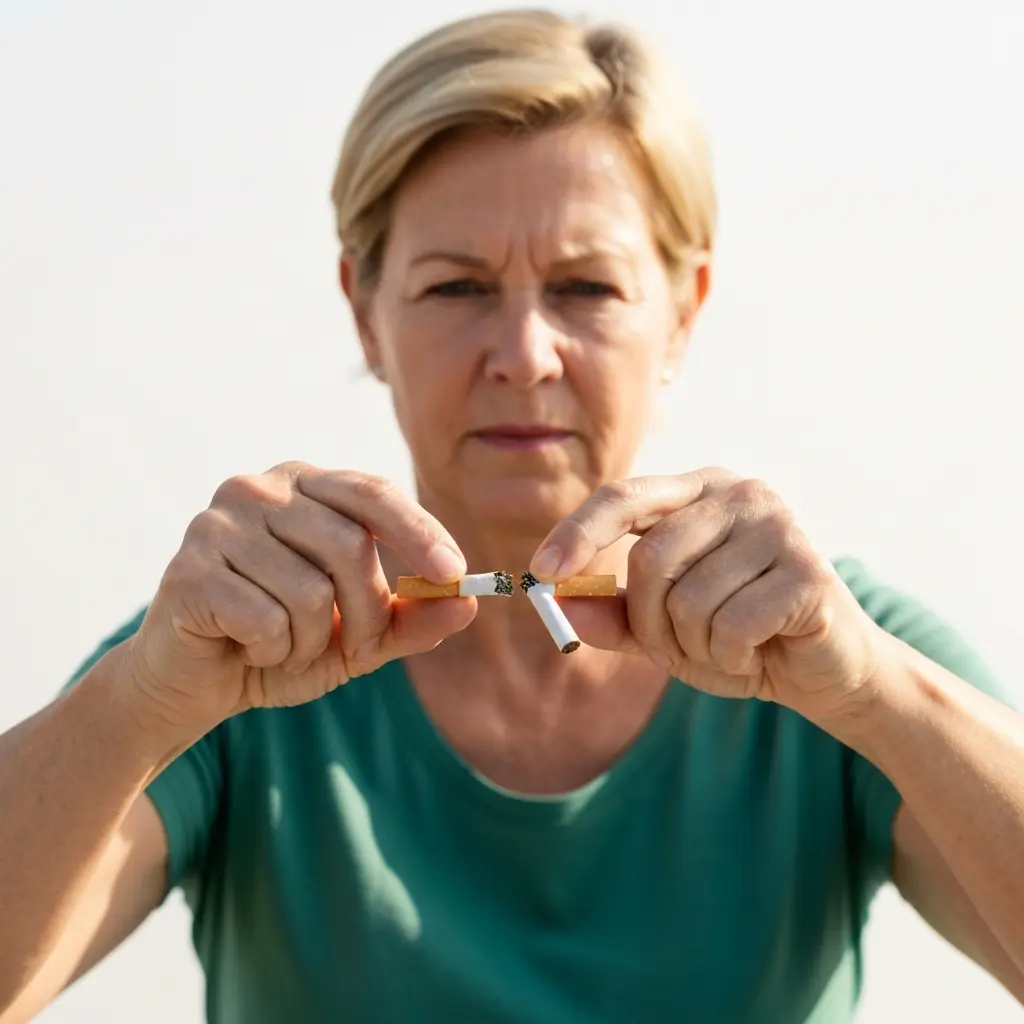
Quit Smoking Cold Turkey in 2026: Evidence-Based Guide for First-Day to Year-One
If you have decided to quit smoking cold turkey, you have chosen the method that has the most robust research support. It feels dramatic — one moment you are a smoker, the next you are not — and the first 72 hours can be genuinely rough. But a landmark randomised trial published in the Annals of Internal Medicine found that abrupt quitters were 25 percent more likely to be smoke-free at six months than those who cut down gradually. This guide walks you through what to expect every step of the way, from the first craving on day one to the quiet pride of reaching your one-year anniversary.
Whether this is your first attempt or your fifth, the evidence is clear: each quit attempt strengthens the neural pathways that make the next one more likely to succeed. You are not failing when you try again — you are building the habit of not smoking.
Why Cold Turkey Works: What the Research Says
For decades, conventional wisdom suggested tapering was kinder to the body and therefore more likely to succeed. The science tells a different story. The 2016 randomised controlled trial by Lindson-Hawley et al. — funded by Cancer Research UK and published in the Annals of Internal Medicine — enrolled 697 smokers who wanted to quit. Participants assigned to abrupt cessation had a 49 percent success rate at four weeks versus 39 percent for gradual reduction, with the advantage persisting at six months.
Why? Two mechanisms stand out. First, cutting nicotine intake gradually still keeps nicotine receptors partially activated, prolonging the period during which the brain associates reward with smoking behaviour. Second, psychologically, setting a firm quit date and making a clean break appears to strengthen commitment more than an extended fade-out that offers many opportunities to rationalise “just one more”.
| Method | 4-Week Success Rate | 6-Month Success Rate | Source |
|---|---|---|---|
| Cold Turkey (Abrupt) | 49% | 22% | Lindson-Hawley et al., 2016 |
| Gradual Reduction | 39% | 17% | Lindson-Hawley et al., 2016 |
| Cold Turkey + NRT | ~55–60% | ~25–30% | Cochrane Review, 2023 |
The CDC reports that about 7.5 percent of smokers quit successfully in any given year without help, and that figure rises to 25–35 percent with combined pharmacotherapy and behavioural support. Cold turkey, especially with support, sits comfortably within the evidence-based options recommended by the WHO.
How to Prepare Your Quit Day
The night before your quit day matters as much as the day itself. Here is a practical preparation checklist drawn from NHS Stop Smoking guidance:
- Choose a meaningful quit date. Pick a date 7–14 days out so you can prepare. Mondays, birthdays, and anniversaries work well psychologically.
- Clear all tobacco from your environment. Dispose of cigarettes, lighters, and ashtrays the evening before. Even one “emergency cigarette” hidden in a drawer will be found during a craving.
- Tell three people. Social accountability is one of the strongest predictors of success. Tell your partner, a close friend, and a work colleague.
- Download a quit tracker. Apps like the iQuitNow tracker turn abstinence into a visible, motivating data story — days free, cigarettes not smoked, money saved. Read our guide on the best quit smoking apps in 2026 for a full comparison.
- Stock distraction supplies. Sugar-free gum, carrot sticks, a stress ball, and a playlist you love can interrupt a craving long enough for it to pass.
- Book a support call. NHS Stop Smoking Services quadruple the odds of success. Call 0300 123 1044 (UK) or visit smokefree.gov (US) to book a counsellor.
- Plan your first craving response. Decide in advance what you will do when the urge hits: a specific 5-minute activity, a text to a friend, a breathing exercise.
The First 24 Hours: Hour-by-Hour
The first 24 hours after your last cigarette are marked by rapid physiological change — most of it in your favour, even if it does not feel that way.
| Time Since Last Cigarette | What Is Happening |
|---|---|
| 20 minutes | Heart rate and blood pressure begin to drop toward normal levels. |
| 2 hours | Nicotine levels in the blood fall by about 50%. First significant cravings may start. |
| 8 hours | Carbon monoxide levels in the blood drop to near-normal. Oxygen-carrying capacity improves. |
| 12 hours | Oxygen saturation normalises. Irritability and hunger may increase as nicotine continues to clear. |
| 24 hours | Heart attack risk begins to decline. Nicotine nearly cleared; withdrawal symptoms may feel intense but are peaking. |
Each craving during the first 24 hours typically lasts 3–5 minutes. The “5-D” technique from the NHS is useful here: Delay (wait 5 minutes), Deep breathe (slow diaphragmatic breaths), Drink water (sipping cold water can reduce intensity), Do something (a physical distraction), and Discuss (call or text your support contact). The craving almost always passes before you finish the five steps.
Days 2–7: Surviving the Hardest Week
Days 2 and 3 are, for most people, the most physically intense. By 48 hours, all nicotine and cotinine (its main metabolite) have cleared the body. The brain’s nicotinic acetylcholine receptors — which had been upregulated by years of nicotine exposure — are firing in overdrive without their usual chemical signal. This produces the classic withdrawal cluster: irritability, difficulty concentrating, headaches, insomnia, and intense cravings.
This is also when nicotine withdrawal symptoms are at their most disruptive. Common experiences in this window include:
- Headaches (usually resolving by day 5–7)
- Increased appetite and cravings for sweets — your taste buds are recovering
- Disturbed sleep or vivid dreams
- A productive cough as cilia in the airway begin to recover
- Difficulty focusing (“brain fog”)
By day 4–5, most people notice a meaningful improvement. By day 7, many describe feeling “over the worst.” The lung’s cilia begin moving mucus more effectively, which can cause a temporary increase in coughing — this is healthy clearance, not damage.
Weeks 2–4: When It Gets Easier
Weeks two through four represent the transition from physical withdrawal to psychological habit change. The body has largely detoxified; what remains is rewiring the behavioural loops that linked cigarettes to specific triggers — morning coffee, work breaks, driving, stress.
This is the period to be systematic about trigger management. Keep a brief trigger diary: note every time you feel an urge, what you were doing, who you were with, and what emotion preceded it. Patterns emerge within days and give you specific moments to target with substitute behaviours.
Improvements you are likely to notice by week four:
- Resting heart rate and blood pressure normalising
- Improved lung function — up to 10% increase in forced expiratory volume according to NHS data
- Better sleep quality (the insomnia of weeks 1–2 resolves for most people)
- Noticeably improved sense of taste and smell
- First signs of improved skin tone and circulation
If you are finding psychological cravings particularly strong, consider cognitive-behavioural techniques. Tesify’s research on academic willpower and habit formation offers surprisingly applicable insights — their piece on breaking through mental resistance when starting a hard task maps closely onto the cold turkey experience of confronting an uncomfortable craving without giving in.
Months 2–6: Building the New Identity
By month two, the physical chapter is largely closed. What sustains you now is identity: you are a non-smoker. Research in behaviour change — including work by James Clear on atomic habits and clinical trials by West and Michie — consistently shows that people who internally describe themselves as “a non-smoker” rather than “someone trying to quit” have significantly better outcomes.
This is also when the financial picture becomes motivating. At an average UK cigarette price of £12.50 per pack of 20 in 2026, a 20-a-day smoker saves over £375 per month. Tracking this concretely in a quit app maintains motivation during flat periods when health benefits are less viscerally felt.
Health milestones in months 2–6:
- 1 month: Skin cell turnover has produced visibly fresher complexion in most ex-smokers
- 3 months: Circulation has meaningfully improved; exercise tolerance increases
- 3–9 months: Cilia in the lungs have largely regenerated; coughing and breathlessness decrease substantially
- 6 months: Many people report that the thought of a cigarette no longer triggers desire — it has become neutral or even aversive
If you want to track your progress with an AI-powered habit coach, Authenova’s AI content and habit tracking platform demonstrates how AI can personalise feedback loops — the same principle applies to building quit-smoking momentum through data-driven check-ins.
Months 7–12: Getting to Year One
The home stretch of year one is quieter than the early months — which is its own challenge. The dramatic, motivating intensity of the early struggle has faded, but occasional cravings can still appear, often triggered by anniversary contexts (a stressful period similar to when you smoked, a social situation, a particular season).
These “sleeper triggers” are normal. Research by Marlatt and colleagues on the abstinence violation effect shows the danger point is not the craving itself — it is the story you tell yourself about the craving. “I still want a cigarette, something is wrong with me” leads to relapse; “I am having a craving, this is normal, it will pass” leads through it.
By the one-year mark, your body has achieved extraordinary recovery:
| Milestone | Health Benefit (Source: NHS / CDC) |
|---|---|
| 1 year | Risk of coronary heart disease is half that of a continuing smoker. |
| 5 years | Stroke risk falls to the same level as a non-smoker. |
| 10 years | Lung cancer risk is approximately half that of a smoker; risk of cancers of the mouth, throat, and pancreas also substantially reduced. |
| 15 years | Risk of coronary heart disease equivalent to a lifetime non-smoker. |
Managing Triggers and Cravings
Cravings are not signs of weakness — they are conditioned responses that the brain has spent years reinforcing. Understanding this reframes the experience. You are not failing to control yourself; you are successfully observing a brain event that will pass in minutes.
The most common cold turkey triggers include:
- Stress and anxiety — nicotine temporarily lowered cortisol; without it, stress feels sharper initially
- Alcohol — the strongest situational relapse trigger, especially in the first three months
- Morning routine — the post-wakeup cigarette was often the most chemically reinforced
- Post-meal — a conditioned sequence: eat, smoke
- Driving — hands idle, a habitual reaching motion
- Seeing other smokers — social learning cues reactivate desire
- Negative emotions — boredom, loneliness, frustration
For a comprehensive toolkit of craving management techniques, see our guide on how to deal with cigarette cravings, which covers 25+ evidence-based strategies from urge surfing to brief mindfulness exercises.
What to Do If You Slip
A slip — one or a few cigarettes — is not the same as a relapse. The research is consistent: the average successful quitter makes three to five serious attempts before achieving lasting abstinence. Each attempt is not failure; it is data.
If you slip:
- Do not catastrophise. Throw away the remainder of the pack immediately.
- Identify the trigger precisely — what situation, emotion, or person was involved?
- Return to your quit date within 24 hours. Do not give yourself a “wind-down week.”
- Tell your support person. Shame thrives in secrecy and leads to full relapse.
- Consider adding a support tool you did not use before — NRT, medication (varenicline/Champix doubles quit rates), or a counsellor.
The quit smoking success rate data shows that combining cold turkey with either NRT or prescription medication and behavioural support produces success rates of 35–40% at 12 months — far above unaided attempts. There is no shame in using every tool available.
Frequently Asked Questions
Is cold turkey really the best way to quit smoking?
A 2016 Annals of Internal Medicine randomised trial found that abrupt quitting (cold turkey) produced a 25% higher success rate at 6 months compared to gradual reduction. Most cessation guidelines, including those from the NHS, consider it a first-line approach when paired with behavioural support.
How long does cold turkey withdrawal last?
Physical nicotine withdrawal peaks at 48–72 hours and largely resolves within 2–4 weeks. Cravings can continue intermittently for 3–6 months, and occasional urges may surface up to a year, though they become shorter and less intense over time.
What are the hardest days when quitting cold turkey?
Days 2 and 3 are consistently reported as the most intense. Nicotine levels in the blood reach zero within 72 hours, causing cravings, irritability, headaches, and disrupted sleep to peak before gradually easing.
Can I use nicotine replacement therapy with cold turkey?
NRT can be used alongside cold turkey. Some smokers choose to go fully nicotine-free from day one, while others use NRT to reduce severe withdrawal without returning to cigarettes. Both approaches are clinically valid; the key is stopping combustible tobacco immediately.
What should I do if I slip up while quitting cold turkey?
A slip is not a relapse. Research shows that people who treat a slip as a learning moment rather than a failure are more likely to achieve long-term abstinence. Note the trigger, recommit your quit date, and seek extra support if needed. Most successful quitters made multiple attempts before achieving lasting abstinence.
How do I survive the first 24 hours of cold turkey?
Prepare by removing all tobacco from your environment the night before. During the first 24 hours, drink plenty of water, eat regular meals to stabilise blood sugar, use the 5-minute distraction rule when a craving strikes, and call or text a support contact. The first craving wave almost always passes within 5 minutes.
Does quitting cold turkey affect mental health?
Short-term irritability, anxiety, and low mood are normal during withdrawal. However, large studies consistently show that mental wellbeing significantly improves after 4–8 weeks of abstinence. Quitting smoking is associated with reduced long-term anxiety and depression compared to continuing to smoke.
Ready to Start Your Cold Turkey Journey?
The iQuitNow app tracks every smoke-free hour, converts your savings into real numbers, and sends personalised encouragement exactly when you need it. Thousands of people have used it to survive day one — and reach year one.
Download iQuitNow free and start tracking your quit today. Your future non-smoking self will look back on this moment as the turning point.