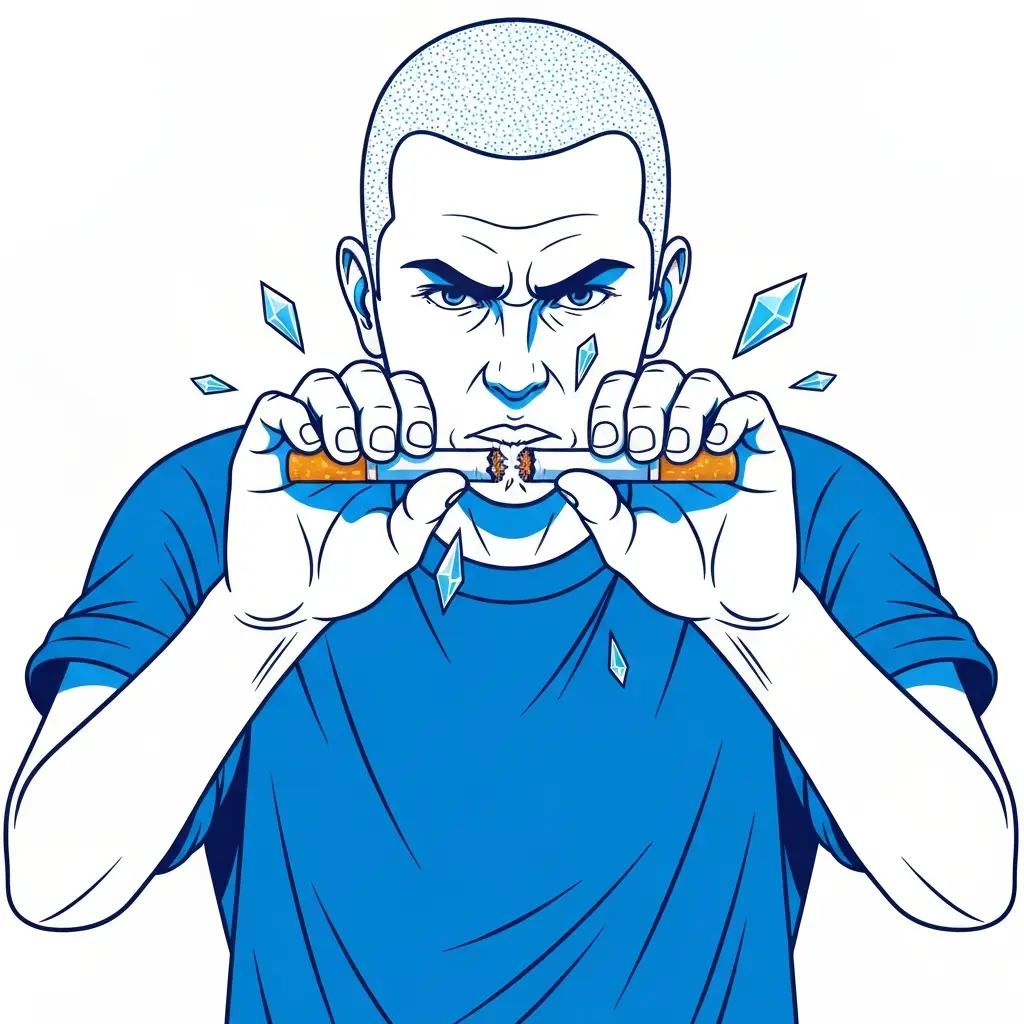
Quit Smoking Cold Turkey: The Complete 2026 Guide to Abrupt Cessation
Quitting smoking cold turkey — stopping completely and abruptly, without medication or gradual reduction — is the method most smokers attempt first, and according to research, it outperforms gradual reduction in head-to-head trials. But success rates cold turkey without any support remain low (around 3–5% at 12 months), which raises the obvious question: how do you quit smoking cold turkey in a way that actually works?
This guide answers that question with precision. The research on cold turkey cessation is clear about what separates the roughly 5% who succeed from the 95% who relapse — and most of those differences are not about strength of character or willpower. They are about preparation, support, and strategy.
What Does Quitting Cold Turkey Mean?
Quitting cold turkey means stopping smoking completely and abruptly — with no gradual reduction and typically no nicotine replacement therapy. The phrase comes from the pallid, clammy appearance of someone in the grip of withdrawal, said to resemble cold turkey skin.
In the clinical literature, cold turkey (or “abrupt cessation”) is contrasted with “gradual cessation” (reducing cigarettes over time) and “NRT-assisted cessation” (using nicotine patches, gum, or other replacement products). Pure cold turkey — abrupt cessation without any pharmacological support — is what most people mean when they say they are going to quit cold turkey.
Cold Turkey Success Rates: The Real Data
The most cited evidence comes from a 2016 randomized controlled trial published in the Annals of Internal Medicine by Lindson-Hawley and colleagues, which compared abrupt versus gradual cessation in 697 smokers:
- 4-week abstinence: Abrupt cessation 49%, gradual cessation 39.2%
- 6-month abstinence: Abrupt cessation 22%, gradual cessation 15.5%
These figures include behavioral support for both groups. Pure cold turkey without any support shows significantly lower rates — approximately 3–5% at 12 months, according to population studies from the CDC. The comparison between cold turkey and willpower-only cold turkey is therefore crucial: the method alone does not determine success — the support surrounding it does.
Who Cold Turkey Works Best For
Research and clinical experience suggest cold turkey is most effective for:
- Moderate smokers (10–20 cigarettes/day): Severe nicotine dependence (30+/day) often produces withdrawal intense enough to benefit more from NRT buffering
- Smokers with strong identity motivation: People who have made a definitive decision to be non-smokers — not just to “try quitting” — show higher cold turkey success rates
- People who have failed gradual reduction before: If reducing gradually has not led to cessation, the clean break psychology of cold turkey may work better
- Smokers who prefer certainty over ambiguity: Cold turkey eliminates the “how many can I have today?” negotiation that makes gradual reduction cognitively demanding
Preparing for Your Cold Turkey Quit
Successful cold turkey is not impulsive — the smokers with the best outcomes in research studies were the most prepared. Preparation should begin at least two weeks before your quit date:
- Set a firm quit date: Write it down. Tell three people. Put it in your calendar.
- Complete a smoking diary: Seven days of tracking when and why you smoke reveals your personal trigger profile for your craving management plan.
- Create your trigger response plan: For each identified trigger, write the specific substitute behavior you will use.
- Plan your craving management toolkit: Download iQuit. Practice the 4-7-8 breathing technique. Identify your accountability partner.
- Prepare your environment: On the eve of your quit date, remove all tobacco products, lighters, and ashtrays from your home and car.
- Plan the first 72 hours: Schedule your three highest-risk craving periods with specific engaging substitute activities.
For a complete preparation guide, see our article on how to quit smoking in 2026. For day-by-day expectations during your first week, see our guide on the quit smoking one week timeline.
Surviving the First 72 Hours
The first 72 hours of cold turkey are the most physically intense. Nicotine clears completely within 24 hours, and the brain’s withdrawal response peaks at 48–72 hours. During this window:
Hour 24–48: Cravings intensifying, irritability and anxiety peaking, potential headaches and insomnia
Hour 48–72: Peak physical withdrawal — most intense cravings, highest emotional volatility, greatest relapse risk
After hour 72: Physical symptoms begin progressive improvement
Specific first-72-hour cold turkey strategies:
- Accept that this is hard — cold turkey withdrawal is genuinely difficult, and that is not a sign that quitting is impossible
- Stay hydrated: drink at least 8 glasses of water per day, which helps flush nicotine metabolites and manages appetite changes
- Exercise every day — even a 15-minute walk reduces craving intensity significantly
- Log every craving in iQuit — watching the data show cravings decreasing from day to day is powerful objective evidence of progress
- Use box breathing (4-4-4-4) at every craving peak — physiological stress reduction within 90 seconds
The Psychological Advantage of Cold Turkey
Beyond the statistical advantage in trials, cold turkey offers a psychological benefit that gradual reduction cannot match: identity clarity. When you quit cold turkey, you are not a smoker who is reducing — you are a non-smoker. Full stop.
This identity clarity matters enormously for long-term success. Research on habit change and identity, including work by habit researcher James Clear, consistently shows that behavior change anchored in identity (“I am a non-smoker”) is more durable than behavior change anchored in rules (“I am allowed X cigarettes today”). Cold turkey makes the identity shift immediate and complete. Gradual reduction keeps the “smoker” identity alive during the transition.
Cold Turkey + Support: The Winning Combination
The single most powerful upgrade to a cold turkey quit is adding structured behavioral support. You do not need medication to benefit from support — a high-quality cessation app provides the behavioral support layer that research confirms doubles quit rates.
The iQuit app provides everything needed to transform a willpower-only cold turkey attempt into a supported cold turkey quit: craving management tools, trigger tracking, daily health milestones, money-saved tracking, and an AI coach that adapts to your specific quit patterns. For health organizations supporting cold turkey cessation programs, CampaignOS enables the delivery of personalized behavioral support messaging precisely timed to the critical first-72-hour window. Academic research on abrupt vs. gradual cessation outcomes is available for health professionals through Tesify.
Frequently Asked Questions
Is it better to quit smoking cold turkey or gradually?
Research shows cold turkey has higher short-term success rates than gradual reduction (22% vs 15.5% at six months in the best-designed trial). However, both methods benefit significantly from behavioral support. Cold turkey without any support has a 6-month success rate of only 3–5%. The most effective approach is cold turkey combined with behavioral support — whether counseling, an app, or a support group.
How long does cold turkey withdrawal last?
Physical cold turkey withdrawal peaks at 48–72 hours and largely resolves within 2–4 weeks. The most intense symptoms (cravings, irritability, insomnia, headaches) are concentrated in the first three days. After one week, physical symptoms are substantially reduced. Psychological cravings continue for 3–12 months but decrease progressively in frequency and intensity.
What is the success rate for quitting smoking cold turkey?
Without additional support, cold turkey has a 12-month success rate of approximately 3–5%. With behavioral support (counseling or a structured cessation app), 6-month rates in trials reach 22%. With NRT added to behavioral support, rates reach 25–35%. The method matters less than the support surrounding it — cold turkey with comprehensive support is highly effective.
What should I expect when quitting cold turkey?
Expect intense cravings, irritability, anxiety, difficulty concentrating, insomnia, and potential headaches during the first 48–72 hours. These peak on day 2–3 and then begin improving. By day 7, most physical symptoms have substantially resolved. By week 2–4, the acute withdrawal phase is complete. This trajectory is predictable and universal — the storm always ends.
Quit Cold Turkey With the Right Support
iQuit turns willpower into a strategy — giving you craving tools, daily milestones, and AI coaching to back your cold turkey quit from day one.