
What Happens When You Quit Smoking with COPD: Real Fixes That Work
You already know smoking is destroying your lungs. Your doctor has said it. The pamphlets say it. And you’ve tried to quit — maybe more than once — only to find yourself lighting up again, wondering whether your COPD makes quitting harder, or whether quitting even matters at this point.
Here’s the uncomfortable truth most people don’t hear: quitting smoking with COPD is significantly harder than quitting without it. The disease physically rewires how your body responds to nicotine withdrawal. But here’s what actually matters — what happens when you quit smoking, even with COPD, is still one of the most powerful health decisions you can make. The timeline of benefits is real. The obstacles are real too. This article addresses both.
Table of Contents
- Why COPD Makes Quitting Harder Than Average
- Quit Smoking Benefits Timeline: Hour by Hour, Week by Week
- Nicotine Withdrawal Symptoms: What’s Normal, What’s a Red Flag
- Nicotine Withdrawal Timeline for COPD Patients
- Why Quit Attempts Fail with COPD (And the Fixes)
- Your Practical 30-Day Quit Plan for COPD
- Frequently Asked Questions

Why COPD Makes Quitting Harder Than Average
Most smoking cessation research lumps all smokers together. That’s a problem — because a person with moderate-to-severe COPD faces a biologically different quitting experience than a healthy smoker does.
COPD causes chronic inflammation in the airways. That inflammation interacts with nicotine dependence in ways researchers are still unpacking. What’s clear is that people with COPD report higher levels of nicotine dependence on the Fagerström scale, more severe withdrawal symptoms, and higher relapse rates compared to smokers without respiratory disease. A 2020 report from the U.S. Surgeon General confirmed that cessation rates among people with COPD remain disproportionately low despite higher motivation to quit.
What is nicotine dependence in COPD patients?
Nicotine dependence in COPD patients is a state of physical and psychological reliance on nicotine that is intensified by the disease’s effect on dopamine pathways, anxiety levels, and dyspnea (breathlessness). COPD patients tend to smoke more cigarettes per day, inhale more deeply, and experience more severe withdrawal anxiety — all factors that make standard cessation approaches less effective without targeted modifications.
There’s another layer to this. Many COPD patients are caught in a psychological trap: they feel breathless from withdrawal-related anxiety, mistake that breathlessness for a COPD flare-up, and reach for a cigarette to “calm down.” The cigarette does briefly reduce the anxiety — because it relieves nicotine withdrawal — which reinforces the mistaken belief that smoking helps breathing. It doesn’t. But the loop is powerful.
What most people miss is that COPD-related depression and anxiety — both extremely common comorbidities — independently reduce quit success rates. Treating the mental health component isn’t optional; it’s central to the quit strategy.
If your previous quit attempts failed, there’s a good chance the strategy wasn’t matched to your COPD reality. That’s fixable. For a broader look at the psychological and behavioral factors behind failed quit attempts, see these top strategies to quit smoking successfully — many of which apply directly to COPD-complicated cessation.
Quit Smoking Benefits Timeline: Hour by Hour, Week by Week
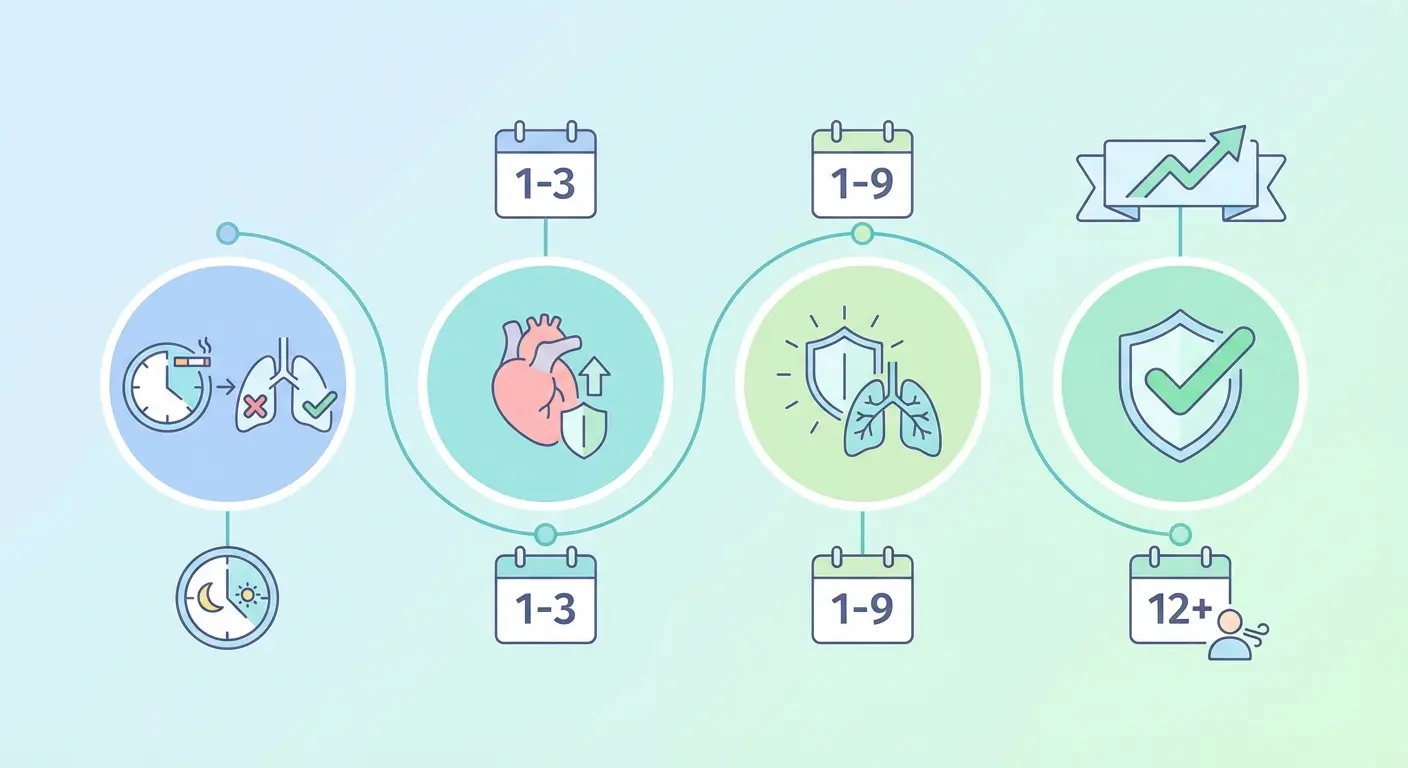
One of the most motivating — and misunderstood — pieces of information for anyone with COPD is what actually happens to your body after your last cigarette. The quit smoking benefits timeline is more dramatic in the early hours than most people expect, even when lung function is already compromised.
| Time After Quitting | What Happens in the Body | COPD-Specific Note |
|---|---|---|
| 20 minutes | Heart rate and blood pressure drop toward normal | Reduced cardiovascular strain — COPD patients face elevated heart attack risk |
| 8–12 hours | Carbon monoxide levels in blood drop by half; oxygen levels normalize | Cells get more oxygen — meaningful for already-hypoxic COPD lungs |
| 24 hours | Heart attack risk begins to decrease | COPD patients face 2–3x higher heart attack risk; this matters immediately |
| 48–72 hours | Nicotine fully cleared; taste and smell begin recovering | Peak withdrawal intensity — often the highest relapse risk window |
| 2–4 weeks | Coughing and mucus production begin to decrease; circulation improves | Many COPD patients notice reduced sputum volume — a real, measurable change |
| 1–9 months | Cilia in airways start recovering; lung infections become less frequent | Fewer COPD exacerbations — this is the outcome that saves hospital visits |
| 1 year | Risk of coronary heart disease halved compared to a smoker | Lung function decline slows significantly — the primary long-term COPD benefit |
| 5–10 years | Stroke risk drops to that of a non-smoker | Quality of life metrics improve substantially in clinical studies |
The honest caveat: with COPD, existing lung damage doesn’t fully reverse. The alveolar destruction of emphysema isn’t rebuilt. But what quitting does do — decisively — is slow the rate of further decline. According to the CDC’s benefits of quitting smoking resource, the health trajectory changes meaningfully from the moment of cessation, regardless of how much prior damage exists.
Here’s where it gets interesting: some of the most dramatic improvements COPD patients report aren’t the lung function numbers — it’s the frequency of exacerbations (flare-ups). Every exacerbation accelerates lung decline and carries hospitalization risk. Fewer exacerbations after quitting is, quite literally, life-extending.
The American Cancer Society’s detailed breakdown of quitting benefits over time provides additional data on how this timeline applies across different health baselines.
Nicotine Withdrawal Symptoms: What’s Normal, What’s a Red Flag
The first week after quitting is where most people stumble — and with COPD, several withdrawal symptoms overlap with disease symptoms in confusing, demoralizing ways.
Standard nicotine withdrawal symptoms include:
- Intense cigarette cravings (typically lasting 3–5 minutes per episode)
- Irritability and frustration
- Anxiety and restlessness
- Difficulty concentrating
- Increased appetite and weight gain
- Insomnia or disturbed sleep
- Depressed mood
- Increased coughing
That last one catches COPD patients off guard. Coughing often increases in the first week or two after quitting. This isn’t the lungs getting worse — it’s the cilia (tiny hair-like structures in the airways) starting to recover and actively clearing out accumulated mucus. It passes. Knowing this in advance is the difference between pushing through and interpreting it as a sign to go back to smoking.
Breathlessness during withdrawal is where the genuine danger lies. Anxiety — a core withdrawal symptom — physiologically increases the sensation of breathlessness. For someone with COPD, this can feel identical to a flare-up. The result: patients often smoke to relieve what feels like a respiratory crisis, not recognizing it as anxiety-driven withdrawal.
Working with your pulmonologist before your quit date to distinguish between withdrawal-related breathlessness and true exacerbation symptoms gives you a clinical anchor. Some physicians prescribe short-term anxiolytics or adjust COPD maintenance medications around a quit attempt for exactly this reason.
Tracking your symptoms daily — including mood, breathlessness level, and cravings — helps you spot patterns and distinguish withdrawal from COPD flares. Apps like iQuit include journal and mood tracking features specifically designed for this, letting you log symptoms in real time and review them with your care team.
Nicotine Withdrawal Timeline for COPD Patients
The general nicotine withdrawal timeline assumes a person without additional respiratory comorbidities. For COPD patients, the timeline follows a similar arc — but the intensity of certain symptoms, particularly anxiety and breathlessness perception, tends to run higher.
What is the nicotine withdrawal timeline?
The nicotine withdrawal timeline is the predictable sequence of physical and psychological symptoms that occur after stopping smoking, typically peaking at 48–72 hours and largely resolving within 2–4 weeks for most symptoms. In COPD patients, anxiety and breathlessness perception may remain elevated beyond the standard timeline due to underlying disease and comorbid anxiety disorders, requiring extended behavioral and pharmacological support.
Here’s a realistic, week-by-week breakdown for someone with COPD:
- Hours 1–24: Cravings begin within 30–60 minutes of the last cigarette. Irritability and restlessness appear. Heart rate and blood pressure are already improving — but you won’t feel it yet.
- Hours 24–72 (Peak Withdrawal): This is the hardest window. Nicotine is fully leaving the system. Anxiety peaks. Breathlessness perception is often at its worst. Insomnia, headaches, and mood crashes are common. NRT or prescription cessation medications are most critical here.
- Days 4–7: Physical nicotine dependence is largely broken. What remains is psychological craving and habitual triggers (coffee, stress, after meals). Coughing may increase — this is the cilia recovery phase, not a setback.
- Weeks 2–4: Most acute physical symptoms resolve. Energy levels often improve noticeably. Weight gain may begin. Psychological cravings can still spike with strong triggers. COPD patients may notice mucus production decreasing.
- Months 1–3: Airway inflammation decreases measurably. Exacerbation frequency often drops. Breathing during mild exertion may feel easier. Cravings become situational rather than constant.
- Month 3 onward: The brain’s dopamine regulation is normalizing. Risk of relapse decreases significantly after 90 days, though COPD patients should maintain behavioral support longer than average quitters.
Fair warning: the timeline above describes what happens when support is in place. Cold turkey, without NRT or medication, with COPD — the failure rate approaches 95%. This isn’t a willpower problem. It’s a biology problem with medical solutions.
For a more detailed walkthrough of evidence-based cessation techniques that work alongside this timeline, the effective strategies to help you quit smoking guide covers behavioral interventions that complement pharmacological support.
Why Quit Attempts Fail with COPD — And the Real Fixes
If you’ve tried to quit before and it hasn’t worked, you deserve a real explanation — not another list of tips that ignores the COPD factor.
Here are the most common, specific reasons COPD patients relapse — and what actually addresses each one:
Problem 1: Undertreated Nicotine Dependence
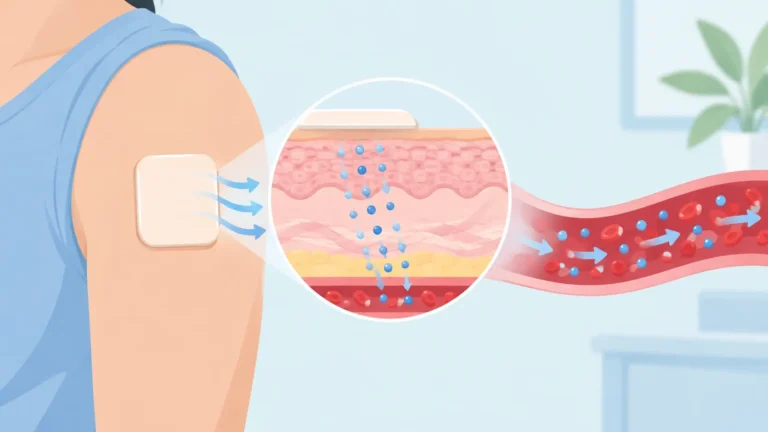
Most COPD patients have high Fagerström scores (indicating severe dependence). A standard single-piece NRT patch isn’t enough. The fix: combination NRT — a long-acting patch plus a short-acting rescue form (gum, lozenge, or inhaler) — or prescription medication. Varenicline (Chantix) has shown the strongest evidence for COPD cessation success in clinical trials. Talk to your pulmonologist, not just your GP.
Problem 2: Withdrawal-Triggered Breathlessness Panic
Anxiety-driven breathlessness gets misread as COPD worsening. The fix: pre-quit breathlessness management training. Work with a respiratory physiotherapist to learn pursed-lip breathing and diaphragmatic breathing techniques before your quit date. These provide a direct, non-smoking response to the sensation of breathlessness.
Problem 3: No Plan for High-Risk Trigger Moments
COPD patients often smoke in response to stress and breathlessness — two triggers that don’t disappear after quitting. The fix: a written trigger-response plan. For every identified trigger, you need a pre-decided response that takes less than 30 seconds to execute. Using an app with an SOS craving feature — like iQuit’s emergency craving support — gives you a structured intervention at the exact moment you’d otherwise relapse.
Problem 4: No Pulmonary Rehabilitation Integration
Pulmonary rehabilitation programs — structured exercise and education for COPD patients — dramatically improve quit rates when combined with cessation support. Exercise reduces withdrawal-related anxiety, improves mood via dopamine release, and gives patients direct evidence that their breathing is improving. Most people attempt to quit without accessing this resource. It’s often covered by insurance for COPD patients.
Problem 5: Treating It as a One-Time Event
Quitting smoking is a process, not a moment. The average person makes 8–10 quit attempts before achieving long-term success — not because they’re weak, but because addiction requires iterative approaches. Each “failed” attempt is data. What triggered the relapse? What support was missing? The fix: reframe relapse as information, not failure, and adjust the strategy before the next attempt.
Your Practical 30-Day Quit Plan for COPD
This isn’t a generic quit plan. It’s structured specifically around the COPD-related barriers identified above, with a timeline that matches the nicotine withdrawal timeline.
Week Before Quit Date: Preparation Phase
- ☐ Schedule an appointment with your pulmonologist to discuss cessation medication options (varenicline, bupropion, or combination NRT)
- ☐ Ask for a referral to pulmonary rehabilitation if not already enrolled
- ☐ Learn pursed-lip breathing and diaphragmatic breathing — practice daily until quit date
- ☐ Identify your top 5 smoking triggers and write a specific response for each
- ☐ Tell one person you trust about your quit date (accountability reduces relapse risk by roughly 30%)
- ☐ Remove cigarettes, lighters, and ashtrays from your home and car on quit date eve
- ☐ Download a tracking app to log cravings, mood, and symptoms starting day one
Days 1–3: Peak Withdrawal Phase
- ☐ Start NRT or prescription medication exactly as directed — don’t skip doses
- ☐ Use your breathlessness breathing technique the moment anxiety or breathlessness appears
- ☐ Log every craving: time, trigger, intensity, and what you did instead
- ☐ Have a go-to 5-minute distraction for each craving window (walk, cold water, short task)
- ☐ Contact your doctor immediately if coughing produces colored mucus, fever, or breathlessness beyond your baseline
Days 4–14: Consolidation Phase
- ☐ Note that increased coughing is likely — this is expected recovery, not worsening
- ☐ Attend any scheduled pulmonary rehab sessions — don’t skip them during this window
- ☐ Re-read your trigger-response plan if you nearly relapsed; adjust if a specific trigger needs a new approach
- ☐ Watch for mood changes — if depression intensifies, contact your doctor (bupropion may be adjusted or added)
- ☐ Celebrate 7 and 14 days explicitly — reward structures support dopamine recovery
Days 15–30: Stabilization Phase
- ☐ Review your craving log for patterns — what situations still catch you off guard?
- ☐ Continue NRT for the full prescribed period — ending too early is a leading relapse cause
- ☐ Schedule a 30-day check-in with your pulmonologist — lung function measurement can be motivating at this point
- ☐ Begin identifying your next 90-day goal (most COPD patients benefit from extended behavioral support through this milestone)
The Smokefree.gov personalized quit plan builder is a free tool that can help you formalize this structure around your specific situation, including medication preferences and support options. For additional accountability tools, the quitSTART app from Smokefree.gov offers daily challenges and tracking features that complement the plan above.
For a broader library of evidence-based strategies — including how to handle relapses without abandoning the quit — the guide on top strategies to quit smoking successfully covers approaches that work across different dependence levels and COPD stages.
Frequently Asked Questions
What happens when you quit smoking with COPD — does lung function improve?
When you quit smoking with COPD, existing lung damage (especially emphysema) doesn’t reverse — but the rate of further decline slows significantly. Most COPD patients see a decrease in exacerbation frequency, reduced coughing and mucus, and improved exercise tolerance within weeks to months. The primary benefit is slowing disease progression, not reversing it, but this still meaningfully extends quality and length of life.
How long does nicotine withdrawal last for COPD patients?
For most people, the acute nicotine withdrawal timeline peaks at 48–72 hours and resolves substantially within 2–4 weeks. For COPD patients, anxiety and breathlessness-related symptoms may persist longer due to comorbid anxiety disorders. Psychological cravings tied to specific triggers can continue for months, which is why extended behavioral support is recommended beyond the standard 4-week window for COPD patients.
Why does breathing feel worse right after quitting smoking?
Breathing can feel worse in the first 1–2 weeks after quitting for two reasons: withdrawal-related anxiety increases the perception of breathlessness, and recovering cilia in the airways actively clear out accumulated mucus, which increases coughing. Neither indicates lung function is worsening. If breathlessness is severe, accompanied by fever, or clearly beyond your normal COPD baseline, contact your doctor to rule out an exacerbation.
What is the most effective quit smoking treatment for COPD patients?
Clinical evidence supports combination therapy as most effective for COPD patients: varenicline (Chantix) or bupropion plus behavioral counseling produces the highest 12-month quit rates. Combination NRT (patch plus short-acting rescue form) is a strong alternative. Adding pulmonary rehabilitation to any pharmacological approach further improves outcomes. Willpower alone has a failure rate approaching 95% in this population.
Is it worth quitting smoking if you already have severe COPD?
Yes — quitting smoking at any stage of COPD provides meaningful benefits. Even in severe COPD (GOLD Stage III or IV), quitting reduces exacerbation frequency, slows further lung function decline, lowers cardiovascular risk, and improves response to COPD medications. According to the Cleveland Clinic, cessation is the single most effective intervention for slowing COPD progression regardless of disease severity.
What are the quit smoking benefits timeline milestones most relevant to COPD?
The most COPD-relevant quit smoking benefits timeline milestones are: 8–12 hours (oxygen levels normalize, reducing hypoxia burden); 2–4 weeks (coughing and mucus production decrease); 1–9 months (cilia recover, respiratory infections become less frequent); and 1 year (rate of FEV1 decline — the key COPD lung function measure — slows to that of a non-smoker). Fewer exacerbations often appear within 1–3 months and represent the most clinically significant near-term benefit.
Track Your Recovery — Day by Day
Knowing the quit smoking benefits timeline is one thing. Watching your own numbers change — cravings logged, hours smoke-free, health milestones reached — is what keeps you going. The iQuit app combines a real-time health recovery timeline, daily craving support, mood tracking, and an AI coach that’s available exactly when you need it most.
Explore More on Quitting Smoking
- Top strategies to quit smoking successfully — covers the full range of cessation methods, relapse prevention, and trigger management
- Effective strategies to help you quit smoking — behavioral and pharmacological techniques for managing withdrawal and cravings
Sources: U.S. Surgeon General’s Report on Smoking Cessation (2020); CDC Benefits of Quitting Smoking; Cleveland Clinic: What Happens to Your Body When You Quit Smoking; American Cancer Society; International Journal of COPD; Nicotine & Tobacco Research.