
Quit Smoking Cravings: Beat Any Urge in 10 Minutes
A craving hits. Your hands feel restless, your chest tightens, and every rational thought about quitting gets drowned out by one single, overwhelming urge. You’ve been here before. The good news — and this is something most people don’t fully believe until it happens to them — is that every cigarette craving peaks and fades within 3 to 10 minutes, whether you smoke or not. Your only job is to outlast it.
This guide gives you exactly what you need: fast, proven techniques to handle quit smoking cravings right now, plus the motivation to keep going after the urge passes.
How Long Do Cigarette Cravings Actually Last?
Here’s the thing that changed how millions of people think about quitting: a craving is not a permanent state. It’s a wave. Nicotine cravings typically peak between minutes 3 and 5, then begin to subside — regardless of what you do. According to the Mayo Clinic, most tobacco cravings last only about 5 minutes.
The problem isn’t the craving’s duration. It’s that when you’re in the middle of one, it feels endless. Your brain — specifically the dopamine reward pathway that nicotine has trained over months or years — sends urgent, insistent signals. That urgency is the addiction talking. It’s not a true emergency.
The early days are the hardest. Week one after quitting is when cravings are most frequent and most intense. By week two, most people notice a real drop. By the end of month one, many former smokers describe cravings as manageable background noise rather than urgent alarms. That trajectory is encouraging — but it doesn’t help you much at minute four of a craving on day three.
That’s exactly what the next section is for.
10-Minute Techniques to Kill a Craving Fast
These aren’t filler suggestions. These are methods with actual evidence behind them — tested by real people who quit smoking after years or decades of the habit.
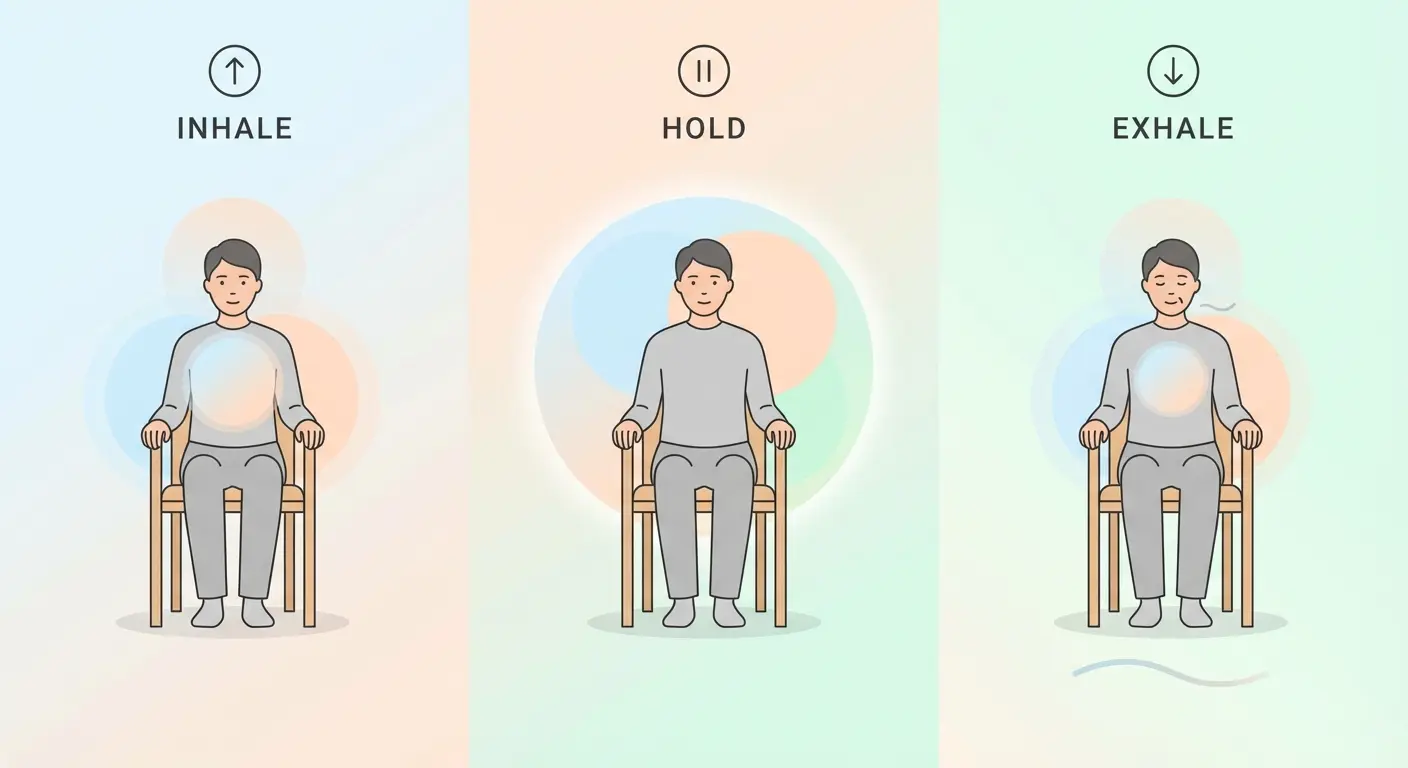
1. The 4-7-8 Breathing Method
Breathe in for 4 counts, hold for 7, exhale slowly for 8. Repeat four times. This activates your parasympathetic nervous system — the biological opposite of the stress response that usually triggers a craving. It takes under two minutes and physically changes your body’s chemical state.
2. Drink a Full Glass of Cold Water
Slowly. Not gulped. Cold water occupies your hands, your mouth, and your attention — three of the four things a cigarette normally occupies. Some former smokers keep a water bottle specifically for craving moments. It sounds too simple. It works.
3. The 5-4-3-2-1 Grounding Technique
Name 5 things you can see, 4 you can physically touch, 3 you can hear, 2 you can smell, 1 you can taste. This forces your brain out of the automatic craving loop and into conscious sensory awareness. It’s a tool borrowed from anxiety management — cravings and anxiety share more neurology than most people realize.
4. Move Your Body — Even for 90 Seconds
Walk up a flight of stairs. Do ten jumping jacks. Step outside and walk around the block. Physical movement releases dopamine naturally, giving your brain a mild chemical reward that competes with the craving signal. A study published in Addiction found that even brief bouts of exercise significantly reduced cigarette cravings and withdrawal symptoms.
5. Chew Something
Sugar-free gum, a carrot stick, a toothpick. Oral stimulation is part of what smoking provides — chewing gives your mouth something to do. Nicotine gum serves double duty here: it satisfies the oral habit while delivering a controlled nicotine dose that prevents withdrawal from spiking.
6. Text or Call Someone
Tell them you’re having a craving. You don’t need advice — just connection. The act of articulating what you’re feeling shifts your brain from reactive mode to reflective mode. And if they know you’re quitting, the accountability alone can be enough to carry you through those ten minutes.
7. Use an SOS Feature
Apps like iQuit include an emergency craving support mode — built specifically for this moment. When a craving hits, the SOS feature walks you through a guided intervention, tracks the craving, and logs it as a win when it passes. Seeing your craving history shrink over time is genuinely motivating.
The CDC’s How to Quit Smoking resource also outlines behavioral strategies and support options — worth bookmarking for reference beyond the immediate craving.
Understanding Your Smoking Triggers
Beating cravings in the moment matters. But knowing why they hit when they do gives you a real long-term edge. The NHS Better Health program identifies two main categories of smoking triggers: internal (emotions like stress, boredom, or anxiety) and external (places, people, times of day).
Most smokers have three to five consistent triggers. Morning coffee. After meals. Stressful work calls. Driving alone. Social situations with other smokers. The triggers aren’t random — they’re conditioned. Your brain learned to associate cigarettes with these situations through repetition, and it will keep sending craving signals until you teach it something different.
What most people miss is that you don’t have to eliminate the trigger — you just have to break the automatic link between the trigger and the cigarette. Drink your morning coffee in a different chair. Take a different route on your post-meal walk. Change one element of the ritual and the association weakens.
For a structured approach to identifying and disrupting your specific triggers, the strategies outlined in top strategies to quit smoking successfully go deep on this — including how emotional triggers and habitual patterns interact, and how to systematically address both.
The Smokefree.gov My Quit Plan tool is also worth completing — it’s interactive, free, and builds a personalized plan around your specific triggers and preferences.
Real Quit Smoking Success Stories That Prove It’s Possible
Motivation is fuel. And the most effective motivation, for most people, isn’t statistics — it’s stories from real people who were exactly where you are right now.
Brandon C., featured in the CDC’s Tips From Former Smokers campaign, started smoking as a teenager and quit after experiencing serious health consequences. His story — honest, specific, and unglamorous — is the kind that actually lands. Watch it here: Brandon C.’s story from the CDC Tips From Former Smokers campaign.
The broader CDC Tips From Former Smokers playlist includes dozens of accounts — different ages, different smoking histories, different reasons for quitting, and different paths through withdrawal. The common thread: none of them found it easy. And all of them made it.
What’s striking across quit smoking success stories isn’t the absence of struggle — it’s the decision to keep going through the struggle. One former smoker described her first two weeks as “white-knuckling through ten-minute intervals.” That’s not a failure story. That’s exactly how quitting works.
If you’re looking for community and shared experiences alongside your own quit journey, the iQuit app includes community challenges and accountability circles — spaces where people share real progress, not just highlights. Being part of a group that’s fighting the same battle changes something.
Craving Management Methods: A Quick Comparison
Not every technique works equally well for every person or every type of craving. Here’s a practical breakdown:
| Method | Best For | Time Required | Works Anywhere? |
|---|---|---|---|
| 4-7-8 Breathing | Stress-triggered cravings | 2–3 minutes | Yes |
| Cold Water | Oral / habit-based urges | 1–2 minutes | Yes (mostly) |
| Physical Movement | Restlessness, post-meal cravings | 2–10 minutes | Yes |
| Grounding (5-4-3-2-1) | Anxiety and overwhelm triggers | 3–5 minutes | Yes |
| Nicotine Replacement Therapy | High-intensity physical withdrawal | 15–30 min (onset) | Yes |
| Calling / Texting Support | Social triggers, loneliness | 5–10 minutes | Yes |
| App SOS Feature (e.g., iQuit) | Any craving, especially at home | 3–7 minutes | Yes (needs phone) |
One important note: Nicotine Replacement Therapy (NRT) — patches, gum, lozenges, inhalers — has strong evidence behind it. A Cochrane evidence summary on NRT found that using NRT increases quit success rates by 50–70% compared to no medication. It’s not cheating. It’s using every available tool.
Quit Smoking Motivation When You’re Running on Empty
Day nine. The acute withdrawal has softened but you’re exhausted, irritable, and wondering if the effort is actually worth it. This is where quit smoking motivation becomes less about inspiration and more about honest accounting.
Try this: calculate exactly what you’ve already saved. If you smoked a pack a day at $10 per pack, nine days in means $90 back in your pocket. The Smokefree.gov savings calculator makes this concrete — enter your details and see the real number. Seeing $3,650 in projected annual savings is different from knowing it abstractly.
Beyond money, your body is already working to recover. Within 20 minutes of your last cigarette, blood pressure starts to drop. At 48 hours, nerve endings begin regrowing. At two weeks, lung function measurably improves. The process is already happening — whether you feel it yet or not.
What most people underestimate is the cumulative effect of each craving they outlast. Every urge you ride out without smoking literally weakens the neural pathway that generates the next one. You’re not just surviving — you’re actively rewiring your brain.
For a broader framework that connects these daily wins to a sustainable quit strategy, the article on effective strategies to help you quit smoking covers behavioral techniques, preparation methods, and how to maintain momentum after the first few weeks — the stretch where many people relapse not from physical withdrawal but from motivational drift.
The iQuit app’s daily missions and 50+ achievement system are designed around this exact problem. Celebrating a single craving beaten, a single smoke-free morning, or a single tough day survived keeps the feedback loop positive at a stage when progress is real but not always visible.
Fair warning: there will be moments when none of this feels like enough. That’s normal. Quitting smoking is genuinely hard, and pretending otherwise doesn’t help anyone. But hard and impossible are different things — and the quit smoking success stories of millions of former smokers prove that beating quit smoking cravings, one urge at a time, is exactly how this works.
Frequently Asked Questions
How do you deal with cigarette cravings when they hit suddenly?
When a craving hits suddenly, focus on outlasting it — most cravings peak within 5 minutes and fade. Use a fast intervention: try the 4-7-8 breathing technique, drink cold water, or step outside and walk briskly. Having a specific plan ready before cravings hit makes the response automatic rather than effortful in the moment.
How long does it take for cigarette cravings to stop after quitting?
Cravings are most frequent and intense during the first week after quitting. For most people, they significantly reduce in frequency and strength by weeks two through four. Occasional cravings can persist for months, but they become shorter and easier to manage over time — especially when triggered by specific situations or stress.
What is the fastest way to get rid of a cigarette craving?
The fastest interventions are controlled breathing (the 4-7-8 method takes under 2 minutes), cold water, and brief physical movement. These work because they interrupt the craving signal with competing sensory and physiological input. Nicotine replacement products like gum or lozenges also act relatively quickly — within a few minutes — for high-intensity physical withdrawal.
Is it normal to feel worse a few days after quitting smoking?
Yes — days 2 through 5 are often the most difficult physically. Nicotine leaves your system within 72 hours, after which withdrawal symptoms like irritability, difficulty concentrating, and strong cravings can peak. This is temporary. Symptoms typically begin easing noticeably by the end of the first week, and significantly by week two.
Does exercise really help with quit smoking cravings?
Yes, and the evidence is solid. Even brief exercise — a 5-minute walk or a short bout of movement — has been shown to temporarily reduce craving intensity and improve mood during withdrawal. Exercise triggers dopamine release naturally, which partially compensates for the dopamine your brain is no longer getting from nicotine. It also gives restless hands and energy somewhere productive to go.
Your Next Step: More Than Just Surviving Cravings
Beating a craving today is a win. Building a system that makes tomorrow easier is a strategy. If you’re looking for what comes next — understanding your triggers, building sustainable habits, and making sure the motivation doesn’t run dry — explore the top strategies to quit smoking successfully and the effective strategies to help you quit smoking for the bigger-picture tools that complement every technique in this article.
And for support between articles — including real-time craving interventions, progress tracking, and a community of people who understand exactly what you’re going through — the iQuit app is worth having on your phone before the next craving hits.