
Quit Smoking: How Heart Disease Risk Drops in 1 Year
Your heart starts recovering within 20 minutes of your last cigarette. That’s not a motivational slogan — it’s physiology. What happens when you quit smoking is one of the most dramatic, measurable health transformations a human body can experience, and the cardiovascular gains within the first year alone are significant enough to genuinely change your long-term prognosis.
Most people expect to feel worse before they feel better — and for the first two weeks, that’s often true. Nicotine withdrawal symptoms are real, and they’re uncomfortable. But buried inside that discomfort is a body actively healing itself, hour by hour, week by week. The quit smoking benefits timeline isn’t just a list of milestones. It’s a biological story worth understanding.
This article breaks down exactly what happens to your heart, lungs, and mental health across the first year after quitting, with a particular focus on why the 12-month mark is such a critical turning point for heart disease risk.
Why Smoking Raises Heart Disease Risk
Cigarette smoke contains more than 7,000 chemicals, and the damage they do to your cardiovascular system is both immediate and cumulative. Understanding the mechanism makes the recovery timeline much easier to appreciate — and believe.
What is Smoking-Related Heart Disease?
Smoking-related heart disease refers to cardiovascular damage caused by the chemicals in tobacco smoke, primarily through arterial inflammation, reduced oxygen delivery, increased clotting risk, and accelerated atherosclerosis (plaque buildup in arteries). It encompasses coronary artery disease, heart attack, stroke, and peripheral artery disease.
Here’s the core problem: nicotine causes your blood vessels to constrict and your heart rate to spike every time you smoke. Carbon monoxide simultaneously binds to hemoglobin, crowding out oxygen. Your heart is literally working harder to deliver less oxygen — every single cigarette, every single day.
Over time, this combination triggers chronic inflammation in arterial walls. That inflammation accelerates plaque formation, which narrows arteries and dramatically increases heart attack risk. A Cochrane systematic review found that smoking cessation is one of the most effective interventions for secondary cardiovascular prevention, reducing subsequent cardiac events in people who already have heart disease.
The good news — and this is where it gets genuinely interesting — is that arterial walls are surprisingly resilient. The inflammation doesn’t have to be permanent. Once you remove the insult (smoke), the healing process begins almost immediately, and it’s measurable within hours.
Quit Smoking Benefits Timeline: Heart Recovery Hour by Hour
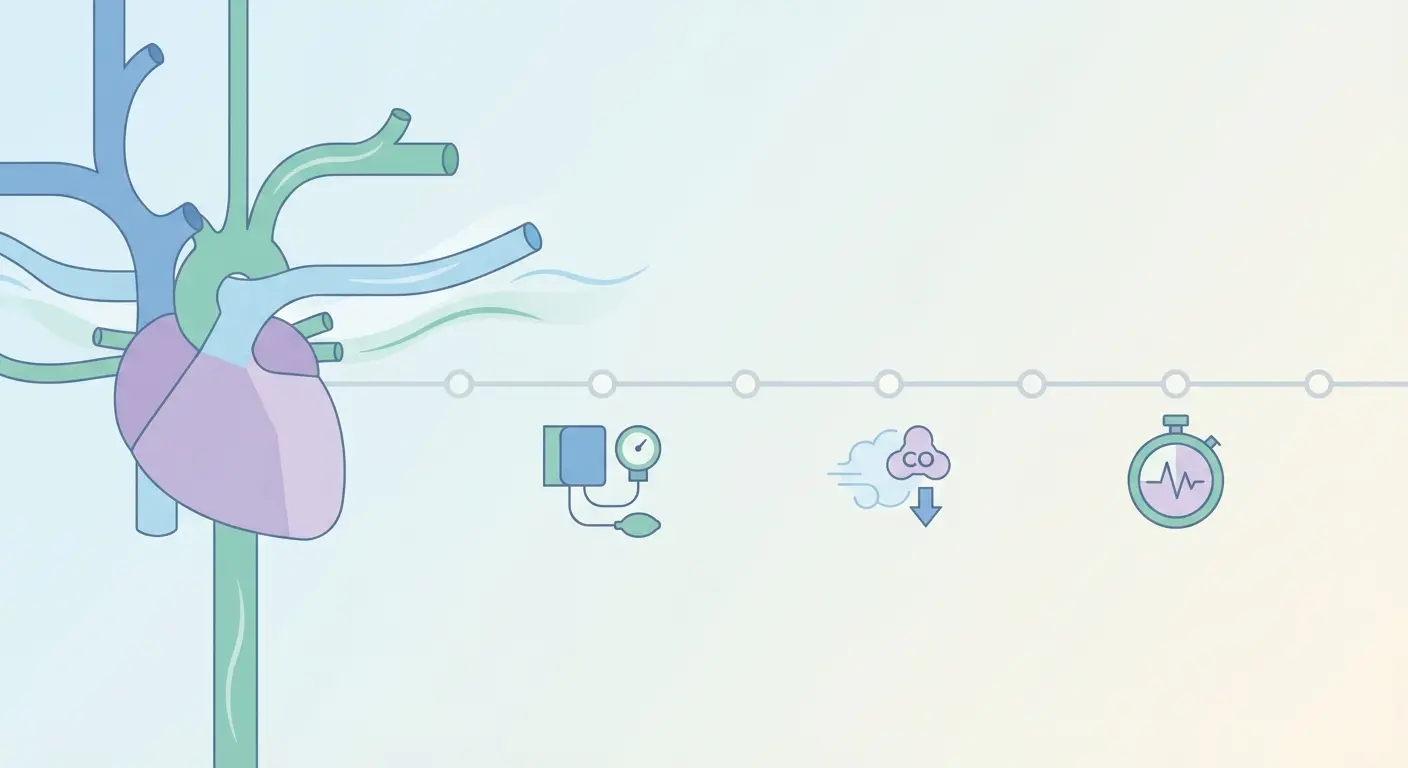
The quit smoking benefits timeline for cardiovascular health is more specific — and more rapid — than most people expect. The timeline below reflects data from the CDC’s Benefits of Quitting Smoking resource and supporting clinical literature.
| Time Since Quitting | Cardiovascular Benefit | What’s Happening Biologically |
|---|---|---|
| 20 minutes | Blood pressure and heart rate drop | Nicotine’s vasoconstrictive effect fades; arteries begin to dilate |
| 12 hours | Blood oxygen returns to normal | Carbon monoxide clears from the bloodstream; hemoglobin carries oxygen again |
| 2–3 weeks | Circulation improves; heart attack risk begins declining | Reduced platelet aggregation; improved endothelial function |
| 1–3 months | Resting heart rate normalizes; exercise tolerance increases | Cardiac output improves; blood viscosity decreases |
| 1 year | Heart disease risk cut by ~50% | Significant arterial inflammation reduction; improved vascular reactivity |
| 5 years | Stroke risk equals a non-smoker’s | Continued arterial remodeling and plaque stabilization |
| 15 years | Heart disease risk approaches that of someone who never smoked | Long-term vascular repair essentially complete |
What most people miss is that the first-year drop in heart disease risk isn’t a slow, gradual process — much of it happens in concentrated bursts during the first weeks and months, as the most acute forms of cardiovascular stress (elevated heart rate, carbon monoxide exposure, clotting tendency) resolve rapidly.
Nicotine Withdrawal Timeline: What to Expect Week by Week
Knowing the nicotine withdrawal timeline doesn’t make withdrawal comfortable — but it does make it manageable. There’s a huge psychological difference between “this is unbearable and I don’t know when it ends” and “this is peak intensity right now, and I know it starts easing in 3–4 days.”
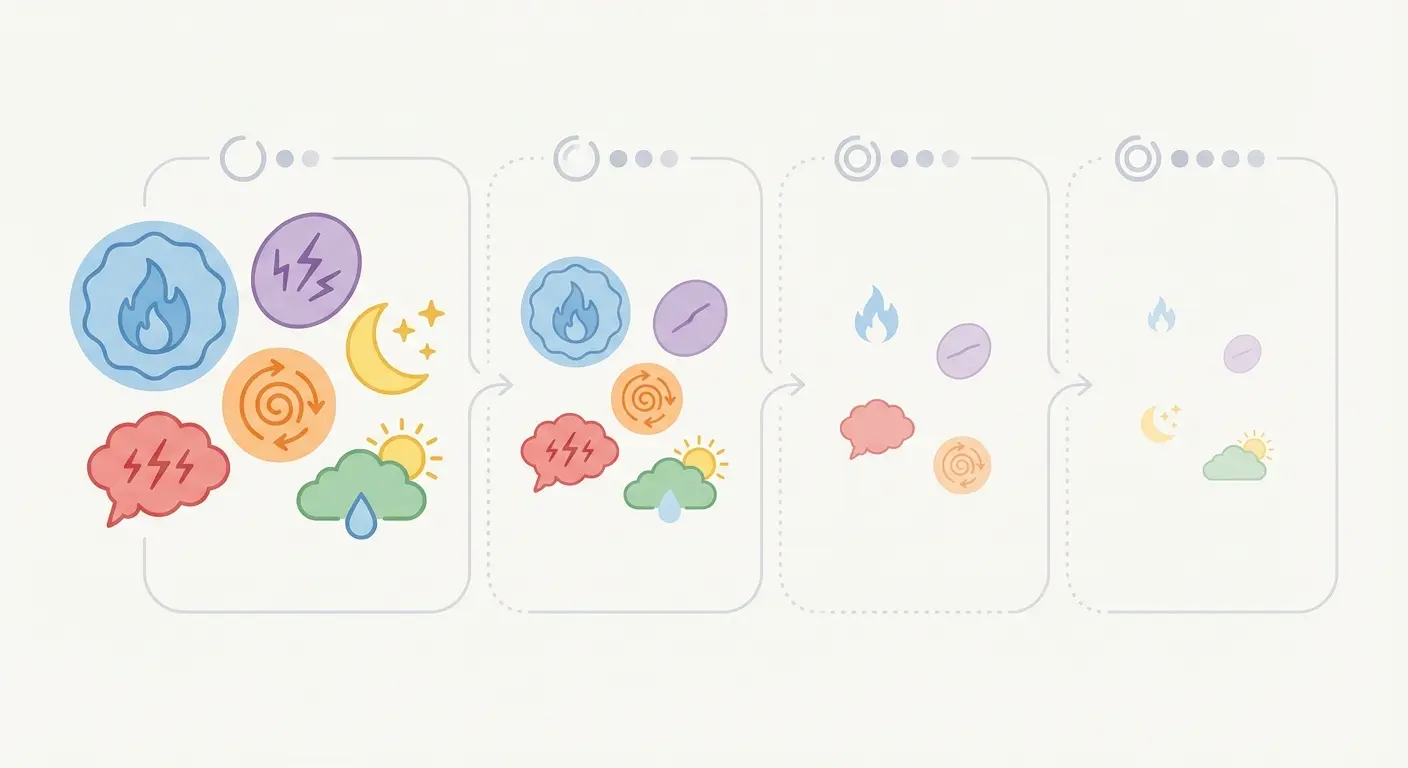
The nicotine withdrawal symptoms most people experience fall into two categories: physical symptoms driven by neurochemical changes, and psychological symptoms driven by habit and behavioral cues.
Physical Nicotine Withdrawal Symptoms
- Intense cravings (typically peak at 2–3 days)
- Headaches and dizziness (days 1–3)
- Increased appetite and weight gain tendency
- Fatigue and disrupted sleep
- Constipation or GI discomfort (first 1–2 weeks)
- Sore throat or mouth (as airways begin clearing)
Psychological Nicotine Withdrawal Symptoms
- Irritability and frustration (often most pronounced in first week)
- Difficulty concentrating
- Anxiety or restlessness
- Low mood or depressive episodes (most common in weeks 2–4)
- Persistent cravings tied to specific triggers (coffee, stress, social situations)
By week 4, most physical symptoms have largely resolved for the majority of quitters. The challenge that persists longer is psychological — cravings triggered by situations, emotions, and environments that your brain has deeply associated with smoking. That’s not weakness; it’s conditioning, and it responds well to behavioral strategies.
If you’re in the thick of early withdrawal right now, the evidence-based techniques covered in this guide to effective strategies to help you quit smoking are worth reading — particularly the sections on managing trigger-based cravings.
Lung Recovery After Quitting: The Longer Game
Lung recovery after quitting smoking is slower than cardiovascular recovery — and that surprises people. The lungs don’t bounce back in weeks the way blood pressure does. But the improvements are real, meaningful, and progressive.
The American Lung Association explains that smoking damages cilia — the tiny hair-like structures that sweep mucus and debris out of the airways. After quitting, cilia begin regrowing and resuming function within weeks, which is why many quitters notice an increase in coughing initially. That’s not a bad sign. That’s your airways doing their job again.
Lung Recovery Milestones After Quitting
One caveat worth being honest about: if you have established COPD, emphysema, or significant fibrosis, quitting smoking slows further deterioration significantly — but doesn’t reverse existing structural damage. Quitting still matters enormously; it means managing a chronic condition better, rather than achieving a complete reset.
You can also review real patient stories and clinical perspectives at the CDC’s Tips From Former Smokers video campaign — some of the most candid accounts of what long-term smoking does to lung health.
Mental Health and Quitting Smoking
Here’s the counterintuitive part that most quit-smoking content glosses over: many smokers believe cigarettes reduce anxiety and improve mood. They feel true in the moment. But they’re not — and the distinction matters enormously for anyone trying to stay quit.
What smoking actually does is relieve the anxiety caused by nicotine withdrawal itself. The relief you feel after a cigarette is primarily the disappearance of craving-induced discomfort, not a genuine anxiolytic effect. Study after study has confirmed that long-term ex-smokers report lower anxiety and better mood than they did when smoking — once past the withdrawal phase.
Several factors support mental health during withdrawal:
- Nicotine Replacement Therapy (NRT) — patches, gum, lozenges, or inhalers reduce the neurochemical crash
- Prescription medications — varenicline (Champix/Chantix) and bupropion both have evidence for reducing depressive symptoms during cessation
- Exercise — even 20–30 minutes of aerobic activity reliably reduces craving intensity and improves mood
- Behavioral support — counseling, group support, or app-based coaching significantly improve long-term quit rates
- Progress tracking — seeing concrete evidence of health improvements shifts focus from loss to gain
Apps like iQuit are specifically designed for this phase — combining mood tracking, craving SOS support, and a health recovery timeline that lets you watch your progress accumulate day by day. When you’re struggling at 3am with a craving, having an AI coach and a running tally of days smoke-free can be surprisingly stabilizing.
The 1-Year Milestone: What the Data Actually Shows
The 1-year mark is where the numbers become undeniably compelling. It’s the most well-documented milestone in smoking cessation research, and the cardiovascular data in particular is striking.
| Health Metric | Risk While Smoking | Risk at 1 Year Smoke-Free | Source |
|---|---|---|---|
| Coronary heart disease | 2–4× non-smoker risk | ~50% reduction | American Heart Association |
| Heart attack (acute MI) | Significantly elevated | Risk decreasing toward baseline | CDC |
| Blood pressure (resting) | Chronically elevated | Near-normal in most ex-smokers | NHS/CDC |
| Chronic cough | Present in majority of smokers | Resolved or significantly improved | American Lung Association |
| Lung infection frequency | Elevated | Substantially reduced | American Lung Association |
| Anxiety (self-reported) | Often masked by nicotine cycle | Lower than baseline smoking levels | NHS |
The NHS notes that 10 years after quitting, lung cancer risk falls to about half that of a smoker. But for cardiovascular disease — which kills more smokers than cancer does — the 1-year turnaround is uniquely fast and clinically meaningful.
Reaching that milestone requires a plan. The evidence-backed methods in this overview of top strategies to quit smoking successfully outline the combination approaches — behavioral support plus pharmacotherapy plus environmental changes — that give you the highest probability of being in that “one year smoke-free” category.
Practical Checklist: Surviving and Thriving in Year One
This won’t work for everyone in exactly the same order, but the framework below reflects the consensus from cessation research on what former smokers actually needed — not just what sounds good on paper.
Month 1: Damage Control and Craving Management
- Choose your NRT or medication strategy before day 1 — don’t improvise through peak withdrawal. Talk to your doctor or pharmacist about patches, gum, varenicline, or a combination approach.
- Identify your top 3 triggers — coffee, stress, and after meals are the most common. Have a specific plan for each one, not a vague intention.
- Remove all smoking paraphernalia — lighters, ashtrays, stale packs. Friction matters during craving peaks.
- Track your progress daily — even a simple counter creates accountability and momentum. Apps with health milestone notifications help make abstract benefits feel concrete.
- Tell at least one other person — social accountability is a real, measurable predictor of success.
Months 2–3: Building New Patterns
- Replace smoking rituals deliberately — the brain craves the ritual as much as the nicotine. Find a replacement that occupies the same time slot (a short walk, a glass of water, a breathing exercise).
- Start tracking your physical improvements — resting heart rate, morning cough frequency, exercise duration. Seeing measurable data is motivating.
- Expect a “second dip” in motivation around weeks 6–10 — the initial urgency has passed but habits aren’t fully formed. This is the most common relapse window.
- Consider group or app-based support — peer accountability during this phase is underrated.
Months 4–12: Consolidating Gains
- Schedule a GP or physician check-in at 3 months — getting blood pressure and resting heart rate measured gives you objective evidence of improvement.
- Have a written relapse plan — not because you expect to fail, but because knowing your “if I slip, I will…” response in advance removes the shame spiral that often turns a slip into a full relapse.
- Track financial savings — the average pack-a-day smoker saves $3,000–$5,000 per year, depending on location. Watching that number grow is a real and useful motivator.
- Mark the 1-year milestone intentionally — it’s worth acknowledging. The cardiovascular benefits you’ve accumulated are genuinely significant.
Frequently Asked Questions About Quitting Smoking and Heart Health
What happens when you quit smoking after 1 year?
After one year smoke-free, your heart disease risk drops by approximately 50% compared to when you were smoking. Blood pressure and resting heart rate are typically normal, chronic cough has usually resolved, and lung function has measurably improved. The cardiovascular system shows the most dramatic gains at this milestone — though recovery continues for years afterward.
How long does nicotine withdrawal last?
Physical nicotine withdrawal symptoms typically peak at 2–3 days and largely resolve within 2–4 weeks. Psychological symptoms — particularly trigger-based cravings and mood fluctuations — can persist for several months, though they decrease in frequency and intensity over time. Using nicotine replacement therapy significantly reduces the severity of the withdrawal timeline.
Does quitting smoking reverse existing heart damage?
Quitting smoking doesn’t reverse all existing cardiovascular damage, but it dramatically slows or stops its progression and reduces acute risk. Arterial inflammation decreases, platelet aggregation normalizes, and the ongoing injury from carbon monoxide and nicotine ceases. For people who have already had a cardiac event, cessation is one of the most effective interventions for preventing a second one.
What are the most common nicotine withdrawal symptoms?
The most common nicotine withdrawal symptoms are intense cravings, irritability, difficulty concentrating, increased appetite, headaches, fatigue, and sleep disruption. Most people also experience anxiety and low mood in the first two to four weeks. These symptoms are most intense in the first 72 hours and are significantly reduced by nicotine replacement therapy or prescription cessation medications.
Can quitting smoking improve mental health?
Yes — and this surprises many smokers. Once past the initial withdrawal phase, former smokers consistently report lower anxiety, better mood, and improved stress management compared to when they were smoking. The perceived stress-relief from cigarettes is largely a relief from nicotine withdrawal itself, not a genuine anxiolytic effect. Long-term mental health outcomes after quitting are generally positive.
What is the best way to manage cravings during the first month?
The most effective craving management combines pharmacological support (NRT, varenicline, or bupropion) with behavioral strategies like trigger identification, habit substitution, and progress tracking. The “4 D’s” approach — Delay, Deep breathe, Drink water, Do something else — has solid evidence behind it. Individual cravings typically peak and pass within 3–5 minutes, which makes distraction strategies genuinely effective.
Track Your Heart Health Recovery in Real Time
Every day smoke-free is measurable progress. The iQuit app shows you your health recovery timeline as it happens — from blood pressure normalization in the first hours to heart disease risk reduction at one year. With built-in craving SOS support, mood tracking, and AI coaching, it’s designed for exactly the moments when staying quit feels hardest.
Keep Reading: Build the Knowledge to Stay Quit
Understanding what happens when you quit smoking is only part of the equation. The other part is having the right tools for the moments when nicotine withdrawal symptoms are loudest.
- Top strategies to quit smoking successfully — a research-backed breakdown of what actually works, including the combination approaches that double your odds of reaching 12 months smoke-free.
- Effective strategies for managing early withdrawal — practical techniques for the first days and weeks, when physical nicotine withdrawal symptoms are most intense and relapse risk is highest.
For free text-based quit support, the SmokefreeTXT program from the National Cancer Institute sends scheduled support messages — particularly useful in the first 6 weeks. And if you want an app with more robust features and real-time tracking, the Smokefree.gov app directory lists clinically reviewed options alongside iQuit.
One year from today, your heart disease risk could be half of what it is right now. That’s a measurable, documented, physiologically real outcome from health and recovery after quitting smoking — and it starts with the next 20 minutes.