
Quit Smoking: What Is the Best Way to Stop Naturally?
Quit smoking once and you’ll understand why millions of people call it the hardest thing they’ve ever done. The physical pull is real. The psychological grip is stronger. And if you’ve already tried — and slipped back — you’re not weak. You’re dealing with one of the most addictive substances on earth, one that reshapes brain chemistry after just a few weeks of regular use.
But here’s what most quitting guides won’t tell you upfront: the “best” method isn’t a single product or pill. Research consistently shows that combining behavioral strategies with strong self-awareness produces the highest long-term success rates. And many of those strategies cost nothing.
This article walks you through the most effective natural approaches to quitting — what the science says, what former smokers actually did, and how to build a quit plan that fits your life.
Why Natural Quitting Works — and When It Doesn’t
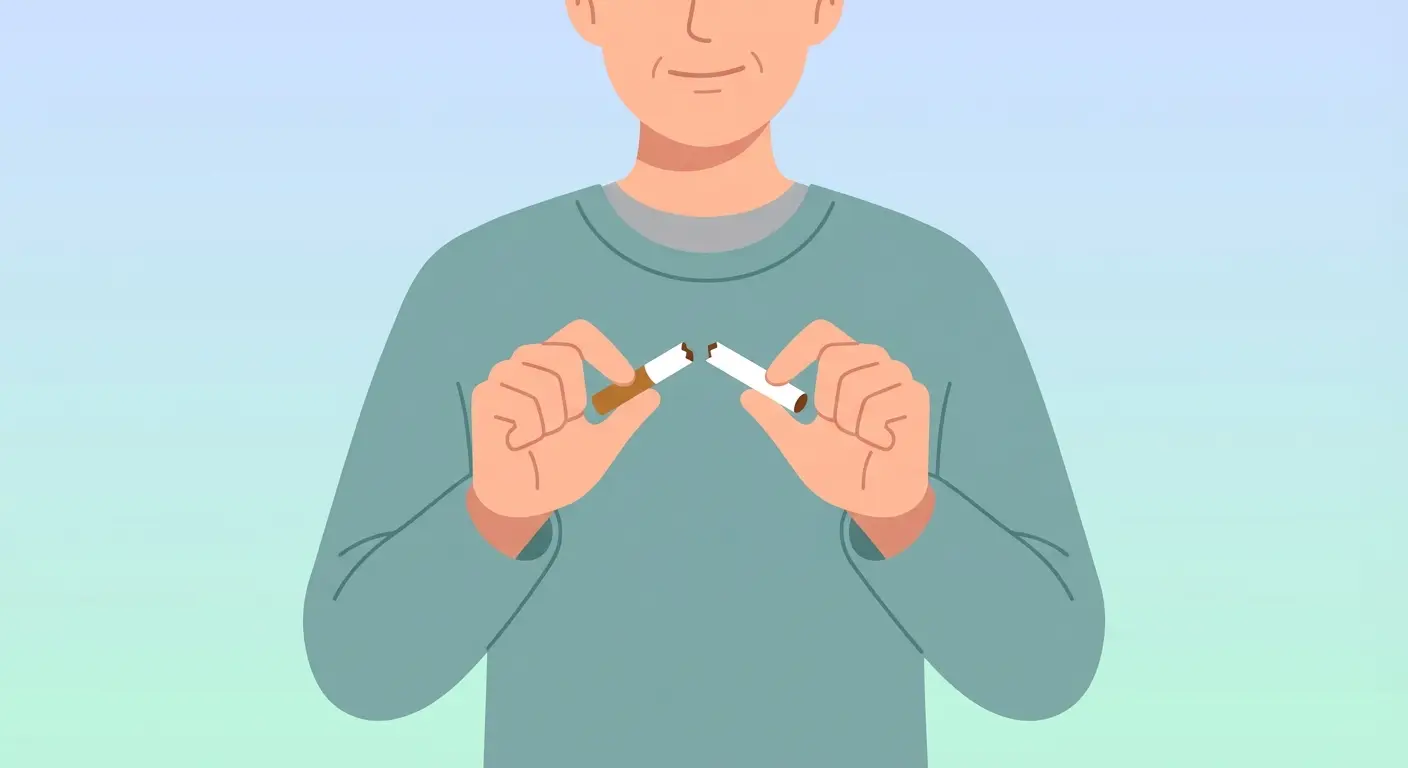
Natural cessation doesn’t mean white-knuckling it alone. It means using non-pharmacological tools — behavioral change, mindfulness, physical activity, social support — as the core of your strategy rather than a backup plan.
According to the CDC’s guidance on how to quit smoking, most smokers need multiple attempts before successfully quitting, and every failed attempt carries valuable information about what triggers relapse. That’s not failure — that’s data.
Quitting smoking naturally refers to stopping cigarette use through behavioral, psychological, and lifestyle-based methods — without the primary use of prescription medications or nicotine replacement therapy (NRT). It includes strategies like trigger management, habit substitution, mindfulness, exercise, and structured support systems.
Where natural methods sometimes fall short is for heavy, long-term smokers with significant physical dependence. If you’ve smoked 20+ cigarettes daily for more than a decade, withdrawal symptoms can be intense enough that pure behavioral methods may not be sufficient on their own. That’s an honest limitation worth acknowledging.
Still, the research is clear: behavior change is the engine of any successful quit. Medications can reduce withdrawal intensity, but they can’t rewire the psychological associations — the coffee-and-cigarette pairing, the after-dinner smoke, the stress response — that keep many people returning to cigarettes months or years after quitting.
| Factor | Natural Methods | Medication-Assisted |
|---|---|---|
| Cost | Low to none | Moderate to high |
| Addresses psychological triggers | Yes — directly | Partially |
| Reduces physical withdrawal | Indirectly (exercise, diet) | Yes — directly |
| Long-term habit change | Strong (rewires behavior) | Dependent on behavior change too |
| Side effects | Minimal | Possible (varies by medication) |
Set a Quit Date and Make It Real
Choosing a specific date is one of the most evidence-backed steps in any quit-smoking plan. It sounds simple. It’s not trivial.
The American Cancer Society’s guide to quitting smoking recommends picking a date within the next two weeks — close enough that you stay committed, far enough to prepare. Write it down. Tell someone. Put it in your phone calendar.
What makes the quit date powerful isn’t the date itself — it’s the preparation period before it. Use those days to:
- Identify your highest-risk smoking moments (first cigarette of the day, after meals, during stress)
- Remove cigarettes, lighters, and ashtrays from your home, car, and workspace
- Tell at least two people your quit date so external accountability kicks in
- Plan what you’ll do instead during your 3 highest-risk daily triggers
- Stock replacement items — gum, herbal tea, carrot sticks, a fidget tool
One counterintuitive insight here: don’t wait until you “feel ready.” Most people never feel 100% ready to quit. The decision precedes the feeling, not the other way around. Commitment creates motivation — not the reverse.

Understand Your Smoking Triggers
Here’s where it gets interesting — and where most people underestimate what they’re up against. Nicotine addiction has two components: the physical craving (which peaks around 72 hours after quitting and fades substantially within 2-3 weeks) and the behavioral/psychological triggers, which can persist for years.
Triggers are situational cues that your brain has wired to the reward of smoking. They fall into four main categories:
- Emotional triggers: Stress, anxiety, boredom, loneliness, frustration
- Social triggers: Being around other smokers, alcohol, parties
- Routine triggers: Morning coffee, after meals, work breaks, driving
- Sensory triggers: The smell of cigarettes, seeing someone light up, certain locations
The most effective natural quit strategies address triggers directly. That means mapping your own trigger profile — not a generic list — and building specific responses to each one.
Keep a trigger journal for three to five days before your quit date. Every time you reach for a cigarette, write down: the time, what you were doing, how you felt, and whether you were alone or with others. Patterns will emerge quickly. Those patterns are your quit plan’s blueprint.
For a deeper look at how triggers connect to successful quitting strategies, these top strategies to quit smoking successfully cover behavioral trigger management in detail.
Behavioral Strategies That Replace the Habit
Smoking isn’t just a nicotine habit — it’s a physical ritual. The hand-to-mouth motion, the pause, the deep breath. Any successful natural quit plan needs to address the ritual, not just the substance.
What most people miss is that the brain doesn’t respond well to “stopping” a behavior. It responds much better to substitution. You’re not giving something up — you’re replacing it with something that meets the same underlying need.
Physical Substitutions
These replace the oral and physical sensations associated with smoking:
- Chewing sugar-free gum or sucking on a cinnamon stick during cravings
- Holding a pen, stress ball, or smooth stone in the hand you’d normally use for a cigarette
- Drinking cold water through a straw to mimic the inhalation sensation
- Brushing your teeth immediately after meals — it disrupts the after-meal smoking ritual powerfully
Activity-Based Substitutions
Physical activity is one of the most evidence-supported natural aids for quitting. A Mayo Clinic smoking cessation study found that exercise reduces withdrawal symptoms and cravings — not just through distraction, but through actual neurochemical effects. Even a brisk 5-minute walk during a craving can reduce its intensity significantly.
- Take a 5-10 minute walk during your previous “smoke break” times
- Do 10 push-ups or jumping jacks when a craving hits
- Start a simple stretching or yoga routine in the morning when you’d previously light up
Mindfulness and Breathing Techniques
Deep breathing is underrated as a quit aid. When you smoke, you’re forced to take slow, deliberate breaths. That has a genuine calming effect — one you can replicate without nicotine.
Try the 4-7-8 method when cravings hit: inhale for 4 seconds, hold for 7, exhale for 8. Do it three times. The physiological calming effect is real, and it directly competes with the urge to reach for a cigarette.
Mindfulness-based relapse prevention (MBRP) has shown promising results in addiction research. The core skill is “urge surfing” — observing the craving without acting on it, treating it as a wave that rises and falls rather than a demand that must be met. Cravings typically peak and pass within 3-5 minutes if you don’t feed them.
For additional evidence-based techniques, explore these effective strategies to help you quit smoking that cover cravings management in detail.
Managing Nicotine Withdrawal Naturally
Withdrawal is real, and pretending otherwise sets people up to feel like failures when symptoms hit. The physical symptoms — irritability, difficulty concentrating, headaches, sleep disruption, increased appetite — are your body recalibrating. They’re temporary. Most resolve within 2-4 weeks.
Here’s what can help reduce their intensity without medication:
Diet and Hydration
Certain foods appear to intensify cigarette cravings. Meat, alcohol, and coffee are frequently reported by smokers as making cigarettes taste better. During early quitting, some people find it helpful to temporarily reduce alcohol and switch to herbal tea or water instead of coffee in the morning.
On the other side: fruits, vegetables, dairy, and non-caffeinated drinks are reported to make cigarettes taste worse — which is useful information. Loading up on these during the first two weeks isn’t just healthy; it actively works against the craving cycle.
Staying well-hydrated helps flush nicotine metabolites and reduces the intensity of withdrawal headaches. Aim for 8+ glasses of water daily in your first week.
Sleep Protection
Nicotine disrupts sleep architecture, and withdrawal often makes this worse before it gets better. Protect your sleep during early quit days by reducing screen time an hour before bed, keeping a consistent sleep schedule, and avoiding alcohol (which is also a relapse trigger).
Stress Management
Stress is the single most commonly reported trigger for relapse. Building even a basic stress management toolkit before your quit date is one of the highest-leverage things you can do. This doesn’t have to be elaborate — a daily 10-minute walk, a journaling habit, or a specific person you call when stress peaks will do.
The Johns Hopkins guide on the dangers of smoking and help to quit emphasizes that stress-related relapse is the most common failure point — and it’s one that preparation can directly address.
Mindset, Motivation, and Handling Setbacks
The biggest mental shift that separates successful quitters from those stuck in the cycle? They stop seeing a slip as proof that quitting is impossible and start treating it as a learning event.
Research on behavior change consistently shows that identity-based approaches outperform goal-based ones. The difference between “I’m trying to quit smoking” and “I’m a non-smoker” is not just semantic. Identity statements reshape behavior over time — your actions begin to align with who you believe you are.
This isn’t self-help fluff. It’s grounded in psychological research on habit formation, including work by James Clear (author of Atomic Habits) and decades of addiction research showing that self-efficacy — your belief in your ability to succeed — is one of the strongest predictors of quit success.
When You Slip
If you smoke a cigarette after your quit date, that’s a slip — not a relapse. The distinction matters. A slip becomes a relapse only when you decide to resume smoking. Many successful long-term quitters slipped once or more before achieving permanent cessation.
After a slip, do three things:
- Don’t catastrophize. One cigarette doesn’t undo your progress.
- Identify what triggered it. Specifically. Time of day, emotional state, social situation.
- Update your plan. That trigger is now a known risk — build a direct response to it.
Apps built specifically for quitting can make this kind of tracking significantly easier. The iQuit app includes a journal and mood tracking feature alongside emergency SOS craving support — so when a craving peaks, you have a structured tool in your pocket rather than just willpower alone. Features like real-time progress tracking and a health recovery timeline also give you concrete, motivating data on how your body is recovering hour by hour.
Your 7-Day Natural Quit Plan
This plan is designed for someone who has chosen a quit date and wants a structured natural approach. Adjust it to fit your schedule — but don’t skip the preparation days. They’re where most of the real work happens.
-
Day -3 (Three Days Before Quit Date): Trigger Mapping
Carry a small notebook or use your phone’s notes app. Every cigarette, log: time, trigger, emotional state. By evening, you’ll have a clearer picture of your top 3 smoking situations. -
Day -2: Environment Audit
Remove all cigarettes, lighters, and ashtrays from your home, car, and workplace. Stock your replacement toolkit: gum, herbal tea, healthy snacks, a stress ball or similar object. Inform at least two trusted people of your quit date. -
Day -1: Plan Your First 24 Hours
Write out your schedule for quit day. Identify the top 3 moments when you’ll want to smoke and write your specific substitute action for each. Plan a rewarding smoke-free activity for the evening. -
Day 1 (Quit Day): Execute, Don’t Negotiate
Don’t debate whether to have “just one.” Treat the decision as already made. Use the 4-7-8 breathing technique every time a craving hits. Text someone in your support circle when cravings feel intense. Track your first smoke-free hours. -
Day 2-3: Expect the Peak
Withdrawal peaks around 48-72 hours. Irritability, difficulty concentrating, and strong cravings are normal and temporary. Increase physical activity. Drink more water. Sleep aggressively. This is the hardest window — getting through it is the biggest win of the process. -
Day 4-5: Build Momentum
Physical withdrawal begins subsiding. Acknowledge the progress — concretely. Calculate how much money you’ve saved. Note how your breathing feels. These wins are real, and tracking them reinforces the identity shift from “smoker trying to quit” to “non-smoker.” -
Day 6-7: Focus on Psychological Triggers
By now, physical withdrawal is significantly reduced. What remains is largely psychological — the habitual pulls. This is where your trigger substitutions need to become automatic. Review your trigger map and reinforce the replacement behaviors that worked. Plan your Week 2 strategy.
For a personalized version of this plan, Smokefree.gov’s Quit Plan builder walks you through creating a structured plan tailored to your smoking history and personal triggers.
Frequently Asked Questions About Quitting Smoking
What is the most effective natural way to quit smoking?
The most effective natural approach combines three elements: a firm quit date with structured preparation, trigger identification and behavioral substitution, and social accountability. Research shows that smokers with a written quit plan and at least one accountability partner are significantly more likely to remain smoke-free at 6 months than those who quit without preparation. No single method works for everyone, but this combination consistently produces the strongest results across studies.
How long does nicotine withdrawal last when quitting naturally?
Physical nicotine withdrawal typically peaks between 48 and 72 hours after your last cigarette and substantially diminishes within 2-4 weeks. Psychological cravings linked to behavioral triggers can persist longer — sometimes months — but they become less frequent and less intense over time. Most people find that by the 4-week mark, the physical symptoms are largely resolved and the remaining challenge is managing situational and emotional triggers.
Is cold turkey quitting more effective than a gradual reduction?
A study published in Annals of Internal Medicine found that abrupt cessation (cold turkey) produced slightly higher quit rates at 4 weeks compared to gradual reduction — 49% vs. 39%. However, the difference largely disappears when both methods are combined with adequate behavioral preparation. What matters most isn’t the reduction method but the quality of planning, support, and trigger management that accompanies it.
Can exercise really help with quitting smoking?
Yes — and the evidence is stronger than most people realize. Exercise reduces both the intensity and frequency of nicotine cravings by triggering the release of dopamine and endorphins, essentially providing a natural, healthier version of the reward cigarettes deliver. Even short bouts of activity (a 5-minute brisk walk) have been shown to reduce craving intensity in the moment. Building regular physical activity into your quit plan directly supports withdrawal management.
What should I do immediately when a cigarette craving hits?
First, recognize that most cravings peak and pass within 3-5 minutes — you just have to get through that window. Effective immediate responses include the 4-7-8 breathing technique (inhale 4 seconds, hold 7, exhale 8), drinking a large glass of cold water, doing 10 jumping jacks or a short walk, or texting someone from your support circle. Having a pre-decided craving response means you’re not making the decision under pressure.
Are there foods that help reduce cigarette cravings?
Some evidence suggests that certain foods make cigarettes taste less appealing — particularly dairy products, fruits, and vegetables. Conversely, meat, alcohol, and coffee are frequently reported to intensify cravings. While no food eliminates nicotine withdrawal, eating more produce and staying well-hydrated during your first two weeks can modestly support your quit attempt. Avoiding alcohol during the early quit period is especially important, as it’s one of the most common relapse triggers.
Taking Your Next Step Toward Quitting Smoking
Quitting smoking naturally is genuinely possible — but it works best when it’s treated as a structured process rather than an act of willpower alone. The behavioral, psychological, and lifestyle strategies covered here are drawn from the same evidence base that informs clinical cessation programs. They work because they address the whole habit, not just the physical dependency.
The most important next step isn’t the “perfect” plan — it’s starting. Pick a quit date. Map your triggers. Tell someone. And when cravings hit, remember: they peak at 3-5 minutes and then fade. Every craving you ride out makes the next one slightly easier to handle.
For real-time support during those critical craving windows, many people find that having a structured tool helps. The iQuit app was built specifically for this — with emergency craving support, daily behavioral missions, health recovery milestones, and an AI coach available whenever you need it. It turns your quit journey into something you can see, track, and build on each day.
The CDC’s Tips From Former Smokers campaign features real stories from people who quit under difficult circumstances — worth watching if motivation is what you need right now.
You’ve read this far because quitting matters to you. That intent is worth acting on — today, not someday.
This article is for informational purposes only and does not constitute medical advice. Speak with a healthcare provider if you have concerns about nicotine dependence or withdrawal, or if you’re considering combining natural methods with cessation medications.