Quit Smoking One Month Benefits: The Science of What Your Body Does in 30 Days
Reaching one month smoke-free is one of the most significant health milestones you will ever achieve. Not because of what it symbolises — though that matters enormously — but because of the very real, measurable biological changes that have been happening inside your body for 30 consecutive days. These aren’t small or subtle. By the time you hit day 30, your cardiovascular system, lungs, nervous system, skin, taste buds, and brain chemistry have all undergone documented, clinically significant improvements. This guide walks you through the science, system by system.
According to the American Cancer Society, the health benefits of quitting smoking begin within 20 minutes of the last cigarette and continue accumulating for decades. The first month is when the most dramatic and rapid changes occur — particularly in the cardiovascular and respiratory systems. Here is exactly what is happening, day by day, in biological terms.
Cardiovascular System: Days 1–30
The heart and blood vessels begin recovering faster than almost any other system after you stop smoking. Within 20 minutes of your last cigarette, your heart rate and blood pressure drop to normal. Within 24 hours, carbon monoxide — which competes with oxygen in your red blood cells — has been eliminated, and your blood oxygen levels are back to normal.
By day 2, blood vessels begin to dilate. Peripheral circulation improves — many ex-smokers notice warmer hands and feet within the first week. By the end of week 2, circulation improvement is measurable in exercise tolerance. You can move further and faster with less cardiovascular effort than you could as a smoker.
After one month, your risk of having a heart attack has already begun to decrease. The CDC reports that within 1–2 years of quitting, heart attack risk drops dramatically, and the trajectory of improvement starts in the very first days. The mechanism involves normalising blood viscosity (blood becomes less “sticky”), reduced platelet aggregation, and lower arterial inflammation — all driven by the absence of the 7,000+ chemicals in cigarette smoke that damage blood vessel walls.
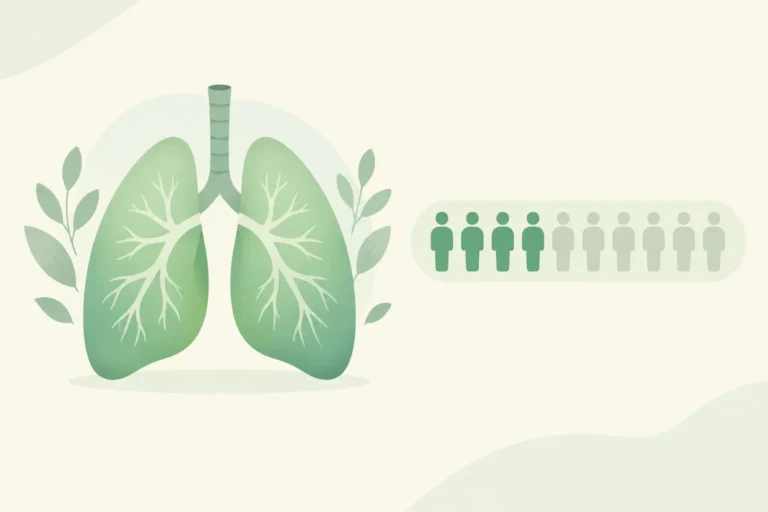
Respiratory System: Your Lungs Month One
Lung recovery in the first month operates on two distinct timescales: immediate structural cleaning and longer-term capacity improvement.
The Cilia Repair — Days 3 to 14
Smoking paralyses the cilia — tiny hair-like structures that line the bronchial tubes and sweep mucus, bacteria, and debris out of the lungs. Within 72 hours of quitting, the cilia begin reactivating. By day 7–14, they are functioning again, actively sweeping accumulated debris out of the airways. This is why many ex-smokers cough more in the first two weeks — not because their lungs are getting worse, but because the cleaning mechanism has restarted. This cough is healthy and temporary.
Lung Capacity — Weeks 2 to 4
By the end of week 2, lung function measurably improves. The bronchial tubes begin to relax and dilate, making it easier to move air in and out. Many people first notice this when climbing stairs — they can reach the top with noticeably less breathlessness. By the end of the first month, coughing and shortness of breath have decreased significantly for the majority of quitters. Within 9 months, lung function increases by approximately 10% according to NHS data.
Brain and Nervous System Recovery
Nicotine’s most profound effects are neurological. It hijacks the brain’s reward system by triggering dopamine release — more rapidly and intensely than natural reward behaviours like food, exercise, or social connection. Over time, the brain downregulates its own dopamine production and reduces the number of dopamine receptors in response to being constantly flooded with nicotine-induced dopamine. This is the biological basis of addiction.
When you quit, the brain begins the slow process of restoring its own dopamine balance. This takes time — several months for full neurological recovery. But measurable changes begin within the first month:
- Week 1–2: Dopamine sensitivity begins to increase as receptors are gradually upregulated. This manifests as a slow improvement in the ability to experience pleasure from everyday activities — though this phase often feels flat or grey first.
- Week 2–3: Concentration and focus begin to improve. The cognitive fog reported by many quitters in the first week (from reduced dopamine activity) begins to lift.
- Week 3–4: Many quitters report improved baseline mood. Anxiety and stress levels — which temporarily increase during early withdrawal — begin returning to pre-quit levels or below. Research actually shows that long-term quit smokers have lower anxiety than they had while smoking.
Taste and Smell Return
One of the most immediately rewarding one-month benefits of quitting smoking is the restoration of taste and smell. Smoking damages the olfactory nerves and taste receptors through direct chemical irritation and reduced blood flow. Within 48 hours of quitting, nerve regeneration begins. Most ex-smokers report a noticeable difference in taste sensitivity within 1–2 weeks, with full restoration approaching by the end of month one.
Foods that seemed bland may taste more complex and satisfying. Smells — both pleasant and unpleasant — become more vivid. This heightened sensory experience is one of the most frequently cited pleasures of early recovery and can be a powerful motivator when cravings arise.
Skin and Circulation Changes
Smoking damages skin through several mechanisms: it reduces blood flow to the skin surface (causing pallor and dullness), depletes vitamin C (which is essential for collagen production), and introduces free radicals that accelerate cellular ageing. The aesthetic effects of smoking are real and reversible.
Within 2–4 weeks of quitting, improved peripheral circulation brings more oxygen and nutrients to the skin surface. Many ex-smokers report a noticeable improvement in skin colour — the grey, dull pallor associated with smoking begins to lift. Hydration improves. The rate of new skin cell formation increases. By one month, the difference is visible.
For a detailed look at the skin recovery process, see our article on quit smoking and skin health recovery. For immune system improvements in the same period, see how your immune system recovers after quitting smoking.
Energy, Sleep, and Physical Stamina
Many smokers are surprised to find that their energy levels drop initially when they quit. This is real — nicotine is a stimulant, and its absence creates a temporary energy gap. However, by the end of the first month, the physical energy recovery overtakes this temporary deficit:
- Resting heart rate decreases, meaning your heart works more efficiently
- Blood oxygen levels are permanently elevated compared to when you smoked
- Lung function improvement means more efficient gas exchange during activity
- Circulation improvement means muscles receive more oxygen during exercise
Sleep quality also improves after the first 2 weeks. Nicotine is a stimulant that disrupts REM sleep architecture — smokers typically get less restorative sleep than non-smokers. After the initial withdrawal-related insomnia (which peaks around days 3–7), sleep quality often exceeds pre-quit levels by the end of the first month.
30-Day Milestone Timeline Table
| Milestone | Biological Change | Source |
|---|---|---|
| 20 minutes | Heart rate and blood pressure normalise | American Cancer Society |
| 12 hours | Carbon monoxide cleared; blood oxygen normal | CDC |
| 48 hours | Taste/smell nerve regeneration begins; nicotine cleared | NHS |
| 72 hours | Cilia begin reactivating; bronchial tubes relax | American Lung Association |
| Day 7 | Circulation visibly improved; withdrawal peak passed | NHS |
| Day 14 | Lung function measurably better; exercise tolerance up | American Lung Association |
| Day 21 | Brain dopamine system beginning to normalise; mood stabilises | Medical research |
| Day 30 | Shortness of breath and coughing reduced; heart attack risk trajectory declining; skin improved; taste/smell fully restored | CDC, NHS, American Cancer Society |
For the longer view on what happens next, see our one-year quit smoking benefits guide and our complete milestone timeline from 20 minutes to 15 years.
Frequently Asked Questions
Does one month without smoking make a significant health difference?
Yes — significantly. After 30 days, carbon monoxide has been absent for weeks, cilia have reactivated and begun clearing the airways, circulation has improved measurably, taste and smell are restored, skin colour and hydration are visibly better, and the heart attack risk trajectory has already begun declining. These are clinically documented changes, not minor improvements.
Why do I cough more after quitting smoking?
Increased coughing in the first 1–3 weeks after quitting is caused by the reactivation of cilia — tiny hair-like structures in the bronchial tubes that sweep debris out of the lungs. Smoking paralyses cilia; when they restart, they begin actively clearing accumulated mucus and debris. This cough is a positive sign of lung recovery and typically resolves within 3–4 weeks.
When does the craving for cigarettes stop after one month?
By the end of month one, cravings are significantly less frequent and intense than in the first week. Physical withdrawal is essentially complete. However, psychological cravings triggered by habits, emotions, or situations can persist for 3–6 months. The average craving duration decreases over time — from 5 minutes in week one to 1–2 minutes by month three for most people.
What happens to anxiety after quitting smoking for a month?
Anxiety often temporarily increases in the first 1–2 weeks because nicotine was artificially suppressing the stress response, and its removal creates a rebound effect. However, after 3–4 weeks, research shows that anxiety and stress levels in ex-smokers are actually lower than when they were smoking — because nicotine itself is a stimulant that was increasing baseline anxiety while creating the illusion of relieving it.
How can I celebrate reaching one month smoke-free?
Calculate how much money you’ve saved (typically £150–£300 for a pack-a-day smoker in the UK, or $200–$350 in the US) and spend some of it on something meaningful. Share your milestone with people who supported your quit. Try a physical activity that would have winded you a month ago — a brisk walk, a swim, a bike ride. Notice the difference. Your body has done something extraordinary.
See Every Milestone As It Happens
The iQuit App shows you exactly where you are in your health recovery timeline — from 20 minutes to one year. Watch your milestones accumulate in real time and track the money you’re saving every single day.