
Quit Smoking: The Complete One-Month Quit Plan
Most people who quit smoking successfully don’t do it on their first try. Research consistently shows it takes an average of 8 to 14 attempts before someone quits for good — and that number isn’t meant to discourage you. It’s meant to reframe what “failure” actually looks like. Every attempt teaches your brain something. Every quit attempt changes the odds in your favor.
If you’ve tried before and fallen back into it, this plan is built for you. Not for someone who has never smoked, not for the person who quit cold turkey after a single bad cough. This is a structured, 30-day roadmap grounded in what behavioral science, clinical research, and real quit attempts actually tell us works.

Why Quitting Smoking Is So Hard (and Why That’s Not Your Fault)
Nicotine is one of the most addictive substances known — more so than many people give it credit for. When you smoke, nicotine reaches your brain in about 10 seconds and triggers a dopamine release that reinforces the behavior. Do that 20 times a day for years, and your brain physically rewires itself around the habit.
The American Cancer Society explains that people continue smoking not just because of the nicotine hit itself, but because of deeply encoded behavioral cues — the cigarette after coffee, the smoke break at work, the ritual of lighting up. These cues are neurological grooves, not character flaws.
According to CDC surveillance data tracking tobacco use from 2017 to 2023, roughly 28 million adults in the United States still smoke cigarettes. And the vast majority report wanting to quit. The gap between wanting to quit and actually quitting permanently isn’t a willpower gap — it’s a strategy gap.
That’s the core logic of this plan. You won’t be white-knuckling every craving. You’ll be replacing behaviors, managing physical symptoms, and building a new baseline — one week at a time.
Before Your Quit Date: Weeks -1 to 0
The week before you quit matters more than most guides acknowledge. This isn’t the time to keep smoking normally while vaguely planning to stop. It’s the time to restructure your environment and your mindset so that Quit Day doesn’t feel like stepping off a cliff.
Set Your Quit Date
Pick a specific date — not “sometime next week,” but a real date on your calendar. Research published in the Annals of Internal Medicine found that people who set a specific quit date were significantly more likely to stay quit than those who gradually reduced. Give yourself 7 to 14 days. Enough time to prepare; close enough that you don’t lose momentum.
Tell People You’re Quitting
Accountability matters. Tell at least two or three people close to you — a partner, a friend, a coworker. This creates social accountability that functions as an external commitment device. You don’t want to announce to someone you’ve quit and then light up in front of them a week later.
Track Your Current Smoking Pattern
For 3 to 5 days before your quit date, keep a simple log: when you smoke, what triggers it, and how you’re feeling in that moment. You’ll start to see patterns — stress smokes, boredom smokes, habitual smokes tied to daily rituals. Knowing your triggers is the foundation of everything that follows.
If you want a structured way to track this, apps like iQuit include mood and journal tracking features designed specifically for this pre-quit mapping phase. Real-time pattern visibility makes your triggers less automatic — which is already progress.
Remove Cigarettes and Smoking Cues from Your Environment
Throw away all cigarettes, lighters, and ashtrays on the morning of your quit date — or the night before. Clean your car, wash clothes that smell like smoke, and identify the physical spaces most associated with smoking. You don’t have to avoid every trigger forever. But during the first two weeks, reducing environmental cues reduces the cognitive load on an already-strained system.
Choose Your Cessation Method
This decision should happen before Quit Day, not on it. See the comparison table in the cessation methods section below for a breakdown of options. If you’re considering prescription medication like varenicline (Chantix/Champix) or bupropion, you need to start these before your quit date — typically 1 to 2 weeks prior. That requires a conversation with your doctor this week, not next.
Week One: Surviving the First 7 Days
Here’s the honest truth about Week One: it’s the hardest part. Days 2 through 5 are typically where withdrawal symptoms peak — irritability, difficulty concentrating, sleep disruption, intense cravings, and a persistent restlessness that feels almost physical. That’s because it is physical. Your brain is recalibrating its dopamine system.
Day 1: The Quit Day Protocol
Don’t just stop smoking — replace the morning routine that included cigarettes. If you normally smoke with your first coffee, change the coffee ritual entirely. Drink tea instead, or take a 10-minute walk. The goal is to interrupt the association at the neurological level, not just the behavioral one.
Keep your hands busy. Nicotine replacement products like gum or lozenges help here both physically (delivering nicotine) and behaviorally (giving your hands and mouth something to do). The CDC’s quit smoking guide specifically recommends having NRT ready before Quit Day, not scrambling for it when cravings hit.
Days 2-4: Peak Withdrawal
The 4 Ds are a classic craving management technique from behavioral smoking cessation research:
- Delay — Tell yourself to wait 10 minutes. Most cravings peak and pass within that window.
- Distract — Move your body or your attention. A brisk walk, a phone call, a task at work.
- Drink water — Cold water slows down the craving signal and keeps your hands and mouth occupied.
- Deep breathe — Slow, controlled breathing activates the parasympathetic nervous system and reduces the anxiety spike that accompanies cravings.
Days 5-7: The Plateau
By day 5, many people notice their physical symptoms starting to stabilize. The acute nicotine withdrawal is tapering. What you’re dealing with now is more psychological — the habit grooves, the automatic reaching for something that isn’t there. This is when behavioral substitution becomes critical.
For a deeper breakdown of how to identify and manage your specific trigger patterns, the guide to top strategies to quit smoking successfully covers trigger mapping and long-term relapse avoidance in detail.
Week Two: Getting Past the Hardest Hump
Week Two is where most quit attempts quietly die. The initial adrenaline of “I’m doing this” has faded. The worst physical symptoms have peaked. And now you’re left in a gray zone where you don’t feel dramatically better yet, but you’ve already gone through the hard part of stopping. The psychological argument for “just one” starts to feel reasonable.
It isn’t reasonable. Here’s why: one cigarette in Week Two doesn’t mean you’ve failed — but it does mean your brain gets a fresh dopamine hit that resets the craving clock. What felt like a manageable urge becomes a full-scale pull again within 24 hours.
Build Your Non-Smoking Rituals
The behavioral vacuum left by smoking needs to be filled deliberately. Think about the social and emotional functions that cigarettes served — stress relief, social bonding, transitional moments in your day. Identify specific replacements for each:
- Stress relief: 5-minute breathing exercises, a quick walk, progressive muscle relaxation
- Social bonding: Step outside during smoke break times anyway — just don’t smoke. Social contact without the cigarette retrains the association.
- Transitional moments: A glass of cold water, a mint, a specific song — something that signals “this moment is a reset” without nicotine
Leverage the Financial Motivation
By end of Week Two, you’ve already not spent roughly $50 to $150 depending on where you live and how much you smoked. Calculate your exact number. Then decide what it goes toward — something tangible that you can track. Some people open a dedicated savings account and watch it grow. The money motivation isn’t trivial; it’s a daily visible reinforcement of the decision you’re making.
Consider Adding Group or Community Support
The evidence for social support in smoking cessation is solid. A Cochrane Review found that group behavioral therapy produced higher quit rates than self-help materials alone. You don’t need an in-person group — online communities, accountability partnerships, or app-based community features can serve the same function.
Weeks Three and Four: Building a Smoke-Free Identity
Something shifts around the three-week mark. For many people, the automatic reaching-for-a-cigarette reflex starts to feel less automatic. You’ll still have triggers and hard moments — stress doesn’t stop, and some cues will persist for months — but the constant background noise of craving begins to quiet.
This is also the point where many people start making a crucial identity shift. They stop thinking of themselves as “a smoker trying not to smoke” and start thinking of themselves as “someone who doesn’t smoke.” That distinction sounds semantic. It isn’t. The internal narrative you hold about your identity directly affects the choices you make when under pressure.
Week Three: Reward Milestones Deliberately
Recognize that three weeks is a genuine achievement — not because you should feel good and stop working, but because positive reinforcement maintains motivation. Buy something with your cigarette savings. Do something you enjoy. Use this as fuel, not as a signal to relax your guard.
Anticipate High-Risk Situations
By Week Three, you have enough data from your own experience to know what situations make you most vulnerable. Social drinking is one of the most commonly reported relapse triggers — alcohol lowers inhibition and is frequently paired with smoking as a social behavior. Plan for it:
- Let people you’ll be with know you’ve quit
- Have a non-alcoholic drink option at hand
- Position yourself away from smokers outside
- Have your NRT or craving management tool with you
Week Four: Assess and Adjust
At 30 days, do an honest review. What worked? What nearly broke the plan? What situations still feel high-risk? A 30-day quit is a real milestone, but it’s also the beginning of the long game — most clinical definitions of “quitting smoking” use 6 to 12 months of continuous abstinence as the meaningful threshold.
For evidence-based techniques that work across the long game — not just the first month — explore these effective strategies to help you quit smoking, including how to handle withdrawal symptoms that persist beyond month one.
The Quit Smoking Withdrawal Timeline
Knowing what’s coming makes it manageable. Here’s what the evidence shows about the physiological and psychological changes after your last cigarette.
| Timeframe | What Happens in Your Body | What You Might Feel |
|---|---|---|
| 20 minutes | Heart rate and blood pressure begin to drop | Restlessness, urge to smoke |
| 12 hours | Carbon monoxide levels normalize | Irritability, anxiety, strong cravings |
| 24-48 hours | Nicotine fully cleared; lung cilia begin repairing | Peak irritability, headache, difficulty focusing |
| 72 hours | Bronchial tubes relax; breathing begins to ease | Peak craving intensity; energy fluctuations |
| 1-2 weeks | Circulation improves; lung function increases | Cravings become shorter; psychological triggers persist |
| 1 month | Cilia fully recovered; reduced infection risk | Occasional cravings; significantly reduced intensity |
| 1 year | Heart disease risk cut in half vs. a smoker | Cravings rare; smoke-free identity established |
The 72-hour mark deserves special attention. It’s the peak of physical withdrawal — after that, your body no longer has nicotine in its system, and symptoms begin to ease. If you can plan ahead to make Day 2 and Day 3 as low-stress as possible (take time off work if you can, avoid social situations with alcohol, have your support tools ready), you dramatically increase your odds of making it to Day 4.
Quit Smoking Methods Compared
There’s no single method that works best for everyone. What the research consistently shows is that combining a pharmacological aid with behavioral support significantly outperforms either approach alone. Here’s an honest breakdown.
| Method | How It Works | Approximate Quit Rate (6 months) | Best For |
|---|---|---|---|
| Cold Turkey | Abrupt cessation, no aids | 3-5% | Very light smokers; those who’ve quit before with this method |
| Nicotine Patch | Steady nicotine delivery through skin | 10-15% | People with consistent daily smoking patterns |
| Nicotine Gum/Lozenge | On-demand nicotine for acute cravings | 10-15% | People with unpredictable triggers; those who need oral substitution |
| Varenicline (Chantix) | Reduces nicotine reward; eases withdrawal | 25-35% | Heavy smokers; those who’ve failed NRT alone |
| Bupropion (Wellbutrin/Zyban) | Antidepressant that reduces cravings | 15-20% | Smokers with co-occurring depression or anxiety |
| Combination NRT | Patch + gum/lozenge together | 15-25% | Heavy smokers; those who failed single NRT |
| Behavioral Counseling + NRT | Combined physical and psychological support | 25-40% | Most people — this is the gold standard combination |
The Mayo Clinic’s guide to quit-smoking products provides detailed information on dosing and usage for each NRT type — worth reading before making your choice.
If you’re unsure where to start, the Smokefree.gov quit plan builder (from the National Cancer Institute) walks you through a personalized plan selection process based on your smoking history and preferences.
Proven Quit Smoking Tips for Managing Cravings
Cravings are not emergencies, even when they feel like one. The average craving peaks at around 3 to 5 minutes in intensity and fades within 10 minutes whether you smoke or not. Understanding that time-limited arc changes how you relate to cravings — from something that demands a response to something you can simply wait out.
Physical Strategies
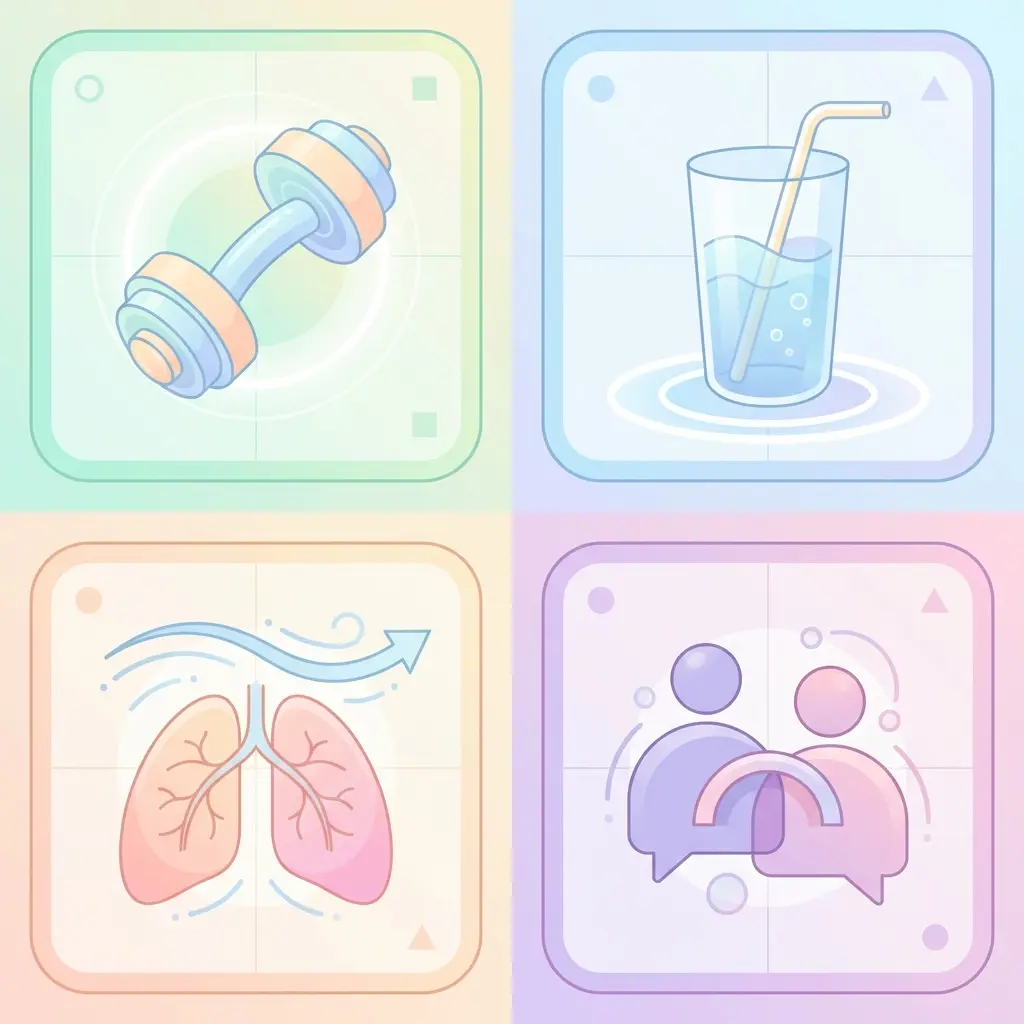
- Exercise: Even a 5-minute brisk walk reduces craving intensity. Research from the University of Exeter found short bouts of exercise reliably dampened craving signals.
- Cold water: Drinking a glass of cold water slows the craving signal and provides oral stimulation.
- Chewing alternatives: Sugar-free gum, raw vegetables, toothpicks — oral substitution is underrated, especially for people who smoked as a way to have something in their hands or mouth.
- Controlled breathing: Box breathing (4 counts in, 4 hold, 4 out, 4 hold) activates the vagus nerve and genuinely reduces the anxiety component of craving.
Behavioral Strategies
- Change your location: Move rooms. Go outside. The environmental cue that triggered the craving often dissipates when you leave the context.
- Call someone: Social engagement interrupts the craving loop effectively. Even a 3-minute conversation shifts your focus.
- Journal your craving: Write down what you’re feeling, what triggered it, and how strong it is on a 1-10 scale. The act of observation creates psychological distance from the urge.
The Emergency Plan
Have a specific response ready for high-intensity craving moments — not a vague intention to “distract yourself,” but a concrete sequence. Write it down before you need it:
- Drink water immediately
- Leave the current space
- Text or call your accountability contact
- Start a 5-minute walk
- Use NRT if needed
Apps like iQuit include an SOS craving support feature that walks you through this kind of emergency protocol in real time — useful when your brain is flooded with craving signals and it’s genuinely hard to think clearly about what to do next.
For a deeper look at the science behind these approaches, the video from Mayo Clinic on quit smoking strategies covers the neurological basis of why behavioral techniques work alongside medication.
What to Do If You Slip
A slip — smoking one or a few cigarettes — is not the same as a full relapse. How you respond in the 24 hours after a slip determines whether it becomes a minor detour or a complete return to smoking.
Don’t Let One Cigarette Become a Story
The most damaging thing that happens after a slip isn’t the nicotine — it’s the narrative. “I’ve already ruined it, I might as well keep going.” That’s the trap. A single cigarette doesn’t undo three weeks of physiological recovery. The health gains from your smoke-free days are real and they don’t evaporate with one lapse.
Analyze, Don’t Catastrophize
Ask three specific questions after a slip:
- What was the trigger? Was it stress, alcohol, a social situation, a specific time of day?
- What coping strategy was absent? What could you have had in place that wasn’t there?
- What changes before your next attempt? Specific, actionable adjustments.
This isn’t about self-punishment. It’s about treating the quit attempt as data, the same way a scientist would treat a failed experiment — not as evidence that the project is hopeless, but as information that refines the next attempt.
Your 30-Day Quit Smoking Checklist
Print this out. Stick it somewhere visible. Check items off as you complete them.
Pre-Quit Week (Days -7 to -1)
- ☐ Set a specific quit date on your calendar
- ☐ Tell at least 3 people you’re quitting
- ☐ Track your smoking pattern for 3-5 days (when, where, why)
- ☐ Choose your cessation method (NRT, medication, combination)
- ☐ See your doctor if choosing prescription medication
- ☐ Start medication if required (varenicline: 1-2 weeks before quit date)
- ☐ Remove cigarettes, lighters, and ashtrays from home and car
- ☐ Identify your top 3 triggers and write a specific response plan for each
- ☐ Download a quit tracking app or set up a paper tracking system
Week One (Days 1-7)
- ☐ Use NRT as directed from Day 1
- ☐ Drink at least 8 glasses of water daily
- ☐ Replace at least 2 smoking rituals with new behaviors
- ☐ Use the 4 Ds when cravings hit
- ☐ Contact your accountability person at least once
- ☐ Get 7-8 hours of sleep (sleep deprivation worsens cravings)
- ☐ Survive Days 2-4 (acknowledge the peak — this is the hardest stretch)
Week Two (Days 8-14)
- ☐ Calculate your cigarette savings so far
- ☐ Identify your Week One trigger patterns from your tracking data
- ☐ Join an online quit community or accountability group
- ☐ Plan specifically for one high-risk situation (social, alcohol, stress)
- ☐ Add 15-20 minutes of daily physical activity
- ☐ Review your cessation method — is it working? Adjust if needed
Weeks Three and Four (Days 15-30)
- ☐ Reward your 2-week milestone intentionally
- ☐ Write down 5 reasons you’re glad you quit (for high-risk moments)
- ☐ Gradually reduce NRT dosage if patch-based (as directed)
- ☐ Practice saying “I don’t smoke” instead of “I’m trying to quit”
- ☐ Handle one high-risk social situation smoke-free
- ☐ Reward your 30-day milestone with something meaningful
- ☐ Plan your 3-month and 6-month strategy
Nicotine dependence is a physical and psychological addiction to nicotine — the chemical in tobacco products. It develops because nicotine triggers dopamine release in the brain’s reward system, creating habitual use patterns. The American Psychiatric Association classifies it as a substance use disorder, meaning it responds best to structured treatment, not just willpower.
The EX Program (a collaboration between Truth Initiative and Mayo Clinic Nicotine Dependence Center) offers free evidence-based behavioral support online — a solid complement to any physical cessation method, particularly during Weeks Two through Four when behavioral habits are the primary challenge.
Frequently Asked Questions About Quitting Smoking
How long does it take for nicotine withdrawal symptoms to go away?
Physical nicotine withdrawal symptoms typically peak between 48 and 72 hours after your last cigarette and begin to ease significantly after the first week. Most physical symptoms resolve within 2 to 4 weeks. Psychological cravings tied to behavioral triggers can persist for months but become less frequent and intense over time.
What is the most effective method to quit smoking?
The most effective quit smoking method is a combination of behavioral support and pharmacotherapy — typically nicotine replacement therapy or prescription medication alongside counseling or a structured behavioral program. This combination consistently outperforms either approach alone, with quit rates up to 40% at six months in clinical trials.
Is it normal to feel worse before feeling better when quitting smoking?
Yes — this is completely normal and expected. Days 2 through 5 typically involve the worst symptoms: irritability, difficulty concentrating, sleep disruption, and intense cravings. These symptoms reflect the brain recalibrating after years of nicotine exposure, not an indicator that quitting isn’t working. After the first week, most people notice a clear improvement.
How do I quit smoking if I’ve tried and failed multiple times?
Multiple prior attempts don’t predict failure — they predict eventual success, because each attempt teaches you more about your specific triggers and what strategies don’t work for your situation. Review what happened in previous attempts: did you use a cessation aid? Did you have behavioral support? Most people who quit long-term do so after several attempts using progressively better-matched strategies.
Will I gain weight when I quit smoking?
Some weight gain (typically 4 to 10 pounds) is common in the first few months after quitting, primarily because nicotine suppresses appetite and increases metabolism. This is manageable and should not be a reason to continue smoking — the health risks of smoking dramatically outweigh the risk of modest weight gain. Regular physical activity during your quit attempt significantly reduces this effect.
Can I use nicotine replacement therapy and a prescription medication at the same time?
In some cases, yes — combination therapy using both a prescription medication and NRT has been shown to improve quit rates compared to either alone. This is a decision to make with your doctor, who can evaluate your health history and smoking patterns to recommend the safest and most effective combination for your situation.
Build Your Quit Plan — and Find Support That Lasts
A one-month quit smoking plan is a starting point, not an endpoint. The first 30 days establish the foundation; the months that follow are where the identity shift becomes permanent. The research is clear: people who use structured tools and community support maintain significantly higher quit rates than those going it alone.
Here are the resources worth bookmarking as you move through your plan:
- Top strategies to quit smoking successfully — for trigger identification and long-term relapse prevention
- Effective strategies to help you quit smoking — for managing withdrawal and evidence-based behavioral tactics
- Smokefree.gov quit plan builder — free, NCI-backed personalized plan tool
- EX Program — free behavioral support from Truth Initiative and Mayo Clinic
If you want real-time support during cravings, progress tracking, and a community of people at the same stage you are, the <a href="https://play.google.com/store/apps/details?