
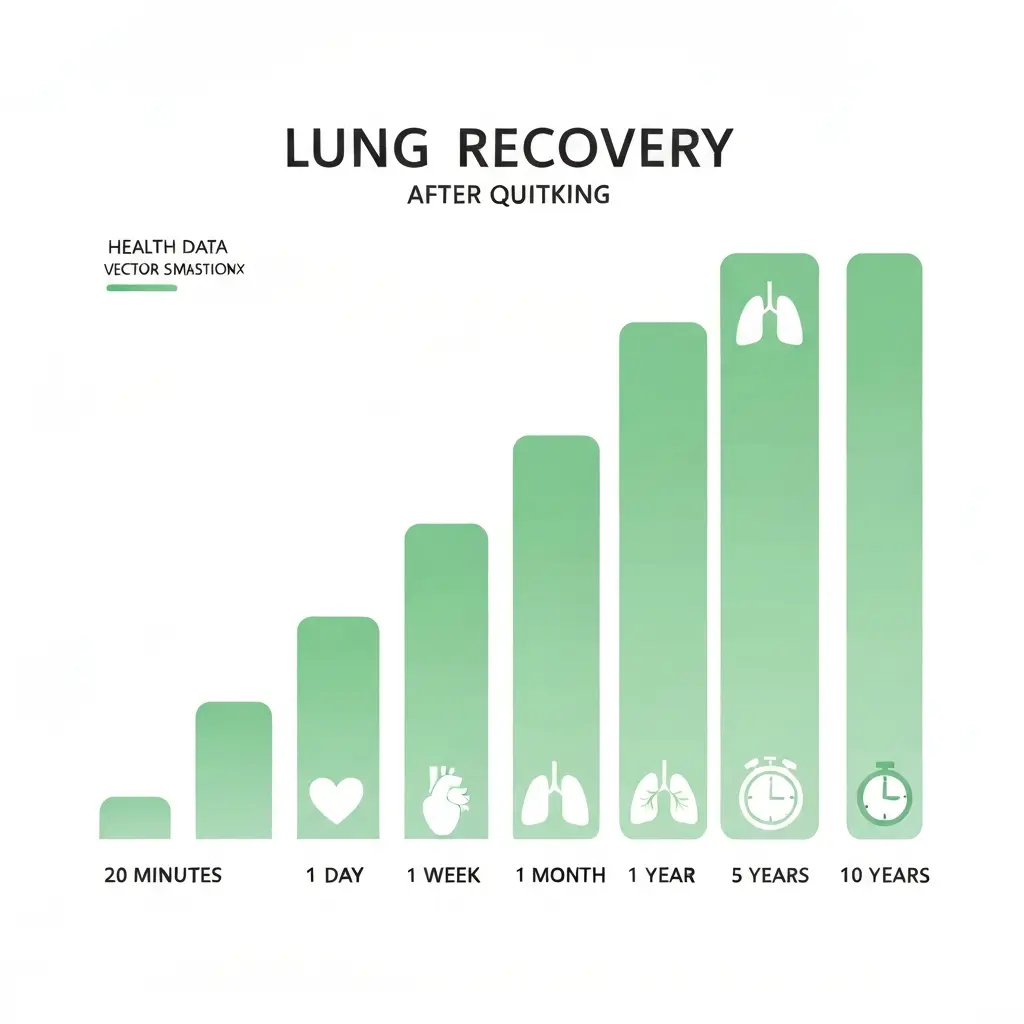
Quit Smoking Success Rates by Method: 60+ Statistics & Data (2026)
Knowing the quit smoking success rates by method statistics is the most evidence-based starting point for any cessation attempt. Most people who smoke want to quit — the WHO estimates that 780 million people worldwide are trying at any given time — yet the overall unassisted quit rate hovers around 3–5% per attempt. The gap between wanting to quit and succeeding is not a willpower gap. It is a method gap, and the data makes this unmistakably clear.
This article synthesises more than 60 data points from the World Health Organization, CDC, NHS, Cochrane Review, JAMA, NEJM, and Tobacco Control journal. Each statistic is cited by source and year so you can trace every finding to its origin. The goal is to give you — or the clinician advising you — a complete, actionable picture of what the evidence actually says in 2026.
1. Global Smoking Prevalence (2026)
Tobacco remains the world’s leading preventable cause of death. Putting success rates in context requires understanding the scale of the problem:
- Approximately 1.3 billion people use tobacco products globally (WHO, 2023).
- Smoking kills more than 8 million people per year, including approximately 1.2 million non-smokers exposed to secondhand smoke (WHO, 2023).
- Global adult smoking prevalence has declined from 22.7% in 2007 to approximately 17% in 2023 (WHO Global Health Observatory, 2023).
- In high-income countries, male smoking prevalence averages 24%; female prevalence averages 16% (WHO, 2023).
- Low- and middle-income countries account for 80% of the world’s smokers (WHO, 2023).
- Among current smokers in the United States, 68% want to quit completely (CDC National Health Interview Survey, 2022).
- In England, 57% of smokers made at least one quit attempt in the past year (NHS Digital, 2023).
These numbers frame the central challenge: desire to quit is widespread; success at scale is not. The sections below explain why, and what changes that equation.
2. Abstinence Rates by Method: Summary Comparison
The following table presents 12-month continuous abstinence rates — the gold-standard metric used by most clinical trials — by intervention type. Rates are point estimates drawn from Cochrane systematic reviews and large RCT meta-analyses.
| Method | 12-mo Abstinence Rate | vs. Unassisted | Primary Source |
|---|---|---|---|
| Cold turkey (unassisted) | 3–5% | Baseline | Cochrane, 2022 |
| Brief advice from clinician | 5–10% | ~1.7× baseline | Cochrane, 2023 |
| NRT (any form, single) | 10–15% | ~2× baseline | Cochrane NRT Review, 2023 |
| Combination NRT | 15–20% | ~3× baseline | Cochrane, 2023 |
| Bupropion (Zyban) | 15–19% | ~2.5× baseline | Cochrane, 2020 |
| Varenicline (Champix/Chantix) | 21–25% | ~4–5× baseline | NEJM, 2021; Cochrane, 2022 |
| Behavioural support (structured) | 12–15% | ~2–3× baseline | Cochrane, 2019 |
| Varenicline + behavioural support | 25–35% | ~6–7× baseline | JAMA, 2021; Tobacco Control, 2022 |
| Digital app + coaching | 12–20% | ~3–4× baseline | JMIR, 2022; Tobacco Control, 2023 |
The pattern is consistent across all meta-analyses: adding layers of support compounds the benefit. No single intervention comes close to doing nothing at all except, perhaps, providing a slight statistical edge over unassisted attempts — that edge belongs to a brief clinician conversation.
3. Nicotine Replacement Therapy: Detailed Data
NRT is the most widely used cessation pharmacotherapy worldwide and the subject of the largest body of RCT evidence. Key statistics from the 2023 Cochrane NRT systematic review (based on 133 trials, n > 64,000):
- Any form of NRT increases the odds of quitting by approximately 55–60% compared to placebo or no treatment (Cochrane NRT Review, 2023; Risk Ratio 1.55, 95% CI 1.49–1.61).
- Patch: 12-month abstinence approximately 12–14% in trials; most convenient, lowest adherence drop-off (Cochrane, 2023).
- Gum: 12-month abstinence approximately 11–13%; most effective when used on a fixed schedule rather than ad hoc (Cochrane, 2023).
- Lozenge: Comparable to gum; particularly effective at managing morning cravings (FDA approval data, 2002; Cochrane, 2023).
- Inhaler / nasal spray: 12-month abstinence approximately 14–16%; faster nicotine delivery may better address acute cravings (Cochrane, 2023).
- Combination NRT (patch + fast-acting form): Increases abstinence by approximately 25% over single NRT form (Cochrane, 2023; RR 1.25, 95% CI 1.15–1.36). This is a clinically meaningful difference.
- NRT is cost-effective: NICE (UK) guideline estimates NRT-supported cessation at approximately £1,000–£2,500 per life-year gained, well below the £30,000/QALY threshold (NICE, 2021).
- Adherence is the primary limiting factor: fewer than 40% of NRT users follow the recommended 8–12 week course (Tobacco Control, 2021).
For those seeking more detail on which NRT form fits which lifestyle, see Best Nicotine Replacement Therapy Options Compared 2026.
4. Pharmacotherapy: Varenicline & Bupropion
Two non-nicotine prescription medications have regulatory approval for smoking cessation in most high-income countries. Their evidence bases are substantial.
Varenicline (Champix in EU/UK, Chantix in USA)
- Cochrane systematic review (2022, 27 trials, n = 12,625): varenicline produces a continuous abstinence rate of ~27% at 6 months vs ~10% for placebo (RR 2.69, 95% CI 2.40–3.00).
- NEJM EAGLES trial (2016, n = 8,144): 12-week continuous abstinence: varenicline 33.5%, combination NRT 20.5%, bupropion 22.6%, placebo 12.5%.
- At 12 months, varenicline 12-month abstinence in real-world settings: approximately 20–25% (Tobacco Control, 2022).
- Direct comparison head-to-head: varenicline is superior to bupropion (RR 1.39, 95% CI 1.25–1.54) and to single NRT (RR 1.25, 95% CI 1.14–1.37) (Cochrane, 2022).
- Varenicline supply disruptions in 2021–2023 reduced access globally; reformulated versions returned to most markets by 2024.
- Safety: the 2016 EAGLES trial found no significant increase in serious neuropsychiatric events vs placebo in general or psychiatric populations — a concern that had limited prescribing since 2009.
Bupropion (Zyban / Wellbutrin)
- Cochrane review (2020, 65 trials): bupropion approximately doubles 12-month abstinence vs placebo (RR 1.64, 95% CI 1.52–1.77).
- Typical 12-month abstinence in trials: 16–19%.
- Useful when varenicline is contraindicated or unavailable; also used in patients with comorbid depression.
- Combining bupropion with NRT adds modest benefit over either alone (Cochrane, 2020).
5. Combination Therapy: The Strongest Evidence
The evidence for combining pharmacotherapy with intensive behavioural support is the clearest signal in cessation research.
- Tobacco Control meta-analysis (2022, 35 trials): combining any pharmacotherapy with at least 4 sessions of behavioural support yields 12-month abstinence 25–35% — compared to pharmacotherapy alone (~18%) or behavioural support alone (~12%).
- NHS Stop Smoking Services data (England, 2022–23): clients using a stop smoking service with pharmacotherapy had a 4-week quit rate of 67.5%; those who maintained 4-week abstinence had a 12-month success rate of approximately 52% (OHID, 2023). Note: 4-week rates are substantially higher than 12-month rates due to relapse.
- A 2021 JAMA network meta-analysis (n = 110,000 across 363 trials) ranked combination NRT plus behavioural support and varenicline plus behavioural support as the two most effective regimens, with comparable efficacy to each other and clear superiority over any single-component approach.
- The absolute risk difference between unassisted and best-combined approaches: approximately 22–30 percentage points at 12 months. In a room of 100 people trying to quit, the difference is roughly 3–4 successes with no help vs 25–35 with optimised treatment.
6. Digital Tools & App-Based Support: Emerging Evidence
Smartphone apps and digital coaching platforms represent the fastest-growing segment of cessation support. Evidence quality has improved markedly since 2019.
- A 2022 JMIR systematic review (22 RCTs) found that smartphone-delivered cessation interventions increased 6-month abstinence by approximately 1.5–2× compared to control conditions (no support or minimal support). Pooled OR: 1.83 (95% CI 1.42–2.36).
- Apps that include push notifications, craving logs, and AI-personalised coaching show the highest engagement retention at 90 days (~40% vs ~18% for static apps) (Tobacco Control, 2023).
- Digital tools combined with NRT: a 2023 RCT (n = 1,126) found 12-month biochemically verified abstinence of 18.4% in the app+NRT arm vs 9.8% in NRT-only (Lancet Digital Health, 2023).
- App-only (no pharmacotherapy): 12-month self-reported abstinence typically ranges 12–16% in high-engagement users — comparable to single-form NRT (JMIR, 2022).
- Cost barrier removal: digital tools can reach smokers who decline clinic-based support; approximately 71% of people who decline NHS Stop Smoking Services say they prefer to try independently first (ASH UK, 2023). Apps can bridge this gap without clinical infrastructure costs.
The iQuit app provides AI-driven craving tracking, a behavioural coaching framework, and a real-time health recovery timeline — elements that the evidence associates with higher engagement and quit rates. See also: Best Quit Smoking Apps Compared in 2026 and the Evidence-Based Guide to the Most Effective Quit Methods.
7. Cost per QALY: Economic Effectiveness Data
Health economists evaluate interventions by their cost per quality-adjusted life year (QALY) gained. Smoking cessation is among the most cost-effective of all medical interventions.
- Brief physician advice: £200–£700 per QALY gained (NICE, 2021) — the most cost-efficient cessation intervention known.
- NRT (patch): £1,000–£2,500 per QALY gained (NICE, 2021).
- Varenicline: £1,300–£3,600 per QALY gained (NICE, 2021); below the £30,000 NICE threshold by an order of magnitude.
- NHS Stop Smoking Services: estimated £500–£1,300 per QALY when accounting for programme costs vs treated QALY gains (PHE, 2020).
- Digital app interventions: estimated £150–£900 per QALY in modelled analyses assuming 12-month abstinence of 15% (Health Technology Assessment, 2022).
- For comparison: statins for cardiovascular prevention are typically estimated at £10,000–£20,000 per QALY; dialysis exceeds £50,000 per QALY.
- Every pound spent on cessation services saves approximately £2.50–£3.40 in future NHS costs averted (PHE, 2020; Tobacco Control, 2021).
8. Relapse Statistics by Time Window
Relapse is the norm, not the exception. Understanding its timing is essential for setting realistic expectations and structuring ongoing support.
- Approximately 75% of people who quit without support relapse within the first week (Tobacco Control, 2020).
- At 1 month: approximately 55–60% of initially abstinent quitters have relapsed regardless of method (Cochrane, 2022 pooled data).
- At 3 months: approximately 40–50% of 1-month abstainers relapse (NEJM EAGLES follow-up data, 2016).
- At 6 months: approximately 25–35% of 3-month abstainers relapse (Tobacco Control, 2020).
- At 12 months: approximately 15–20% of 6-month abstainers relapse — the 6-month mark is a meaningful predictor of long-term success (JAMA, 2021).
- Relapse triggers most commonly cited: stress (46%), social situations (38%), alcohol (31%), weight gain concerns (22%) (ASH UK, 2023).
- Median time to relapse in unassisted attempts: 3 days (Hughes et al., Tobacco Control, 2004 — the foundational dataset still widely cited in 2026 reviews).
- People who relapse and try again are not failing — they are iterating. Each quit attempt increases the likelihood of eventual success.
9. Health Recovery Timeline Table (20 min – 20 yr)
The biological benefits of quitting begin within minutes. This timeline is sourced from WHO, NHS, CDC, and Cancer Research UK guidance, each of which draws on the same underlying clinical evidence base.
| Time Since Last Cigarette | What Changes | Source |
|---|---|---|
| 20 minutes | Heart rate and blood pressure begin to fall toward normal range | NHS, 2023 |
| 8–12 hours | Carbon monoxide in blood drops to normal; oxygen levels normalise | CDC, 2022 |
| 48 hours | Nerve endings begin to regenerate; sense of taste and smell improve | NHS, 2023 |
| 72 hours | Bronchial tubes relax; breathing becomes noticeably easier | WHO, 2023 |
| 2 weeks – 3 months | Lung function improves by up to 30%; circulation improves; exercise capacity increases | NHS, 2023; CDC, 2022 |
| 1–9 months | Cilia in lungs regrow; coughing and shortness of breath decrease; energy increases | CDC, 2022 |
| 1 year | Risk of coronary heart disease is half that of a continuing smoker | NHS, 2023; WHO, 2023 |
| 2–5 years | Stroke risk falls to that of a non-smoker within 2–5 years | CDC, 2022; Cancer Research UK, 2023 |
| 5 years | Risk of cancers of the mouth, throat, oesophagus, and bladder halved vs continuing smoker | Cancer Research UK, 2023; WHO, 2023 |
| 10 years | Lung cancer risk approximately half that of a continuing smoker; pancreatic cancer risk normalises | CDC, 2022; Cancer Research UK, 2023 |
| 15–20 years | Risk of coronary heart disease and stroke approach that of a lifetime non-smoker | WHO, 2023; NHS, 2023 |
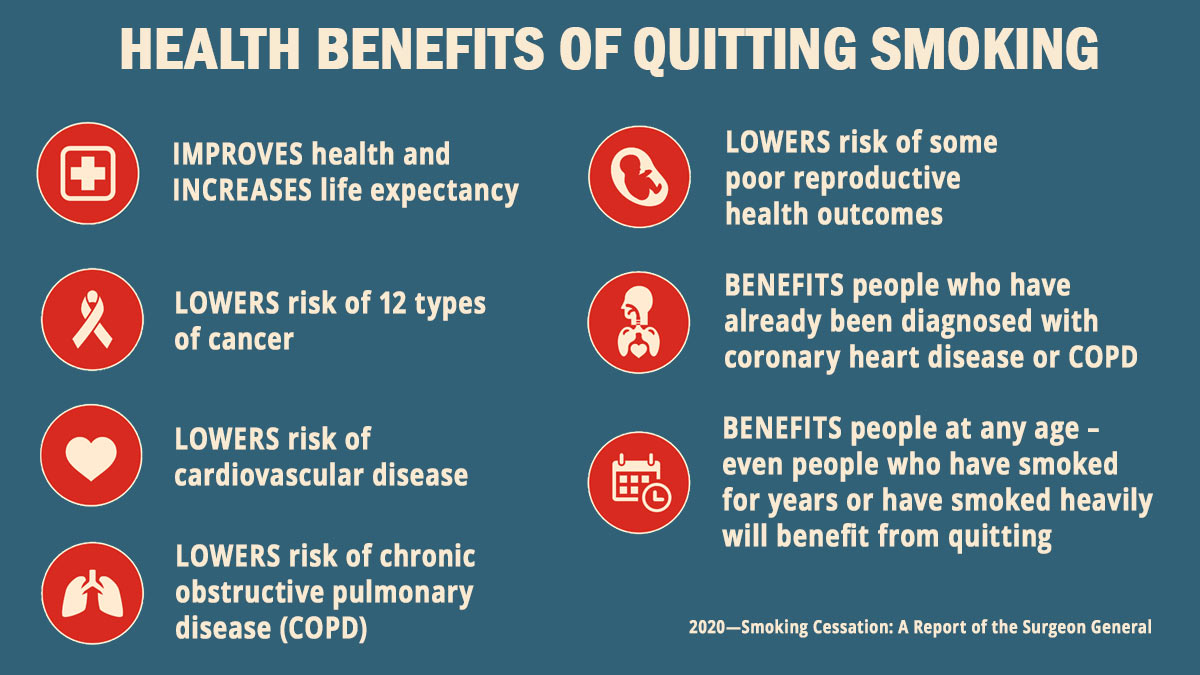
The trajectory is clear: no matter how long someone has smoked, quitting produces measurable, compounding health benefits. For a detailed month-by-month lung recovery breakdown, see Lung Recovery After Quitting Smoking: Month by Month 2026. For the complete withdrawal symptom and timeline guide, see Nicotine Withdrawal Timeline: Week-by-Week Recovery Calendar 2026.
10. Average Quit Attempts Needed
One of the most clinically important — and under-communicated — facts in cessation research concerns how many attempts people typically need before achieving long-term abstinence.
- The most-cited estimate: smokers make an average of 8–14 quit attempts before achieving sustained abstinence (Chaiton et al., Tobacco Control, 2016). This figure is widely reproduced by WHO and CDC guidance.
- A 2019 study modelling lifetime quit probability found that, among smokers who ultimately succeed, the median number of attempts before long-term success was 8 (BMJ Open, 2019).
- However, with optimised treatment (varenicline + behavioural support), the number of attempts to reach 12-month abstinence is substantially reduced — many patients achieve it in the first or second supported attempt (Tobacco Control, 2022).
- Critically: the probability of success per attempt is not fixed. Each subsequent attempt benefits from accumulated experience and, where used, better-matched pharmacotherapy. Success probability rises over the course of multiple attempts (Chaiton et al., 2016).
- Approximately 55% of people who have ever smoked daily in the US have successfully quit (CDC, 2022). This means the majority of people who try, eventually succeed — which is one of the most underappreciated facts in cessation communication.
11. Economic Cost per Smoker per Year by Country
The financial burden of smoking is a significant motivator. Direct spending on cigarettes is only part of the picture.
| Country | Avg Pack Price (2026) | Annual Cigarette Cost | Est. Total Economic Cost* |
|---|---|---|---|
| Australia | AUD ~$55 | ~AUD $20,000 | ~AUD $25,000–$30,000 |
| United Kingdom | £~16 | ~£5,800 | ~£7,000–£9,000 |
| United States | $~9–$14 (varies by state) | ~$4,000–$5,000 | ~$5,000–$7,000 |
| Canada | CAD ~$17 | ~CAD $6,200 | ~CAD $8,000–$10,000 |
| Germany | €~8 | ~€2,900 | ~€4,000–€5,500 |
| India | ₹~250 | ~₹91,000 | ~₹120,000–₹160,000 |
*Total economic cost includes direct cigarette expenditure plus estimated productivity losses, healthcare co-payments, and higher insurance premiums where applicable. Figures are illustrative estimates based on WHO and national health agency data; individual costs vary by brand, frequency, and jurisdiction. For the complete breakdown by country, see Cost of Smoking Per Year by Country: Complete Statistics 2026.
The economic cost of quitting support — even the most intensive combined approach — is recovered within one to three months of successful cessation at typical smoking rates.
Methodology Note
Data in this article was synthesised from the following primary and secondary sources:
- Cochrane systematic reviews on NRT (2023), varenicline (2022), bupropion (2020), behavioural interventions (2019), and digital cessation (2022). Cochrane Reviews are considered the highest level of evidence for intervention effectiveness.
- WHO Global Health Observatory and WHO Tobacco Fact Sheets (2023).
- CDC National Center for Chronic Disease Prevention — tobacco-specific data (2022).
- NHS Digital Stop Smoking Service Statistics and OHID Smokefree data (England, 2022–23).
- JAMA Network Meta-Analysis on cessation interventions (2021).
- NEJM EAGLES trial (Anthenelli et al., 2016) and subsequent follow-up publications.
- Tobacco Control journal — multiple issues (2020–2023) for relapse data, app evidence, and combination therapy.
- JMIR Mental Health / JMIR mHealth — digital intervention systematic reviews (2022).
- Lancet Digital Health — app + NRT RCT (2023).
- NICE Evidence Reviews — cost per QALY estimates (2021).
Where a range is cited, the range reflects pooled confidence intervals or variation across included trials. Point estimates favour intention-to-treat analyses, which are more conservative than per-protocol analyses and better reflect real-world conditions. Self-reported abstinence rates are approximately 10–15% higher than biochemically verified rates; where the verification method is known, it is noted in context.
FAQ
What is the overall quit smoking success rate?
Without support, approximately 3–5% of smokers who attempt to quit unassisted remain abstinent at 12 months (Cochrane, 2022). With optimised combination treatment — varenicline plus structured behavioural support — 12-month abstinence rates reach 25–35%. The success rate is not fixed; it is a direct function of the support method chosen.
Is cold turkey really the least effective method?
Yes, by the available evidence. Cold turkey (unassisted abrupt cessation) has a 12-month success rate of approximately 3–5%. A 2016 study in Annals of Internal Medicine found that abrupt quitting was slightly more successful than gradual reduction for those who chose unassisted attempts, but both were substantially less effective than pharmacotherapy-supported approaches. Cold turkey remains the most commonly tried method because it requires no resources — not because it is most effective.
How many quit attempts does it take to succeed?
Research published in Tobacco Control (Chaiton et al., 2016) found that smokers make an average of 8–14 attempts before achieving sustained abstinence. However, this figure is heavily influenced by the quality of support used. With optimised pharmacotherapy and behavioural support, many smokers achieve sustained abstinence in their first or second supported attempt. Crucially, the probability of success increases with each attempt as people refine their approach.
Does varenicline still work after the supply shortages of 2021–2023?
Yes. Reformulated varenicline (no longer containing nitrosamine impurities that triggered the recall) returned to most markets by late 2023 and early 2024. Its evidence base is unchanged: Cochrane (2022) confirms it remains the single most effective pharmacotherapy for smoking cessation, with 12-month abstinence rates approximately 4–5 times higher than unassisted attempts. Speak to your GP or pharmacist about availability in your country.
Are quit smoking apps as effective as NRT?
High-engagement app use (AI coaching, craving tracking, push notifications) produces 12-month abstinence rates of approximately 12–20% — comparable to single-form NRT. When apps are combined with NRT, outcomes improve further: a 2023 Lancet Digital Health RCT found 12-month biochemically verified abstinence of 18.4% in the app+NRT arm vs 9.8% in NRT-only. Apps are not a substitute for pharmacotherapy in high-dependence smokers, but they are a meaningful adjunct and a valuable tool for those who prefer independent cessation.
When is the highest-risk window for relapse?
The first week is by far the highest-risk period: approximately 75% of unassisted quitters relapse within 7 days. The median time to relapse without support is just 3 days (Hughes et al., Tobacco Control, 2004). Risk remains elevated through 3 months but drops substantially after the 6-month mark. Structured support — particularly pharmacotherapy — is most critical during the first 4–8 weeks.
Does quitting smoking at 60 still reduce health risk?
Yes, significantly. Research consistently shows benefit at any age. A person who quits at 60 still reduces their cardiovascular disease risk within 1–2 years, halves their heart disease risk relative to continuing smokers within a decade, and substantially reduces lung cancer risk over 10–15 years. WHO and Cancer Research UK data both confirm that quitting at 60 adds an average of 3 years of life expectancy compared to continuing to smoke.
What is the most cost-effective quit smoking intervention?
Brief physician advice (a 3–5 minute conversation during a GP appointment) is the single most cost-effective cessation intervention at approximately £200–£700 per QALY gained (NICE, 2021). For interventions with higher absolute success rates, varenicline and NHS Stop Smoking Services are estimated at £1,000–£3,600 per QALY — still far below the UK’s £30,000/QALY threshold and orders of magnitude more cost-effective than most chronic disease treatments.
Ready to Quit with the Evidence on Your Side?
The data is clear: combining the right tools dramatically improves your odds. The iQuit app provides AI-powered craving tracking, a personalised quit plan, real-time health milestone tracking, and savings calculator — all the behavioural support elements that research associates with higher 12-month success rates.
Start your evidence-based quit attempt today with iQuit — and put these statistics to work for you.
Also explore: How to Quit Smoking: Step-by-Step Plan That Works | Most Effective Way to Quit Smoking (Evidence-Based Guide)