Quit Smoking Tips: 20 Evidence-Based Strategies That Work in 2026
The internet is full of quit smoking tips. Many of them are vague (“stay busy!”) or well-meaning but not evidence-based. This guide is different: every tip here is grounded in clinical research from the CDC, NHS, WHO, and peer-reviewed cessation medicine. We have ranked them roughly by strength of evidence and organised them into categories — so whether you are in the planning stage, the first brutal week, or the long plateau of early non-smoking life, you will find the strategies that are most relevant to where you are right now.
The key message before we begin: using multiple strategies simultaneously is significantly more effective than using any single strategy alone. Quitting smoking is a multi-dimensional challenge — physical, psychological, habitual, and social. Meeting it on multiple dimensions at once is the evidence-backed approach.
Preparation Tips: Before Your Quit Date
Tip 1: Set a Quit Date — and Write It Down
Choosing a specific quit date 1–2 weeks in advance and writing it down (on paper, in your phone, on a calendar) is more effective than deciding to “quit when the pack runs out.” The commitment act of choosing a date activates intention and allows time for preparation. Tell at least two people your quit date — the social accountability increases follow-through.
Tip 2: Make a Detailed Trigger List
Write down every situation in which you smoke — not just “stress” but specific situations: the first coffee of the day, after dinner, on the commute, on your lunch break. For each one, plan a specific response. The detail matters: “I will drink tea instead of coffee for the first week and take a walk after dinner” is far more effective than “I will find something else to do.”
Tip 3: Remove Every Cigarette and Trigger Item
On the day before or on quit day, remove all cigarettes, lighters, ashtrays, and tobacco products from every environment you use — home, car, desk drawer. This is not about resolve; it is about removing availability at the moments when your resolve will be at its lowest. A craving that requires getting in the car and driving to a shop is far more likely to be ridden out than one that requires reaching into a jacket pocket.
Tip 4: Research and Acquire Your Chosen Support
Obtain NRT, varenicline prescription, or other chosen pharmacological support before quit day — not after. Waiting until the first difficult craving to source NRT adds a barrier at exactly the wrong moment.
Pharmacological Tips
Tip 5: Use NRT From the First Moment of Quit Day
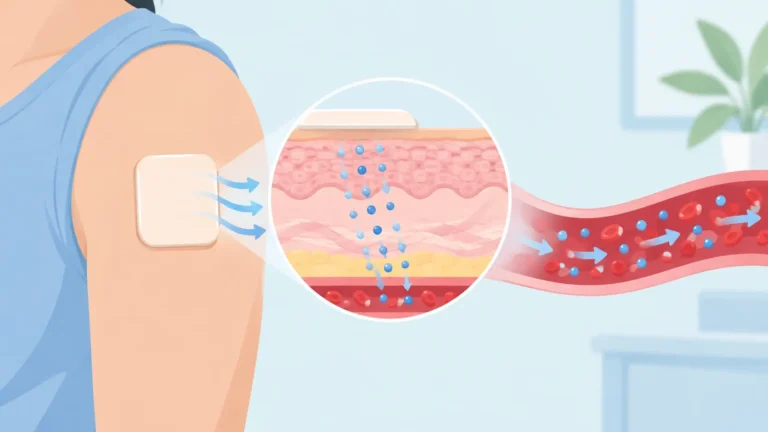
NRT is not a last resort for when cravings become overwhelming — it is most effective when used proactively from the start. Applying a patch before getting out of bed on quit day ensures that blood nicotine levels are being maintained when the first craving of the day arrives. The Cochrane review of 136 NRT trials confirms that all NRT forms approximately double quit rates.
Tip 6: Combine Long-Acting and Fast-Acting NRT
Using a nicotine patch (long-acting, provides steady baseline) alongside a fast-acting form such as gum, lozenges, or an inhaler is more effective than patch alone. The patch manages background withdrawal; the fast-acting form addresses breakthrough cravings as they occur. Many NHS Stop Smoking Services recommend this dual NRT approach as their standard protocol.
Tip 7: Consider Varenicline for the Highest Success Rate
If you are a regular smoker and have tried NRT before without success, ask your doctor about varenicline (Champix in the UK; Chantix in the US). The EAGLES trial — the largest cessation medication safety study, involving 8,000+ participants — confirmed that varenicline is more effective than NRT alone, bupropion alone, or placebo, and is safe including for people with mental health conditions.
Tip 8: Complete the Full Course of Medication
One of the most common errors in cessation pharmacotherapy is stopping NRT too early — often after a couple of weeks when things feel better. Standard NRT courses are 8–12 weeks. Varenicline courses are 12 weeks (and sometimes 24 weeks for higher-dependence smokers). Completing the full course dramatically reduces relapse risk.
Craving Management Tips
Tip 9: Time Your Cravings
The single most useful piece of information about cravings is that they last only 3–5 minutes. When a craving hits, literally set a timer on your phone for 5 minutes. Knowing that the craving has a fixed, short endpoint transforms it from a sense of ongoing overwhelm into a finite, countable challenge. This is one of the most consistently recommended strategies in NHS Stop Smoking Service training.
Tip 10: Exercise to Interrupt Cravings
Exercise is the most evidence-backed non-pharmacological craving management tool available. Multiple randomised controlled trials confirm that even a brief bout of moderate-intensity exercise (a brisk 5-minute walk) measurably reduces both the subjective intensity of cravings and associated anxiety in nicotine-withdrawal periods. Exercise also raises endorphins, partially compensating for the reduced dopamine of early withdrawal. See our guide on how to stop smoking cravings instantly.
Tip 11: Use Diaphragmatic Breathing
Deep, diaphragmatic breathing (slow inhalation for 4 counts, hold for 2, slow exhalation for 6 counts) activates the parasympathetic nervous system — the body’s “calm down” response — and measurably reduces the subjective intensity of cravings. It is available any time, costs nothing, and takes less than 2 minutes. For a full guide to breathing techniques, see breathing exercises for cravings.
Tip 12: Use the 4D Technique for Cravings
Delay (wait 5 minutes — the craving will pass), Distract (change your activity), Drink water (cold water is a craving interrupter), Deep breathe (see Tip 11). Having a four-step response prepared means you do not need to make a decision when a craving hits — you simply execute the sequence.
Lifestyle and Habit Tips
Tip 13: Change Your Morning Routine
The morning cigarette — often immediately linked to coffee — is one of the most deeply conditioned smoking behaviours. Changing your entire morning routine on quit day disrupts this conditioned response before it can trigger. Even small changes (different cup, different chair, different order of activities) can significantly reduce the force of morning cravings in the first week.
Tip 14: Drink More Water
Increased water intake serves multiple functions during quitting: it helps flush nicotine metabolites from the body, provides a substitute oral behaviour, and reduces craving intensity. Cold water is particularly effective as a craving interrupter — the physical sensation of cold in the throat and stomach provides a powerful sensory distraction.
Tip 15: Eat Healthy Snacks Instead of Smoking
The oral component of smoking — the hand-to-mouth action — is a conditioned behaviour as much as a nicotine delivery mechanism. Providing healthy substitutes (carrot sticks, sunflower seeds, sugar-free gum) both addresses the oral habit and manages increased appetite during withdrawal. This does not replace NRT — it works alongside it.
Tip 16: Improve Your Sleep
Poor sleep dramatically worsens cravings, irritability, and mood during withdrawal. Prioritising sleep quality — consistent bedtimes, no caffeine after 2pm, cool dark bedroom — significantly improves the withdrawal experience. If using nicotine patches, removing them at bedtime reduces the risk of vivid dreams and disrupted sleep.
Psychological and Mindset Tips
Tip 17: Reframe Every Craving as Progress
Many quitters experience cravings as evidence of failure — as proof that they cannot manage without cigarettes. Reframing cravings as evidence of healing — the brain signalling as it recalibrates — transforms the psychological experience of withdrawal. Each craving you ride out without smoking is the brain’s conditioned response weakening. You are not failing when you crave. You are winning.
Tip 18: Remind Yourself Why You Quit — Daily
Write your reasons for quitting on a card (or in your phone) and read them every morning, and every time a strong craving hits. Health motivation, family motivation, financial motivation, and freedom motivation are all powerful — the key is having them articulated and accessible when willpower is at its most depleted.
Tip 19: Plan for High-Risk Situations in Advance
Research shows that relapse is most common in predictable situations — stress, alcohol, exposure to smokers, negative mood. Do not rely on in-the-moment decision-making in these situations. Plan: “If I am at a party and feel the urge to smoke, I will step outside with a nicotine lozenge and call my accountability person.” Specific plans beat vague intentions every time.
Digital and App Tips
Tip 20: Use a Quit Smoking App From Day One
Digital support is now an established evidence-based cessation tool. Quit smoking apps provide several proven benefits: real-time progress tracking, financial savings visualisation, health milestone notifications, craving management tools, and AI coaching. The combination of data visibility (seeing your savings accumulate and your health improve daily) and in-the-moment craving support makes apps particularly valuable in the early weeks.
The iQuit app combines all these features in one place — craving tracker, health milestones, savings calculator, and AI coaching — and is free on Android. For a comparison of app options, see our guide on the best quit smoking apps in 2026.
Also read: how to quit smoking: the complete guide, quit smoking cold turkey survival guide, and quit smoking motivation guide.
Frequently Asked Questions
What is the single most effective tip for quitting smoking?
If forced to choose one, the evidence points to using pharmacological support (NRT or varenicline) from the moment of quitting. Unaided quit attempts succeed at 3–7%; adding NRT approximately doubles this; adding varenicline raises it further. The key insight is that quitting smoking is partly a biology problem, and it needs a biological tool alongside behavioural strategies.
Does keeping busy really help when quitting smoking?
Yes — but “staying busy” works best when planned in advance and specific. Idle, unstructured time is the most dangerous time for cravings to become irresistible. Having your time actively planned — with activities, social engagements, exercise, or productive tasks — prevents the unstructured moments where craving thoughts can escalate. This is particularly important in the first 2 weeks of quitting.
What are the best foods to eat when quitting smoking?
Foods that help during quitting include: crunchy vegetables (carrot sticks, celery — provide oral stimulation and crunching action); fruits (natural sugars help with mood and energy); dairy products (milk and cheese reportedly make cigarettes taste worse, which may reduce satisfaction if you slip); and foods high in vitamin C (smoking depletes vitamin C levels, which bounce back quickly after quitting). Avoiding highly processed, high-sugar foods reduces mood volatility.
How do I quit smoking when I live with a smoker?
Living with a smoker makes quitting harder but not impossible. Key strategies: ask your household to smoke outside only during your quit period; keep cigarettes out of your immediate sight and access; agree on signals for when you need space from smoking-related triggers; and maintain strong NRT use to manage cravings triggered by the smell of smoke. Ideally, if a partner or housemate is also willing to quit, doing so together increases both parties’ chances of success.
Put All 20 Tips Into Action with iQuit
iQuit brings together tracking, craving management, breathing tools, AI coaching, and milestone celebrations in one place. Use it as your daily companion through every stage of your quit journey.