

Quit Smoking Tracker App: How to Save $2,400 in 6 Months

A quit smoking tracker app doesn’t just count the days since your last cigarette — it quietly stacks up the dollars you’re no longer burning. At $8–$10 per pack and a pack-a-day habit, six months of not smoking puts roughly $1,500–$2,400 back in your pocket. That’s before you factor in what drops off your insurance bill or your next doctor’s tab.
The math is simple. The quitting part is harder. And that’s exactly where the right app makes a measurable difference — one that goes beyond a basic streak counter and actually helps you understand why you smoke, what triggers your cravings, and how to beat them when they hit hardest.
What’s Covered in This Article
- The Real Cost of Smoking: Running the Numbers
- What a Quit Smoking Tracker App Actually Does
- Best Quit Smoking App Features to Look for in 2026
- Quit Smoking Money Saved: How to Calculate Your Real Savings
- Step-by-Step: How to Use a Quit Smoking App Effectively
- App-Assisted Quitting vs. Cold Turkey: What the Research Says
- Frequently Asked Questions
The Real Cost of Smoking: Running the Numbers
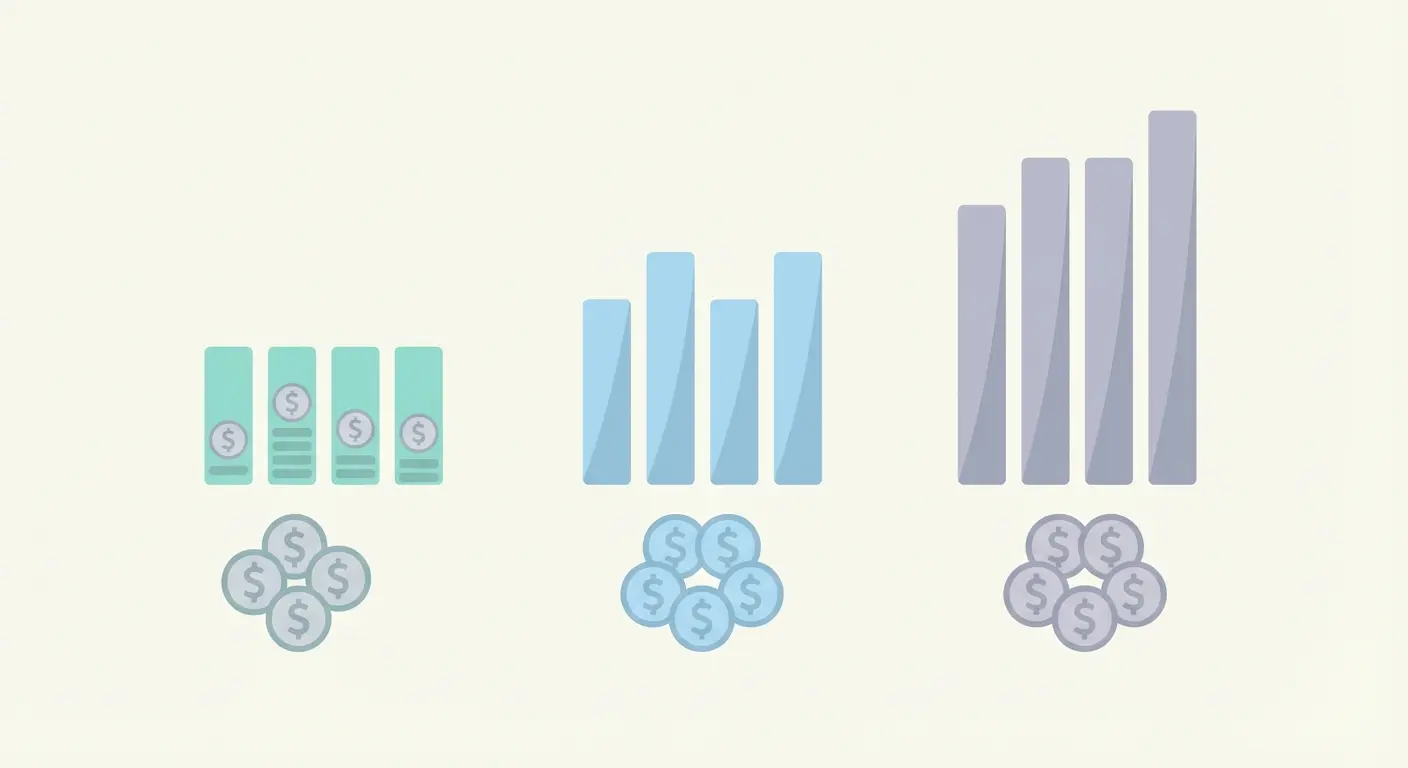
Most smokers know cigarettes are expensive. But the cost of smoking per year rarely gets calculated honestly — because honest math is uncomfortable.
Here’s what it actually looks like for a pack-a-day smoker in the U.S., where the average pack costs around $8.00 (more in states like New York, where it’s closer to $11–$13):
| Time Period | At $8/Pack | At $10/Pack | At $13/Pack |
|---|---|---|---|
| 1 Week | $56 | $70 | $91 |
| 1 Month | $240 | $300 | $390 |
| 6 Months | $1,440 | $1,800 | $2,340 |
| 1 Year | $2,920 | $3,650 | $4,745 |
| 5 Years | $14,600 | $18,250 | $23,725 |
That $2,400 figure in the headline? That’s a conservative six-month estimate for a $10-pack smoker — and it’s just the cigarette cost. It doesn’t count the hidden toll: higher health insurance premiums (smokers can pay up to 50% more under the ACA), increased dental bills, more frequent sick days, and the long-term medical costs that accumulate quietly over years.
Here’s the thing that most cost-of-smoking articles miss: seeing this number written out once doesn’t change behavior. What changes behavior is seeing your personal savings update daily, in an app, with your exact cigarette price and smoking frequency factored in. That psychological feedback loop is one reason quit smoking tracker apps work in ways that generic awareness campaigns simply don’t.
What a Quit Smoking Tracker App Actually Does
A quit smoking tracker app is a mobile application designed to support smoking cessation by monitoring your smoke-free progress, calculating money and health gains in real time, managing cravings through behavioral interventions, and providing motivational feedback via milestones, streaks, and community features. Most effective apps combine behavioral science principles with personalized data tracking.
Think of it as a quit coach, financial calculator, and accountability partner — all running in your pocket. The core functions split into a few clear categories.
Progress tracking is the baseline. The app logs your quit date, counts smoke-free hours and days, and estimates how many cigarettes you’ve avoided. Simple, but seeing “Day 47, 940 cigarettes not smoked” hits differently than just knowing you haven’t bought a pack lately.
Financial tracking is where it gets motivating. Enter your average daily cigarette count and local price per pack, and the app calculates savings in real time. Many users describe watching that number climb daily as one of the most powerful reinforcements they’ve found — more immediate than long-term health statistics.
Craving management tools separate the good apps from the basic ones. Cravings peak at 3–5 minutes and then pass. An app that gives you something to do during those minutes — breathing exercises, distraction games, a community SOS button — is actively fighting the addiction rather than just measuring it.
Health milestone timelines show physiological recovery at verified benchmarks: 20 minutes after quitting, blood pressure drops. After 12 hours, carbon monoxide levels normalize. After 2 weeks, circulation and lung function improve. After 1 year, coronary heart disease risk drops by half. Seeing these milestones on a personal timeline — tied to your specific quit date — makes abstract science feel personal.
Apps like iQuit take these core features further with AI-powered coaching that adapts to your patterns, journal and mood tracking to identify emotional triggers, and community challenges that recreate the social accountability that many smokers need to stay on track. These aren’t gimmicks — they reflect what the research on cessation actually shows works.
Best Quit Smoking App Features to Look for in 2026
Not every quit app is worth your screen time. The market has dozens of options, ranging from stripped-down streak trackers to apps with genuine behavioral science backing. Here’s how to distinguish the best from the rest.
A 2023 systematic framework published in JMIR reviewed smoking cessation apps against behavioral change theories and found significant variability in quality. The apps with the strongest outcomes shared specific feature sets — and those are exactly what you should look for when choosing the best quit smoking app in 2026.
| Feature | Why It Matters | Look For |
|---|---|---|
| Real-time craving SOS | Cravings last 3–5 minutes; fast intervention breaks the habit loop | Breathing tools, distraction tasks, emergency community alerts |
| Personalized quit plan | One-size-fits-all plans have lower success rates | Onboarding that asks about triggers, smoking history, goals |
| Money saved calculator | Financial motivation is one of the strongest behavioral drivers | Customizable pack price, daily cigarette count, visual savings display |
| Health timeline | Physiological milestones reinforce that quitting is working | Evidence-based benchmarks tied to your actual quit date |
| Mood and trigger journal | Most relapses are triggered by emotional states, not nicotine alone | Daily check-ins, mood logging, pattern analysis over time |
| AI coaching | Adapts advice to your specific patterns instead of generic tips | Conversational interface, pattern-based suggestions |
| Community / accountability | Social support significantly improves quit rates | Group challenges, accountability circles, peer messaging |
| Wearable/health app sync | Connects quit progress to real biometric data | Apple Health, Google Fit, Fitbit integration |
What most app comparison lists miss is the difference between features that feel useful and features that are functionally useful. A slick interface with 200 achievements but no craving intervention tool will fail you at 11 PM when stress hits and you’re six weeks into your quit. Prioritize depth of craving management over breadth of cosmetic features.
For anyone who’s tried the cold-turkey approach and struggled with the behavioral side of quitting, the top strategies to quit smoking successfully go deeper on how trigger identification, replacement behaviors, and habit stacking can be reinforced by the right app features.
Quit Smoking Money Saved: How to Calculate Your Real Savings
The standard “cigarettes per day × pack price × days” formula is a starting point, but it undersells your true savings. Here’s a more honest calculation using a proper quit smoking money saved calculator approach.
Step 1: Calculate Direct Cigarette Costs
Take your average daily cigarette count. Divide by 20 (cigarettes per pack) to get daily pack fraction. Multiply by your local pack price, then by days smoke-free.
Example: 15 cigarettes/day ÷ 20 × $10/pack × 180 days = $1,350 saved in 6 months
Step 2: Add Accessories and Related Spending
Most smokers also spend on lighters ($2–5/month), occasional extra packs at convenience stores (often $1–2 premium), and stress-driven impulse purchases that accompany smoking breaks. Add $15–30/month conservatively = another $90–180 at six months.
Step 3: Account for Health-Adjacent Costs
This is harder to pin down personally, but dentist visits for cleaning smoke-stained teeth, extra sick days (smokers average 2–3 more sick days annually than non-smokers), and higher co-pays for smoking-related conditions are real costs that quietly compound. Even a conservative estimate of $200–400 in the six-month window is reasonable for a long-term smoker.
Step 4: Factor in Insurance Savings (If Applicable)
If you’re purchasing individual health insurance, declaring as a non-smoker after 12 consecutive months can reduce premiums significantly. Under the ACA, insurers can charge smokers up to 50% more. On a $400/month plan, that’s a $2,400/year differential — though this kicks in after 12 months of documented cessation, not six.
Direct cigarettes: $1,800 + Accessories/impulse: $120 + Health-adjacent costs: $300 = ~$2,220 saved. At $13/pack in higher-cost states: over $2,700.
A good quit smoking money saved calculator inside an app handles the cigarette cost piece automatically and updates daily. What it can’t yet calculate — but you can — is the full picture above. Some users find it helpful to open a dedicated savings account and transfer the daily “cigarette money” into it physically. After 180 days, the balance is undeniable.
Understanding the financial side also pairs well with the behavioral strategies behind quitting. If you want a deeper look at how financial motivation interacts with habit-change techniques, the effective strategies to help you quit smoking covers how to anchor your motivation across different psychological triggers, not just the financial one.
Step-by-Step: How to Use a Quit Smoking App Effectively
Downloading an app is easy. Actually using it to stay quit for six months takes a specific approach — and most people skip the steps that matter most in the first 72 hours.
- Set your quit date before you quit. Don’t download the app while already in a craving. Set it up on a calm evening, two to three days before your planned quit date. This gives you time to configure everything without pressure.
- Enter your exact smoking data honestly. Cigarettes per day, pack price, years smoking. The accuracy of your savings tracker and health estimates depends entirely on this. Rounding down doesn’t help you.
- Identify and log your top three triggers. Most apps include a trigger or journal section. Before you quit, write down your highest-risk situations: morning coffee, post-meal, stress at work, social drinking. The app can then surface coping suggestions at those times.
- Set up craving alerts and check-in reminders. Schedule daily mood check-ins during your highest-risk windows. If the app has an SOS craving button, test it before you need it so you know exactly how to reach it fast.
- Connect with the community feature on Day 1. Don’t wait until you’re struggling. Introduce yourself, post your quit date, and follow a few other users. Social accountability works best when it’s established before the hard moments, not during them.
- Check your savings dashboard every morning. Make it the first thing you look at — before email, before news. Anchoring your morning routine to a positive number builds the motivational habit.
- Use the health timeline as a reward system. Mark each milestone in your calendar. After 48 hours (carbon monoxide fully cleared), do something small to celebrate. After 2 weeks (circulation improving), do something larger. Physical rewards tied to physiological recovery reinforce both.
- Log a relapse if it happens — don’t delete the app. One cigarette after 47 days doesn’t erase 47 days of progress. Apps with lapse-logging (vs. full reset) support what researchers call “harm reduction framing,” which keeps users engaged rather than ashamed.
- ☐ Download app and complete full onboarding (don’t skip questions)
- ☐ Enter quit date, cigarettes/day, pack price
- ☐ Log your top 3 smoking triggers in the journal
- ☐ Enable push notifications for check-ins
- ☐ Test the craving SOS feature
- ☐ Join at least one community group or challenge
- ☐ Screenshot your Day 1 dashboard to compare with Day 30
- ☐ Open a dedicated savings account (optional but powerful)
The NCI’s Build a Plan to Quit Smoking tool from Smokefree.gov is a free, evidence-based planning resource that pairs well with any app. Use it to structure your behavioral quit plan, then let the app handle daily reinforcement and tracking.
Ready to Build Your Quit Plan?
iQuit’s guided onboarding walks you through every setup step — quit date, trigger logging, craving tools, and community — so you start Day 1 fully equipped, not figuring it out mid-craving.
App-Assisted Quitting vs. Cold Turkey: What the Research Says
Cold turkey gets romanticized. The idea of pure willpower, no crutches, just deciding to stop — it sounds clean. But the data tells a different story.
Most estimates put unaided cold turkey success rates at 3–5% after one year. That’s not a failure of character. It’s a function of how nicotine addiction actually works in the brain — dopamine pathways, withdrawal timelines, and trigger conditioning that willpower alone struggles to override.
App-assisted cessation isn’t magic either. But a Cochrane Review on mobile phone text messaging and app-based interventions found that these tools significantly increased short-term quit rates. The effect was most pronounced in apps that combined multiple behavioral change techniques rather than relying on a single mechanism.
| Quitting Method | 1-Year Success Rate (Approx.) | Key Advantage | Key Limitation |
|---|---|---|---|
| Cold Turkey | 3–5% | No cost, no tools needed | No craving support; relies entirely on willpower |
| NRT (Patches/Gum) Only | 10–15% | Reduces physical withdrawal | Doesn’t address behavioral triggers |
| App + Behavioral Support | 15–25%* | Real-time craving management + tracking | Requires consistent engagement |
| App + NRT + Counseling | 25–35%* | Addresses physical, behavioral, and emotional components | Higher cost and time investment |
*Estimated ranges based on available meta-analytic data; individual results vary.
The honest answer is that there’s no single method that works for everyone. What the research consistently shows is that combining approaches — behavioral tools, social support, and physical nicotine management — produces better outcomes than any single-method approach.
Apps work best as the connective tissue. They’re available at 2 AM when a craving hits. They don’t get tired of reminding you. They don’t judge a lapse. And — critically — they make the financial and health progress visible in a way that no other tool does as effectively.
The NCI’s quitSTART app from Smokefree.gov is a no-cost option backed by the National Cancer Institute and worth exploring alongside other tools. For video-based peer support, the CDC’s Tips From Former Smokers YouTube playlist and Kick It California’s channel offer real stories from people who’ve quit — which research confirms has its own motivational impact.
What most comparison articles won’t tell you: the biggest predictor of app success isn’t which app you choose. It’s whether you actually engage with it daily for the first three weeks. The habit of checking the app is itself a replacement habit that competes with the smoking habit. Build that check-in routine first, and the features take care of the rest.
Your 6-Month Quit Plan: From App Setup to $2,400 Saved
Here’s how the six months actually break down — both financially and physiologically — for a pack-a-day smoker at $10/pack:
| Milestone | Time Since Quitting | Money Saved | Health Change |
|---|---|---|---|
| First breath of fresh air | 20 minutes | $0.07 | Heart rate and blood pressure drop |
| Carbon monoxide clears | 12–24 hours | $10 | Blood oxygen normalizes |
| Nicotine fully cleared | 3 days | $30 | Lung function starts improving |
| One week smoke-free | 7 days | $70 | Taste and smell sharpening |
| One month smoke-free | 30 days | $300 | Cilia in airways regenerating |
| Three months smoke-free | 90 days | $900 | Lung function up ~10%, exercise easier |
| Six months smoke-free | 180 days | $1,800 | Chronic cough and shortness of breath significantly reduced |
The financial column is your tracker app’s job. The health column is its inspiration. Together, they create the feedback loop that makes six months achievable — not just aspirational.
Ready to Start Tracking Your Savings?
iQuit combines real-time savings tracking, AI-powered craving support, health milestones, mood journaling, and community challenges — everything the research says actually moves the needle on quitting. Your first dollar saved shows up the moment you log your quit date.
Frequently Asked Questions
How accurate are quit smoking money saved calculators in apps?
Quit smoking money saved calculators are accurate for direct cigarette costs when you enter honest data — your real daily cigarette count and your actual local pack price. They don’t automatically account for insurance savings, dental costs, or productivity gains, so your true financial benefit is typically higher than what the app displays. Update your pack price if it changes to keep the calculation current.
What is the cost of smoking per year for an average smoker?
For a pack-a-day smoker in the U.S., the cost of smoking per year ranges from roughly $2,920 at $8/pack to $4,745 at $13/pack — before factoring in higher insurance premiums, healthcare costs, and other related expenses. Smokers in high-tax states like New York or Massachusetts typically spend over $5,000 annually on cigarettes alone.
Do quit smoking tracker apps actually work?
Yes — peer-reviewed research, including a 2023 meta-analysis published in JMIR, confirms that smartphone app-based cessation interventions significantly improve quit rates compared to no-intervention controls. Apps are most effective when they include multiple behavioral change techniques such as craving management tools, progress tracking, and social support features, rather than simple streak counters alone.
What features make the best quit smoking app in 2026?
The best quit smoking apps in 2026 combine real-time craving SOS tools, personalized quit plans, financial savings calculators, evidence-based health timelines, mood and trigger journals, AI coaching that adapts to your patterns, and community accountability features. Apps that integrate with health platforms like Apple Health or Google Fit add an extra layer of biometric motivation. Depth of craving management matters more than the number of achievements or cosmetic features.
How much can I save in 6 months if I quit smoking?
A pack-a-day smoker can save between $1,440 and $2,340 in direct cigarette costs over six months, depending on local pack prices ($8–$13). When you add accessories, impulse purchases, and modest health-related cost reductions, the real six-month savings typically lands between $1,700 and $2,700. After 12 months of documented cessation, health insurance premium reductions can add thousands more in annual savings.
What should I do if I relapse while using a quit smoking app?
Don’t delete the app. Log the lapse honestly and keep the streak data visible — most relapses happen after a period of smoke-free days, and that data is still meaningful progress. Use the journal or AI coaching feature to analyze what triggered the slip, then adjust your coping plan. Research shows that multiple quit attempts are normal, and each attempt builds skills and self-knowledge that improve the odds on the next try.
The Bottom Line
A quit smoking tracker app won’t quit for you. But it stacks the odds in your favor — by making the invisible visible. Your savings climb daily. Your health milestones arrive on schedule. Your cravings get met with tools instead of cigarettes.
Six months is 180 days. At $10/pack, that’s $1,800 in cigarette savings — and that’s just the cigarette math. The real number, when you count everything, pushes well past $2,000 for most smokers. That’s not a promise; that’s arithmetic.
The behavioral side of quitting — managing triggers, building replacement habits, staying accountable — is where most people get stuck, and it’s where the right resources make a real difference. The top strategies to quit smoking successfully and the effective strategies to help you quit smoking cover those tactics in detail — pair them with a tracker app and you’ve got both the daily reinforcement and the strategic foundation you need.
Your quit date is one decision away. The savings calculator starts the moment you make it.
Start Saving From Day One
iQuit tracks your money saved, supports you through cravings with AI coaching, and connects you with a community that knows exactly what you’re going through. Real features. Real results. No fluff.