Secondhand Smoke Dangers: The Statistics and How to Protect Others
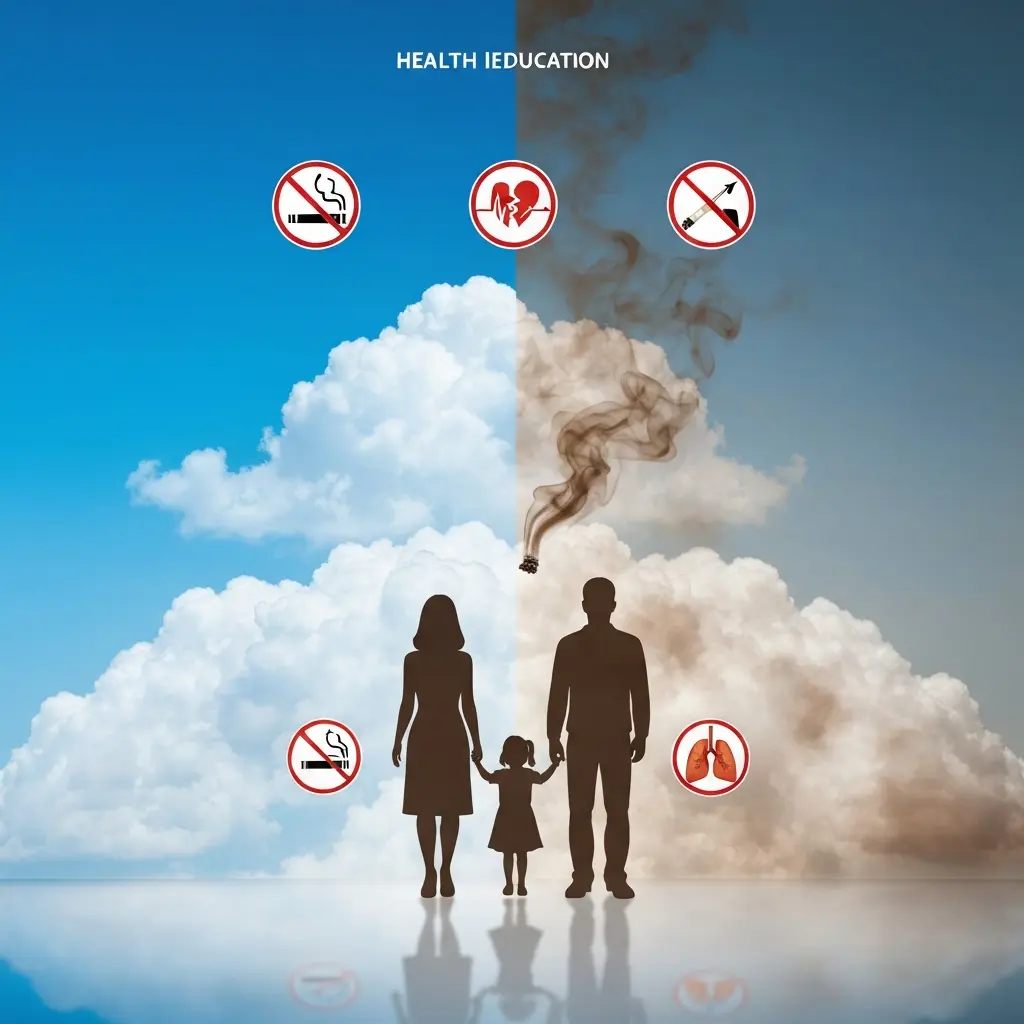
Secondhand smoke dangers are not abstract health warnings from a distant pamphlet. They are measured in deaths, diagnoses, and developmental impacts happening right now, in homes and cars and shared spaces where someone is smoking while someone else breathes. Since 1964, approximately 2.5 million non-smokers have died from health problems caused by secondhand smoke exposure in the United States alone. That number represents people who never chose to smoke — people who had no say in the matter.
If you smoke, understanding the specific, statistical weight of secondhand smoke exposure — and the concrete, evidence-backed steps you can take to eliminate it — provides some of the most compelling possible motivation for quitting. And if you live or work with a smoker, this information helps you understand exactly what the risks are and what you can do to protect yourself and the people you care about.
What Secondhand Smoke Actually Contains
Secondhand smoke is the combination of smoke from the burning end of a cigarette (sidestream smoke) and the smoke exhaled by the person smoking (mainstream smoke). It is not a diluted version of the smoke a smoker inhales — in some ways, it is more dangerous, because sidestream smoke (which accounts for 85% of the secondhand smoke in a room) burns at lower temperatures, producing higher concentrations of certain toxins.
Secondhand smoke contains more than 7,000 chemicals. Of these, hundreds are toxic and at least 70 are known or probable carcinogens, including:
- Formaldehyde (a known human carcinogen)
- Benzene (linked to leukemia)
- Polonium-210 (radioactive)
- Vinyl chloride (linked to liver cancer)
- Arsenic (a potent carcinogen)
- Ammonia, carbon monoxide, hydrogen cyanide
- Nitrosamines (strong carcinogens found at higher concentrations in sidestream than mainstream smoke)
The American Cancer Society notes that there is no safe form of tobacco smoke — including low-yield or “light” cigarettes, and including brief exposures. Any level of exposure carries health risk.
Health Risks for Adults: The Statistics
For non-smoking adults, regular secondhand smoke exposure carries serious and well-documented health risks. The numbers from the CDC and major health authorities are sobering:
| Cause | Deaths Per Year | Increased Risk |
|---|---|---|
| Coronary heart disease | ~34,000 | 25–30% higher risk |
| Lung cancer | ~4,120 | 20–30% higher risk |
| Stroke | Significant contributor | 20–30% higher risk |
A comprehensive 2024 meta-analysis published in Nature Medicine further confirmed that secondhand smoke increases the risk of ischaemic heart disease, stroke, type 2 diabetes, and lung cancer in non-smokers. The authors concluded that the evidence base supporting no safe level of exposure remains robust and continues to strengthen with each new study.
Health Risks for Children: Disproportionate Danger
Children are disproportionately vulnerable to secondhand smoke for several reasons: they breathe faster than adults (inhaling more air per unit of body weight), their developing organs and immune systems are more susceptible to chemical damage, and they have less ability to remove themselves from smoky environments. The health consequences are extensive:
- Sudden Infant Death Syndrome (SIDS): ~120 SIDS deaths per year are attributed to secondhand smoke exposure. Infants of smokers are at significantly elevated risk.
- Acute lower respiratory infections: Secondhand smoke is a leading contributor to bronchitis and pneumonia in children under five. Hundreds of thousands of cases annually are attributable to parental smoking.
- Asthma: Secondhand smoke both triggers existing asthma attacks and is associated with the development of new asthma in children who might not otherwise develop the condition. Children exposed to secondhand smoke have more frequent, more severe, and more medication-resistant asthma than those in smoke-free homes.
- Middle ear disease: Elevated rates of middle ear infections and fluid accumulation in children exposed to secondhand smoke are well-documented. This is a leading cause of childhood hearing difficulties and associated language development delays.
- Reduced lung function: Long-term secondhand smoke exposure during childhood and adolescence is associated with measurably smaller and less functional lungs — effects that may persist for life.
- Cognitive and behavioral effects: Research links prenatal and early childhood secondhand smoke exposure to attention difficulties, reduced cognitive performance, and higher rates of behavioral problems.
A systematic review published in PMC in 2024 examining the impact of secondhand smoke on children’s health concluded that legislative smoke-free measures (banning smoking in homes and cars with children) are associated with significant reductions in child hospitalizations for respiratory conditions — demonstrating the direct, measurable health benefit of creating smoke-free environments for children.
Secondhand Smoke and Heart Disease
The cardiovascular effects of secondhand smoke are acute as well as chronic. Even brief exposure to secondhand smoke causes immediate changes in blood chemistry that increase the risk of blood clots: it reduces platelets’ ability to function normally, makes blood more viscous, and triggers inflammatory responses in blood vessel walls.
For people with existing heart disease, brief secondhand smoke exposure can be acutely dangerous — triggering angina episodes and increasing short-term heart attack risk. The American Heart Association notes that secondhand smoke exposure is responsible for approximately 34,000 heart disease deaths annually among non-smokers in the US, making it one of the leading preventable causes of cardiovascular mortality in non-smoking adults.
Secondhand Smoke and Cancer
The US Surgeon General has concluded that there is no safe level of exposure to secondhand smoke for cancer risk. Secondhand smoke is classified as a Group 1 known human carcinogen by the International Agency for Research on Cancer (IARC) — the same classification given to asbestos and benzene.
Non-smokers regularly exposed to secondhand smoke have a 20–30% increased risk of developing lung cancer. Additional cancers linked to secondhand smoke exposure include nasal sinus cancer, breast cancer (particularly in premenopausal women), cervical cancer, and leukemia. The biological mechanism is direct DNA damage from carcinogens in the smoke — the same mechanism operating in the person who is actively smoking.
Secondhand Smoke During Pregnancy
Secondhand smoke exposure during pregnancy is associated with a range of serious outcomes for both the pregnant person and the developing fetus:
- Low birth weight (a significant predictor of multiple health problems)
- Preterm birth
- Placental abruption and placenta previa
- Ectopic pregnancy risk
- Fetal brain and organ development effects
- Elevated SIDS risk in the infant
Pregnant women who cannot eliminate their own secondhand smoke exposure should speak with their healthcare provider about their specific situation and available protective strategies.
Thirdhand Smoke: The Danger That Stays Behind
Thirdhand smoke is the toxic residue from tobacco smoke that settles on surfaces and persists long after a cigarette has been extinguished. Unlike secondhand smoke, which disperses when a room is ventilated, thirdhand smoke accumulates in fabrics, carpets, walls, furniture, dust, and even the skin and clothing of people who smoke.
This residue re-emits volatile organic compounds into the air over time and forms new toxic chemicals — including cancer-causing nitrosamines — through reactions with indoor air pollutants. Opening windows or ventilating a room does not eliminate thirdhand smoke. Washing hands removes surface contamination temporarily, but the residue in hair, clothing, and upholstered furniture can persist for months.
For families concerned about thirdhand smoke, the only complete solution is smoking cessation. Professional deep cleaning of carpets and upholstered furniture, repainting walls, and replacing heavily contaminated soft furnishings can reduce residue in a home where smoking has stopped, but these measures are secondary to the primary intervention: quitting.
Why There Is No Safe Level of Exposure
The concept of “safe” exposure to secondhand smoke — that occasional or brief exposure is acceptable — is not supported by the evidence. The American Cancer Society, the CDC, and the US Surgeon General all conclude that any exposure carries risk because:
- Many of the harmful effects of secondhand smoke (cardiovascular changes, DNA damage) begin with very brief exposures
- There is no threshold below which carcinogens in tobacco smoke do not cause cellular damage
- The cumulative effects of repeated low-level exposures are significant over time
This is why smoke-free policies — not “reduced smoking” or “smoking in another room” — are the public health standard for protecting non-smokers. It is also why quitting smoking entirely, rather than cutting down, provides the greatest protection to those around you.
How to Protect Your Family and Others
If you or someone in your household smokes, these are the evidence-based steps to minimizing harm to non-smokers while working toward cessation:
- Make your home completely smoke-free. No smoking indoors, even with windows open. Smoke drifts through indoor air for hours.
- Make your vehicle completely smoke-free. A car interior is an especially confined space with concentrated toxin levels; smoking in a car with children present exposes them to carcinogen concentrations many times higher than those in a typical smoky bar.
- Wash hands and change clothing after smoking and before contact with infants and young children to minimize thirdhand smoke transfer.
- Ask household members who smoke to follow the same household smoke-free rules, even if they are not yet ready to quit themselves.
- Seek support to quit. All other measures are protective but partial. Complete cessation is the only fully protective action. The iQuit app, combined with professional cessation support, gives you the best possible foundation for quitting.
Quitting smoking for the health of your family is one of the most evidence-supported and emotionally powerful motivations for cessation. Read more about quitting for your family and build the quit motivation strategies that will carry you through to a smoke-free life.
Frequently Asked Questions
Is secondhand smoke worse than directly smoking a cigarette?
In some respects, yes. Sidestream smoke (from the burning end) is produced at lower temperatures than mainstream smoke (inhaled by the smoker), which results in higher concentrations of certain carcinogens and toxic gases — including carbon monoxide, benzene, and nitrosamines. While the person directly smoking is exposed to higher total quantities, non-smokers in a smoky environment may be exposed to particularly hazardous components at high concentrations relative to the total amount inhaled.
How long does secondhand smoke stay in a room?
In a room with normal ventilation, gaseous components of secondhand smoke can persist for two to three hours after a cigarette is extinguished. Fine particles — which carry many of the most harmful chemical components — can remain suspended in room air for hours. In poorly ventilated spaces, detectable secondhand smoke contamination can persist for considerably longer. Thirdhand smoke residue on surfaces and fabrics persists for months to years.
Does vaping produce secondhand smoke?
Vaping produces secondhand aerosol, not smoke, but this aerosol is not harmless. It contains nicotine, fine particles, and various chemicals — including some known carcinogens — at levels significantly lower than cigarette smoke but above background air. Research on the long-term health effects of secondhand vaping aerosol is ongoing, but current evidence indicates it is not safe for non-smokers, particularly children, to be regularly exposed to it in enclosed spaces.
Is brief secondhand smoke exposure (like passing someone on the street) harmful?
Very brief, occasional outdoor exposures carry extremely low risk. The concern with secondhand smoke is primarily regular, sustained exposure — living with a smoker, spending time in repeatedly smoky indoor environments, or working in spaces where smoking occurs. Passing someone briefly outdoors delivers a negligible dose of secondhand smoke. The risks documented in the research literature are associated with regular, significant exposure.
Can secondhand smoke harm pets?
Yes. Research shows that cats in smoking households have a significantly elevated risk of feline oral squamous cell carcinoma — because they ingest thirdhand smoke residue when grooming. Dogs in smoking households show elevated rates of nasal cancer. Birds are particularly sensitive to airborne toxins and show respiratory distress at secondhand smoke levels that would not affect humans. Pets in smoke-free homes live longer, healthier lives — another compelling motivation for cessation.
What is the most effective way to reduce secondhand smoke exposure at home?
The most effective measure is smoking cessation by all household members who smoke. While smoke-free rules (only smoking outdoors), air purifiers with HEPA filters, and ventilation can reduce exposure, none of these approaches eliminates it. Air purifiers do not remove gaseous components of secondhand smoke, and thirdhand smoke residue accumulates on surfaces regardless of where the smoking occurs. Complete cessation remains the gold standard.
The Best Protection Is Quitting
Every smoke-free day is a day your family breathes cleaner air. The iQuit app supports your cessation journey with craving tools, milestone tracking, and community support — so you can take the most powerful step possible to protect the people around you. Download iQuit today.