Smoking and Gum Disease Statistics 2026: Periodontitis Risk & Recovery Data
Gum disease is the quiet damage smoking inflicts that rarely gets the headlines — yet the data tell a starkly compelling story. According to NIDCR (National Institute of Dental and Craniofacial Research) data from the most recent National Health and Nutrition Examination Survey, 62.4% of current smokers have total periodontitis, compared to 34.4% of people who have never smoked. That is not a small gap — it represents a profoundly different experience of oral health. Understanding the smoking and gum disease statistics for 2026 is valuable both for setting realistic expectations about what smoking does to your mouth and for understanding the concrete, measurable gains that come with quitting.
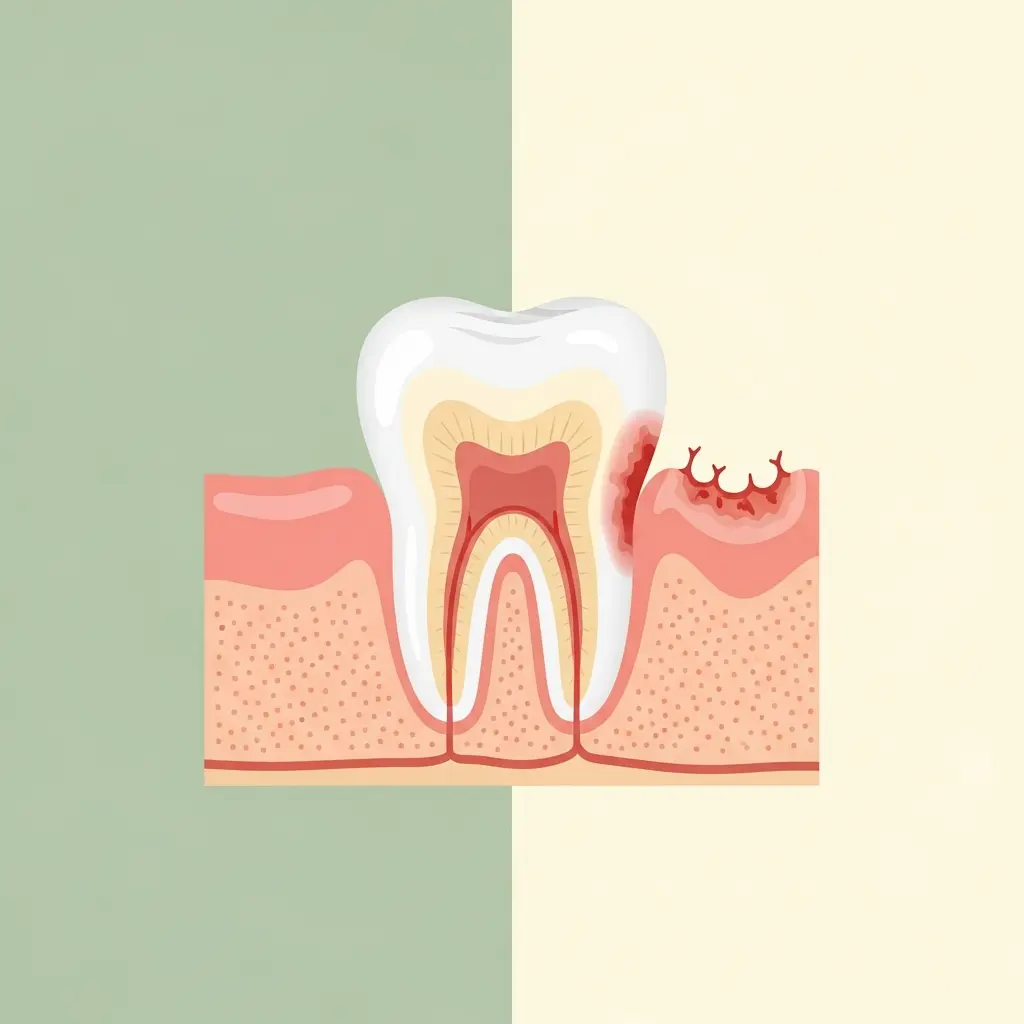
Periodontitis — chronic bacterial infection of the structures supporting your teeth — progresses silently through bone loss, deepening pockets between tooth and gum, and eventually tooth loss. Smoking accelerates every stage of this process while simultaneously masking the bleeding that would normally alert people to see a dentist. This article compiles the most rigorously sourced prevalence data, dose-response findings, global burden statistics, and clinical recovery evidence available in 2026.
Current smokers are roughly twice as likely to develop periodontitis as people who have never smoked, with 62.4% of smokers affected vs. 34.4% of never-smokers — and the gap is even wider for severe disease, where smokers are more than three times as likely to be affected. Smoking accounts for an estimated 41.9% of all adult periodontitis cases in the United States. The encouraging news: gums begin healing within weeks of quitting, and after approximately 11 years of cessation, former smokers’ periodontal disease risk is no longer statistically different from that of never-smokers.
Prevalence: How Common Is Gum Disease in Smokers?
The NIDCR’s analysis of NHANES 2009–2014 data — the largest nationally representative oral health survey in the United States — provides the most authoritative prevalence snapshot available. Among adults aged 30 and older:
| Smoking Status | Total Periodontitis | Severe Periodontitis |
|---|---|---|
| Current smokers | 62.4% | 16.9% |
| Former smokers | 45.8% | 8.0% |
| Never-smokers | 34.4% | 4.9% |
| All adults (combined) | 42.2% | 7.8% |
Source: NIDCR Periodontal Disease in Adults, NHANES 2009–2014.
Two numbers stand out. First, the severe periodontitis rate among current smokers (16.9%) is more than three times higher than among never-smokers (4.9%). Second, former smokers sit at a midpoint — healthier than active smokers but still carrying measurably worse outcomes than those who never smoked. This residual burden reflects the years of cumulative damage that persist even after cessation.
The CDC’s Tips From Former Smokers campaign frames this clearly: smokers have twice the risk for gum disease compared with non-smokers, and the risk increases the longer and more heavily a person smokes. A foundational NHANES III study published in the Journal of Periodontology and indexed on PubMed estimated that approximately 41.9% of adult periodontitis cases in the U.S. are attributable to current cigarette smoking, with a further 10.9% attributable to former smoking — meaning over half of all periodontitis cases have a direct tobacco connection.
These figures carry real public health weight. For context on how smoking reshapes the entire health recovery picture beyond oral health, the 2026 smoking cessation statistics and success rate data show consistent gains across multiple organ systems beginning soon after the last cigarette. The broader health costs of smoking-related periodontitis also connect to overall economic burden — for the full picture see the workplace smoking statistics for 2026, which quantify how absenteeism and healthcare costs accumulate.
Video: Mayo Clinic Minute — Running, Periodontitis, Smoking | Mayo Clinic (1M+ subscribers)
Dose-Response: More Cigarettes, More Damage
One of the most clinically important findings in the smoking-periodontitis research literature is the clear dose-response relationship — the more cigarettes smoked, the greater the periodontitis risk. This is not an artefact of confounding; it has been replicated across multiple large cohorts and methodologies.
The NHANES III study by Tomar and Asma (2000) — a landmark paper in periodontal epidemiology — found the following odds ratios for periodontitis by daily cigarette consumption among current smokers, compared to never-smokers:
| Cigarettes per Day | Odds Ratio vs Never-Smokers | 95% Confidence Interval |
|---|---|---|
| ≤9 cigarettes/day | 2.79× | 1.90–4.10 |
| 10–19 cigarettes/day | 3.3× | — |
| 20–30 cigarettes/day | 4.5× | — |
| ≥31 cigarettes/day | 5.88× | 4.03–8.58 |
The gradient is unmistakable: someone smoking fewer than 10 cigarettes per day already faces nearly three times the periodontitis risk of a never-smoker, and that climbs to almost six times the risk at heavy use. A 2023 systematic review and meta-analysis (PMC10466628) incorporating 14 prospective studies and approximately 11,000 participants confirmed the overall pooled risk ratio at 1.85 (95% CI: 1.5–2.2) — meaning smoking nearly doubles the prospective risk of developing new periodontitis, independent of baseline periodontal status.
Duration matters too. The CDC data confirm that the risk compounds with years of exposure — the longer someone smokes, the worse the trajectory. This aligns with the biological mechanisms: prolonged nicotine and toxin exposure progressively impairs vascular supply to gum tissue, creating a landscape where healing becomes progressively more difficult.
How Smoking Destroys Gum Tissue
Statistics gain meaning when we understand the biology behind them. Smoking damages periodontal health through several concurrent mechanisms:
- Immune suppression: Tobacco compounds suppress neutrophil function — the frontline white blood cells responsible for fighting bacterial infection in gum pockets. With a weakened immune response, periodontal pathogens establish deeper, more stable colonies.
- Vasoconstriction: Nicotine causes blood vessels in gum tissue to constrict, reducing oxygen and nutrient delivery. This is also why smokers classically show less bleeding from the gums — a deceptive “masking” of active disease that often delays diagnosis.
- Impaired healing: Fibroblast function — the cells responsible for building connective tissue and reattaching gum to bone — is significantly reduced by cigarette smoke components. This means that even after treatment, gum tissue in smokers heals more slowly and less completely.
- Altered microbiome: Smoking shifts the oral microbiome toward more virulent, anaerobic periodontal pathogens. Studies have documented that Gram-negative bacteria repopulate treated pockets significantly faster in smokers after scaling and root planing.
- Oxidative stress: A Nature Scientific Reports study on smoking and periodontal oxidative stress documented that smoking disrupts redox homeostasis in gum tissue, accelerating inflammatory tissue destruction beyond what bacteria alone would cause.
These mechanisms do not operate independently — they create a compounding environment in which disease progresses faster, gets detected later, and responds worse to treatment. It is worth noting that the same vascular and inflammatory pathways that harm the gums are at work throughout the body. The data on how smoking damages heart health reflect the same fundamental processes in the cardiovascular system.
Severity Data: Bone Loss, Pocket Depth, and Tooth Loss
Beyond simple prevalence rates, the severity data for smokers with periodontitis is striking. Several key clinical parameters worsen significantly in the presence of tobacco use:
Alveolar Bone Loss
Smokers experience up to three times more alveolar bone loss than non-smokers with equivalent levels of bacterial plaque. Bone loss is the critical outcome in periodontitis because, unlike soft tissue, alveolar bone does not regenerate spontaneously once destroyed. The loss of bone support is what leads ultimately to tooth mobility and tooth loss.
Periodontal Pocket Depth
Clinical studies consistently document deeper periodontal pockets — the spaces between tooth and gum that harbour disease-causing bacteria — in smokers compared to non-smokers with comparable plaque levels. Deeper pockets are harder to clean, both by patients at home and by dental hygienists during treatment, creating a self-reinforcing cycle of disease.
Tooth Loss
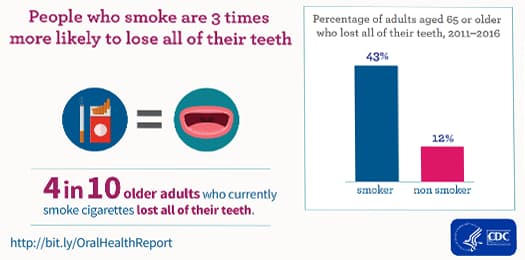
Tooth loss is the endpoint that periodontitis builds toward, and the tobacco contribution is substantial. Among adults aged 65 and older, daily smokers are roughly three times more likely to have lost all their teeth than non-smokers in the same age group. A 2025 causal analysis of smoking and tooth loss using Mendelian randomization methodology — available on PMC — confirmed a causal, not merely associative, relationship between smoking and tooth loss, independent of socioeconomic and dietary confounders.
Tooth loss is not only a dental concern. Missing teeth affect nutrition, speech, self-confidence, and social participation. Like the visible ageing effects of smoking on skin — documented in detail in our smoking and skin ageing science data — tooth loss represents a permanent change that quitting can slow but not always reverse.
Implant Failure
For smokers who have already lost teeth and pursue dental implants as replacement, the evidence is sobering. A meta-analysis of implant outcomes found an inverse correlation between cigarettes smoked per day and implant success rates, with increased marginal bone loss around implants in smokers. Some guidelines recommend against implant placement in patients with 5–10 or more pack-years of smoking history until cessation is achieved and sustained.
Because nicotine-induced vasoconstriction reduces gum bleeding, smokers often have less obvious warning signs of active periodontitis. This means many smokers are in more advanced stages of disease by the time symptoms prompt a dental visit — underscoring why routine dental check-ups are especially important for people who smoke.
The financial cost of treating advanced periodontitis — and replacing lost teeth — is substantial. The broader picture of what smoking costs the healthcare system is covered in our analysis of smoking-related healthcare cost statistics for 2026.
Global Burden: 1 Billion People, a Growing Crisis
The scale of periodontitis globally is often underappreciated. According to the Global Burden of Disease 2021 Study, published in the Journal of Periodontal Research in 2024 and indexed on PubMed:
- Over 1.07 billion people globally were affected by severe periodontitis in 2021, representing a global age-standardised prevalence of 12.5%.
- An additional 353 million people were edentulous (completely toothless) as a result of periodontal disease and caries.
- By 2050, severe periodontitis cases are projected to exceed 1.5 billion — a rise of more than 44% — largely driven by ageing populations and continued tobacco use in low- and middle-income countries.
Smoking remains one of the most potent modifiable risk factors in this global disease burden. While poor oral hygiene, diabetes, and ageing all contribute, tobacco use is among the few causes that acts through multiple simultaneous pathways and produces a dose-dependent amplification of disease that other risk factors do not match.
In the United Kingdom, approximately 50% of adults have some form of gum disease, according to data cited by the ASH Scotland Smoking and Oral Health briefing (September 2024). With NHS dental access increasingly constrained, the intersection of tobacco use and periodontal disease represents a major burden on dental health services.
Treatment Outcomes: Why Gums Heal Worse in Smokers
Even when smokers do receive periodontal treatment, the clinical evidence consistently shows worse outcomes compared to non-smokers across all standard treatment modalities. A narrative review on periodontal treatment outcomes in smokers published on PMC (PMC8494073) summarises the evidence across treatment types:
| Treatment Type | Smokers’ Outcome vs Non-Smokers |
|---|---|
| Scaling and root planing (non-surgical) | Less pocket depth reduction; smaller attachment level gain; faster bacterial repopulation |
| Surgical debridement (open flap) | Reduced pocket depth improvement and clinical attachment gain, especially in heavy smokers |
| Guided tissue regeneration | Significantly diminished regenerative success rates |
| Dental implants | Increased marginal bone loss; inversely correlated success with cigarette consumption |
| Supportive periodontal maintenance | Greater bone loss and tooth loss over 5- and 20-year follow-up periods |
The critical clinical implication: continuing to smoke during periodontal treatment can substantially blunt the healing response, with several clinical trials reporting markedly reduced pocket-depth and attachment gains in smokers compared with non-smokers. This is not a theoretical concern but a well-documented, consistently replicated finding. Dentists and periodontists frequently recommend cessation as a prerequisite or concurrent goal for active periodontal treatment, not simply as general health advice.
Recovery After Quitting: The Timeline in Data
The data on recovery is where the story genuinely shifts from sobering to hopeful. The body’s periodontal recovery after quitting smoking follows a measurable timeline, with documented milestones. For a detailed week-by-week account of what happens to your gum tissue — including the masking effect that lifts when you quit, why early bleeding is a sign of healing, and how to support recovery — see our dedicated guide on gum and mouth recovery after quitting smoking.
| Time After Quitting | What Happens to Gum Health |
|---|---|
| 24 hours | Circulation begins improving; blood flow to gum tissue starts to recover |
| 2–12 weeks | Noticeable gum health improvements; bleeding on probing (a sign of healing) returns, which is actually a positive indicator |
| 1–3 months | Gum tissue begins repairing; risk of further disease progression starts to drop |
| ~1 year | Treatment response approaches that of non-smokers; rate of disease progression decelerates |
| 9–12 years | Tooth loss risk equals that of never-smokers; alveolar bone loss rates normalise |
| ~11 years | Overall periodontitis risk is no longer statistically different from never-smokers |
The finding that former smokers who quit before age 30 have nearly the same periodontal health as people who never smoked is particularly meaningful. It illustrates that the recovery pathway, while not instantaneous, is real and clinically significant. The evidence strongly suggests that quitting smoking is beneficial to patients following periodontal treatments — a conclusion supported by epidemiological, cross-sectional, and case-control studies reviewed in the PMC literature.
Interestingly, the return of bleeding on probing within weeks of quitting is often misread by patients as a new problem. It is the opposite: it indicates that blood flow and normal immune function are returning to gum tissue. Vasoconstriction from nicotine had been suppressing this response. Its reappearance is a sign of healing, not harm.
Quitting also affects the soft tissue of the mouth beyond the gums. Many people experience a temporary spike in mouth ulcers and canker sores during the first two weeks of cessation — a well-documented withdrawal symptom explained in full in our guide on quit smoking mouth ulcers and why they spike then settle.
For people serious about protecting their periodontal health, cessation is not just complementary to dental treatment — it is often the single most impactful intervention available. The broader picture of what the body recovers across all systems is detailed in our comprehensive health recovery timeline data, which maps organ-by-organ improvements from day one to years after quitting.
Protect Your Gums: iQuit Can Help You Stop Today
Every day without cigarettes gives your gum tissue a chance to heal. The iQuit – Quit Smoking App offers an AI coach, craving tracker, and health milestone celebrations — including reminders of your improving oral health — to keep you motivated through every stage of your quit journey.
- Track the hours, days, and weeks since your last cigarette
- Monitor money saved (and what it could pay for in dental care)
- Connect with a community of people at every stage of quitting
- Receive evidence-based guidance when cravings hit hardest
Your gums begin recovering within 24 hours. Start iQuit today.
Frequently Asked Questions
How much more likely are smokers to get gum disease?
According to NIDCR data from NHANES 2009–2014, current smokers have a 62.4% total periodontitis rate compared to 34.4% among never-smokers — and for severe periodontitis the gap is wider, at 16.9% versus 4.9%. The CDC states that smokers have approximately twice the risk of gum disease as non-smokers, and NHANES III research found that heavy smokers (≥31 cigarettes/day) face nearly six times the odds of periodontitis compared to people who have never smoked. The dose-response relationship — more cigarettes, greater risk — has been consistently confirmed in multiple large studies.
Does smoking cause gum disease directly or just make it worse?
Both. Smoking is a direct causal risk factor for periodontitis — not merely an association. A 2021 Mendelian randomisation study (a method designed to establish causality) confirmed that smoking causally increases the risk of both gum disease and tooth loss. Smoking also accelerates existing disease by suppressing the immune response, reducing blood flow to gum tissue, impeding healing, and shifting the oral microbiome toward more pathogenic bacteria. An estimated 41.9% of all adult periodontitis cases in the United States are directly attributable to current cigarette smoking.
Will my gums recover if I quit smoking?
Yes, meaningfully so — though the timeline varies with years of smoking and severity of existing disease. Blood flow to gum tissue begins improving within 24 hours. Noticeable improvements in gum health typically appear within 2–12 weeks. Treatment responses approach those of non-smokers within approximately one year of cessation. Research shows that around 11 years after quitting, former smokers’ overall periodontitis risk is no longer statistically different from that of never-smokers, and tooth loss risk normalises after 9–12 years. Former smokers who quit before age 30 have nearly the same periodontal health as lifelong non-smokers.
Why do smokers’ gums bleed less, yet the disease is worse?
Nicotine causes vasoconstriction — narrowing of the blood vessels in gum tissue. This reduced blood flow means the gums bleed less when probed, even when significant infection and inflammation are present. This is dangerous because patients (and sometimes clinicians unfamiliar with this presentation) can interpret less bleeding as a sign of healthier gums. In reality, it is a masking effect. When someone quits smoking and blood flow recovers, the return of bleeding on probing can feel alarming but is actually a positive sign: the immune system is re-engaging with the infection site and healing is beginning.
Does secondhand smoke cause gum disease too?
Research suggests yes. Multiple logistic regression analyses have found significantly higher periodontitis odds ratios for both involuntary (passive) and active smokers compared to people with no tobacco exposure. Studies of non-smokers exposed to secondhand smoke have reported meaningfully elevated odds of periodontitis relative to those with no exposure — meaning regular exposure to others’ smoke can elevate periodontitis risk even in people who do not smoke themselves.
How does smoking affect periodontal treatment success?
Smoking significantly reduces the effectiveness of all standard periodontal treatments. Smokers show less pocket depth reduction and smaller gains in clinical attachment after scaling and root planing. Surgical outcomes, guided tissue regeneration results, and dental implant success rates are all measurably worse in current smokers compared to non-smokers. Former smokers respond significantly better to treatment than current smokers — in some studies approaching the outcomes achieved by never-smokers — which is why many periodontists actively incorporate cessation support into their treatment protocols.
Data sources: NIDCR/NHANES 2009–2014; CDC Tips From Former Smokers; Tomar & Asma, Journal of Periodontology 2000 (PubMed 10872955); PMC systematic review PMC10466628 (2023); Global Burden of Disease 2021 Study (PubMed 39192495); PMC8494073 periodontal treatment outcomes review; ASH Scotland Oral Health Briefing September 2024; PMC11949599 Mendelian randomisation study on smoking and tooth loss; CDC Division of Oral Health — Older Adults and Tooth Loss by Smoking Status (2011–2016). All statistics drawn from peer-reviewed or major public health authority sources verified as of June 2026.