Smoking and Skin: How Cigarettes Age Your Face and What Happens After You Quit (2026)
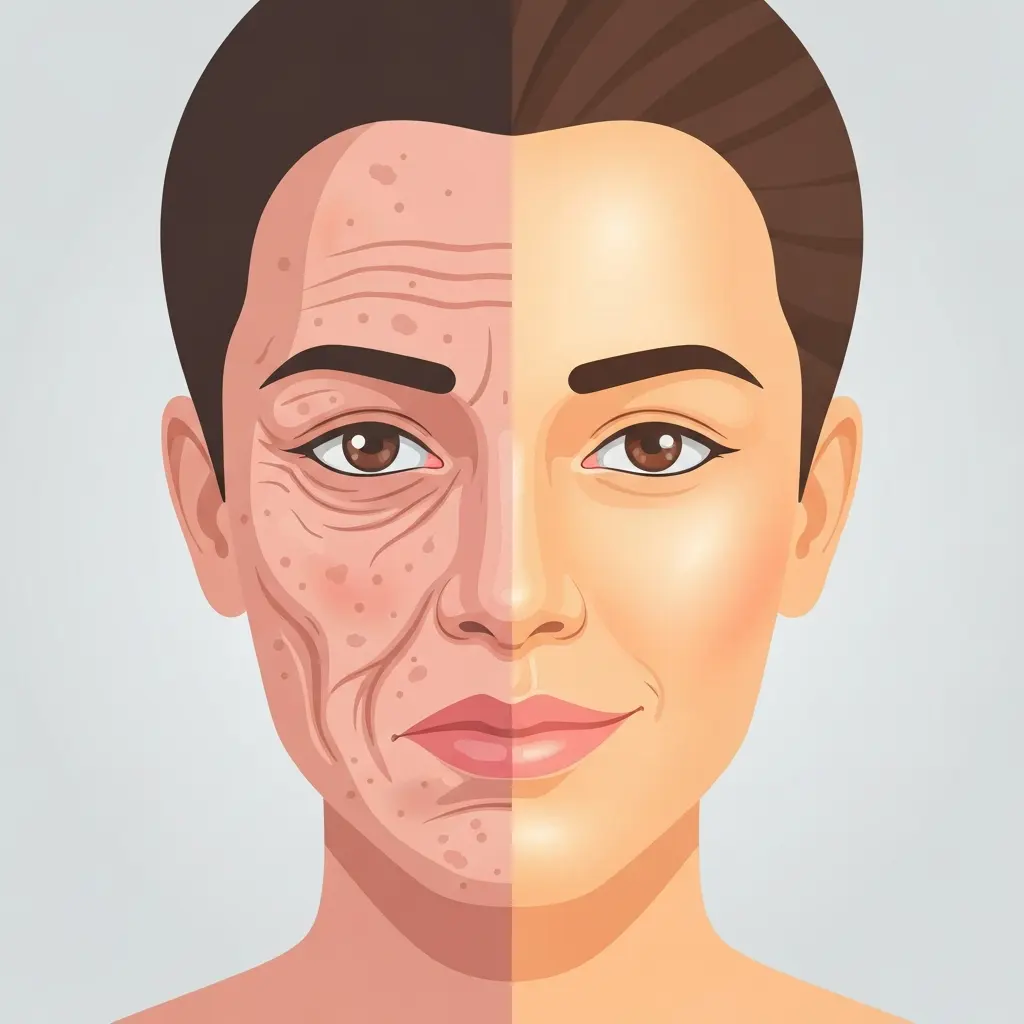
Smoking and skin aging are inseparable in the medical literature. Dermatologists coined the term “smoker’s face” in 1985 to describe a clinically distinguishable constellation of features: premature wrinkles, a grayish or ashen complexion, gaunt facial contours, and a characteristic wrinkling pattern around the lips and eyes. By 2026, the evidence base is even stronger — and so is the evidence that quitting reverses much of this damage faster than most people expect.
Every cigarette delivers over 4,000 chemicals into your bloodstream, many of which directly attack the skin’s structural integrity. Understanding the mechanisms helps make the benefits of quitting concrete and personal — because skin changes are often more immediately visible than internal health improvements, they serve as powerful motivational milestones in the first months after quitting.
How Smoking Damages Skin: 4 Core Mechanisms
1. Collagen Degradation
Collagen is the structural protein that gives skin its elasticity and firmness. Nicotine and tobacco smoke activate matrix metalloproteinases (MMPs) — enzymes that break down collagen and elastin. Smokers show collagen degradation rates 40% higher than non-smokers of the same age and sun-exposure history (British Journal of Dermatology, 2019). This is the primary driver of premature wrinkling.
2. Vasoconstriction and Reduced Skin Blood Flow
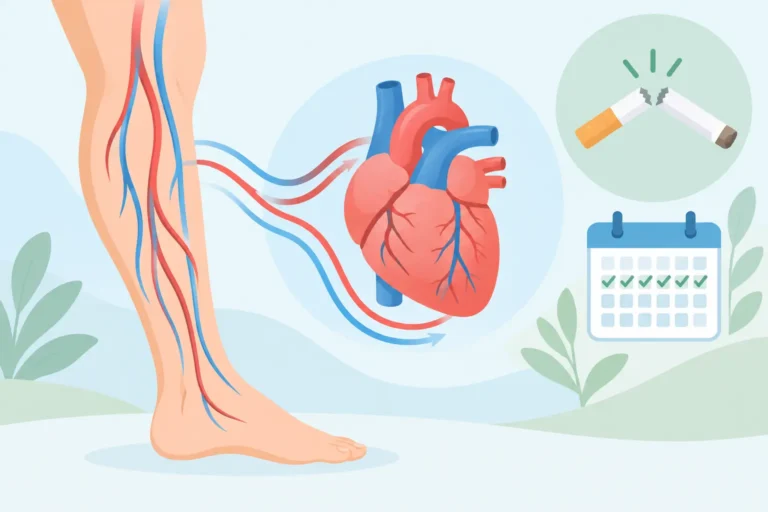
Nicotine is a potent vasoconstrictor. Every cigarette constricts the blood vessels supplying the skin, reducing oxygen and nutrient delivery to skin cells. In heavy smokers, skin oxygen levels can be 20–30% lower than in non-smokers. This drives the characteristic sallow, grayish tone associated with smoking, and impairs the skin’s ability to regenerate and repair itself.
3. Oxidative Stress
Tobacco smoke contains thousands of free radicals per puff — highly reactive molecules that damage skin cell DNA, degrade collagen, and accelerate the cellular aging process. Smokers have significantly lower levels of skin antioxidants (particularly vitamin C and vitamin E) than non-smokers, leaving skin structurally less able to defend against environmental damage.
4. Impaired Wound Healing
Smoking significantly impairs the inflammatory and proliferative phases of wound healing. Surgical studies consistently show that smokers have 2–3× higher rates of wound complications than non-smokers. Even minor skin injuries — cuts, abrasions — heal more slowly and scar more noticeably in active smokers.
Smoker’s Face: What the Evidence Shows
The “smoker’s face” concept has been validated in multiple blinded clinical studies. In a classic study published in JAMA Dermatology, dermatologists reviewing photographs of twin pairs where one smoked and one didn’t consistently and accurately identified the smoker — purely on facial appearance — at a success rate significantly above chance, across all age groups.
The characteristic features include:
- Perioral wrinkling — fine vertical lines around the lips from constant lip pursing on cigarettes
- Periorbital wrinkling — squinting in response to smoke causes characteristic crow’s feet patterns earlier and more severely than in non-smokers
- Facial gauntness — buccinator muscle hypertrophy from sucking combined with subcutaneous fat loss
- Uneven skin tone — patchy pigmentation and the characteristic grayish complexion
- Loss of skin lustre — reduced hydration and blood flow produce dull, flat skin appearance
Studies estimate that smoking is equivalent to adding 10–14 years of visible skin aging in pack-a-day smokers compared to non-smoking peers (Archives of Dermatology, 2012).
Skin Conditions Made Worse by Smoking
Smoking doesn’t just cause general aging — it exacerbates specific dermatological conditions:
- Psoriasis: Smokers have 2× the risk of developing psoriasis and show worse disease severity and poorer treatment response (NEJM data)
- Hidradenitis suppurativa (HS): Smoking is the single strongest modifiable risk factor — smokers have 9× higher risk (British Dermatology Journal)
- Lupus: Smoking worsens cutaneous lupus manifestations and reduces the effectiveness of antimalarial treatment
- Acne in adults: Smoking is associated with non-inflammatory acne (“smoker’s acne”) through sebum oxidation
- Wound healing post-surgery: Surgeons routinely ask patients to quit smoking 4–8 weeks before elective procedures to reduce complications
Skin Recovery Timeline After Quitting
The skin’s recovery after quitting smoking follows a predictable timeline, though individual speed varies based on age, duration of smoking, sun exposure history, and baseline skin health.
| Timeframe After Quitting | Skin Changes |
|---|---|
| 1–3 days | Improved skin oxygen delivery as carbon monoxide clears |
| 2–4 weeks | Circulation improves; early reduction in skin dullness; wound healing begins normalising |
| 1–3 months | Collagen production recovers significantly; skin tone begins brightening |
| 6–9 months | Measurable appearance improvements in blinded dermatology assessments (Journal of Dermatology, 2022) |
| 1–2 years | Substantial recovery in skin elasticity; psoriasis severity often reduces; HS improves |
| 5+ years | Skin aging trajectory normalises significantly toward non-smoker baseline |
It is important to note that some structural damage — established deep wrinkles, for instance — will not reverse completely without cosmetic intervention. However, the appearance of skin tone, luminosity, and fine surface texture consistently improve with prolonged abstinence. For the full body-wide recovery timeline, see our 50+ data point health recovery guide.
Maximising Skin Recovery After You Quit
Quitting is the single biggest thing you can do for your skin. But you can support the recovery process:
- SPF 30+ daily: UV damage and tobacco damage act synergistically on collagen. Protecting skin from further UV damage while it recovers accelerates net improvement.
- Vitamin C topical serum: Collagen synthesis requires vitamin C. Topical vitamin C (10–20%) increases collagen production and protects against free radical damage — particularly beneficial during recovery.
- Retinoids (retinol or prescription tretinoin): The best evidence base for reversing collagen loss and fine wrinkles. Start after 3–4 weeks smoke-free when skin blood flow has improved.
- Hydration: Smoking severely dehydrates skin. Consistent hydration (2L water/day) combined with a good moisturiser accelerates the restoration of skin barrier function.
- Nutrition: Protein (collagen precursors), zinc (wound healing), and antioxidants (countering residual oxidative stress) all support skin recovery.
Hair follicles benefit from the same improved blood flow and reduced oxidative stress that helps skin — if smoking-related hair thinning has been on your mind alongside your skin, our dedicated look at whether quitting helps smoking-related hair loss covers what the evidence actually shows there.
Many people discover that the motivation to see and feel tangible physical changes — like skin improvement — becomes one of their strongest reasons to stay smoke-free. Building awareness of these changes is part of why cessation apps like iQuit include appearance-based milestone tracking. Habit formation theory, well-documented in academic productivity research and behaviour change science alike, consistently shows that visible, concrete feedback loops are among the most powerful reinforcers of new behaviour.
For the complete picture of mental and emotional changes after quitting, see our guide on how quitting smoking improves mental health and anxiety. And for the broader context of why quitting is so hard neurologically, marketing automation research into health behaviour campaigns offers interesting insights into how multi-touchpoint engagement (apps, push notifications, social proof) mirrors effective cessation support architecture.
Frequently Asked Questions
How long does it take for skin to improve after quitting smoking?
Early improvements in skin blood flow and oxygen delivery begin within days. Visible skin tone brightening typically becomes noticeable at 4–8 weeks. Measurable improvements in skin elasticity and appearance, assessed by blinded dermatologists, are documented at 6–9 months post-quit (Journal of Dermatology, 2022). Significant wrinkle softening may take 1–2 years of continued abstinence.
Can quitting smoking reverse skin damage?
Quitting can reverse much of the functional damage — improved circulation, collagen production recovery, and reduced oxidative stress all contribute to measurably better skin. Established structural changes like deep wrinkles will not fully reverse without cosmetic procedures. However, the rate of further aging slows dramatically, and surface texture, tone, and luminosity improve substantially for most former smokers.
Why do smokers age faster?
Smoking accelerates skin aging through four main mechanisms: collagen degradation (40% higher rate in smokers), vasoconstriction reducing skin blood flow by 20–30%, oxidative stress from free radicals in tobacco smoke, and impaired wound healing. The combined effect is estimated to add 10–14 years of visible aging in pack-a-day smokers compared to non-smoking peers of the same age and sun-exposure history.
What is “smoker’s face”?
Smoker’s face is a clinically recognised set of facial changes caused by smoking: premature perioral and periorbital wrinkles, a grayish or ashen complexion, facial gauntness, and uneven skin tone. These features are reliably identifiable by dermatologists in blinded assessments. They result from chronic vasoconstriction, collagen degradation, oxidative stress, and the mechanical action of smoking (pursed lips, squinting eyes).
Start Your Skin’s Recovery Today
The iQuit app tracks your health milestones — including appearance-related changes — and helps you visualise the physical transformation that quitting sets in motion. Every day smoke-free is a day your skin gets more of the blood flow, oxygen, and collagen production it needs.
Download iQuit free and watch your skin recovery begin.