Smoking Cessation App: Features That Make a Real Difference in 2026
The app store is full of smoking cessation app options — but the difference between one that actually helps you quit and one that you delete after a week is not about design or branding. It is about the specific features backed by clinical evidence to support lasting behavior change. In 2026, the research on what works in digital cessation tools is more comprehensive than ever, and the results are clear: the right app can triple your success rate.
This guide breaks down the features that matter, explains why they work, and helps you evaluate any smoking cessation app against evidence-based standards.
What the Research Says About App Effectiveness
A systematic review and meta-analysis published in the Journal of Medical Internet Research found that smartphone app-based interventions produce significantly better quit rates than control conditions. A separate study cited by New Atlas found that for every 1,000 people trying to quit, using a smoking cessation app resulted in approximately 40 more successful quitters than receiving basic advice alone.
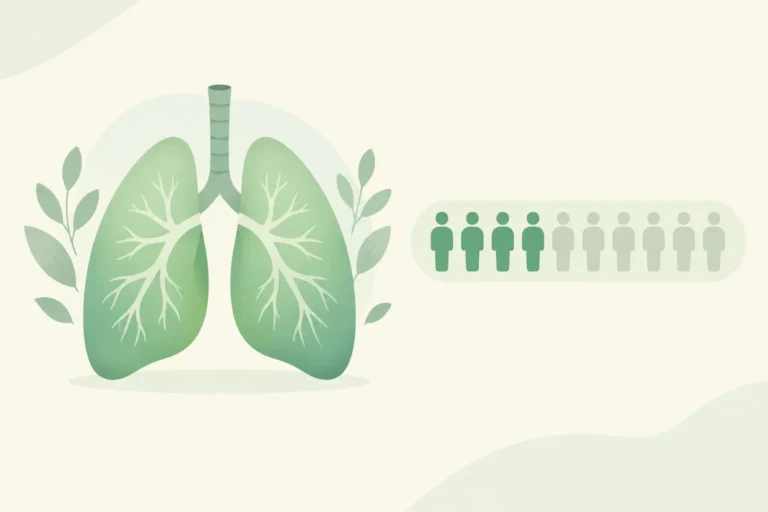
Three times more likely to quit for six months. Forty additional success stories per thousand attempts. These are not marginal benefits — they represent a fundamental improvement in cessation outcomes.
However, the research also reveals that not all apps perform equally. Apps built on evidence-based behavioral frameworks dramatically outperform those that simply track days smoke-free. The features list matters enormously.
The 8 Features That Actually Work
Based on published systematic reviews of smoking cessation app research, these are the features with documented evidence of improving quit outcomes:
| Feature | Why It Works | Evidence Level |
|---|---|---|
| Structured quit plan | Sets clear intentions; reduces ambiguity at critical moments | Strong |
| Craving management tools | Provides immediate alternative to reaching for cigarettes | Strong |
| Health milestone tracking | Makes abstract benefits concrete; activates reward circuitry | Strong |
| Financial savings calculator | Tangible, real-time reward that compounds daily | Moderate-Strong |
| CBT-based coping skills | Teaches thought patterns that reduce craving response | Strong |
| Mindfulness/urge surfing | Non-reactivity to cravings; proven in multiple RCTs | Strong |
| Trigger identification | Enables proactive rather than reactive craving management | Moderate |
| Social support/community | Accountability and emotional connection improve persistence | Moderate |
Why CBT and Mindfulness Matter
The most impactful smoking cessation app feature is the behavioral framework underneath it. Cognitive Behavioral Therapy (CBT) and Acceptance and Commitment Therapy (ACT) — which includes mindfulness and urge surfing — are the two frameworks with the strongest evidence base for smoking cessation.
How CBT Works in a Cessation App
CBT for smoking cessation helps you identify the thoughts and situations that trigger smoking, examine the automatic beliefs around smoking (e.g., “I need a cigarette to handle stress”), and replace them with more accurate ones (“I am feeling withdrawal anxiety, which will pass in a few minutes”).
A well-designed smoking cessation app delivers CBT content in micro-doses — a guided exercise when you log a craving, a thought-challenge prompt after a difficult moment, a cognitive reframe when you are near a trigger location. This just-in-time delivery, matching intervention to moment of need, is far more effective than reading a workbook.
Mindfulness and Urge Surfing
Research from UC San Diego and published in peer-reviewed journals shows that urge surfing — observing a craving like a wave, rising and falling without acting on it — produces significant reductions in cigarette consumption. Studies found that participants using urge surfing cut their smoking by 37% within one week. An app that guides you through urge surfing in real time, at the moment a craving hits, delivers this benefit when it is most needed.
Progress Tracking: Seeing Is Believing
One of the most powerful features of an effective smoking cessation app is real-time progress tracking. The psychology behind it is rooted in the concept of “operant conditioning” — behavior is reinforced by visible rewards.
The most motivating tracking features show:
- Smoke-free time: Hours, days, months — each unit feels like a badge earned
- Cigarettes not smoked: A concrete count that grows reassuringly large
- Money saved: A real-time financial reward that compounds daily and monthly
- Health milestones: “Your heart rate normalized 20 minutes ago” — connecting actions to biological outcomes
- Life regained: An estimate of years or days added to your life expectancy
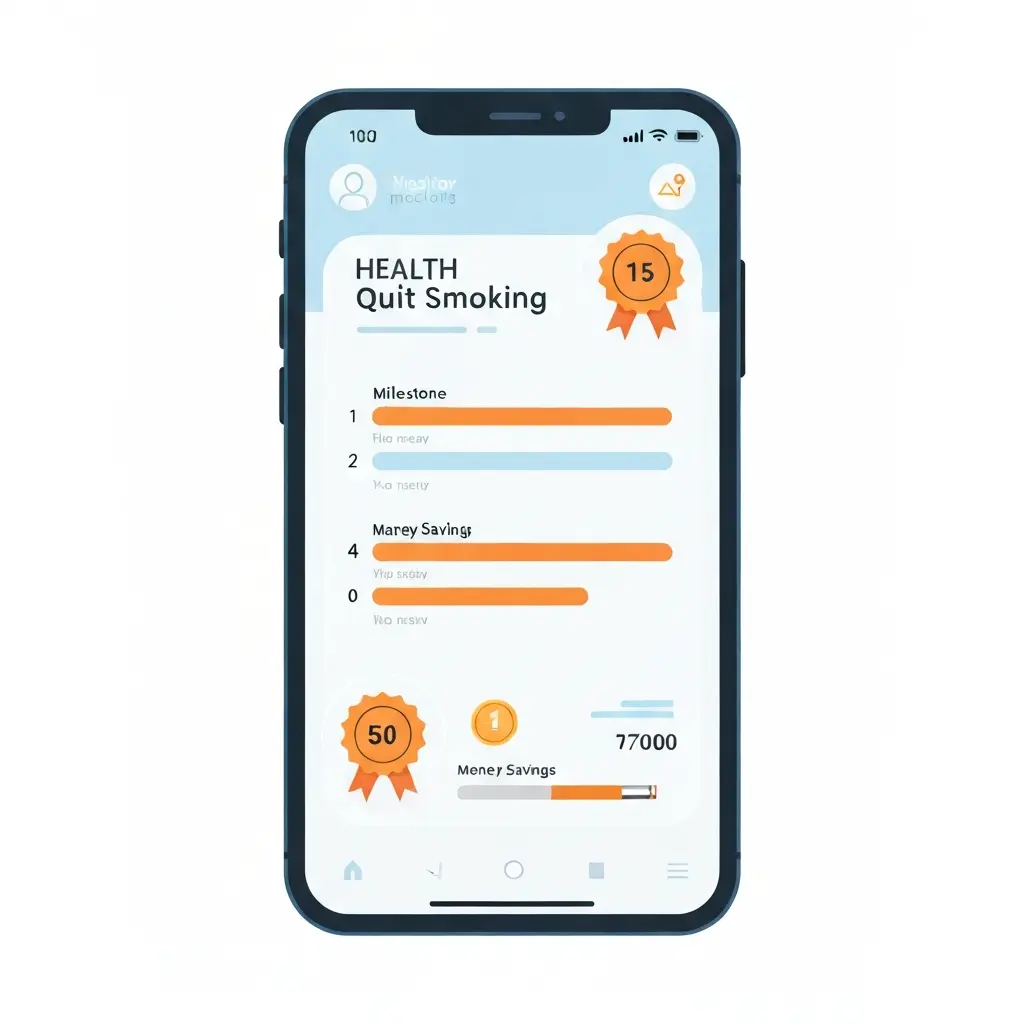
The iQuit app displays all of these metrics on a recovery dashboard, making the abstract benefits of quitting tangible and immediate. Many users report that seeing the money saved counter grow is one of the most effective motivators — particularly when a craving hits and you can see exactly what giving in would cost. For more on the financial dimension, see our guide on How Much Money Do You Save When You Quit Smoking.
Craving Management Tools
A craving lasts 3 to 5 minutes. An effective smoking cessation app turns those minutes into a managed experience rather than a white-knuckle test of willpower. The most effective craving tools include:
Craving Timer
A visible countdown showing that the craving is temporary. Knowing “this will pass in 4 more minutes” transforms a craving from an overwhelming urge into a timed challenge. Many users report this single feature dramatically reduces their response to cravings.
Distraction Activities
Immediate suggestions for what to do during those 3 to 5 minutes — a specific breathing exercise, a mindfulness exercise, a quick physical activity, a text to a friend. The key is specificity: generic “keep busy” advice does not work; concrete activities with timers do.
Breathing Exercises
Guided diaphragmatic breathing activates the parasympathetic nervous system, directly reducing the anxiety component of a craving. The 4-7-8 breath (inhale 4 counts, hold 7, exhale 8) is one of the most effective acute anxiety and craving interventions, accessible to anyone, anywhere.
Trigger Logging
Logging what triggered each craving — location, emotion, activity, time of day — builds a pattern map that enables proactive management. After two weeks of logging, most users can identify their top three triggers and prepare alternative responses in advance.
Social and Community Features
Quit rates improve when social support is involved. An effective smoking cessation app leverages this through:
- Achievement sharing: Allowing users to share milestones with friends or family directly from the app
- Community forums: Connecting with others at the same stage of the quit journey
- Buddy features: Paired accountability with someone who checks in on your progress
- Coach access: Some premium apps provide access to human cessation coaches via chat
Social features work because they activate a different motivational system — social obligation and belonging — that supports commitment on days when personal motivation is low.
How to Evaluate Any Cessation App
Before downloading any smoking cessation app, ask these questions:
- Does it have a structured quit plan, or just a day counter?
- Does it include craving management tools that activate in real time?
- Is it built on CBT, ACT, or mindfulness — or is it just motivational content?
- Does it track health milestones, not just days smoke-free?
- Does it include financial savings tracking?
- Is there a community or social support component?
- Can you log triggers and cravings to build self-knowledge over time?
The iQuit app is built around all of these evidence-based features — a real-time health dashboard, craving management tools, mindfulness exercises, financial tracking, and milestone alerts — giving you the full toolkit that research identifies as most effective. For a side-by-side perspective on tracking features, see our article on Quit Smoking Tracker App: How Progress Monitoring Helps You Quit.
Get Every Evidence-Based Feature in One App
iQuit combines craving tools, health milestones, financial tracking, and mindfulness support — everything research identifies as most effective — in a single, free smoking cessation app.
Frequently Asked Questions
Do smoking cessation apps really work?
Yes, when they include the right features. Research shows that people using a smoking cessation app with evidence-based features are approximately three times more likely to quit for at least six months compared to those who receive minimal or no support. Apps that simply track days smoke-free are less effective; apps that incorporate CBT, mindfulness, craving management, and progress tracking produce significantly better outcomes.
Is a smoking cessation app better than nicotine patches?
A smoking cessation app and nicotine patches address different dimensions of addiction. Patches manage the physical nicotine withdrawal; apps address the behavioral and psychological components. Research consistently shows that combining pharmacotherapy (NRT or varenicline) with behavioral support tools produces higher quit rates than either alone. The optimal approach is to use both — an app for behavioral support alongside NRT or medication for physiological support.
What is the single most important feature in a quit smoking app?
Research identifies craving management tools as the highest-impact single feature, because they deliver support at the exact moment a smoker is most vulnerable — during an active craving. A craving timer showing the urge will pass in minutes, combined with a guided breathing or mindfulness exercise, is the most direct behavioral intervention. Everything else — progress tracking, community, planning — supports the quit journey over time, but craving tools win the critical moments.
Are free smoking cessation apps as good as paid ones?
Price is not a reliable indicator of effectiveness. Several free apps include evidence-based features equal to or better than paid competitors. The determinant of effectiveness is the feature set and behavioral framework — not the price. Many effective cessation apps are free because they are funded by public health initiatives or operated as a service. Evaluate any app against the evidence-based feature checklist in this article, regardless of cost.
How long should I use a smoking cessation app?
The critical period for app support is the first three months, when cravings are most frequent and relapse risk is highest. Most research studies follow participants for three to six months. However, many successful quitters continue using their app for a year or more — the financial tracking, health milestones, and community features provide ongoing motivation. There is no reason to stop using a cessation app that is working for you.