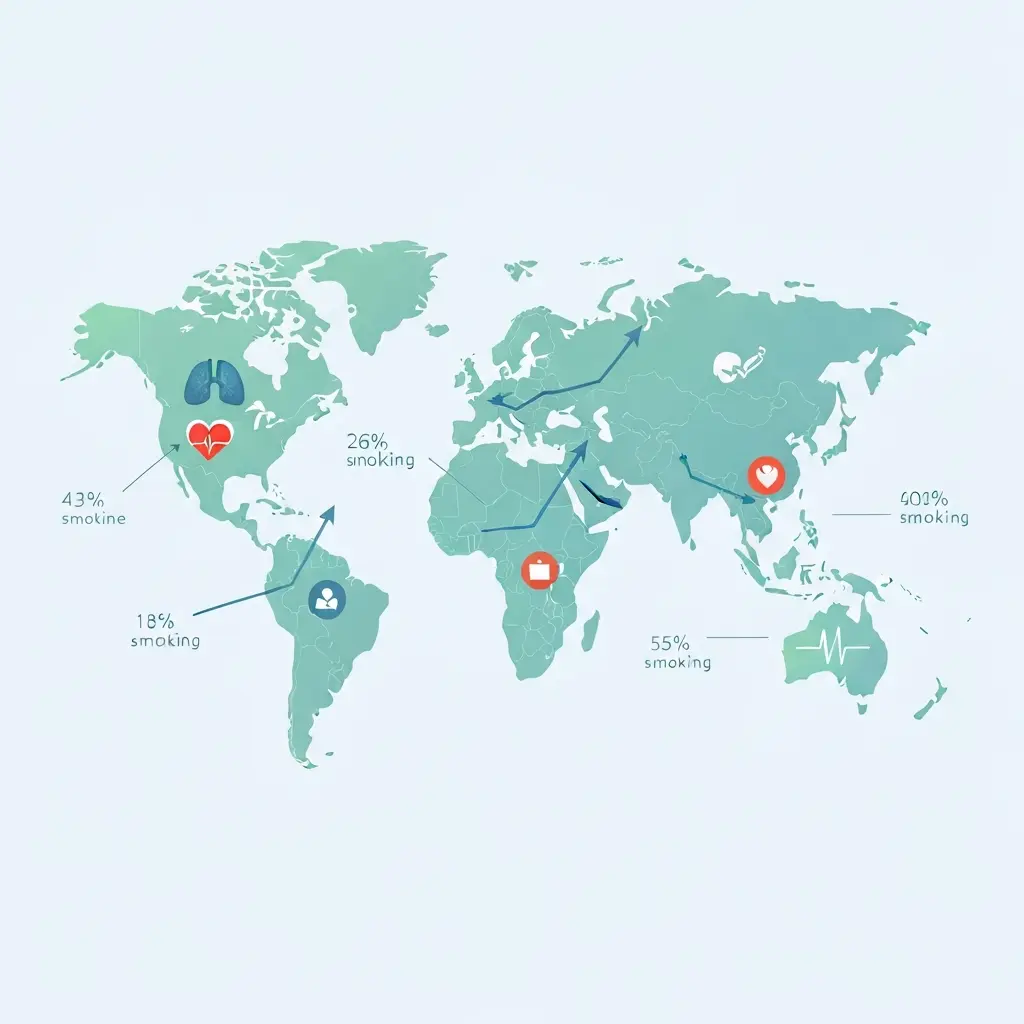
Smoking Cessation Statistics 2026: Key Data on Quitting Worldwide
Understanding smoking cessation statistics for 2026 provides both the sobering context of how hard quitting is and the hopeful evidence that it is getting more accessible. From WHO global data to CDC national surveillance to the latest clinical trial outcomes, this article compiles the most important numbers that define the current state of smoking cessation — who is quitting, who isn’t, and what the data shows about what works.
Smoking remains the single largest preventable cause of death worldwide, responsible for approximately 8.7 million deaths annually (WHO, 2024). Yet the global trend is unmistakably toward lower smoking prevalence — driven by regulation, public health campaigns, and improved cessation tools. The 2026 landscape shows both encouraging progress and significant remaining challenges, particularly in treatment access and success rates.
Global Smoking Statistics 2026
| Metric | Data Point | Source |
|---|---|---|
| Global tobacco deaths per year | ~8.7 million | WHO 2024 |
| Global adult smoking prevalence | ~17% (2025) | WHO estimates |
| Global smokers (current) | ~1.3 billion | WHO 2024 |
| Global ex-smokers (ever smoked, now quit) | ~1.0 billion | WHO estimates |
| Countries with comprehensive cessation services | 43 (21% of countries) | WHO MPOWER |
| Annual economic cost of tobacco use | $1.4 trillion USD | WHO 2023 |
The global trend is positive but slow. WHO data shows global smoking prevalence declining from 22.7% in 2007 to approximately 17% by 2025 — a meaningful reduction, but short of the WHO’s 30% reduction target by 2025. The reduction has been fastest in high-income countries with comprehensive tobacco control policies; in some low-income regions, prevalence has increased.
United States Statistics (CDC, 2022–2025)
- Current smokers: 28.8 million adults (11.5% of US adults) in 2022, down from 42.4% in 1965
- Quit attempts (2022): Approximately 14 million adults tried to quit smoking; fewer than 10% achieved 12-month abstinence
- Treatment use: Fewer than 40% of adults who tried to quit used evidence-based treatment (counseling or medication)
- Clinician advice: Only 50% received advice or assistance to quit from a healthcare provider
- Youth smoking: 1.5 million youth (middle and high school students) reported current cigarette smoking in 2023 — a historical low, though nicotine product use broadly remains elevated due to vaping
- Smoking-related deaths: Approximately 480,000 per year in the US, making tobacco the leading preventable cause of death
- Healthcare cost attributable to smoking: $240 billion annually (CDC estimate)
United Kingdom Statistics
- Current smokers: 12.7% of UK adults (6.4 million people) in 2023, down from approximately 20% in 2012
- NHS Stop Smoking Services: 4-week quit rates ~50% for service users; substantially higher than population average
- NHS referrals: Approximately 400,000 people referred to Stop Smoking Services annually
- Smoking-related NHS costs: £2.5 billion per year
- Smoking-related deaths: Approximately 76,000 per year in England
- Generational quit rates: 65.5% of adults who have ever smoked in the UK have now quit — suggesting quitting is possible and common at population scale
Quit Attempt Statistics
Data on quit attempt patterns reveals important insights:
- Average attempts before success: 8–10 serious quit attempts (Truth Initiative, 2024)
- Most common method: Cold turkey (~65–75% of attempts globally) — the least effective method
- Relapse timing: Approximately 80% of relapses occur within the first month; 50% within the first week
- Long-term success trajectory: Those who achieve 3-month abstinence have approximately 70% chance of achieving 12-month abstinence
- Motivation patterns: Health concerns are the most cited reason for quitting (cited by ~90% of quitters); financial reasons cited by ~50%
The pattern of multiple attempts before success is not a sign of weakness — it reflects the genuine difficulty of overcoming a neurochemical dependency in the context of everyday life. Making this data visible, as tools like iQuit do with individual progress tracking, is one of the most valuable contributions of technology to cessation support. Similarly, platforms like Tesify show how making progress visible in any complex goal-oriented process — from academic writing to health behavior change — improves sustained effort.
Treatment Access Data: The Gap
One of the most striking findings in cessation research is the treatment access gap:
- Only 23% of WHO member states offer comprehensive cessation services (behavioral support + medication coverage)
- In the US, only 38% of quit attempters used any evidence-based treatment in their most recent attempt (CDC, 2022)
- Cost is cited as a primary barrier in the US — NRT costs $30–80 for a full course without insurance coverage
- In lower-income countries, access to cessation medication is severely limited — varenicline is unavailable or unaffordable in many WHO member states
- Race/ethnicity disparities in cessation treatment access exist in the US — Black and Hispanic smokers report less access to cessation support despite equivalent quit motivation
Free resources like quitlines (1-800-QUIT-NOW in the US), NHS services in the UK, and free app tiers are specifically designed to address this access gap. Data-driven advocacy for better treatment coverage is increasingly informed by platforms like AI analytics tools that help health organizations understand where resource allocation gaps are largest.
Demographic Trends in Smoking Cessation
| Demographic | US Smoking Rate (2022) | Notable Trend |
|---|---|---|
| Male adults | 13.1% | Historically higher; gap narrowing |
| Female adults | 9.8% | Lower rates; faster metabolize nicotine |
| Ages 25–44 | 14.6% | Highest age group prevalence |
| Ages 65+ | 7.0% | Lower; but health stakes highest |
| American Indian/Alaska Native | 22.6% | Highest group rate; significant disparity |
| Asian American | 4.7% | Lowest group rate |
| No diploma / GED | 23.3% | Significant educational gradient |
Economic Cost Statistics
- Global annual economic cost of tobacco: $1.4 trillion (WHO, 2023)
- US healthcare costs attributable to smoking: $240 billion annually
- US productivity losses from smoking-related illness and death: $186 billion annually
- Average US smoker cost: A pack-a-day habit costs approximately $7,000–$10,000 per year in the US (varies significantly by state)
- Per-capita ROI of cessation treatment: NHS analysis finds every £1 spent on cessation services returns £2.37 in reduced healthcare costs — making it among the most cost-effective medical interventions
- Individual financial benefit of quitting: A 20-cigarette-per-day smoker in the UK saves approximately £4,000–£5,000 per year; in the US approximately $5,000–$8,000
Frequently Asked Questions
What percentage of smokers successfully quit?
In any given year, approximately 50% of current smokers attempt to quit, and of those, about 5–7% achieve 12-month abstinence unassisted. With evidence-based treatment, this rises to 20–35%. Long-term, the majority of people who ever smoked eventually quit — in the UK, 65.5% of ever-smokers are now ex-smokers, showing that quitting is achievable even if it typically takes multiple attempts.
How many people quit smoking each year in the US?
CDC estimates approximately 14 million US adults make a serious quit attempt annually. Of these, fewer than 10% — approximately 1.0–1.4 million — achieve 12-month continuous abstinence. This represents meaningful absolute progress: US adult smoking prevalence has fallen from 42.4% in 1965 to 11.5% in 2022, reflecting decades of cumulative cessation success.
Is smoking declining globally?
Yes, in terms of prevalence rates. Global adult smoking prevalence has declined from 22.7% in 2007 to approximately 17% by 2025. However, because of population growth, the absolute number of smokers has remained around 1.3 billion. Progress has been uneven — fastest in high-income countries with strong tobacco control policies; slower or reversed in some low-income regions where tobacco industry marketing is less regulated.
What is the smoking rate in 2026?
Based on trends: global adult smoking prevalence is approximately 16–17% in 2026, down from 22.7% in 2007. US adult smoking prevalence is approximately 10–11%, continuing the long-term decline from 42.4% in 1965. UK prevalence is approximately 12–13%. Exact 2026 figures will be available in WHO and CDC annual reports later this year.
How many people die from smoking each year?
Approximately 8.7 million people die from tobacco-related diseases annually worldwide (WHO, 2024). In the US, this figure is approximately 480,000 per year. In the UK, approximately 76,000 per year. This makes tobacco use the single largest preventable cause of death globally, ahead of alcohol, unsafe sex, and illegal drugs combined.
What proportion of smokers want to quit?
Consistently, approximately 60–70% of current smokers in high-income countries report wanting to quit. CDC 2022 data found that the majority of the 28.8 million US adult smokers wanted to quit. Globally, the WHO estimates 780 million of the 1.3 billion current smokers want to quit. The gap between wanting to quit and succeeding reflects access barriers, not lack of motivation.
Has smoking increased or decreased since 2020?
Decreased overall. While some early data suggested a brief uptick in tobacco use during the COVID-19 pandemic (driven by stress), longer-term trend data shows continued decline in smoking prevalence in most high-income countries from 2020 to 2026. Nicotine product use broadly (including vaping) has been more complex — cigarette smoking has continued its decline while vaping has grown, particularly among younger demographics.
How much would I save annually if I quit smoking?
A pack-a-day habit costs approximately $7,000–$10,000 per year in the US (varies significantly by state) and approximately £4,000–£5,000 per year in the UK. At 10 cigarettes/day, halve these figures. Over a decade, a pack-a-day habit costs $70,000–$100,000 in direct cigarette spending alone — not including healthcare and productivity costs. The iQuit app’s money counter shows your personal savings accruing in real time from your quit date.
Become One of the Success Statistics
The data shows that quitting is hard, but achievable — especially with the right support. The iQuit app gives you the behavioral support that the statistics show makes the critical difference. Download free today and add yourself to the growing numbers of successful ex-smokers.