Smoking Craving Relief: 20 Instant Techniques That Actually Work
When a smoking craving hits, you need smoking craving relief now — not a lengthy explanation of why you are craving, not a motivational pep talk, but something you can do in the next sixty seconds that will help you get through the next five minutes without smoking. This article gives you exactly that: 20 concrete, evidence-based techniques drawn from smoking cessation research, organized so you can quickly find and use what works for your situation right now.
Here is what makes this list different from generic quit advice: every technique here is grounded in the actual mechanism of nicotine cravings — their neurological basis, their typical duration (three to five minutes), and the specific physiological and psychological triggers that make them feel irresistible. Understanding the mechanism even briefly makes the techniques more effective, because you know exactly what you are working with.
Breathing Techniques (Fastest Acting)
Breathing techniques are the fastest-acting craving relief tools because they directly engage the parasympathetic nervous system — reducing the physiological arousal (elevated heart rate, tension, stress hormones) that intensifies cravings. They are also available anywhere, any time, with no equipment.
Technique 1: Box Breathing (4-4-4-4)
Breathe in for 4 counts, hold for 4, breathe out for 4, hold for 4. Repeat four to six times. This is the technique used by Navy SEALs for acute stress management. It works rapidly to calm the nervous system and reduces the intensity of the stress-craving connection within 90 seconds for most people.
Technique 2: 4-7-8 Breathing
Breathe in for 4 counts, hold for 7, breathe out for 8. The extended exhale activates the vagus nerve and produces a rapid calming effect. Particularly effective for anxiety-driven cravings. Do three to four cycles.
Technique 3: The Simulated Cigarette Breath
Take a long, slow inhale through pursed lips (mimicking the physical motion of drawing on a cigarette), hold briefly, and release slowly. This addresses the physical habit component of the craving — the deep inhale-exhale that smokers associate with relief — without any nicotine. Deceptively effective for habit-driven cravings.
Technique 4: Diaphragmatic Breathing
Place one hand on your chest and one on your stomach. Breathe in deeply enough that only the stomach hand rises. This activates deep belly breathing, which is the physiological opposite of the shallow, stressed breathing that accompanies and amplifies cravings. Five diaphragmatic breaths provide measurable stress reduction.
Physical Techniques
Physical techniques work by providing the body with competing stimuli and by triggering natural dopamine and endorphin release — the same neurotransmitters that nicotine artificially stimulates. Brief, intense physical activity is one of the most reliably effective craving relief strategies.
Technique 5: A Brisk 5-Minute Walk
Walking for just five minutes significantly reduces craving intensity according to multiple cessation studies. The combination of physical movement, change of environment, and mild aerobic activity provides multiple simultaneous craving-disrupting effects. If you can go outside, the change of sensory environment adds further relief.
Technique 6: Ten Push-Ups or Squats
Brief, intense physical activity triggers endorphin and dopamine release within minutes. Ten push-ups or squats provide enough intensity to create a measurable neurochemical response, can be done anywhere, and take less than sixty seconds. The physical exertion also burns off the restless energy that accompanies many cravings.
Technique 7: Cold Water on Wrists and Face
Splashing cold water on your wrists or face triggers the mammalian dive reflex — an automatic physiological response that slows heart rate and reduces the stress arousal component of cravings. This technique provides genuinely immediate physiological relief and is available in any bathroom or kitchen in under thirty seconds.
Technique 8: Hand Gripping Exercise
Squeeze your hands into fists tightly for ten seconds, then release completely. Repeat five times. This progressive muscle tension-release technique addresses the physical restlessness of cravings and provides a competing sensory focus. The release of tension after the grip is a mini-version of progressive muscle relaxation.
Technique 9: Dancing to One Song
Put on a song you love and dance. The combination of music, physical movement, and mild joy activation provides multiple craving-disrupting effects simultaneously, and the approximately three to four minute duration of a typical song roughly matches the peak-to-decline arc of a craving. By the end of the song, the craving has passed.
Oral Substitution Techniques
A significant component of cigarette cravings is the oral and hand habit — the physical act of having something in your mouth and hands. Oral substitution techniques directly address this physical dimension.
Technique 10: Sugar-Free Gum
Chewing provides the rhythmic jaw motion and oral stimulation associated with smoking. Sugar-free gum with a strong flavour (peppermint, cinnamon, or spearmint) adds a taste component that disrupts the craving association. Keep a pack accessible during all waking hours for the first month of quitting.
Technique 11: Crunchy Vegetables or Fruit
Carrot sticks, celery, apple slices, or similar crunchy, healthy foods provide oral stimulation plus nutritional benefit plus the hand-to-mouth physical habit replacement. Some research also suggests that certain fruits and vegetables may make cigarettes taste worse — a mild additional deterrent if you do encounter one.
Technique 12: Herbal Tea or Cold Water
Drinking something slowly occupies the mouth and hands, provides a sensory experience that competes with the craving sensation, and gives the three to five minutes of active engagement needed to outlast the peak craving window. Cold water adds the competing temperature sensation that further disrupts the craving signal.
Technique 13: Cinnamon Stick or Toothpick
Holding and chewing on a cinnamon stick or plain toothpick addresses the hand-holding habit of cigarette holding without any chemical component. Simple, discrete, available at any supermarket. Particularly useful in situations (meetings, social events) where other techniques are impractical.
Mindfulness Techniques
Mindfulness techniques provide craving relief by changing your relationship to the craving rather than suppressing or fighting it — offering a different quality of relief that is particularly durable for repeat or intense cravings.
Technique 14: Craving Surfing
Observe the craving as a wave — notice its physical location in your body, watch its intensity rise and fall, ride it without acting. The craving surfing technique is one of the most research-backed mindfulness approaches for smoking cessation, with studies showing it reduces cigarette consumption over subsequent days even when it does not reduce craving intensity in the moment.
Technique 15: 5-4-3-2-1 Grounding
Name 5 things you can see, 4 you can touch, 3 you can hear, 2 you can smell, 1 you can taste. This grounding exercise rapidly pulls your attention out of the internal craving experience and into concrete sensory reality — interrupting the psychological loop of craving thought and creating a brief but effective circuit break.
Technique 16: The “Not Now” Reframe
Instead of “I will never smoke again” (which the addicted brain immediately argues with), practice: “Not now. I am just not smoking in the next five minutes.” This technique reduces the psychological enormity of the quit to a single, manageable window. The brain can accept “not now” when it cannot accept “never.” Five minutes at a time is how long-term quit success is built.
Distraction Techniques
Distraction works for cravings because attention is limited — if it is fully occupied by something engaging, there is less cognitive resource available to amplify the craving signal. The most effective distraction techniques are absorbing and require active cognitive engagement rather than passive consumption.
Technique 17: Call or Text Someone
Calling your quit buddy, a friend, or a family member — especially to tell them you are having a craving — provides craving relief through multiple mechanisms simultaneously: distraction, social connection, accountability, and the verbalization of your quit commitment. If in-person calling is not practical, texting your craving moment to your quit buddy or to an online quit community provides similar benefit.
Technique 18: A Specific Puzzle or Brain Game
Pre-download a puzzle game, crossword app, or brain training app on your phone specifically for craving moments. Having a designated craving activity means you do not have to make decisions when the craving is competing for your attention — you just open the app. Three to five minutes of an absorbing puzzle outlasts most craving peaks.
Technique 19: Read Your Motivation List
Keep a written list of your five most powerful reasons for quitting — specific, emotionally vivid, tied to real people and experiences you care about. Reading this list during a craving reactivates your intrinsic motivation at exactly the moment it is most needed. This technique works best when the list was written before the quit, when motivation was clearer, and when the reasons are genuinely specific (“I want to be alive when my son graduates” rather than “my health”).
Connection Techniques
Technique 20: Log Your Craving and Badge Your Progress
Open the iQuit app, log the craving, and immediately look at your smoke-free streak and money saved. The act of logging externalizes the craving from an internal emergency to a data point you are managing. Seeing your smoke-free counter — even if it reads 18 hours — reminds your brain of the concrete progress that would be partially reversed by the cigarette you are considering. Progress visualization is a genuinely effective motivational tool, and making it part of your craving ritual turns a moment of temptation into a moment of reinforcement.
Building Your Personal Craving Relief Kit
A craving relief kit is a physical and digital collection of your chosen go-to tools, assembled before your quit date so they are available immediately when needed:
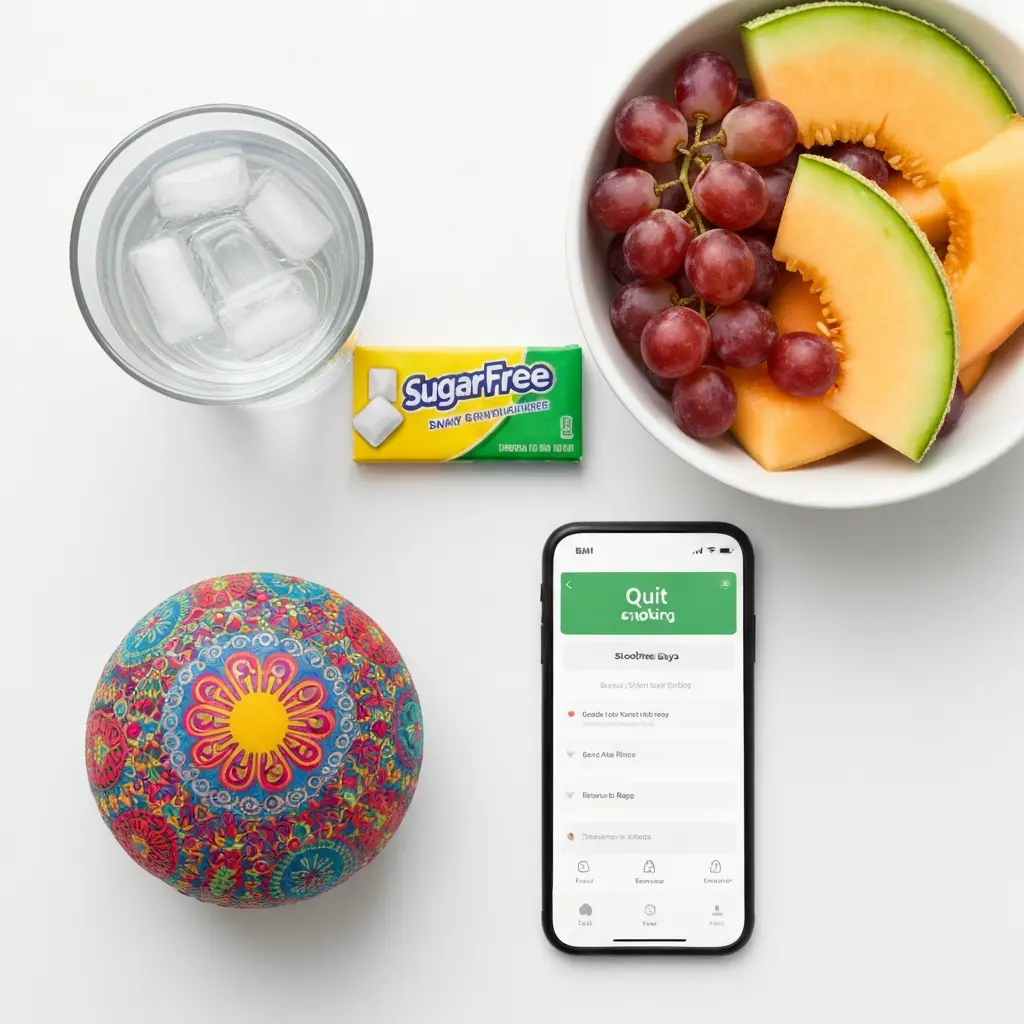
- Physical kit: Sugar-free gum, cinnamon sticks, a stress ball, a bottle of cold water, healthy snacks
- Digital kit: iQuit app (craving log, motivation tools, community), puzzle game app, a playlist for dancing or walking
- Written kit: Your motivation list, your if-then trigger plans, your quit buddy’s phone number
Keep your physical kit accessible at home, in your bag, and at your desk. Keep your digital kit on your phone home screen. The one second of friction between a craving and your tool matters — remove all barriers to accessing your craving relief resources.
For a full strategy around understanding and managing the triggers that cause your most powerful cravings, read our guide on identifying and avoiding smoking triggers. And for the deeper motivational architecture that keeps you going between the battles, our complete quit smoking motivation guide gives you everything you need.
Frequently Asked Questions
How long do smoking cravings last?
Individual cravings typically last three to five minutes from onset to natural decline. Peak craving intensity during the first days of quitting can make this window feel much longer, but it is consistently brief in objective time. The total frequency and intensity of cravings is highest during the first week, peaking at days 1–3, and declines significantly over the first month of sustained abstinence.
What is the single most effective thing to do when a smoking craving hits?
Research does not definitively identify one technique as universally most effective — different people respond best to different approaches. However, the combination most consistently cited in cessation research is: delay five minutes (commit to not acting immediately), deep breathe (box breathing or 4-7-8 technique), and contact someone from your support network. The combination of physiological self-regulation, the delay window, and social connection covers the three main craving drivers simultaneously.
Do NRT products provide instant craving relief?
Yes — some NRT forms act quickly. Nicotine gum, lozenges, nasal spray, and inhalers all provide relatively rapid nicotine delivery that can ease acute cravings within minutes. Patches deliver nicotine slowly and steadily (reducing overall craving frequency) rather than providing immediate craving relief. For people with strong physical dependency, having a fast-acting NRT form available for craving moments is a well-supported strategy that works alongside behavioural techniques.
Why do I get stronger cravings some days than others?
Craving intensity is influenced by a combination of factors: stress levels (higher stress amplifies cravings), sleep quality (poor sleep reduces cognitive control and worsens cravings), exposure to specific triggers (social situations, alcohol, particular environments), hormonal fluctuations, and blood sugar levels. Days with multiple converging factors — high stress, poor sleep, and a trigger encounter — will produce stronger cravings than stable, low-stress days. Tracking patterns in the iQuit app helps you identify your personal intensity drivers.
Can exercise really help with smoking cravings?
Yes — there is strong evidence that even brief exercise significantly reduces acute craving intensity. A systematic review of exercise interventions for smoking cessation found that short bouts of moderate-intensity exercise (as brief as five minutes) produce measurable reductions in craving intensity and improvements in mood. Exercise works through dopamine and endorphin release that provides the neurochemical competition to the nicotine craving signal. Regular exercise during a quit is also associated with better long-term cessation outcomes.
What should I keep in my bag when I quit smoking to manage cravings?
A practical on-the-go craving kit includes: sugar-free gum or mints (oral substitution), a stress ball or fidget item (hand habit replacement), a healthy snack (carrot sticks, nuts, apple), a water bottle, and your phone with the iQuit app and a pre-downloaded puzzle or distraction game. Your quit buddy’s number should be in your recent contacts. The written list of your top five reasons for quitting can be saved as a note on your phone for instant access.
Your Next Craving Has Met Its Match
The iQuit app gives you instant access to your personal craving toolkit, your smoke-free progress, and a community of fellow quitters — everything you need in the three to five minutes between a craving and your next smoke-free minute. Download iQuit and be ready for whatever comes next.