
How to Stop Cigarette Cravings: Reduce Urges in 7 Days
Smoking craving relief doesn’t come from willpower alone — and if you’ve tried to white-knuckle your way through a craving before, you already know that. Most cravings peak within 3 to 5 minutes. That sounds manageable. But when you’re in the middle of one, those 300 seconds can feel like a physical assault on your entire nervous system.
Here’s what most quit-smoking advice misses: cravings aren’t a sign that you’re failing. They’re a predictable, neurological response — and that means they’re something you can prepare for, map out, and reduce over time. Within 7 days of consistent craving management, most people report a measurable drop in both the frequency and intensity of urges.
This guide covers everything — the science, the daily plan, real quit smoking success stories, and practical tools you can start using right now.
Why Cigarette Cravings Happen (And Why They Feel Unstoppable)

Understanding the enemy is the first step to beating it. Nicotine binds to acetylcholine receptors in the brain and triggers a surge of dopamine — the same chemical involved in pleasure, reward, and motivation. Over time, your brain rewires itself to expect that hit. When nicotine levels drop, those receptors send an urgent signal: get more.
That signal is a craving. And it’s not a moral failure — it’s chemistry.
A nicotine craving is a sudden, intense urge to smoke triggered by falling blood-nicotine levels or environmental cues associated with past smoking behavior. Cravings are driven by the brain’s dopamine reward system and typically peak within 3–5 minutes before subsiding, whether you smoke or not.
Here’s the counterintuitive part: every craving you don’t act on actually weakens the neural circuit that caused it. Neuroscientists call this “extinction learning.” Each time your brain expects nicotine and doesn’t get it, the connection between the trigger and the urge gets slightly weaker. That’s not metaphor — it’s measurable synaptic change.
According to the National Cancer Institute’s Smokefree program, most cravings pass within a few minutes regardless of whether you give in. The first two weeks after quitting are the hardest, but the frequency of cravings drops significantly after day 7 for most people.
What most advice skips is this: you need a plan for before the craving hits, not just during it. Reactive coping fails under pressure. Proactive planning is what the research supports — and it’s the foundation of the 7-day structure in this guide.
Identifying Your Personal Craving Triggers
Not all cravings are created equal. Some are purely physiological (your blood-nicotine level dropped). But most are tied to specific triggers — people, places, emotions, or routines that your brain has linked to smoking over months or years.
Triggers fall into four main categories:
- Situational triggers: Morning coffee, driving, after meals, at a bar
- Emotional triggers: Stress, boredom, anxiety, loneliness, even celebration
- Social triggers: Being around other smokers, parties, work breaks
- Physiological triggers: Alcohol, caffeine, hunger, fatigue
The reason trigger identification matters so much: you can’t avoid what you don’t recognize. People who map their triggers before quitting are significantly more likely to succeed long-term. A study published in peer-reviewed addiction research found that smokers who received trigger-based behavioral counseling had double the quit rates compared to those who relied on pharmacotherapy alone.
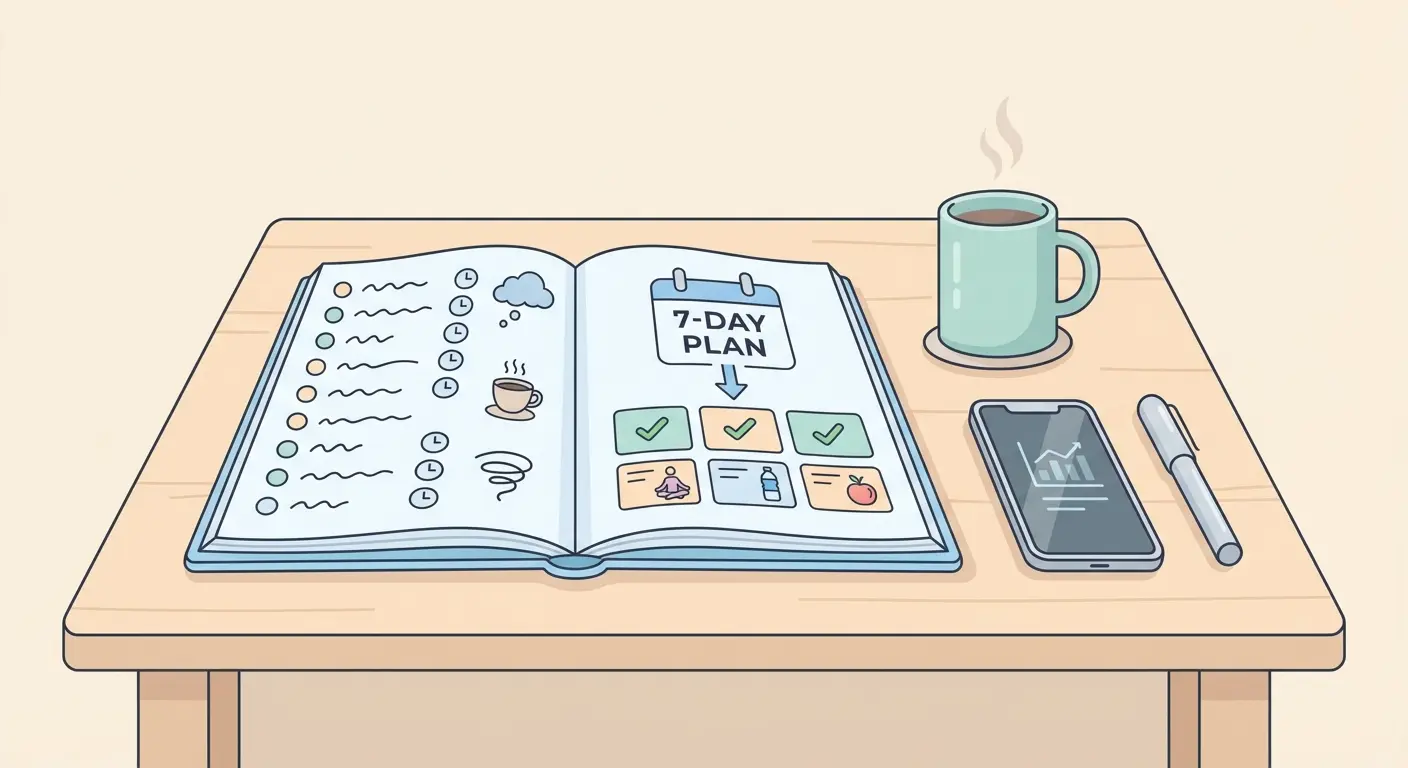
To identify yours, keep a craving log for 48 hours before your quit date. Every time you smoke or feel a strong urge, write down:
- Time of day — Morning cravings often signal physiological dependence; evening ones are usually behavioral
- What you were doing — The activity that preceded the urge
- How you felt emotionally — Stressed, bored, happy, anxious?
- Who was around — Solo or social?
- Craving intensity (1–10) — This helps you see patterns and prioritize which triggers to address first
This data becomes the backbone of your personalized 7-day plan. For a deeper look at the behavioral science behind trigger management, top strategies to quit smoking successfully covers trigger identification and behavioral replacement techniques in detail.
The 7-Day Smoking Craving Relief Plan
Seven days won’t make you a non-smoker permanently — fair warning. But seven structured days will reduce both the frequency and the spike intensity of cravings enough that quitting starts to feel achievable rather than impossible. Think of this as building your craving-management muscle.
Day 1: Set Your Baseline and Remove Temptations
Your first job isn’t to quit cold turkey (unless that’s your plan). It’s to prepare your environment. Remove cigarettes, lighters, and ashtrays from your home, car, and workspace. Tell at least one person you trust. Identify your top 3 triggers from your craving log.
Action: Download a craving tracker app or use a notebook. Log every urge — even ones you give in to. Data without judgment.
Day 2: Learn the 4 D’s
The Delay, Deep Breathe, Drink Water, Do Something Else framework is simple enough to remember mid-craving, which is exactly when your rational brain goes offline. Practice each one today before a craving hits so they feel automatic when you need them.
Action: Set a 5-minute timer the next time you feel an urge. Just wait. Notice when it subsides.
Day 3: Replace, Don’t Resist
Sheer resistance depletes willpower. Replacement is smarter. For each major trigger you identified, write one specific substitute behavior. Morning coffee craving? Swap to tea and take a 5-minute walk. Post-meal urge? Brush your teeth immediately after eating (the minty sensation genuinely blunts tobacco cravings).
Action: Prepare your substitutes physically — have gum, a stress ball, sparkling water, or a playlist ready before the craving hits.
Day 4: Handle the Emotional Triggers
Stress and boredom account for roughly 70% of smoking relapses. Today, build two go-to stress relief routines: one that takes 2 minutes (box breathing, cold water on your wrists, a short walk) and one that takes 20 minutes (exercise, calling a friend, journaling). Having both matters — not every stressful moment gives you 20 minutes.
Action: Practice box breathing today even if you’re not craving. Four counts in, hold four, out four, hold four. Do it three times. That’s it.
Day 5: Strengthen Your Social Plan
If you’re around other smokers today — at work, at home, socially — this is your test run. Have a response ready for when someone offers you a cigarette. “No thanks, I’m cutting back” gets less pushback than “I’m quitting” (which invites debate). If possible, step away from smoking areas rather than standing in them.
Action: Reach out to one person who quit smoking and ask them one question: what got them through the first week?
Day 6: Reflect on Small Wins
Look at your craving log from the week. Count the cravings you outlasted. Each one represents a weakened neural pathway. If you smoked during some cravings, that’s data too — which trigger was hardest? What substitute didn’t work? Adjust without self-criticism.
Action: Write down three things that are already different from Day 1. Physical, emotional, or behavioral. The evidence is there if you look for it.
Day 7: Build Your Long-Term Craving Protocol
By Day 7, most people notice cravings are less frequent. They’re still there — but the spike is lower and the duration shorter. Today, formalize your craving protocol: your top 3 go-to responses, your support contacts, and your reason for quitting written in one sentence.
Action: Write your “craving emergency card” — a physical or digital note with your three fastest craving-relief techniques and your quit reason. Keep it accessible.
Immediate Relief: What to Do in the Next 5 Minutes
Sometimes you don’t have the luxury of a plan. The craving hits and you need something that works right now. These techniques have actual evidence behind them — not just anecdote.
Controlled Breathing (2–4 Minutes)
The physical act of smoking involves slow, deep breathing — which naturally reduces cortisol and calms the nervous system. Mimic that mechanism without the cigarette. Slow exhale for 6 counts. Your brain can’t easily distinguish between “I smoked and feel calmer” and “I breathed deeply and feel calmer.” Use that.
Cold Water on Wrists or Face
Cold water activates the vagus nerve and triggers a mild “diving reflex” that slows heart rate and dampens the physiological arousal driving the craving. This one sounds too simple to work. It works.
Intense 2-Minute Physical Activity
Twenty jumping jacks, a brisk walk around the block, or even vigorous stair climbing for 2 minutes floods your system with dopamine through movement — the same chemical your brain is demanding through nicotine. The Mayo Clinic recommends physical activity as one of the top evidence-based methods for managing tobacco cravings in real time.
Chewing Something with Texture
Crunchy vegetables (carrots, celery), sugar-free gum, or even sunflower seeds give your mouth and hands something to do. The oral fixation component of smoking is real — address it directly.
The “Urge Surf” Technique
This comes from mindfulness-based relapse prevention research. Instead of fighting the craving, observe it like a wave — it rises, peaks, and passes. Narrate it internally: “I notice an urge. It’s at a 7. It’s starting to ease.” Detachment reduces the emotional urgency enough to get through it.
The CDC’s Tips From Former Smokers program documents dozens of real people who used techniques exactly like these — not because they had extraordinary willpower, but because they had specific plans.
Quit Smoking Success Stories: What Actually Worked

Reading quit smoking success stories isn’t just emotionally motivating — it’s neurologically useful. Observing others succeed at something activates the same neural pathways as doing it yourself, which is why community and peer modeling have measurable effects on quit rates.
Here are patterns that appear across thousands of documented success stories:
The “One Craving at a Time” Mindset
Almost universally, long-term quitters describe abandoning the idea of “quitting forever” during the acute phase and replacing it with “I just have to get through this craving.” This isn’t avoidance — it’s precision. Thirty-year smokers don’t quit by thinking about the next decade. They quit one 5-minute window at a time.
James, a 52-year-old who smoked for 28 years, described it this way: “I stopped saying ‘I’ll never smoke again.’ I said ‘I won’t smoke in the next hour.’ Then another hour. That’s how I got to three years.”
Replacing Identity, Not Just Behavior
The most durable quit smoking success stories involve a shift in self-concept. People who say “I don’t smoke” (identity) outperform those who say “I’m trying not to smoke” (willpower contest) in long-term follow-ups. The distinction is subtle but the effect is significant.
Using Accountability Systems
Whether it was a quit buddy, a support group, or an app that tracked progress — almost no long-term success story involved going it alone. Social accountability dramatically increases follow-through, even when the “accountability” is just a digital streak you don’t want to break.
The CDC’s Tips From Former Smokers campaign features real people sharing the exact strategies that worked for them — and the specific moments that nearly broke them. These aren’t cleaned-up success narratives. They include the hard days.
The Science Behind Quit Smoking Motivation
Motivation isn’t a feeling you wait for — it’s a system you build. This is where most quit attempts fail: people expect to feel motivated before they act, when the research shows the opposite is true. Action produces motivation, not the other way around.
There are two broad categories of quit smoking motivation, and which one you lean on matters:
| Motivation Type | Examples | Effectiveness (Long-Term) |
|---|---|---|
| Fear-based (away from) | Avoiding cancer, heart disease, financial cost | Strong short-term, fades over time |
| Goal-based (toward) | Running a 5K, being present for kids, better skin, more energy | More durable, especially weeks 3–12 |
| Social/identity-based | “I’m a non-smoker now,” peer accountability, community | Strongest predictor of 12-month quit rates |
| Progress-based | Tracking days, money saved, health milestones | Highly effective when combined with other types |
The most effective motivation strategy combines all four — but here’s what matters in week one specifically: progress-based motivation. Watching concrete numbers change (days without smoking, money saved, cigarettes avoided) keeps the reward system engaged when the emotional high of quitting day has worn off.
Within 20 minutes of your last cigarette, blood pressure and heart rate normalize. Within 12 hours, carbon monoxide levels drop. After 48 hours, nerve endings begin regenerating. Tracking these milestones — even approximate ones — gives your brain real reward signals during a period when nicotine withdrawal is trying to convince you nothing is improving.
Tools, Apps, and Support Systems That Help

Willpower is a finite resource. Tools exist precisely to reduce the cognitive load during high-craving moments. Here’s what the evidence supports — and how to use each one effectively.
Nicotine Replacement Therapy (NRT)
Patches, gum, lozenges, inhalers, and nasal sprays. A Cochrane evidence review found that NRT increases quit rates by 50–70% compared to placebo. Combining two forms (e.g., a patch for steady-state coverage plus gum for acute cravings) outperforms single-form use. Talk to a doctor about what combination suits your smoking pattern.
Prescription Medications
Varenicline (Chantix/Champix) and bupropion (Wellbutrin/Zyban) both have strong evidence bases. Varenicline, in particular, blocks nicotine receptors while providing mild dopamine stimulation — reducing both the craving and the reward of relapse simultaneously. These are prescription-only options worth discussing with a physician if behavioral methods alone aren’t sufficient.
Behavioral Support and Counseling
The combination of medication and behavioral support is consistently the highest-performing approach in clinical research. Telephone quitlines, group therapy, and one-on-one counseling all show meaningful efficacy improvements over going it alone. In the US, 1-800-QUIT-NOW connects you to free coaching.
Craving Tracking Apps
Apps serve two functions: they provide real-time distraction during cravings (missions, breathing exercises, SOS features) and they track progress data that feeds motivation. The quitSTART app from Smokefree.gov is free and clinically informed, offering craving tracking, tips, and distraction tools built specifically for acute urge management.
For people who want a more structured, AI-supported experience, the iQuit app combines behavioral science with real-time craving support — including an emergency SOS craving feature, daily missions, a health recovery timeline, and community accountability circles. When a craving hits and you’re reaching for your phone anyway, having an app built for exactly this moment turns a potentially harmful habit into a coping tool.
Building a personal quit plan before you hit crisis mode is essential. The NCI’s interactive quit plan builder walks you through personalizing your approach based on your specific smoking patterns and triggers.
For a thorough breakdown of evidence-based methods including pharmacological aids and stepwise quitting approaches, the guide on effective strategies to help you quit smoking covers the full spectrum of options with practical guidance on combining them.
Craving Relief Methods Compared
Not every technique works equally well for every person or every type of craving. This comparison gives you a realistic picture of what each approach offers — and where it falls short.
| Method | Best For | Works In | Limitations |
|---|---|---|---|
| Deep breathing | Stress-triggered cravings | 2–3 minutes | Requires practice; feels awkward without habit |
| Nicotine gum/lozenge | Physiological cravings | 5–15 minutes | Doesn’t address behavioral triggers |
| Physical exercise | High-intensity cravings, boredom | 2–10 minutes | Not always situationally possible |
| Urge surfing (mindfulness) | Reducing emotional reactivity to cravings | 5 minutes | Needs consistent practice; harder in early quit days |
| Varenicline (Rx) | Heavy smokers (20+ cigs/day) | Days–weeks | Prescription required; possible side effects |
| Craving tracking app | Progress motivation + acute craving distraction | Immediate | Requires phone access; engagement varies |
| Behavioral counseling | Complex trigger patterns, high relapse history | Weeks–months | Cost and access barriers; not always immediate |
The practical takeaway: stack at least two methods. One that works in 2 minutes or less (breathing, cold water, exercise) and one that addresses the underlying driver (NRT for physiological craving, counseling or community for emotional craving). Relying on a single technique is what gets people into trouble during high-stress moments.
Your Craving Management Checklist
Print this or save it to your phone. When a craving hits, go through this list sequentially — not all at once, just the first one that feels possible.
- ☐ Check the clock. Tell yourself: “This will pass in 5 minutes.” Set a timer if you need to.
- ☐ Deep breathe for 60 seconds. Slow exhale counts double.
- ☐ Drink a full glass of cold water. Slowly.
- ☐ Move your body. Even 20 jumping jacks or a walk to another room counts.
- ☐ Chew or eat something. Sugar-free gum, a carrot, sunflower seeds.
- ☐ Text or call your quit buddy. Even “rough moment right now” is enough.
- ☐ Open your craving app. Log the craving. Start a distraction mission.
- ☐ Read your quit reason. The one sentence you wrote on Day 7 of the plan.
- ☐ Outlast 5 more minutes. If the craving persists, reset the timer once.
- ☐ Congratulate yourself after. Seriously. Each outlasted craving is a win.
For additional evidence-based coping strategies and withdrawal management techniques, the resource on effective strategies to help you quit smoking provides a deeper framework for building your full quit plan.
- Tips From Former Smokers — CDC Campaign — Real people, real strategies, no polish.
- How to Quit Smoking Today: 10-Step Guide — Doctor O’Donovan — Clinical perspective made accessible.
Frequently Asked Questions
How long do cigarette cravings last after quitting?
Individual cravings typically peak and pass within 3 to 5 minutes, though they can feel much longer. The overall frequency of cravings drops significantly after the first 7–14 days. By weeks 3–4, most people report cravings becoming shorter and less intense, though occasional triggers can spark urges for months — particularly in high-stress situations or social settings associated with smoking.
What is the fastest way to get rid of a cigarette craving?
The fastest evidence-based methods for smoking craving relief are controlled deep breathing (slow exhale for 6 counts, repeated 3–5 times), cold water on the face or wrists, and 2 minutes of physical movement. These work by interrupting the physiological stress response and providing a dopamine alternative to nicotine. Combining two techniques — for example, breathing plus a 2-minute walk — is more effective than relying on a single method.
Does drinking water help with cigarette cravings?
Yes — drinking water helps manage cravings in several ways. It gives you something to do with your hands and mouth, it provides a mild sensory reset (especially if cold), and staying hydrated reduces general irritability associated with nicotine withdrawal. The Mayo Clinic includes drinking water as one of its recommended strategies for resisting tobacco cravings in real time.
Is it normal to have strong cravings weeks after quitting?
Yes, and this is one of the most important things to understand about smoking cessation. While the frequency and baseline intensity of cravings decrease significantly after the first two weeks, situational triggers — specific places, emotions, social situations, or even smells — can activate strong urges weeks or even months after quitting. This doesn’t mean you’re failing; it means your brain is still completing the extinction-learning process.
What foods or drinks reduce cigarette cravings?
Some research suggests that vegetables and certain fruits (particularly citrus) may make cigarettes taste less appealing. Foods high in fiber, like carrots, apples, and celery, give your mouth and hands something to do while providing real satiety. Conversely, alcohol and coffee can intensify cravings — many people find it helpful to temporarily reduce both during the first week of quitting.
What’s the success rate for quitting smoking?
Unaided cold-turkey quitting has a 12-month success rate of roughly 3–5%. With behavioral support alone, that rises to approximately 10–15%. Combining NRT or prescription medication with behavioral counseling raises success rates to 20–35% or higher. The most important statistic: the average person makes 8–10 quit attempts before achieving long-term success — so a previous attempt that didn’t stick is data, not failure.
Keep Going — The Resources Are There
Managing smoking cravings is a skill, not a character trait. And like any skill, it builds with the right tools and consistent practice. The 7-day structure above gives you a starting framework — but sustainable quitting usually means building your full support system over time.
A few places to go from here:
- Deepen your strategy: The guide on top strategies to quit smoking successfully covers the behavioral and psychological frameworks behind long-term success in detail.
- Build your personalized plan: The NCI’s quit plan builder tailors recommendations to your specific smoking pattern — free and research-based.
- Get real-time craving support: If you haven’t tried a craving-focused app yet, iQuit offers an SOS craving feature, health milestone tracking, and community accountability — designed for exactly the moments when you’re most at risk.
Every craving you outlast is progress. The neuroscience — and your own 7-day data — are on your side.