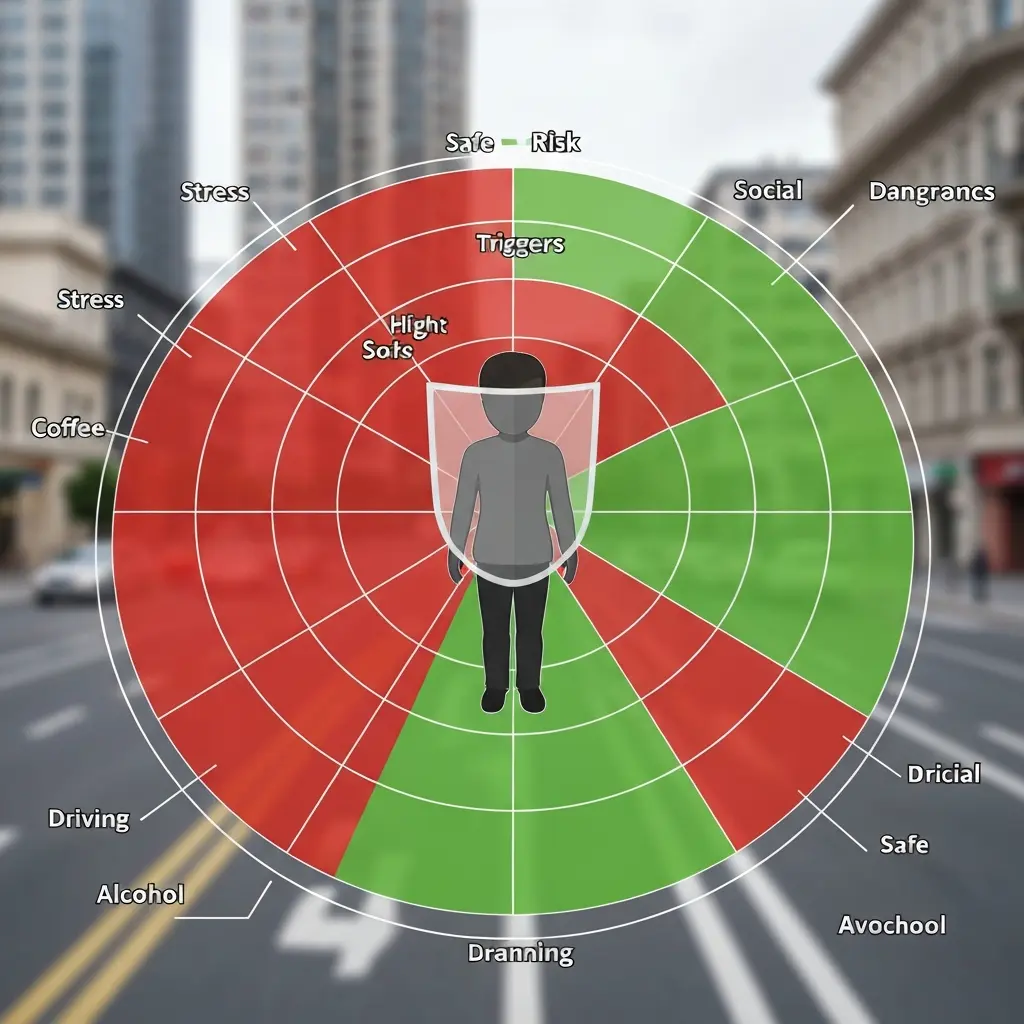
Smoking Triggers: How to Identify and Avoid Your Personal Cues in 2026
Understanding your personal smoking triggers is one of the most important skills you can develop before your quit date. A trigger is any internal or external cue that automatically activates the urge to smoke — and for long-term smokers, these associations have been reinforced thousands of times over years of habitual use. Without a conscious plan to address each trigger, even the most motivated quitter is constantly being ambushed by automatic responses that were built over years of conditioning.
The good news is that triggers are predictable. They are learned responses to specific cues, which means they can be mapped, anticipated, and disrupted. This guide takes you through the complete process of identifying your personal smoking trigger profile and building a specific counter-strategy for each one.
The Four Categories of Smoking Triggers
Clinical smoking cessation programs organize triggers into four main categories. Each category requires different avoidance or replacement strategies:
- Routine/environmental triggers: Specific situations, times, or locations that have become conditioned smoking cues through repetition — morning coffee, the car, after meals
- Emotional triggers: Internal states that prompt the urge to smoke — stress, boredom, anxiety, celebration, loneliness
- Social triggers: People, events, or environments associated with smoking — being around other smokers, drinking alcohol, specific social events
- Sensory triggers: Sensory stimuli that activate smoking memories — the smell of smoke, seeing someone smoke on TV, the feel of an unlit cigarette
How to Map Your Personal Smoking Triggers
Before your quit date, spend five to seven days completing a smoking diary — a simple log that records each cigarette you smoke with four data points:
- Time: When did you smoke this cigarette?
- Location/situation: Where were you? What were you doing?
- Emotional state: What were you feeling immediately before (stressed, bored, happy, anxious)?
- Craving intensity: How strong was the urge (1–10)?
After five days, patterns will be visible: the cigarettes you are most physically driven to smoke versus those you smoke out of habit; the times of day when your highest-intensity cravings occur; the emotional states most consistently associated with smoking. This data is the foundation of your personalized trigger management plan.
Routine Triggers and How to Break Them
Routine triggers are the most consistently reinforced — the morning cigarette, the smoke break, the after-dinner cigarette — and they are among the most powerful because they have been repeated thousands of times in nearly identical circumstances. The disruption strategy for routine triggers is environmental change: altering the contextual cues that fire the trigger.
| Routine Trigger | Why It Is So Strong | Disruption Strategy |
|---|---|---|
| Morning coffee | Daily first-of-day reinforcement, 365 times per year | Switch to tea; drink in a different room; add a 5-min walk immediately after |
| After meals | The digestive-satisfaction + nicotine combination creates a strong conditioned peak | Brush teeth immediately; take a 5-min walk; chew nicotine gum while cleaning up |
| Driving | The car is an isolated space — classic “smoking zone” for many people | Keep gum and water in the car; create a specific driving playlist; take a different route initially |
| Work breaks | Break = smoke break, reinforced multiple times per day | Redefine “break”: walk around the building, call a friend, do 3 minutes of stretching — never stand near the smoking area |
| Finishing tasks | Reward-completion loop: finish task, smoke as reward | Replace the reward: step outside for fresh air, get a glass of water, briefly stretch |
Emotional Triggers and Healthier Alternatives
Emotional triggers are the most deeply reinforced — because nicotine appears to modulate emotional states (though, as we discussed in our guide to cigarette cravings, it creates and maintains the emotional dysregulation it appears to relieve). For each major emotional trigger, you need a specific healthy coping alternative that you have practiced before the craving hits:
- Stress: Box breathing (4-4-4-4), 10-minute walk, brief mindfulness practice, progressive muscle relaxation
- Boredom: Pre-planned engagement list (a podcast, a book, a 5-minute stretching routine) — boredom needs structured replacement, not just avoidance
- Anxiety: 4-7-8 breathing, grounding exercises (name 5 things you see, 4 you hear, 3 you touch), cold water on the face or wrists
- Celebration: The hardest emotional trigger, because it feels incongruent to deprive yourself in a positive moment. Designate a specific non-cigarette celebration ritual — a special food, a specific drink, a shared high-five with your quit buddy
- Loneliness: Call or message someone; use the iQuit community to connect with people who understand exactly how you are feeling right now
Social Triggers and Protective Strategies
Social situations — particularly those involving alcohol or existing smoker friends — are responsible for a significant proportion of relapses. Key strategies for managing social smoking triggers:
- Alcohol: Limit or avoid alcohol for the first three months. Alcohol inhibits decision-making, stimulates shared dopamine pathways with nicotine, and creates social smoking pressure simultaneously. If you drink, tell your companions you are not smoking regardless of what happens.
- Smoker friends: Ask your smoking friends not to offer you cigarettes and not to smoke in your immediate vicinity for the first three months. Most friends will accommodate this — and if they do not, that itself is useful information.
- Smoking social spaces: Avoid the “smoking section” at venues, bars with outdoor smoking areas, and events where smoking is culturally expected during your first month. You can reintegrate these environments once your quit is more established.
Sensory Triggers: The Sneaky Ones
Sensory triggers are among the most surprising for former smokers. The smell of cigarette smoke, seeing someone smoke in a film or on a street, or even the tactile memory of holding a cigarette can activate cravings months or years after quitting — because these sensory memories are stored in the same neural networks as the smoking habit itself.
Key sensory trigger management strategies:
- Clean your home, car, and clothes thoroughly on quit day — removing residual smoke smell removes a major sensory trigger from your daily environment
- If watching TV and a smoking scene appears, acknowledge the triggered craving neutrally: “I notice a craving right now” — then return to the 4 Ds
- Carry a non-cigarette object that can be held when the tactile trigger fires — a pen, a stone, a small toy — to engage the hand-to-mouth behavioral component without a cigarette
Building Your Personalized Trigger Response Plan
Your trigger response plan is a written document — not just a mental note — that specifies for each of your personal top five triggers: (1) what the trigger is, (2) when/where it typically occurs, (3) the specific alternative behavior you will use when it occurs, and (4) the backup behavior if the primary alternative is not available.
The iQuit app includes a trigger tracking system that allows you to log craving events with trigger context, building a visual pattern map of your personal trigger profile over time. This behavioral data makes your trigger plan increasingly precise as you collect real-world evidence about which triggers are most active and which counter-strategies are most effective for you.
Organizations delivering personalized trigger management programs at scale use tools like CampaignOS to send automated trigger-time messages to program participants — for example, a message at 10:45 am to someone whose data shows a consistent high-craving window at that time. Evidence-based approaches to trigger management are reviewed in academic literature accessible through Tesify for health professionals developing cessation programs.
Frequently Asked Questions
What are the most common smoking triggers?
The most common smoking triggers are: morning coffee (the most universally reported), after meals, driving, work breaks, stress, alcohol, boredom, and being around other smokers. Individual trigger profiles vary significantly — some people rarely smoke out of habit (they smoke emotionally), while others rarely smoke emotionally (they smoke out of routine). A smoking diary for 5–7 days before your quit date reveals your personal profile.
How do you avoid smoking triggers during the first week?
In the first week, priority is avoidance over management for your highest-risk triggers. Disrupt your morning routine entirely (different time, different beverage, different location). Avoid alcohol and high-smoking social environments. Remove all tobacco products from your environment on quit day. For triggers you cannot avoid (work breaks, driving), have your specific alternative behavior pre-planned and ready to execute without deliberation.
Can you ever be around smoking triggers without craving a cigarette?
Yes. Each time a trigger occurs without being followed by nicotine, the neural association weakens through a process called extinction. Over months and years, triggers that previously produced intense cravings produce only mild or no craving response. Former smokers who have been abstinent for several years often describe being able to be around smokers or smoking environments with minimal or no craving — evidence of genuine neurological change.
What should I do when a smoking trigger is unavoidable?
When you cannot avoid a trigger, activate your pre-planned alternative behavior immediately — before the craving has time to peak. Have your gum, water, or breathing exercise ready. Use the 4 Ds technique (Delay, Deep Breathe, Drink Water, Do Something). Remind yourself that each triggered craving you survive without smoking further weakens the neural association and makes the next encounter with the same trigger slightly less intense.
Track Your Triggers and Master Your Cravings
iQuit’s craving tracker logs your triggers in real time, building a personalized pattern map so you are always prepared — never surprised.