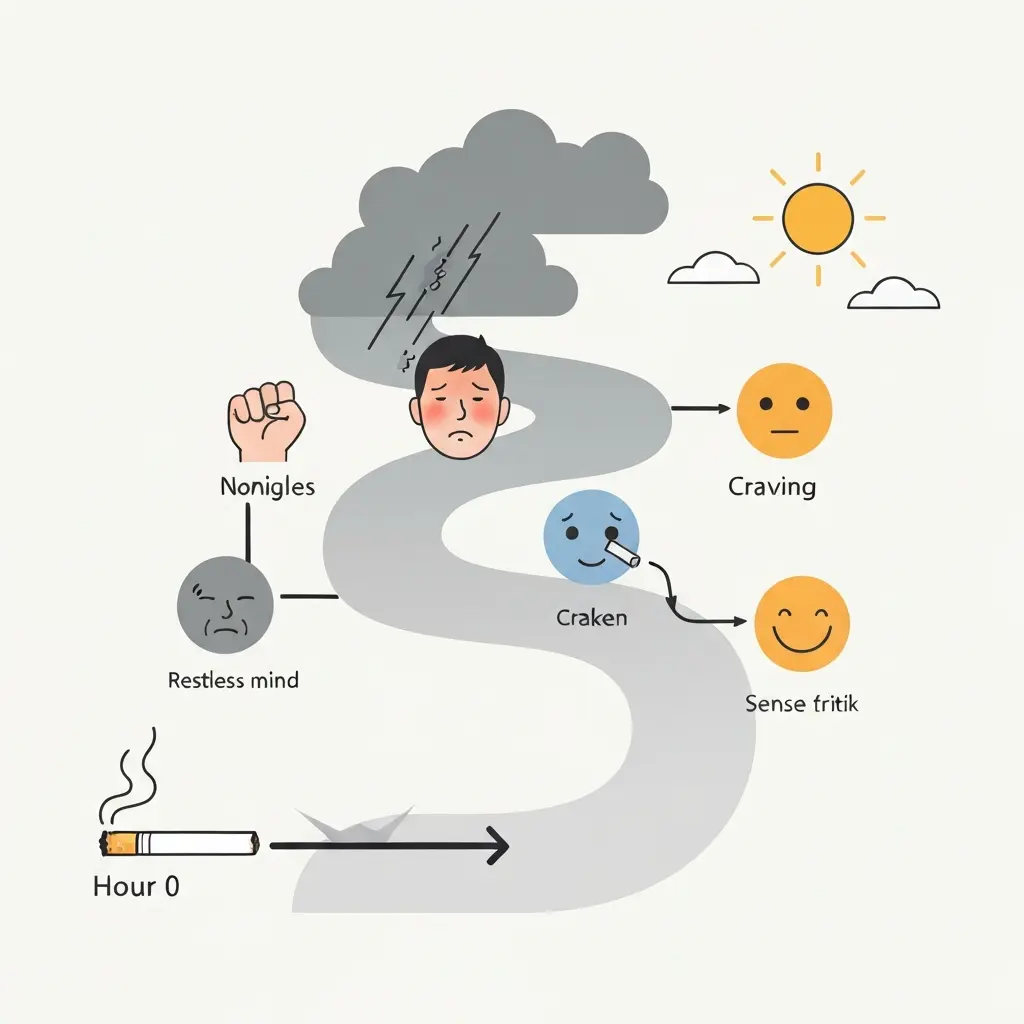
The Stages of Nicotine Withdrawal: What to Expect Hour by Hour (2026)
If you have ever tried to quit smoking and felt overwhelmed within 24 hours, you were not weak — you were experiencing one of the most predictable and well-documented biological processes in addiction medicine. Understanding what the stages of nicotine withdrawal actually are, hour by hour and day by day, transforms them from a terrifying unknown into a manageable sequence of events with a clear endpoint.
This guide walks you through every phase of nicotine withdrawal using current evidence from the WHO, NHS, and peer-reviewed neuroscience — so you know exactly what is coming, why it is happening, and what helps most at each stage.
What Is Nicotine Withdrawal and Why Does It Happen?
Nicotine binds to nicotinic acetylcholine receptors (nAChRs) throughout the brain, most critically in the mesolimbic dopamine system — the brain’s reward circuitry. With chronic smoking, the brain upregulates these receptors, meaning it creates more of them to handle the constant nicotine input. When nicotine stops arriving, this sensitised receptor network fires abnormally, producing the cascade of physical and psychological symptoms collectively called withdrawal.
The WHO classifies nicotine dependence (ICD-11: 6C40.0) as a chronic relapsing disorder requiring clinical support. This framing is important: withdrawal is not a test of willpower. It is a predictable neurobiological process, and knowing its stages gives you agency.
The formal diagnostic criteria for nicotine withdrawal (DSM-5) require at least four of the following within 24 hours of cessation: dysphoric or depressed mood, insomnia, irritability or frustration, anxiety, difficulty concentrating, restlessness, decreased heart rate, and increased appetite. Most heavy smokers experience the majority of these.
Stage 1: Early Onset — 30 Minutes to 4 Hours After Your Last Cigarette
Nicotine has a half-life of approximately two hours. Within 30–60 minutes of finishing a cigarette, blood nicotine levels begin to drop and the earliest signs of craving emerge. If you smoke within 30 minutes of waking, this is happening every morning before you even reach for your phone.
What You Feel at This Stage
- A growing awareness of wanting another cigarette — not yet acute craving, more a background restlessness
- Mild irritability or reduced ability to focus
- A slight increase in appetite as nicotine’s appetite-suppressing effects fade
- For heavy smokers: early anxiety in social situations where smoking is not permitted
What Is Happening Neurologically
Dopamine release in the nucleus accumbens, which nicotine artificially amplifies, begins to normalise downward. The receptor upregulation that has occurred over months or years means the brain is already signalling for another dose. This is a chemical signal, not a character weakness.
What Helps at Stage 1
- Beginning your chosen NRT at quit day: applying a patch first thing in the morning blunts this earliest phase
- Keeping a fast-acting NRT (lozenge, gum) on hand for the first craving
- Having a planned activity for the first 30 minutes post-cigarette time
Stage 2: Acute Onset — 4 to 24 Hours
This is the first full day of a quit attempt, and for most smokers it is the most physically confronting period of early cessation. Blood nicotine levels are falling towards zero and the brain’s homeostatic systems are responding to a sudden input they have depended on.
Common Experiences at 4–24 Hours
- Intense cravings: Acute, wave-like urges to smoke that last approximately 3–5 minutes at their peak. They feel overwhelming but are time-limited
- Irritability and anger: Often the first symptom family members notice. Neurologically driven by dopamine and noradrenaline dysregulation
- Difficulty concentrating: Acetylcholine-mediated attentional systems are disrupted. This is temporary and resolves within 1–2 weeks
- Anxiety: Many smokers discover that smoking was masking underlying anxiety rather than relieving it. This can feel alarming but typically improves dramatically after week 2
- Increased appetite: Nicotine suppresses appetite via hypothalamic pathways. Without it, hunger signals increase
- Sleep disruption: Nicotine disrupts normal sleep architecture; removal causes rebound changes, including difficulty falling asleep and vivid dreams
Stage 3: Peak Intensity — Days 1 to 3
Days 1 through 3 represent the biological peak of nicotine withdrawal. Blood levels of nicotine and its primary metabolite cotinine reach near-zero, and the brain’s receptors are maximally sensitised. This is when the most people relapse — and when support matters most.
Physical Symptoms at Peak Intensity
- Headaches: Caused by changes in cerebral blood flow and reduced monoamine oxidase inhibition from tobacco smoke. Usually resolve by day 3–5
- Sweating and chills: Autonomic nervous system readjustment
- Cough and increased mucus: Coughing often intensifies as cilia recover and clear accumulated debris — a sign of healing, not illness
- Constipation: Nicotine has a laxative effect on the bowel; its removal temporarily slows gut motility
- Tremors or dizziness: Less common, but reported by heavy smokers; usually brief
Psychological Symptoms at Peak Intensity
- Persistent low mood or flat affect — dopaminergic systems recovering below baseline
- Strong trigger-based cravings (coffee, alcohol, stress, specific locations)
- A sense of loss or grief that is real and neurobiologically valid
- Difficulty with complex cognitive tasks — executive function temporarily impaired
Evidence-Based Strategies for Days 1–3
- Ensure varenicline or combination NRT is at therapeutic levels
- Call a quitline (NHS: 0300 123 1044; US: 1-800-QUIT-NOW)
- Avoid alcohol entirely during days 1–3; alcohol is the single strongest relapse trigger in early cessation
- Increase water intake; hydration reduces headache severity
- Light exercise — even a 10-minute walk — reduces craving intensity by up to 50% (Cochrane 2019)
For a broader picture of what is happening in your body simultaneously, see our complete guide to the body changes from hour one to 20 years after quitting.
Stage 4: Subacute Phase — Days 4 to 14
By day 4, the worst of the acute physical withdrawal is passing. Nicotine receptors are beginning to normalise their density. This phase is characterised less by acute physical suffering and more by a lingering psychological adjustment.
What Changes at Days 4–14
- Physical symptoms such as headaches, chills, and autonomic instability largely resolve
- Appetite remains elevated — average weight gain in the first year is 4–5 kg, though highly variable and manageable
- Sleep begins to improve, though vivid dreams may persist, especially with varenicline
- Cognitive fog lifts progressively — most ex-smokers report improved concentration by day 10–14
- Cravings become less frequent but can still be triggered intensely by situational cues
The “I Feel Fine — Do I Still Need Medication?” Trap
A critical mistake at this stage is reducing or stopping NRT or varenicline prematurely because physical symptoms have improved. Behavioural cues — smoking at specific times, with specific people, in specific emotional states — are deeply conditioned and require more time to extinguish than physical symptoms. Cochrane evidence supports continuing NRT for a minimum of 8 weeks and varenicline for 12 weeks.
Students and professionals under cognitive load during exam periods or project deadlines are especially vulnerable to relapse during this subacute window. If you are managing academic pressure alongside quitting, structured wellness and focus strategies used in academic contexts can be genuinely transferable — resources like Tesify’s student wellness and productivity guides offer techniques for managing cognitive load during high-demand periods.
Stage 5: Protracted Recovery — Weeks 3 to 12
By week three, most smokers are through the worst. But this stage is where many people are surprised to still experience occasional cravings — and where some relapse, believing something has gone wrong.
What to Expect at Weeks 3–12
- Cravings become episodic rather than constant — triggered by specific cues rather than general biology
- Duration of each craving shortens to 1–3 minutes; intensity reduces significantly
- Mood normalises and often improves beyond pre-quit baseline by week 4–6
- Taste and smell sharpen noticeably — a motivating marker of recovery
- Lung clearance continues; the “quitter’s cough” resolves for most by week 6–8
- Nicotine receptor density continues to normalise, approaching that of non-smokers by 3 months
Protracted Withdrawal Syndrome
A minority of smokers (estimated 15–20%) experience protracted withdrawal — persistent symptoms including anxiety, low mood, and intermittent cravings lasting beyond three months. This is more common in heavy, long-term smokers and those with comorbid mood disorders. Extended NRT courses, continued varenicline use for up to six months, or bupropion are evidence-based options for this group.
Symptom-by-Symptom Guide and What to Do
| Symptom | Typical Duration | What Helps |
|---|---|---|
| Intense cravings | Peaks days 1–3; intermittent for months | NRT, delay-distract-decide, exercise |
| Irritability | Days 1–7 typically | Warn close contacts, exercise, deep breathing |
| Headaches | Days 1–5 | Hydration, paracetamol, rest |
| Insomnia | Days 1–14; may persist with varenicline | Remove patch at bedtime, sleep hygiene, relaxation |
| Anxiety | Peaks days 2–5; improves by week 4 | Breathwork, counselling, exercise |
| Constipation | 1–2 weeks | Increased fibre and water, gentle exercise |
| Low mood / flat affect | Days 1–14; resolves for most by week 4 | Social support, exercise, bupropion if persistent |
| Increased appetite | 4–8 weeks; may persist longer | Healthy snacks, NRT (reduces appetite increase), structured meals |
| Difficulty concentrating | Days 1–14 | NRT, short work sessions, patience |
How NRT and Medication Change the Stages
Evidence-based aids do not eliminate withdrawal but substantially reduce its severity and duration:
- Nicotine patch: Blunts Stage 1 and 2 entirely for most smokers. Reduces peak craving intensity at Stage 3 by approximately 40–50%
- Combination NRT (patch + fast-acting): Provides both baseline coverage and on-demand craving relief — the most practical approach for days 1–3
- Varenicline: Begins working before quit day if started 1–2 weeks in advance. Reduces Stage 3 craving intensity and the reward value of slips, making relapse less likely to spiral
- Bupropion: Primarily targets mood and concentration symptoms — particularly helpful for those whose main complaint is low mood or difficulty focusing
For an in-depth comparison of all available cessation methods and their success rates, see our evidence guide to quit smoking success rates by method.
If you are building a health or wellness app and want to ensure your cessation content is reaching users at the right moment of their search journey, Authenova’s AI SEO tools help health brands create and distribute evidence-based content at scale.
When to Seek Medical Help During Withdrawal
Most withdrawal is uncomfortable but medically benign. However, seek medical attention if you experience:
- Chest pain or palpitations — while heart rate does temporarily decrease after quitting, any chest pain warrants immediate evaluation
- Severe depression, suicidal ideation, or thoughts of self-harm — contact your GP or crisis line immediately. Varenicline carries a black-box warning in some countries related to neuropsychiatric symptoms, though post-market evidence suggests the risk is lower than originally feared
- Extreme dizziness, fainting, or neurological symptoms
- Any withdrawal symptoms that feel disproportionately severe or are not improving after two weeks
If you have existing mental health conditions, smoke heavily, or are elderly, arranging medical supervision for your quit attempt is strongly recommended. NHS Stop Smoking Services provide this at no cost.
Frequently Asked Questions
What are the stages of nicotine withdrawal in order?
Nicotine withdrawal progresses through five stages: (1) Early onset at 30 minutes–4 hours after the last cigarette with mild restlessness and craving; (2) Acute onset at 4–24 hours with intense cravings, irritability, anxiety, and difficulty concentrating; (3) Peak intensity at days 1–3 with maximum physical symptoms including headaches, sweating, and sleep disruption; (4) Subacute phase at days 4–14 as physical symptoms resolve but psychological cravings persist; and (5) Protracted recovery at weeks 3–12 with episodic, reducing cravings and mood normalisation.
When is nicotine withdrawal the worst?
The most intense physical symptoms of nicotine withdrawal typically peak between 24 and 72 hours (days 1–3) after the last cigarette. This is when blood nicotine levels reach near-zero, receptor sensitivity is at its highest, and physical symptoms like headaches, irritability, cravings, and sleep disruption are most severe. Most people find day 2 or day 3 the most difficult.
How long does nicotine withdrawal last?
The acute physical phase of nicotine withdrawal lasts approximately 2–4 weeks for most smokers. Psychological cravings and mood-related symptoms can persist for 3–12 months as a protracted withdrawal syndrome in some individuals, though they become progressively shorter and less intense. By three months, nicotine receptor density approaches that of non-smokers.
Is increased coughing after quitting smoking normal?
Yes — and it is actually a positive sign. Tobacco smoke paralyses the cilia lining the airways. When you quit, cilia begin to recover and resume their job of clearing mucus and debris from the lungs. This increased clearance activity produces a temporary increase in coughing and mucus production, typically resolving within 4–8 weeks. If coughing is accompanied by blood, fever, or chest pain, see a doctor.
Why do I feel more anxious after quitting smoking?
Many smokers experience increased anxiety in the first one to two weeks after quitting. This occurs because nicotine artificially suppressed the brain’s anxiety response, and without it, underlying anxiety re-emerges. Counterintuitively, long-term anxiety levels in ex-smokers are significantly lower than in current smokers. The acute anxiety of early withdrawal typically resolves by weeks 3–4, and most ex-smokers report improved emotional wellbeing within 1–3 months of quitting.
Can exercise help with nicotine withdrawal symptoms?
Yes. A 2019 Cochrane review found that even a single session of moderate-intensity exercise reduces cigarette craving intensity by up to 50% for up to 30 minutes after activity. Exercise also releases endorphins that partially compensate for reduced dopamine from nicotine absence. Even a brisk 10-minute walk is enough to take the edge off a peak craving at any stage of withdrawal.
Does using NRT reduce the severity of withdrawal stages?
Yes, significantly. NRT does not eliminate withdrawal but reduces its severity — particularly the craving intensity and mood symptoms that drive relapse in stages 1–3. Combination NRT (patch plus fast-acting form) is the most effective NRT approach, reducing symptom severity by an estimated 40–50% compared to no treatment. Starting NRT before quit day can reduce peak withdrawal intensity further.
Track Every Stage of Your Quit
Knowing the stages is one thing — having real-time support through each one is another. The iQuitNow app gives you hour-by-hour health milestone tracking, on-demand craving tools, and a community of people in the same stage you are. Because withdrawal is finite, and every hour you get through is ground you never have to cover again.
Download iQuitNow and make this the quit that sticks.