What Are the Stages of Nicotine Withdrawal? Complete Guide for 2026
Understanding the stages of nicotine withdrawal is one of the most practical things you can do before you quit smoking. When you know what’s coming and why, difficult symptoms become predictable phases rather than signs that something is going wrong. Most people who relapse do so because withdrawal feels unbearable and open-ended — not because it actually is. The reality is that nicotine withdrawal follows a well-documented, finite timeline that gets progressively easier after the first 72 hours.
This guide walks through each stage of withdrawal, the physiological mechanism behind each symptom, how long each stage typically lasts, and what the evidence shows about managing each phase effectively. From the DSM-5 diagnosis criteria to the neurochemical recovery arc, this is the complete picture.
What Is Nicotine Withdrawal?
Nicotine withdrawal is the collection of physiological and psychological symptoms that occur when a person who is nicotine-dependent reduces or stops nicotine intake. The DSM-5 lists nicotine withdrawal as a diagnosable clinical condition, recognizing that these symptoms represent genuine medical distress rather than just discomfort.
The underlying mechanism is straightforward: nicotine increases dopamine, norepinephrine, serotonin, and acetylcholine activity in the brain. Long-term use causes the brain to downregulate its own production of these neurotransmitters — it becomes dependent on external nicotine to maintain normal levels. When nicotine is removed, the brain is left with below-normal neurotransmitter activity until it recalibrates. This is the chemical root of every withdrawal symptom.
The DSM-5 criteria for nicotine withdrawal require at least four of these symptoms within 24 hours of cessation: irritability, anxiety, difficulty concentrating, restlessness, depressed mood, increased appetite, insomnia, or decreased heart rate.
Stage 1: Acute Onset (Hours 0–24)
Withdrawal begins remarkably quickly after the last cigarette — for most regular smokers, the first symptoms emerge within 30–60 minutes.
Typical symptoms in Stage 1:
- Cravings (often the first symptom, emerging within minutes)
- Mild irritability and anxiety
- Difficulty concentrating (usually emerges within 4–8 hours)
- Beginning of appetite increase
- First disruptions to sleep quality
- Initial mood dip
What’s happening biologically: Blood nicotine levels are dropping rapidly (nicotine’s half-life is ~2 hours). The brain’s nicotinic receptors, which had calibrated to expect regular stimulation, are beginning to signal their deprivation. Meanwhile, the body is eliminating carbon monoxide and blood oxygen levels are improving — the physical body is healing even while the brain is struggling.
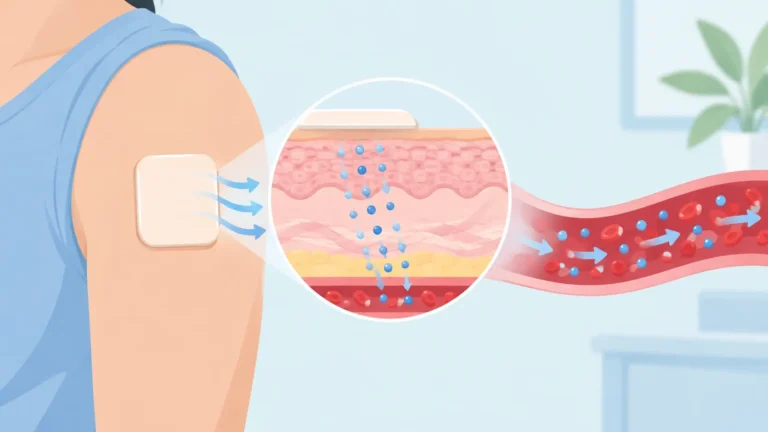
Managing Stage 1: This is the optimal time to start NRT if you haven’t already. Apply your nicotine patch first thing in the morning before you would normally smoke. Have fast-acting NRT (gum, lozenge) ready for when cravings hit. Set up the iQuit app to track your progress and have craving management tools ready for the first acute urge.
Stage 2: Peak Withdrawal (Days 2–3)
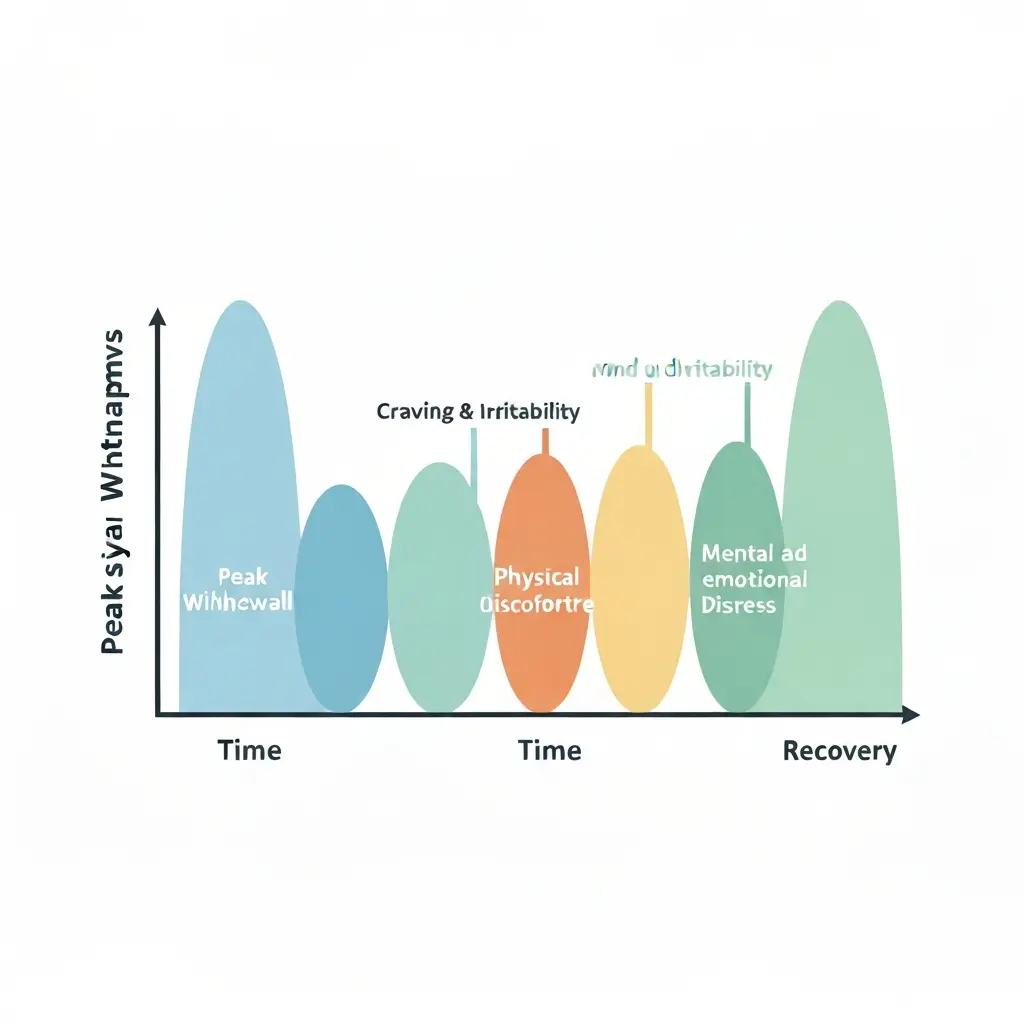
This is the most challenging phase of nicotine withdrawal, and knowing that it peaks here is one of the most useful pieces of information you can have going in. By day 2–3, nicotine has been fully cleared from the blood, and the brain’s neurotransmitter systems are at their most disrupted.
Typical symptoms at peak:
- Intense cravings (most frequent and most intense of the entire quit process)
- Significant irritability and mood swings
- Anxiety — sometimes severe enough to feel like panic
- Difficulty concentrating, described as “brain fog”
- Sleep disruption: difficulty falling asleep, vivid dreams, waking at night
- Headaches (often due to increased blood flow to the brain)
- Increased appetite and cravings for sugar or carbohydrates
- Restlessness and inability to relax
- Cough may worsen (cilia recovering and clearing airways)
- Constipation or digestive discomfort
What’s happening biologically: Nicotine is completely absent from the bloodstream. The brain’s dopaminergic system is at its most depleted — dopamine baseline levels are at their lowest, which drives the irritability, anhedonia, and depression symptoms. The hypothalamic-pituitary-adrenal axis is also adjusting, which contributes to anxiety and stress sensitivity. This is genuinely the neurobiological low point, and it passes.
Stage 3: Resolution Phase (Days 4–14)
Starting from day 4, symptoms begin declining for most people. The trajectory is not perfectly linear — there are good days and harder days — but the overall direction is unmistakably toward improvement.
What changes in Stage 3:
- Craving frequency and intensity gradually decreases — from multiple per hour to several per day
- Concentration and cognitive function begin normalizing
- Sleep quality starts improving (though disruption may continue for 1–2 weeks)
- Mood stabilizes; irritability becomes less constant
- Physical symptoms (headaches, constipation) typically resolve by end of week 1
- Energy levels improve noticeably for many people by days 7–10
During this phase, psychological triggers become the dominant challenge rather than physiological withdrawal. The brain has enough nicotine-related memory associations that specific situations — a cup of coffee, finishing a meal, a stressful work call — can trigger a craving that feels physical even though the body is no longer chemically dependent.
Stage 4: Late Psychological Phase (Weeks 2–12+)
After the first two weeks, the physiological dimension of withdrawal has largely resolved. What remains is the psychological and behavioral dimension — and for many long-term smokers, this phase presents its own challenges.
Characteristics of Stage 4:
- Infrequent but sometimes intense situational cravings triggered by conditioned stimuli
- Increased appetite often persists; weight gain risk is highest in this phase
- Potential emergence or worsening of depression or anxiety in people with pre-existing conditions
- “HALT” triggers (Hungry, Angry, Lonely, Tired) are common craving triggers
- Social situations involving other smokers can trigger strong conditioned cravings
This phase is where many people who got through the acute withdrawal relapse — often after weeks or months of successful abstinence. The triggers are environmental and psychological, and the cravings feel powerful even though there’s no physiological dependence. Knowing this is normal and expected — rather than evidence of ongoing addiction — helps people navigate it.
Structured behavioral support, available through apps like iQuit, helps develop concrete responses to these late-stage triggers. The same framework of building systems to manage complex behavioral patterns is used across high-performance domains — from how AI-driven content platforms manage multi-step workflows to how academic support tools scaffold complex research projects.
Symptom-by-Symptom Guide
| Symptom | Peak Timing | Duration | Evidence-Based Response |
|---|---|---|---|
| Cravings | Days 2–3 | 3–5 months, decreasing | NRT, crave surfing, 4-7-8 breathing |
| Irritability | Days 2–4 | 2–4 weeks | Exercise, mindfulness, varenicline |
| Anxiety | Days 1–5 | 2–4 weeks (then improves) | Diaphragmatic breathing, exercise, CBT |
| Difficulty concentrating | Days 1–3 | 2–4 weeks | Break tasks down; exercise; patience |
| Insomnia | Days 1–7 | 1–3 weeks | Remove patch at night; sleep hygiene |
| Increased appetite | Week 1 | 4–8 weeks | Healthy snacks, sugar-free gum, exercise |
| Headaches | Days 1–3 | 1–2 weeks | Hydration, OTC pain relief, rest |
| Constipation | Days 1–5 | 1–4 weeks | High-fiber diet, hydration, exercise |
Evidence-Based Withdrawal Management
The following interventions have the strongest evidence base for managing nicotine withdrawal symptoms:
- Nicotine Replacement Therapy: Reduces withdrawal symptom severity by maintaining some nicotine, allowing the brain to adjust more gradually. Combination NRT (patch + fast-acting form) is most effective.
- Varenicline: Partially activates nicotinic receptors to reduce withdrawal severity while blocking the reward of smoking. Approved for withdrawal management by FDA and EMA.
- Exercise: A 10-minute walk reduces craving intensity for up to 50 minutes in multiple studies. Exercise increases dopamine and reduces cortisol, directly countering withdrawal neurobiology.
- Mindfulness and breathing: Diaphragmatic breathing (4 counts in, 7 hold, 8 out) activates the parasympathetic nervous system, reducing anxiety within minutes. Craving surfing — observing a craving without acting on it — reduces its perceived intensity over time.
- Behavioral support: CBT-based counseling teaches cognitive restructuring for withdrawal-driven thoughts and trigger-response planning. Even brief counseling significantly improves outcomes.
- App-based support: Evidence-based apps like iQuit provide real-time craving management tools, making behavioral interventions accessible 24/7 — exactly when cravings occur.
Frequently Asked Questions
How long do nicotine withdrawal symptoms last?
Physical withdrawal symptoms typically peak at 48–72 hours and substantially resolve within 2–4 weeks for most people. Psychological symptoms like situational cravings can persist for 3–6 months but become less frequent and intense over time. The 6-month to 1-year mark is generally considered when the risk of relapse drops substantially.
What is the hardest day of nicotine withdrawal?
Most people find days 2 and 3 to be the most challenging, as this is when nicotine is fully cleared from the blood and withdrawal symptoms peak. Day 3 in particular is often cited as the single hardest day. After day 3, symptoms begin declining and most people notice tangible improvement by the end of the first week.
Is it normal to feel worse in the first week after quitting?
Yes, completely normal — and expected. The first week involves the most intense physiological disruption as your brain adjusts to the absence of nicotine. Feeling irritable, anxious, and unable to concentrate in week 1 is not a sign of failure; it’s a sign that the addiction chemistry in your brain is recalibrating. It passes.
Do nicotine withdrawal symptoms ever come back after months of quitting?
True physiological withdrawal (driven by nicotine absence) does not return after the brain has recalibrated — typically within the first few weeks. What can return are conditioned psychological cravings triggered by environmental cues (a smell, a place, a stressful situation). These feel like withdrawal but are actually memory-based responses. They decrease in frequency with time and don’t respond to NRT because they’re not driven by nicotine deficiency.
Can nicotine withdrawal cause depression?
Yes. Nicotine withdrawal commonly causes depressed mood, which is a DSM-5 diagnostic criterion. For most people, this passes within 2–4 weeks. However, people with a history of major depressive disorder are at higher risk of clinical relapse depression during cessation. Anyone with a history of depression should discuss their quit plan with a physician — varenicline has shown particular benefit in this population, and counseling support is important.
How do I know if what I’m experiencing is withdrawal or something else?
Nicotine withdrawal symptoms have a clear timeline (beginning within hours of last cigarette, peaking at days 2–3, resolving over 2–4 weeks) and match the standard symptom list: irritability, anxiety, difficulty concentrating, insomnia, increased appetite, headaches. If you’re experiencing symptoms outside this pattern — severe chest pain, shortness of breath, high fever — consult a doctor rather than attributing them to withdrawal.
Does exercise really help with nicotine cravings?
Yes, with strong evidence. Multiple RCTs have shown that even brief exercise (10 minutes of moderate intensity walking) significantly reduces craving intensity and withdrawal symptoms for up to 50 minutes after exercise. Exercise increases dopamine and endorphin levels, which directly compensates for the dopamine deficit driving withdrawal. It also provides a behavioral substitute — something to do when a craving hits.
What’s the fastest way to get through nicotine withdrawal?
The approach most likely to get you through withdrawal with the least total suffering is: use NRT or varenicline to reduce symptom intensity, combine this with regular exercise, stay hydrated, have behavioral coping strategies ready for cravings, and track your progress with an app that provides evidence-based support. Trying to white-knuckle through without any support tends to be the longest, hardest approach — not the fastest.
Know Your Withdrawal Stage — Right Now
The iQuit app shows you exactly which withdrawal stage you’re in, what symptoms are normal for this stage, and what evidence-based strategies help most. You’re not alone in this — download iQuit and let it walk you through each phase, one day at a time.