How to Stop Cigarette Cravings With Breathing Exercises: A 7-Day Plan
A cigarette craving lasts, on average, 3 to 5 minutes. That’s it. Three to five minutes stands between you and a smoke-free life — yet it can feel like an eternity when your hands are shaking and every rational thought has left the building. Here’s the part most people don’t know: controlled breathing exercises can cut the intensity of those cravings in half, sometimes in under 60 seconds. Learning how to stop cigarette cravings doesn’t require willpower alone — it requires the right technique at the right moment.
This guide walks you through a structured, 7-day breathing plan designed specifically to help you manage and ultimately silence cigarette cravings. You’ll find the science behind why these techniques work, step-by-step instructions for each method, real quit smoking success stories, and honest advice on what to do when things get hard — because they will get hard.
To stop cigarette cravings quickly, use diaphragmatic (belly) breathing: inhale slowly for 4 counts, hold for 2, exhale for 6. Repeat 5–6 times. This activates your parasympathetic nervous system, lowers cortisol, and physically replaces the oral and breathing ritual of smoking — all within 2–3 minutes.
Why Breathing Works Against Cigarette Cravings
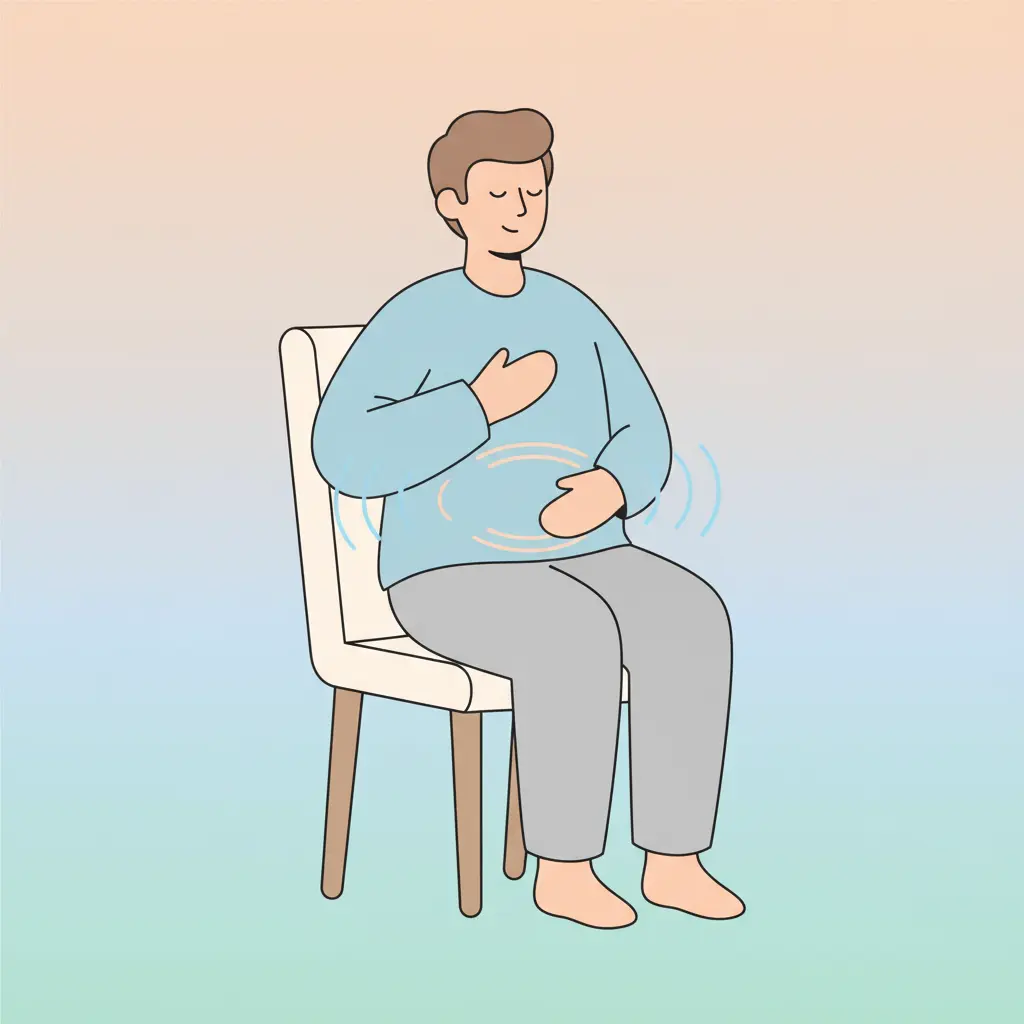
Most people assume that breathing exercises are just a distraction — something to keep your hands busy. The reality is more interesting than that.
When a craving hits, your brain fires a stress response. Cortisol spikes. Your sympathetic nervous system (the fight-or-flight system) kicks in. That’s why cravings feel urgent, even desperate — your body is treating nicotine withdrawal like a genuine threat. Smoking, physiologically, has been doing the job of calming that system for years. Take the cigarette away, and the body panics.
Controlled breathing directly counteracts this. Slow, deliberate exhalation stimulates the vagus nerve, which triggers the parasympathetic nervous system — the rest-and-digest counterpart to fight-or-flight. Within two to three minutes of structured breathing, heart rate slows, blood pressure drops, and the neurological urgency behind the craving begins to soften.
A 2021 meta-analysis published in Nicotine & Tobacco Research examined cue reactivity in cigarette smokers and found that physiological arousal plays a central role in craving intensity. Techniques that reduce arousal — including slow-paced breathing — consistently showed measurable reductions in self-reported craving scores. You can read the full meta-analysis on PubMed for the detailed methodology.
There’s a second mechanism worth mentioning. Smoking is a ritual. The act of bringing something to your mouth, inhaling, and exhaling slowly is deeply encoded as a calming behavior. Breathing exercises replicate that physical ritual — the inhale, the pause, the long exhale — without nicotine. Over time, your brain starts associating that ritual with the breathing technique itself, not the cigarette.
Cue reactivity is the psychological and physiological response smokers experience when exposed to smoking-related triggers — the smell of smoke, a morning coffee, a stressful phone call. Research shows these cues activate cravings just as strongly as nicotine withdrawal itself, making behavioral tools like breathing essential for long-term quit success.
To understand why certain situations trigger cravings more than others — and how to anticipate them — it’s worth reading about understanding triggers and why cravings happen before you start the 7-day plan. That background context makes the breathing exercises significantly more effective.
The 7-Day Breathing Plan to Quit Smoking
Seven days won’t make you a non-smoker for life on their own. What they will do is rewire your default response to cravings, so that reaching for a cigarette stops being the automatic move. Think of this as building a new reflex.
Each day has a specific focus, a primary breathing technique, and a time commitment. The total daily practice never exceeds 20 minutes — but doing it consistently matters more than doing it perfectly.
Day 1 — Awareness: Diaphragmatic Breathing
Goal: Recognize the craving cycle without reacting automatically.
Technique: Belly breathing (4-2-6 pattern): inhale for 4 counts, hold for 2, exhale for 6.
When to practice: Morning baseline (5 minutes) + every time a craving hits.
What to expect: The craving won’t disappear on Day 1 — but you’ll start to notice it has a shape, a beginning and an end.
Day 2 — Reset: Box Breathing
Goal: Interrupt the stress spike that comes with withdrawal.
Technique: Box breathing: 4 counts in, 4 hold, 4 out, 4 hold. Repeat 4 times.
When to practice: Morning + any moment of high-stress craving.
Insight: Navy SEALs and emergency responders use box breathing to stay functional under acute stress. It works for the same reason cravings feel like an emergency — because your body thinks they are one.
Day 3 — Deepening: 4-7-8 Breathing
Goal: Access deeper calm and reduce the physical restlessness of withdrawal.
Technique: Inhale for 4, hold for 7, exhale completely for 8. Do 4 cycles.
When to practice: Before bed (reduces nicotine withdrawal disrupting sleep) + after meals (a high-risk craving window).
Fair warning: The 7-count hold feels awkward at first. That’s normal. Work up to it if needed.
Day 4 — Integration: Alternate Nostril Breathing (Nadi Shodhana)
Goal: Build sustained focus and reduce craving-linked anxiety.
Technique: Close right nostril with thumb, inhale left. Close left with ring finger, exhale right. Inhale right, exhale left. That’s one cycle. Do 5 cycles.
When to practice: Midday reset — many smokers hit their hardest cravings between 2–4 PM.
Day 5 — Anchoring: Pursed-Lip Breathing
Goal: Replace the physical act of smoking with a near-identical movement pattern.
Technique: Inhale slowly through the nose for 2 counts. Pucker lips and exhale slowly for 4 counts, as if blowing out a candle at arm’s length.
Why it works: Pursed-lip breathing mimics the exact mouth position of smoking. Your brain gets the ritual without the chemical. This is one of the most underrated tools for long-term habit replacement.
Day 6 — Stress-Test: Combine Two Techniques
Goal: Build resilience against multi-trigger situations (e.g., social settings, work stress).
Practice: Use box breathing for the initial craving spike, then transition to 4-7-8 to deepen the calm. Practice this sequence deliberately at your three highest-risk craving times.
Day 7 — Commitment: Design Your Personal Breathing Protocol
Goal: Create a go-to sequence you can use for the rest of your quit journey.
Practice: Write down your two favorite techniques. Set a specific trigger event (e.g., “when I feel a craving after my morning coffee, I will…”). Practice the protocol 3 times today in a low-stakes situation so it’s automatic when the real moment comes.
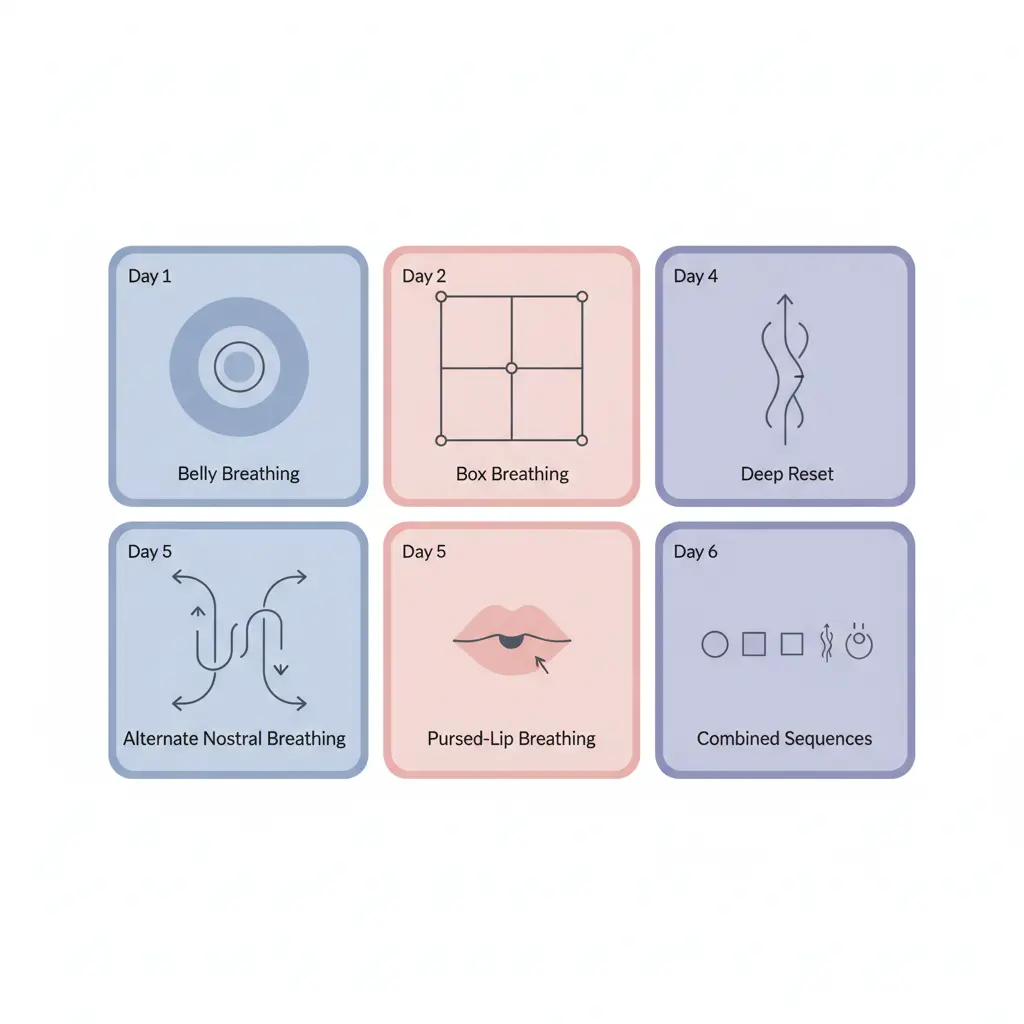
5 Breathing Techniques That Stop Cravings in Their Tracks
Here’s a consolidated reference for the core techniques. Each has been selected based on the evidence for nicotine craving management and practical usability — meaning you can do them in a car, at a desk, or standing outside where you’d normally smoke.
1. Diaphragmatic (Belly) Breathing — The Foundation
Place one hand on your chest, one on your stomach. Breathe so that only the lower hand moves. Inhale 4 counts, hold 2, exhale 6. The extended exhale is what activates the parasympathetic response — don’t rush it.
2. Box Breathing — The Stress Spike Neutralizer
Equal counts of 4 on each phase: inhale, hold, exhale, hold. Used widely in clinical stress management. Best for the first 60 seconds of a craving when the urgency feels overwhelming.
3. 4-7-8 Breathing — The Deep Reset
Developed by Dr. Andrew Weil based on pranayama principles. The extended hold builds CO2 tolerance and sends a sustained parasympathetic signal. Particularly effective for evening cravings and sleep disruption during withdrawal.
4. Pursed-Lip Breathing — The Habit Replacer
The closest behavioral mimic of the smoking act itself. Most effective when cravings are driven by habit and routine rather than acute stress. Ask yourself: is this a stress craving or a habit craving? The answer changes the best technique to use.
5. Resonance Breathing — The Long-Game Technique
Breathe at exactly 5–6 breaths per minute (roughly 5 seconds in, 5 seconds out). This rate has been shown in biofeedback research to create heart rate variability coherence — a state associated with emotional regulation and reduced impulsivity. It takes 2–3 weeks of daily practice to feel the full benefit, but even a single 5-minute session measurably reduces craving intensity.
Breathing Techniques Compared: Which One Fits Your Situation
| Technique | Best For | Time Required | Difficulty | Craving Type |
|---|---|---|---|---|
| Diaphragmatic Breathing | Daily practice, beginners | 2–5 minutes | Easy | All types |
| Box Breathing | Acute stress spike cravings | 2–3 minutes | Easy–Moderate | Stress-triggered |
| 4-7-8 Breathing | Evening cravings, sleep issues | 3–4 minutes | Moderate | Anxiety-driven |
| Pursed-Lip Breathing | Habit-driven cravings | 1–2 minutes | Easy | Routine/habit |
| Alternate Nostril | Anxiety, midday fatigue | 5 minutes | Moderate | Anxiety/restlessness |
| Resonance Breathing | Long-term habit rewiring | 5–10 minutes | Moderate–Hard | All types (long-term) |
How to Deal With Cigarette Cravings Beyond Breathing
Breathing handles the acute physiological response. But cravings have layers — and some of those layers need different tools.
The National Cancer Institute’s Smokefree resource on managing cravings categorizes craving triggers into four main types: emotional triggers (stress, boredom, anxiety), situational triggers (specific places or people), withdrawal triggers (physical nicotine depletion), and habitual triggers (automatic responses to daily routines). Breathing primarily addresses withdrawal and emotional triggers — but situational and habitual triggers need behavioral strategies too.
The 4 D’s When Breathing Isn’t Enough
- Delay: Commit to waiting 5 minutes before acting on the craving. Set a timer. The craving will almost always pass on its own.
- Deep breathe: Return to your chosen technique from this guide.
- Drink water: Cold water creates a physiological interruption and addresses the dry-mouth sensation that mimics a craving signal.
- Do something else: Physical movement — even a 2-minute walk — reduces craving intensity by redirecting blood flow and releasing endorphins.
The American Cancer Society’s guide on dealing with cigarette cravings also recommends preparing specific responses for high-risk situations before they occur — essentially scripting your behavior in advance so you’re not making decisions under pressure.
For a broader toolkit that covers behavioral strategies alongside breathing — including how to restructure your daily routines to reduce exposure to triggers — the article on effective strategies for coping with withdrawal covers those methods in practical detail.
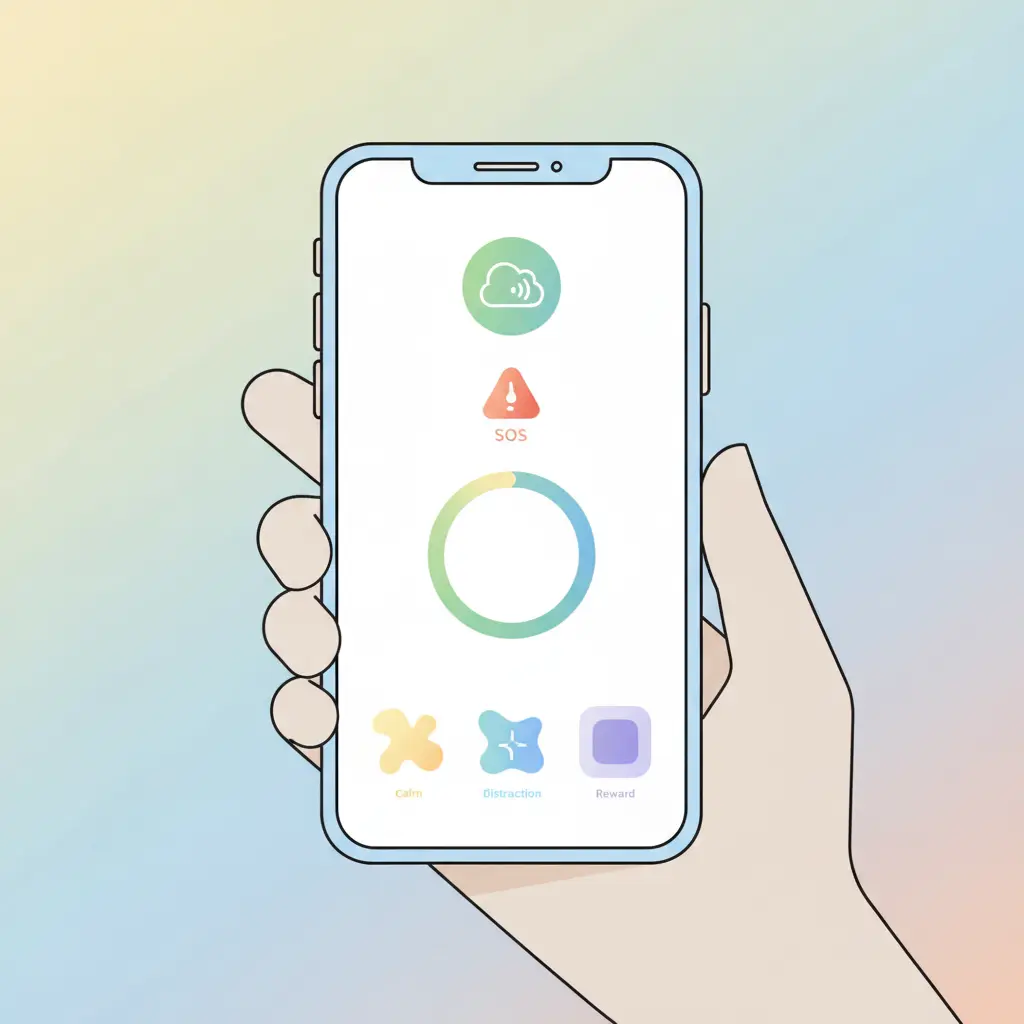
One thing that genuinely helps during the craving management phase is real-time accountability. The iQuit app (available on Google Play) includes an emergency SOS craving support feature that activates when you need it most — giving you a structured response sequence, a community connection, and an AI coach within seconds of a craving hitting. It’s not a replacement for the techniques here, but as a backup when you’re alone and the urge is intense, having something in your pocket that responds immediately makes a real difference.
Quit Smoking Success Stories: What Actually Worked
Statistics are useful. Other people’s stories are what actually make you believe change is possible.
The CDC’s Tips From Former Smokers video series features real people — not actors — sharing their quit journeys, many of them involving decades of heavy smoking before they found what worked. What’s striking watching them is how consistently they describe the first two weeks as the hardest, and how quickly the frequency of cravings dropped after that initial window.
Here’s a pattern that appears in quit smoking success stories over and over:
- The first quit attempt usually fails — not because the person is weak, but because they didn’t have a plan for what to do during a craving
- The successful attempt almost always involved a substitute behavior (something to do with hands, breath, or body in the craving moment)
- Social support — even one other person who knew about the quit — measurably improved success rates
- People who tracked their progress (days smoke-free, money saved, health changes) were more likely to stay quit through the difficult 2–4 week window
What most people miss in these stories is the role of identity shift. The people who stay quit long-term tend to stop thinking of themselves as smokers trying to quit, and start thinking of themselves as non-smokers. That shift doesn’t happen overnight — but breathing exercises, done consistently, accelerate it. Every time you get through a craving without a cigarette, you add evidence to a new self-concept.
Quit Smoking Motivation: Keeping the Momentum Going After Day 7
The 7-day plan builds your breathing toolkit. But motivation — the fuel that keeps you going through Week 3 and Month 2 — needs its own maintenance strategy.
Here’s where it gets interesting: motivation isn’t a fixed resource you either have or don’t. It’s a skill you build through consistent small wins. The neuroscience behind this is straightforward — every time you successfully navigate a craving, your brain releases a small amount of dopamine. Over time, that reward becomes associated with not smoking, rather than with smoking. The system that once rewarded cigarettes starts rewarding resistance.
5 Ways to Maintain Quit Smoking Motivation Long-Term
- Track concrete health milestones: At 20 minutes smoke-free, heart rate normalizes. At 48 hours, carbon monoxide clears. At 2 weeks, circulation improves. Seeing these on a timeline makes abstract benefits tangible.
- Write a “quit letter” to yourself: On Day 7, write to your future self about why you’re doing this. On hard days, read it. The act of articulating your reasons in your own words is more motivating than any external statistic.
- Build a craving response ritual: Make your breathing sequence automatic enough that it feels like a reflex. Rituals reduce decision fatigue in craving moments.
- Connect with others quitting: Community accountability consistently shows up in quit smoking success stories as a major factor. Even an online community — like the accountability circles available in the iQuit app — provides social accountability that’s hard to replicate alone.
- Plan for setbacks without treating them as failures: A single cigarette after Day 7 is not a relapse — it’s data. What triggered it? What will you do differently next time? This non-judgmental approach to setbacks is one of the clearest markers between people who quit permanently and those who don’t.
The CDC’s official guide on how to quit smoking emphasizes that building a quit plan — rather than relying on willpower alone — is the single most reliable predictor of long-term quit success. Breathing exercises are one component of that plan. Pairing them with the broader strategies covered in this guide on quit smoking strategies and triggers creates a more complete approach.

Your 7-Day Quit Smoking Breathing Checklist
Print this, save it to your phone, or keep it somewhere you’ll see it during your highest-craving times.
Daily Non-Negotiables
- ☐ Morning baseline breathing practice (5 minutes before coffee or phone)
- ☐ Identify today’s 3 highest-risk craving windows in advance
- ☐ Prepare a specific breathing response for each window
- ☐ Practice your technique once in a low-stakes moment (not just during cravings)
- ☐ Log whether you used breathing during cravings today (yes/no is enough)
- ☐ End-of-day: note one thing that worked
Weekly Milestones
- ☐ Day 1: Complete awareness breathing practice, track craving frequency
- ☐ Day 2: Add box breathing to your toolkit
- ☐ Day 3: Practice 4-7-8 before bed for 3 consecutive nights
- ☐ Day 4: Try alternate nostril breathing during your midday craving window
- ☐ Day 5: Replace one habitual smoking moment with pursed-lip breathing
- ☐ Day 6: Combine two techniques in sequence during a challenging craving
- ☐ Day 7: Write your personal breathing protocol and commit to it for Week 2
Frequently Asked Questions
How long does it take for cigarette cravings to stop after quitting?
Most acute nicotine cravings peak in intensity within the first 3–5 days after quitting and decrease significantly by the end of Week 2. However, situational cravings — triggered by specific places, emotions, or habits — can occur occasionally for months. Breathing exercises help manage both types, with consistent practice reducing craving intensity and duration over time.
Can breathing exercises really help stop cigarette cravings?
Yes — breathing exercises address the physiological stress response underlying cravings by activating the parasympathetic nervous system, which reduces cortisol and heart rate within 2–3 minutes. They also replace the physical ritual of smoking (inhale, pause, exhale) with a nicotine-free behavior pattern. Research on cue reactivity and stress-induced cravings supports their effectiveness as part of a broader quit plan.
What is the fastest way to deal with a cigarette craving when it hits?
The fastest approach is box breathing (4-4-4-4 counts) repeated 4 times, combined with drinking cold water. This delivers a parasympathetic response within 60–90 seconds and creates a physical interruption. If you’re in a social situation where conscious breathing isn’t practical, pursed-lip breathing works as a discreet alternative that closely mimics the oral habit of smoking.
How many quit attempts does it take before successfully stopping smoking?
Research suggests the average person makes 8–10 quit attempts before quitting permanently. This doesn’t reflect a lack of willpower — it reflects the strength of nicotine addiction as a neurological condition. Each attempt builds knowledge about personal triggers and effective strategies. People who approach quit attempts as a learning process rather than a pass/fail test show better long-term outcomes.
Should I use nicotine replacement therapy alongside breathing exercises?
Breathing exercises and nicotine replacement therapy (NRT) work on different mechanisms and can be used together effectively. NRT addresses the physical withdrawal symptoms, while breathing techniques manage the behavioral and emotional components of cravings. Combining both — especially in the first two weeks — is supported by clinical evidence as more effective than either approach alone. Consult a healthcare provider to find the right NRT type and dosage for your situation.
What’s the difference between a craving and a withdrawal symptom?
Cravings are the psychological urge to smoke, often triggered by specific cues, emotions, or routines. Withdrawal symptoms are the physical effects of nicotine depletion — irritability, difficulty concentrating, disturbed sleep, and increased appetite. They overlap but aren’t identical. Breathing exercises are most effective for cravings; withdrawal symptoms may also benefit from NRT, exercise, and adequate sleep. Both typically peak in the first week and improve significantly by Day 14.
Take the Next Step in Your Quit Journey
You now have a concrete plan to stop cigarette cravings — a 7-day breathing framework, five evidence-backed techniques, and a clear understanding of what’s happening in your body when the urge strikes. That’s more preparation than most people have when they try to quit.
The articles below go deeper on two areas that become increasingly important after Day 7 — understanding the behavioral patterns that drive long-term cravings, and building a broader quit strategy that holds up against real-world pressure:
- Top Strategies to Quit Smoking Successfully — covers the psychology of addiction, trigger identification, and relapse prevention in detail
- Effective Strategies to Help You Quit Smoking — practical behavioral tools, routine restructuring, and withdrawal management techniques to pair with your breathing practice
The quitSTART app from Smokefree.gov (developed by the National Cancer Institute) is also worth exploring as a free complement to your plan.
And if you want real-time craving support, progress tracking, and a community of people going through the same thing — the iQuit app brings all of those tools together in one place. The emergency SOS craving feature alone has helped thousands of people get through the moments when breathing exercises need backup. Find it on Google Play.
The craving lasts 3 to 5 minutes. You now know exactly how to stop cigarette cravings before they win. Start with one breath.